

The landscape of mens workwear clothing has transformed dramatically over recent years, evolving from purely functional protective gear into a sophisticated blend of safety, comfort, and professional presentation. Whether you're outfitting a construction team, hospitality staff, or healthcare professionals, understanding the nuances of modern workwear is essential for making informed purchasing decisions. This comprehensive guide explores everything from fabric technologies and safety standards to branding opportunities and industry-specific requirements, helping businesses select the right clothing solutions for their workforce.
Understanding Modern Mens Workwear Standards
Contemporary mens workwear clothing must satisfy multiple criteria simultaneously. Safety regulations form the foundation, particularly in high-risk industries where protective features can prevent serious injuries. EN ISO 20471 governs high-visibility clothing, whilst EN 343 covers protection against rain and moisture. Understanding these standards ensures compliance and protects employees from workplace hazards.
Beyond safety, modern workwear addresses comfort and performance. Fabric technology has advanced considerably, with moisture-wicking materials, antimicrobial treatments, and temperature-regulating textiles becoming increasingly common. The workwear market is projected to reach $24.64 billion by 2029, driven by technological advancements and sustainability concerns.
Key Fabric Technologies
- Ripstop weaves for enhanced durability and tear resistance
- Breathable membranes that allow moisture vapour to escape
- UV protection integrated into fibres for outdoor workers
- Antimicrobial treatments reducing odour and bacteria growth
- Stretch panels improving mobility in high-movement areas
The integration of these technologies means mens workwear clothing now performs under extreme conditions whilst maintaining professional appearance throughout extended wear periods.
Industry-Specific Workwear Requirements
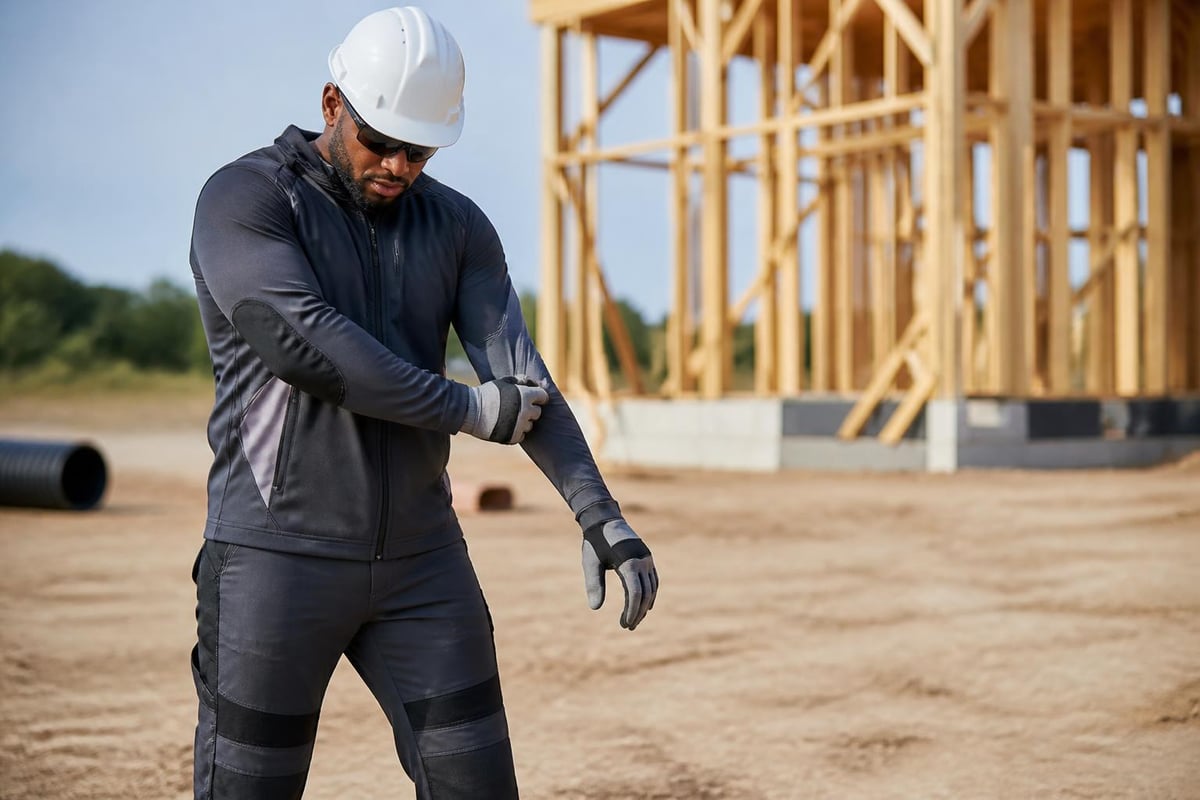
Different sectors demand distinct workwear characteristics. Construction workers require robust, protective clothing with reinforced knees and multiple pockets for tools. Hospitality professionals need smart, presentable garments that withstand frequent laundering. Healthcare workers prioritise hygiene-focused fabrics with antimicrobial properties.
| Industry | Primary Requirements | Common Garments | Key Features |
|---|---|---|---|
| Construction | Durability, visibility, protection | Cargo trousers, hi-vis jackets | Reinforced seams, knee pads, reflective strips |
| Hospitality | Professional appearance, comfort | Polo shirts, chinos, aprons | Stain resistance, breathability, smart styling |
| Healthcare | Hygiene, identification, comfort | Tunics, trousers | Antimicrobial, easy-clean, colour coding |
| Logistics | Mobility, visibility, practicality | Fleeces, cargo trousers | Stretch fabric, multiple pockets, hi-vis options |
Choosing the best workwear for men involves assessing specific job demands and environmental conditions. A warehouse operative faces entirely different challenges compared to a restaurant manager, necessitating tailored solutions.
Essential Garments for Professional Workwear Wardrobes
Building a comprehensive mens workwear clothing collection requires strategic selection of versatile, hardwearing pieces. Start with foundation items that serve multiple purposes before adding specialised garments.
Core Wardrobe Components
Polo shirts form the backbone of many professional uniforms. They strike an ideal balance between casual comfort and business-appropriate presentation. For companies seeking branded solutions, polo shirts with embroidered logos provide professional identification whilst maintaining durability through countless wash cycles.
Work trousers deserve careful consideration. Cargo styles with reinforced stress points suit manual labour, whilst chinos offer smarter alternatives for customer-facing roles. Both should feature adequate pocket space and ergonomic cuts that don't restrict movement during repetitive tasks.
Layering options extend workwear versatility across seasons:
- Base layer t-shirts for temperature regulation
- Mid-layer fleeces or sweatshirts for insulation
- Outer jackets providing weather protection
- Specialist items like high-visibility clothing for specific environments
The traditional blue workwear has even influenced office fashion, demonstrating how functional design transcends industry boundaries.
Branding and Personalisation Strategies
Mens workwear clothing serves dual purposes: protecting employees and representing company identity. Embroidery and printing transform generic garments into powerful marketing tools that enhance brand recognition and foster team unity.
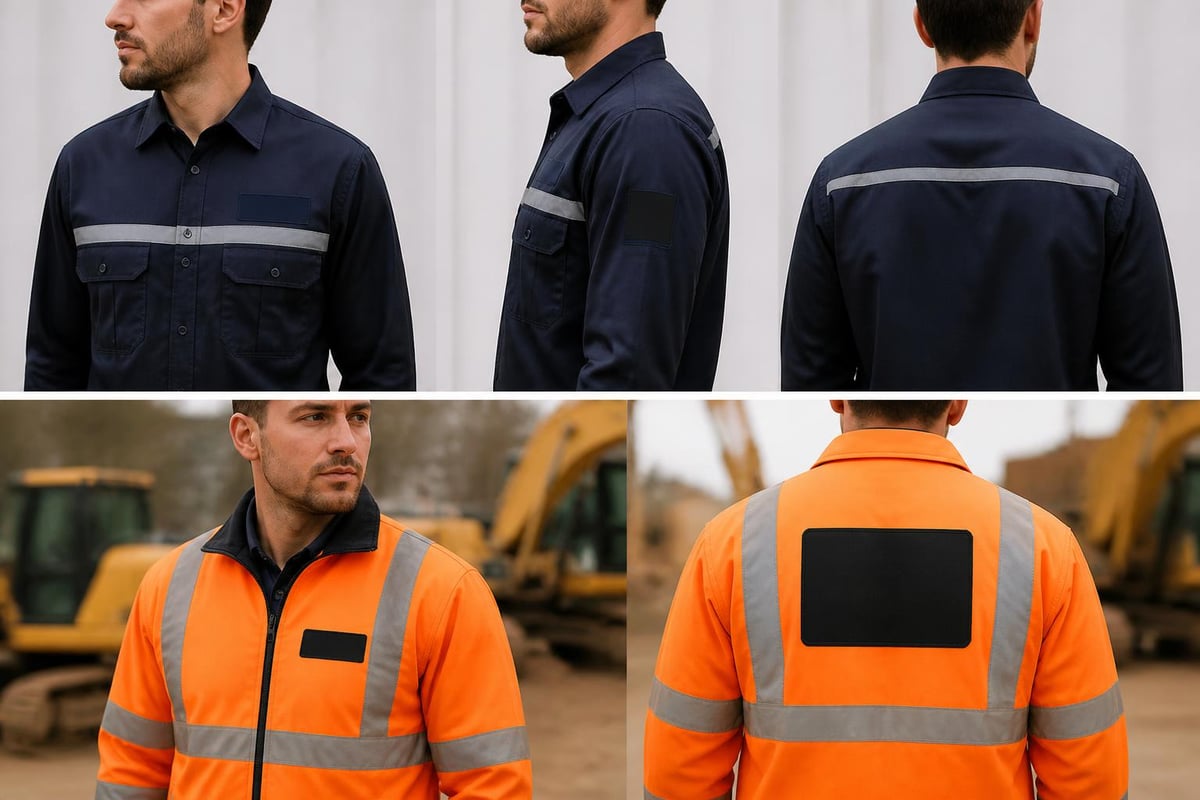
Embroidery offers premium, long-lasting branding suitable for customer-facing roles. It withstands industrial laundering and maintains professional appearance throughout garment lifespan. Positioning matters: left chest for subtle professionalism, back yokes for maximum visibility, sleeve placements for additional branding opportunities.
Screen printing provides cost-effective solutions for larger designs and bulk orders. Modern techniques deliver vibrant colours and intricate details whilst maintaining fabric breathability. Digital printing now enables small-batch customisation and full-colour imagery previously impossible with traditional methods.
Placement Considerations
- Left chest: Subtle, professional, customer-facing appropriate
- Full back: Maximum visibility, team identification
- Sleeves: Additional branding space, practical for rolled-up garments
- Pocket areas: Functional integration with design elements
Successful work uniform purchasing balances branding impact with practical considerations like fabric compatibility and washing durability.
Durability and Maintenance Factors
Investing in quality mens workwear clothing reduces long-term costs through extended garment lifespan. Understanding construction quality indicators helps identify durable options that withstand demanding work environments.
Seam construction reveals manufacturing quality. Double-stitched or flat-felled seams resist stress better than single stitching. Reinforced stress points at pockets, knees, and elbows prevent premature failure in high-wear areas. Bartack stitching at pocket corners and belt loops indicates attention to durability.
Fabric weight matters significantly. Lightweight materials (150-180 gsm) suit hospitality and light-duty work, whilst medium weights (200-250 gsm) serve general purposes. Heavy-duty applications demand 280+ gsm fabrics that resist abrasion and tearing.
| Maintenance Aspect | Best Practice | Impact on Lifespan |
|---|---|---|
| Washing temperature | Follow care labels, typically 40-60°C | Prevents shrinkage, colour fade |
| Drying method | Air dry when possible | Reduces wear from tumble dryers |
| Stain treatment | Address immediately with appropriate products | Prevents permanent marking |
| Storage | Clean, dry, ventilated space | Prevents mildew, odour |
Regular inspection identifies minor issues before they become major problems. Replacing buttons, repairing small tears, and addressing loose seams promptly extends usable life considerably.
Seasonal Adaptations and Weather Protection
British weather demands versatile mens workwear clothing that adapts to unpredictable conditions. Layering systems provide flexibility, allowing workers to adjust comfort levels throughout shifting temperatures and weather patterns.
Winter considerations focus on insulation without bulk. Modern synthetic fills provide warmth whilst maintaining mobility. Softshell jackets combine weather resistance with breathability, whilst bodywarmers offer core warmth without restricting arm movement.
Summer workwear prioritises breathability and moisture management. Mesh-panelled garments, moisture-wicking fabrics, and lighter colours reduce heat stress. UV-protective treatments shield outdoor workers from harmful radiation during extended sun exposure.
Transitional Weather Solutions
Spring and autumn require adaptable options. Removable sleeves, adjustable ventilation, and multiple layering pieces enable personalised comfort. Waterproof-breathable membranes keep workers dry without causing overheating during physical activity.
Recent Paris Men's Fashion Week trends emphasise functionality, reflecting broader industry movements towards protective, practical design that doesn't sacrifice style.
Safety-Critical Workwear Elements
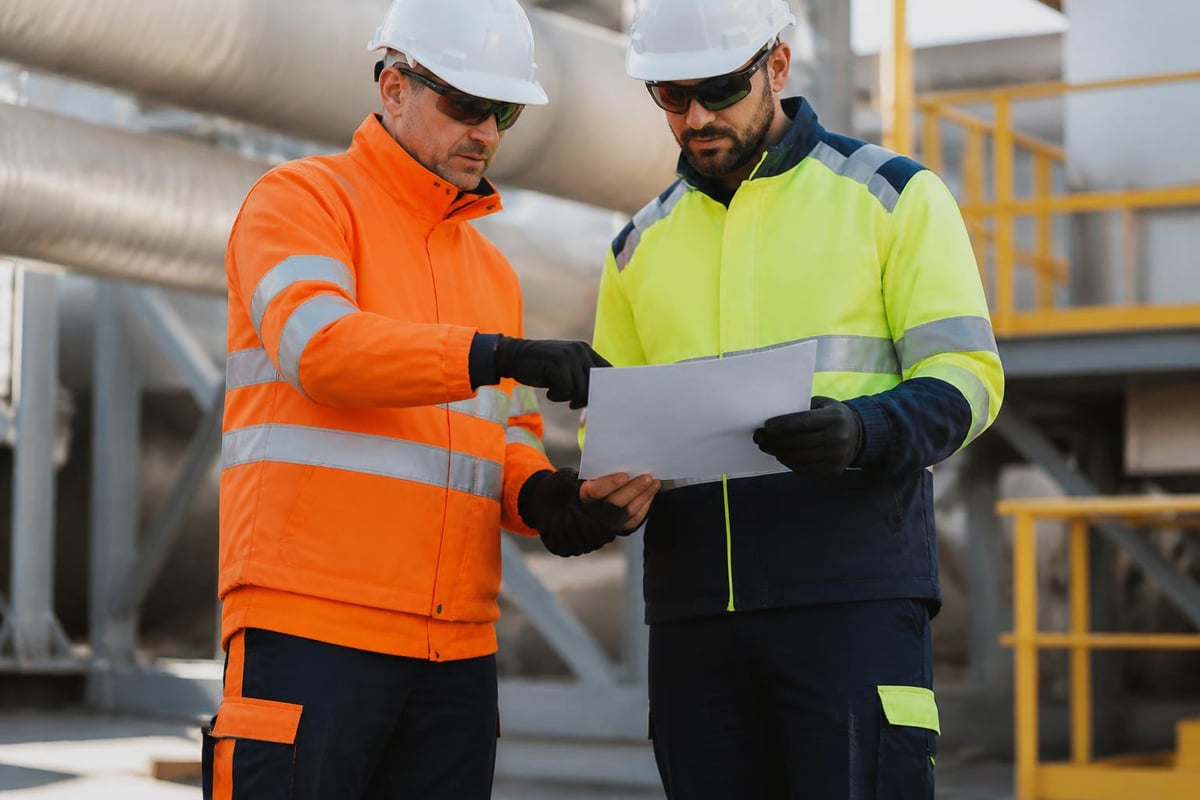
Certain industries require mens workwear clothing that meets stringent safety standards. High-visibility garments, flame-retardant materials, and protective reinforcements prevent accidents and reduce injury severity when incidents occur.
High-visibility clothing must comply with EN ISO 20471 standards, specifying minimum areas of fluorescent background material and retroreflective tape. Class 3 garments offer highest visibility for roadside and construction work, whilst Class 2 suits lower-risk environments.
Flame-retardant workwear protects workers in environments with flash fire risks. These garments self-extinguish when flame source is removed, preventing burns. Chemical treatments or inherently flame-resistant fibres like aramids provide this protection.
Protective features include:
- Reinforced knee and elbow panels resisting abrasion
- Impact-resistant padding in high-risk areas
- Chemical-resistant coatings for hazardous material handling
- Cut-resistant fabrics for sharp object environments
- Electrical arc-rated materials for utility workers
Construction work clothing specifically addresses the unique hazards present on building sites, combining multiple protective elements into comprehensive safety systems.
Sizing and Fit Considerations
Properly fitted mens workwear clothing enhances both comfort and safety. Ill-fitting garments restrict movement, create snag hazards, and reduce protective effectiveness. Understanding sizing systems and fit preferences ensures optimal performance.
European sizing differs from UK measurements. Always consult manufacturer size charts rather than assuming consistency across brands. Measure chest, waist, and inside leg accurately for best results. Consider whether garments will be worn over other layers when selecting sizes.
Fit preferences vary by role. Manual labourers often prefer slightly looser cuts allowing unrestricted movement, whilst customer-facing staff favour tailored fits projecting professional appearance. Modern athletic cuts accommodate both requirements through strategic stretch panel placement.
Common Fit Issues and Solutions
- Restricted shoulder movement: Size up or choose raglan sleeve construction
- Gaping at waist: Select tapered fits or add belt loops
- Short sleeve length: Opt for brands offering tall sizing options
- Tight crotch area: Choose gusseted designs or action backs
- Inadequate length: Check "Regular", "Long", and "Tall" variant availability
Offering multiple size ranges within workwear programmes ensures inclusive solutions for diverse workforces. Extended sizing demonstrates commitment to employee comfort and equality.
Sustainability and Ethical Production
Environmental consciousness increasingly influences mens workwear clothing purchasing decisions. Sustainable materials, ethical manufacturing, and circular economy principles align business practices with corporate responsibility goals whilst appealing to environmentally aware customers.
Organic cotton eliminates pesticide usage, reducing environmental impact and potential skin irritation. Recycled polyester diverts plastic waste from landfills whilst delivering performance characteristics identical to virgin materials. These options typically cost marginally more but demonstrate environmental commitment.
Ethical production encompasses fair wages, safe working conditions, and transparent supply chains. Certifications like Fairtrade, OEKO-TEX, and BSCI provide verification of responsible manufacturing practices. The shift towards sustainable workwear reflects broader consumer demand for environmentally responsible business practices.
| Sustainability Feature | Environmental Benefit | Practical Consideration |
|---|---|---|
| Organic fibres | Reduced pesticide pollution | May require gentle washing |
| Recycled materials | Diverts waste from landfills | Performance equals virgin materials |
| Water-based printing | Lower chemical usage | Durability comparable to traditional |
| Local manufacturing | Reduced transport emissions | Often higher initial cost |
Garment longevity represents perhaps the most significant sustainability factor. Durable mens workwear clothing that lasts years generates far less environmental impact than cheap alternatives requiring frequent replacement.
Budget Planning and Cost Analysis
Strategic mens workwear clothing procurement balances initial investment against long-term value. Cheapest options rarely prove economical when replacement frequency, durability, and employee satisfaction are considered comprehensively.
Total cost of ownership encompasses purchase price, customisation expenses, maintenance requirements, and replacement intervals. A £15 polo shirt lasting six months costs more annually than a £30 garment serving two years. Calculate per-wear costs rather than focusing solely on initial outlay.
Bulk purchasing typically reduces per-unit costs significantly. However, excessive stockpiling ties up capital and risks style obsolescence or size requirement changes. Order sufficient quantities for volume discounts whilst maintaining inventory flexibility.
Budget Optimisation Strategies
- Tiered quality systems: Premium garments for customer-facing roles, standard options for behind-scenes work
- Seasonal purchasing: Order off-season for better pricing
- Long-term supplier relationships: Negotiate favourable terms through consistent business
- Employee contribution schemes: Shared costs increase garment care motivation
- Standardised colour schemes: Simplifies mixing and matching across ranges
Consider affordable women's workwear options alongside mens clothing when outfitting diverse workforces, ensuring equitable quality across all employees.
Future Trends in Professional Workwear
Innovation continues reshaping mens workwear clothing through technology integration, design evolution, and changing workplace dynamics. Understanding emerging trends helps businesses prepare for future requirements and maintain competitive advantages.
Smart textiles incorporate sensors monitoring worker health, environmental conditions, and safety parameters. Temperature-regulating fabrics automatically adjust to maintain optimal comfort. Conductive threads enable integrated heating elements powered by compact batteries. These workplace wearable technologies enhance safety and productivity simultaneously.
The 2026 workwear trends emphasise updated classics with contemporary twists. Traditional workwear silhouettes receive modern fabric treatments, creating garments equally suitable for professional and casual contexts. This versatility appeals to businesses seeking maximum utility from uniform investments.
Gender-inclusive design moves beyond simply offering mens and womens ranges towards truly adaptable garments accommodating diverse body types and preferences. Adjustable features, multiple fit options, and neutral styling create inclusive workplace environments.
Customisation technology enables unprecedented personalisation. Digital printing allows individual names, small-batch designs, and rapid turnaround times previously impossible. On-demand production reduces waste and inventory requirements whilst maintaining quick response capabilities.
Selecting appropriate mens workwear clothing requires balancing safety requirements, industry demands, branding opportunities, and budget constraints whilst prioritising employee comfort and professional presentation. By understanding fabric technologies, safety standards, and emerging trends, businesses can make informed decisions that protect workers, project professional image, and deliver long-term value. Cobra Workwear offers comprehensive workwear solutions across industries, combining quality garments with expert embroidery and printing services to help UK businesses outfit their teams professionally and effectively.
