

When you decide to buy work uniform for your team, you're making a strategic investment that impacts safety, productivity, professional image, and employee satisfaction. For UK businesses across sectors ranging from construction to hospitality, healthcare to logistics, selecting the right workwear involves balancing multiple factors including compliance with safety regulations, durability requirements, branding opportunities, and budget constraints. This comprehensive guide explores the essential considerations that will help you make informed decisions when purchasing professional attire for your workforce in 2026.
Understanding Your Industry-Specific Requirements
Different sectors demand unique features from their workwear. Before you buy work uniform items, conduct a thorough assessment of your specific industry needs.
Safety and Compliance Standards
Industries such as construction, manufacturing, and utilities face stringent safety regulations. High-visibility clothing, flame-resistant materials, and protective features aren't optional but mandatory. According to guidance on work uniforms in industrial settings, understanding safety compliance and material selection is crucial for protecting your workforce whilst meeting legal obligations.
Healthcare professionals require garments that withstand frequent washing at high temperatures, resist contamination, and allow freedom of movement during long shifts. The hospitality sector prioritises smart appearance combined with comfort and ease of care.
Key compliance considerations include:
- HSE regulations for hazardous environments
- EN ISO 20471 standards for high-visibility workwear
- Food safety requirements for catering staff
- Infection control standards for healthcare workers
Assessing Daily Demands and Durability Needs
The physical demands placed on workwear vary dramatically. A receptionist's requirements differ vastly from those of a groundworker. When evaluating which uniform to purchase, consider:
- Movement requirements: Does the role involve bending, reaching, or climbing?
- Environmental exposure: Will employees work outdoors in varying weather conditions?
- Wear frequency: How often will items be washed and worn?
- Potential hazards: Are there risks from chemicals, sparks, or sharp objects?
Understanding fabric selection for work uniforms helps identify materials with appropriate wear resistance, moisture management, and colorfastness for your specific applications.

Determining Your Budget Approach
Financial planning represents a critical component when you buy work uniform. Your budget strategy should balance upfront costs against long-term value.
Purchase Versus Rental Models
Businesses face an important decision regarding ownership. The pros and cons of renting versus purchasing employee uniforms reveal distinct advantages for each approach.
| Factor | Purchasing | Renting |
|---|---|---|
| Upfront cost | Higher initial investment | Lower initial outlay |
| Long-term value | Better for stable workforce | Flexible for fluctuating numbers |
| Maintenance | In-house responsibility | Service provider handles |
| Customisation | Full branding control | Limited personalisation |
| Ownership | Asset on balance sheet | Operational expense |
For established businesses with consistent staffing levels, purchasing typically offers superior value over time. The buying versus renting decision depends on factors including employee turnover rates, storage capacity, and cash flow considerations.
Calculating Total Cost of Ownership
When planning to buy work uniform items, look beyond the purchase price. Total cost encompasses:
- Initial purchase price per garment
- Embroidery or printing costs for branding
- Replacement frequency based on durability
- Laundering and maintenance expenses
- Storage and distribution logistics
Budget optimisation strategies:
Bulk ordering reduces per-unit costs significantly. Many suppliers, including specialists in embroidered workwear, offer tiered pricing that rewards larger orders. Calculate annual requirements and consolidate purchases where practical.
Prioritise quality in high-wear items such as trousers and jackets whilst considering economy options for low-impact garments. For instance, investing in durable polo shirts with embroidered company logos creates a professional appearance that withstands regular use better than printed alternatives.
Selecting the Right Garment Types
Choosing appropriate garment categories ensures employees have functional, comfortable workwear that supports productivity.
Building a Core Wardrobe
Most businesses benefit from a layered approach. Base layers provide comfort and temperature regulation, mid-layers offer versatility across seasons, and outer layers deliver weather protection and professional presentation.
Essential garment categories include:
- Base layer: T-shirts, polo shirts, or formal shirts depending on customer interaction levels
- Mid-layer: Sweatshirts, fleeces, or cardigans for climate control
- Outer layer: Jackets, waterproofs, or high-visibility vests
- Lower garments: Trousers, shorts, or skirts appropriate to role and season
- Protective items: Aprons, coveralls, or specialist safety equipment
- Accessories: Headwear, gloves, or bags where relevant
For businesses seeking guidance on men's workwear options, exploring best workwear for men provides valuable insights into current options and quality considerations.
Sizing and Fit Considerations
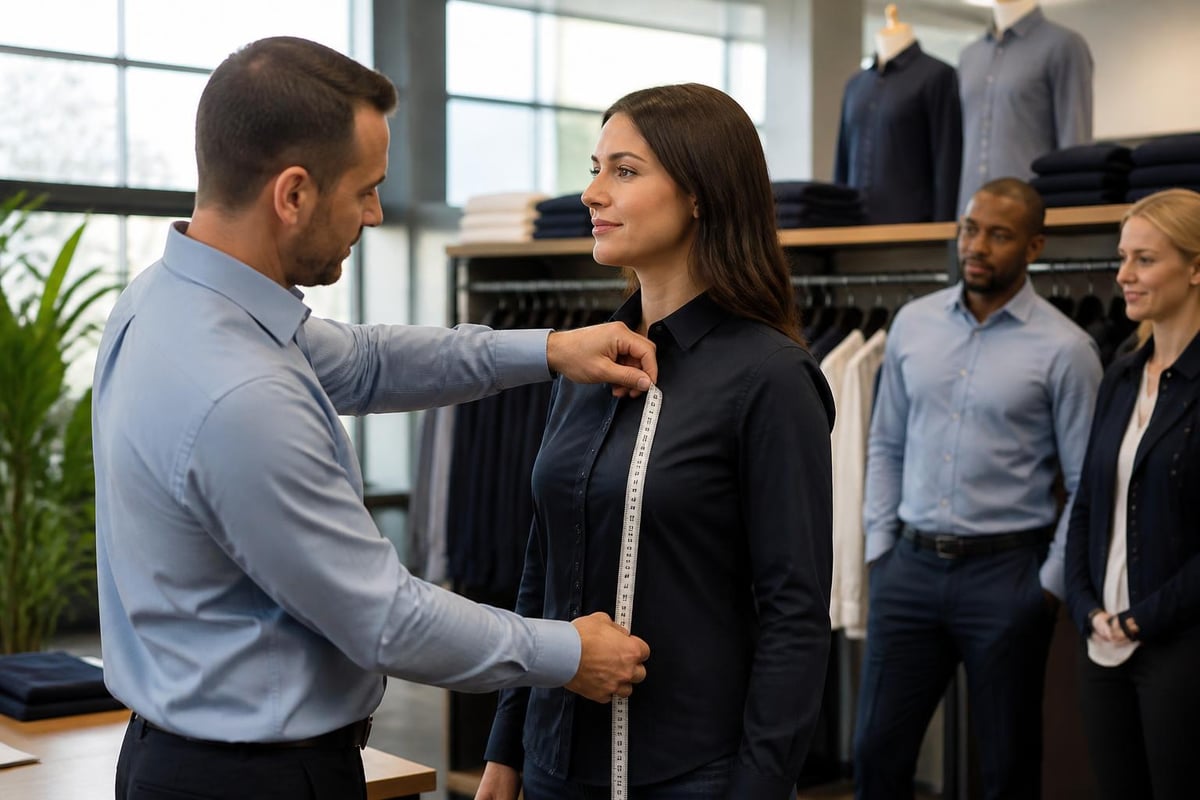
Proper fit dramatically affects comfort, safety, and professional appearance. When you buy work uniform, implement a comprehensive sizing process:
- Provide detailed size guides to all employees
- Order sample sizes for trial fittings where feasible
- Account for layering in colder months
- Consider gender-specific cuts and diverse body types
- Maintain a small stock of common sizes for new starters
Poor fit causes discomfort, restricts movement, and creates unprofessional impressions. Investment in accurate sizing pays dividends through improved employee satisfaction and reduced replacement costs.
Fabric Selection and Performance Features
Material choice fundamentally determines how workwear performs under real-world conditions.
Understanding Fabric Technologies
Modern workwear incorporates sophisticated fabric technologies. Moisture-wicking materials draw perspiration away from skin, maintaining comfort during physical activity. Stretch fabrics containing elastane offer freedom of movement without compromising durability.
Performance fabric characteristics:
| Feature | Benefit | Ideal Applications |
|---|---|---|
| Moisture-wicking | Temperature regulation | Active roles, warm environments |
| Quick-drying | Reduced laundry time | Multi-shift operations |
| Stretch content | Enhanced mobility | Physical, demanding roles |
| Reinforced areas | Extended lifespan | High-wear positions |
| Stain resistance | Easier maintenance | Food service, mechanics |
| Antimicrobial | Odour control | Long shifts, physical work |
Polycotton blends offer excellent balance between comfort, durability, and value. Pure cotton provides breathability but wrinkles more readily and dries slowly. Synthetic fabrics excel in specific applications but may feel less comfortable in hot conditions.
Durability and Maintenance Requirements
When planning to buy work uniform items, consider maintenance demands. Strategies for selecting durable workwear emphasise understanding job demands and choosing appropriate materials.
Garments requiring specialist cleaning add hidden costs. Easy-care fabrics that withstand industrial washing at 60°C or higher suit most applications. Colourfast materials maintain professional appearance despite repeated laundering.
Reinforced stitching at stress points, bar-tacked pockets, and durable fastenings extend garment life significantly. For roles involving heavy manual labour, such as those requiring work construction clothes, prioritising robust construction prevents premature failure.
Branding and Customisation Options
Professional branding transforms basic workwear into powerful marketing assets whilst fostering team identity and pride.
Embroidery Versus Printing
Both decoration methods offer distinct advantages. Embroidery provides premium appearance, exceptional durability, and professional tactile quality. It withstands industrial laundering without degradation, making it ideal for garments requiring frequent washing.
Printing offers cost advantages for large designs, photographic images, or budget-conscious projects. Modern printing techniques deliver good durability, though not matching embroidery's longevity.
Decoration method comparison:
- Embroidery: Premium appearance, superior durability, higher cost per item, ideal for logos and text
- Screen printing: Cost-effective for large runs, vibrant colours, suitable for bold designs
- Transfer printing: Flexible for small quantities, photographic detail, moderate durability
- Direct-to-garment: Excellent for complex designs, lower setup costs, best on cotton fabrics
Many suppliers provide in-house decoration services, streamlining the process when you buy work uniform. This integration ensures consistent quality and faster turnaround times.
Design Considerations for Professional Impact
Effective uniform branding balances visibility with subtlety. Oversized logos appear unprofessional, whilst tiny designs fail to register. Position branding where it's visible during normal activity - typically left chest, back shoulders, or sleeves.
Colour psychology influences perception. Navy and black convey authority and professionalism. High-visibility colours meet safety requirements whilst creating strong visual identity. Ensure your chosen colours align with brand guidelines and industry norms.
Supplier Selection and Procurement Process
Choosing the right supplier significantly impacts satisfaction, value, and long-term success when you buy work uniform.
Evaluating Potential Suppliers
Assess suppliers against multiple criteria. Product range should cover your requirements without forcing compromises. Quality standards must meet your expectations, supported by relevant certifications and guarantees.
Critical supplier evaluation factors:
- Product quality and range breadth
- Customisation capabilities and turnaround times
- Minimum order quantities and pricing structure
- Delivery reliability and lead times
- Customer service responsiveness
- Returns and exchange policies
- Reordering systems for consistent sizing
Request samples before committing to large orders. Physical inspection reveals quality, fit, and finish better than catalogue images. According to guidance on purchasing work uniforms, assessing needs and finding reliable suppliers ensures compliance with safety standards.
Ordering Process and Logistics
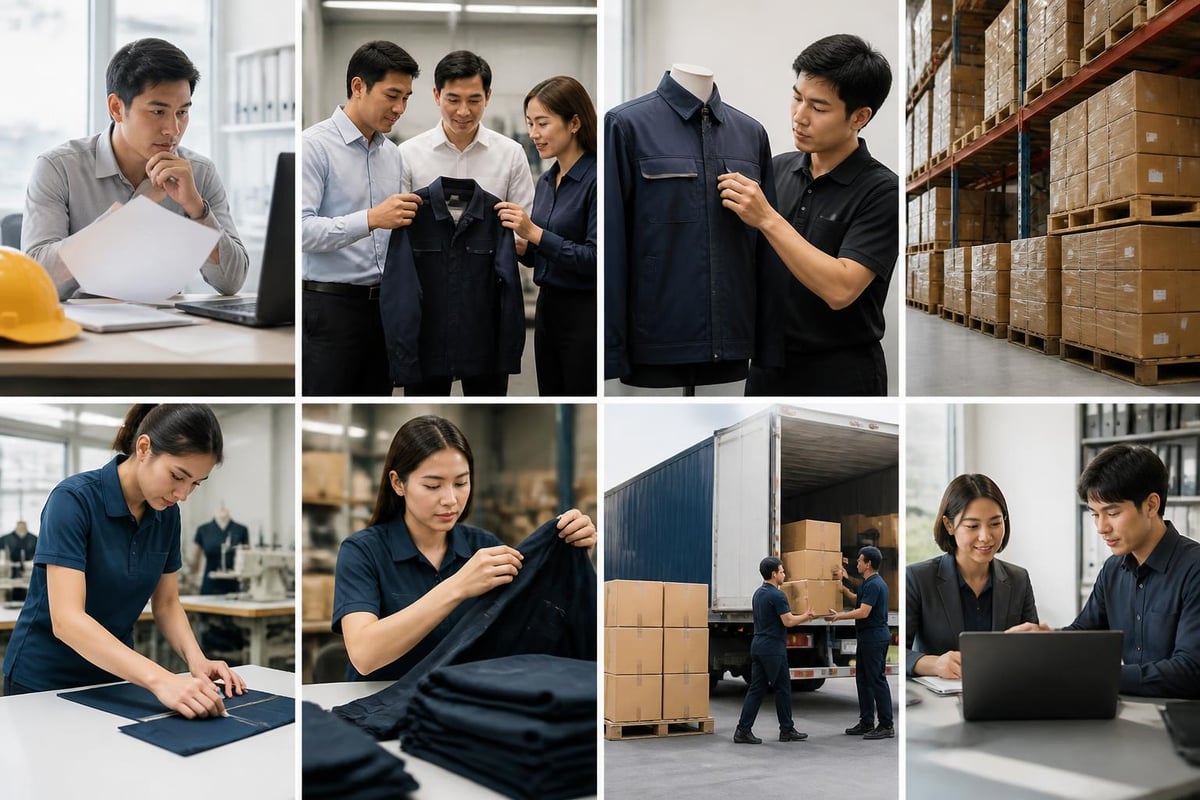
Establish clear procurement procedures. Centralised ordering through designated staff prevents sizing confusion and ensures brand consistency. Create detailed specifications including garment types, sizes, colours, and decoration requirements.
Plan lead times carefully, particularly for customised items. Embroidery and printing add production time. Factor in delivery schedules, especially for bulk orders requiring multiple shipments.
Maintain stock records for reorders. Consistent sizing across orders prevents fit issues when replacing worn items or onboarding new employees. Some suppliers offer dedicated account management for larger contracts, streamlining repeat purchases.
Implementation and Employee Buy-In
Successfully introducing new uniforms requires thoughtful implementation beyond simply purchasing garments.
Launch Strategy and Communication
Communicate changes early and clearly. Explain the rationale behind uniform selection, emphasising benefits such as safety, comfort, or professional image. Employee buy-in increases when they understand the decision-making process.
Provide comprehensive guidance on:
- Garment care instructions and washing requirements
- Acceptable styling and presentation standards
- Replacement procedures for damaged or worn items
- Consequences for non-compliance where applicable
Consider phased introduction for large organisations. Pilot programmes with selected departments identify issues before full rollout, allowing adjustments based on real-world feedback.
Ongoing Management and Replacement
Establish clear policies for uniform maintenance and replacement. Define expected garment lifespan and replacement triggers based on wear rather than arbitrary timeframes. Fair policies prevent disputes whilst controlling costs.
Create inventory systems tracking who has what items. This accountability reduces losses and ensures employees have appropriate quantities. For businesses offering women's workwear, maintaining diverse size ranges requires careful stock management.
Regular reviews ensure uniforms continue meeting needs. Gather employee feedback on comfort, durability, and functionality. Emerging technologies and changing work patterns may necessitate periodic updates.
Special Considerations for Specific Sectors
Certain industries face unique challenges when purchasing workwear.
Healthcare and Hygiene-Critical Environments
Medical facilities require garments meeting stringent infection control standards. Fabrics must withstand high-temperature washing, bleach resistance proves essential, and contamination barriers may be necessary.
Tunics, trousers, and scrubs in antimicrobial fabrics reduce infection transmission risks. Colour coding by department aids identification and prevents cross-contamination. Consider disposable options for high-risk areas alongside reusable garments for general use.
Construction and Heavy Industry
When you buy work uniform for construction teams, prioritise protection without compromising mobility. Reinforced knees, multiple pockets for tools, and abrasion-resistant fabrics prove essential.
High-visibility clothing meeting relevant standards ensures safety on sites with moving vehicles or equipment. Layering systems accommodate varying weather conditions across seasons. Waterproof outer layers, insulated mid-layers, and breathable base layers provide versatility.
Hospitality and Customer-Facing Roles
Front-of-house staff require smart presentation combined with comfort during long shifts. Easy-care fabrics maintain crisp appearance without excessive ironing. Stain-resistant treatments prove invaluable in food service environments.
Interestingly, even businesses in seemingly unrelated sectors like those providing luxury transportation services understand the importance of professional presentation through appropriate dress codes, demonstrating how uniform standards enhance customer perception across industries.
Consider seasonal variations for outdoor hospitality venues. Summer-weight fabrics prevent overheating, whilst layering options accommodate cooler evenings without compromising appearance standards.
Quality Assurance and Testing
Before committing to large purchases, implement quality verification processes.
Sample Testing Protocols
Order samples representing your full requirement range. Conduct wash tests at appropriate temperatures and frequency to assess colorfastness, shrinkage, and durability. Subject samples to typical workplace stresses - stretching, abrasion, or exposure to relevant substances.
Testing checklist includes:
- Dimensional stability after multiple washes
- Colourfast performance with industrial detergents
- Seam strength under stress
- Fastener durability through repeated use
- Decoration adhesion and appearance retention
- Comfort during extended wear trials
Employee trials provide invaluable feedback. Select representatives from different roles and body types for comprehensive assessment. Real-world testing reveals issues invisible in specifications.
Establishing Quality Benchmarks
Define acceptance criteria before ordering. Specify acceptable tolerances for shrinkage, colour variation, and construction standards. Clear benchmarks enable objective evaluation and provide recourse if suppliers fail to meet expectations.
Document your standards for future reference. Consistent quality criteria streamline reordering and supplier comparisons. Photographic records of acceptable and unacceptable quality aid communication with suppliers and internal stakeholders.
Sustainability and Ethical Considerations
Modern procurement increasingly incorporates environmental and social responsibility.
Sustainable Material Choices
Organic cotton, recycled polyester, and responsibly sourced materials reduce environmental impact. Whilst potentially commanding premium prices, sustainable options align with corporate responsibility commitments and appeal to environmentally conscious employees.
Durability represents the most sustainable characteristic. Garments lasting twice as long halve replacement frequency, reducing resource consumption regardless of material origin. When you buy work uniform prioritising quality over initial cost savings, environmental benefits follow economic ones.
Ethical Manufacturing and Supply Chains
Investigate supplier practices regarding working conditions, fair wages, and environmental standards. Certifications such as Oeko-Tex, Fair Trade, or B-Corp status provide reassurance regarding ethical credentials.
UK-based suppliers often offer greater transparency and accountability. Supporting domestic manufacturing reduces transportation emissions whilst ensuring compliance with stringent UK labour and environmental regulations. Local sourcing typically enables faster response to urgent requirements and easier communication.
Selecting the right workwear for your team requires balancing safety, comfort, durability, and budget whilst ensuring professional presentation that reflects your brand values. By carefully assessing your specific requirements, evaluating suppliers thoroughly, and implementing quality testing protocols, you'll make informed decisions that benefit both your business and employees. Cobra Workwear offers comprehensive workwear solutions across multiple sectors, combining quality garments with in-house embroidery and printing services to deliver professional results tailored to your exact specifications.
