

Finding quality womens workwear cheap has become an essential skill for professionals across all industries in 2026. Whether you're starting a new role, refreshing your work wardrobe, or managing uniform budgets for your team, the challenge remains the same: maintaining a professional appearance without depleting your finances. The good news is that affordable workwear no longer means compromising on quality, durability, or style. With strategic shopping approaches, knowledge of the right suppliers, and understanding of what truly constitutes value, women can build comprehensive work wardrobes that perform excellently whilst respecting tight budgets. This guide explores practical strategies for sourcing affordable professional attire across various industries, from healthcare and hospitality to construction and corporate environments.
Understanding Value in Affordable Workwear
Price alone doesn't determine whether workwear represents good value. The true cost of any garment includes its purchase price divided by the number of wears you'll get from it before replacement becomes necessary.
A £15 shirt that lasts six months of regular wear offers better value than a £10 shirt requiring replacement after two months. When evaluating womens workwear cheap options, consider fabric composition, construction quality, and care requirements alongside the initial price tag.
Key Quality Indicators
- Reinforced seams at stress points like shoulders and side panels
- Quality fastenings including sturdy buttons and rust-resistant zips
- Colourfast fabrics that won't fade after a few washes
- Appropriate weight for the intended use and season
- Care instructions that align with practical laundering needs
The concept of 'cost per wear' transforms how you approach workwear purchases. A £40 pair of work trousers worn 100 times costs just 40p per wear, whilst a £20 pair lasting only 30 wears costs 67p per use.

Industry-Specific Budget Strategies
Different sectors have distinct workwear requirements that influence where you can realistically reduce costs without compromising compliance or professionalism.
Healthcare and Medical Sectors
Healthcare professionals require functional, hygienic workwear that withstands frequent high-temperature washing. Budget-conscious nurses, care workers, and medical support staff should prioritise tunics and trousers made from polycotton blends offering durability and easy maintenance.
Consider purchasing tunics in versatile colours that coordinate with multiple bottoms, maximising outfit combinations from fewer pieces. Many suppliers offer multi-pack discounts on basic tunics, significantly reducing per-item costs.
Healthcare workers should also invest in quality safety equipment. Having reliable first aid supplies readily available ensures preparedness for emergency situations whilst maintaining professional standards.
Hospitality and Service Industries
Front-of-house staff need workwear that projects professionalism whilst enduring long shifts and frequent laundering. Black trousers remain a staple, and buying multiple pairs in identical styles creates a uniform appearance whilst allowing rotation.
Smart shopping tips for hospitality workers:
- Purchase core basics in bulk when sales occur
- Invest in one quality white shirt and two budget alternatives
- Choose wrinkle-resistant fabrics to minimise ironing time
- Select stain-resistant treatments where available
- Maintain a spare complete outfit for emergencies
For kitchen staff, heat-resistant and practical chefs clothing designed specifically for culinary environments offers both safety and value. These specialised garments prevent common kitchen accidents whilst meeting hygiene standards.
Construction and Trade Sectors
Women working in construction, manufacturing, or trades require durable, safety-compliant workwear. This sector offers particular challenges for budget-conscious shoppers as safety cannot be compromised.
| Item Type | Budget Range | Features to Prioritise | Expected Lifespan |
|---|---|---|---|
| Hi-Vis Vests | £5-£15 | EN ISO 20471 compliance | 12-18 months |
| Work Trousers | £20-£40 | Knee pad pockets, reinforced seams | 8-12 months |
| Safety Boots | £40-£80 | Steel toe caps, slip resistance | 12-24 months |
| Base Layers | £8-£20 | Moisture-wicking, thermal properties | 6-12 months |
High-visibility clothing represents an area where budget options perform well. The hi-vis collection demonstrates how safety-compliant garments needn't command premium prices when sourced from specialist workwear providers.
Where to Find Womens Workwear Cheap
Strategic sourcing makes a substantial difference to your workwear budget. Multiple channels offer quality affordable options if you know where to look.
Specialist Workwear Suppliers
Dedicated workwear companies often provide better value than high street retailers because they specialise in durable, functional garments rather than fashion-focused pieces. These suppliers understand industry requirements and stock appropriate fabrics and constructions.
Many workwear specialists offer customisation services, allowing businesses to add company branding whilst maintaining competitive pricing through volume discounts and in-house printing capabilities.
Online Marketplaces and Direct Retailers
The digital marketplace has revolutionised access to affordable workwear. Online retailers operate with lower overheads than physical stores, often passing these savings to customers through reduced prices.
Research shows that building a polished office wardrobe with pieces under £100 has become increasingly achievable as more brands embrace accessible pricing structures.
Sample Sales and End-of-Line Clearances
Workwear suppliers regularly clear discontinued lines, previous season's colours, or slight seconds at significant discounts. These garments typically offer identical functionality to full-price alternatives with only cosmetic differences.
Creating relationships with local workwear suppliers can provide advance notice of clearance events. Similarly, subscribing to email newsletters from online retailers ensures you're alerted to flash sales and promotional periods.

Building a Capsule Work Wardrobe on Budget
A capsule wardrobe approach maximises outfit combinations whilst minimising purchase costs. This strategy focuses on versatile core pieces that coordinate seamlessly.
The Foundation Pieces
Start with neutral basics that work across multiple combinations:
- Two pairs of well-fitted work trousers in black or navy
- Three tops in complementary colours and styles
- One structured jacket or cardigan for layering
- Appropriate footwear meeting industry safety standards
- Essential accessories including belts and any required PPE
This foundation provides 15+ outfit combinations from just eight items. As budget allows, add accent pieces in coordinating colours to expand possibilities further.
Seasonal Adaptation Strategies
Rather than maintaining separate seasonal wardrobes, invest in layering pieces that adapt core garments for changing temperatures. Thermal base layers, fleeces, and lightweight jackets extend the year-round usability of your foundation pieces.
Effective layering for year-round wear:
- Spring: Base layer + shirt + light jacket
- Summer: Breathable tops in moisture-wicking fabrics
- Autumn: Base layer + tunic + cardigan
- Winter: Thermal base + shirt + fleece + waterproof outer
This approach significantly reduces the total number of garments required, lowering both initial investment and ongoing storage needs.
Smart Shopping Techniques
How you shop matters as much as where you shop when pursuing womens workwear cheap without compromising quality.
Timing Your Purchases
Retail follows predictable seasonal patterns. January and July typically bring the deepest discounts as retailers clear seasonal stock. Black Friday and Cyber Monday now extend beyond consumer goods into workwear categories.
For industry-specific items, timing varies. Medical suppliers often discount in March and September as healthcare facilities refresh uniforms. Construction workwear sees promotions in late autumn as demand decreases heading into winter.
Comparison Shopping and Price Tracking
Never purchase workwear without comparing prices across multiple suppliers. Browser extensions and price comparison websites automate this process, ensuring you're seeing the best available price.
Creating a wishlist and monitoring prices over time reveals pricing patterns. Some items fluctuate seasonally, whilst others rarely discount, indicating when to buy immediately versus when to wait.
Several resources offer comprehensive guidance on affordable workwear brands for women, helping identify suppliers consistently offering competitive pricing without quality compromises.
Volume Purchasing and Bulk Discounts
If multiple family members require workwear, or you're purchasing for a small team, bulk buying delivers substantial savings. Many suppliers offer tiered pricing structures where per-unit costs decrease as order quantities increase.
This strategy works particularly well for items requiring regular replacement like t-shirts, base layers, or socks. Purchasing six months' worth during promotional periods locks in lower prices.
Extending Workwear Lifespan
The cheapest workwear is that which you already own and maintain properly. Correct care dramatically extends garment lifespan, improving value regardless of initial purchase price.
Proper Laundering Techniques
Always follow manufacturer care instructions, but general principles apply across most workwear:
- Wash inside-out to protect outer fabric and any printing
- Use appropriate temperatures (usually 40°C for most workwear)
- Avoid overloading machines to reduce friction damage
- Air dry when possible to preserve fabric integrity
- Address stains immediately before they set permanently
High-visibility garments require particular attention. The reflective elements degrade with harsh washing, so use gentle cycles and avoid fabric softeners that coat reflective surfaces.
| Fabric Type | Washing Temperature | Drying Method | Special Considerations |
|---|---|---|---|
| Polycotton | 40-60°C | Tumble low or air dry | Iron whilst slightly damp |
| Pure Cotton | 40-60°C | Air dry preferred | Expect minor shrinkage |
| Hi-Vis Polyester | 40°C maximum | Air dry only | No fabric softener |
| Performance Blends | 30-40°C | Air dry | No bleach or harsh detergents |
Repair Rather Than Replace
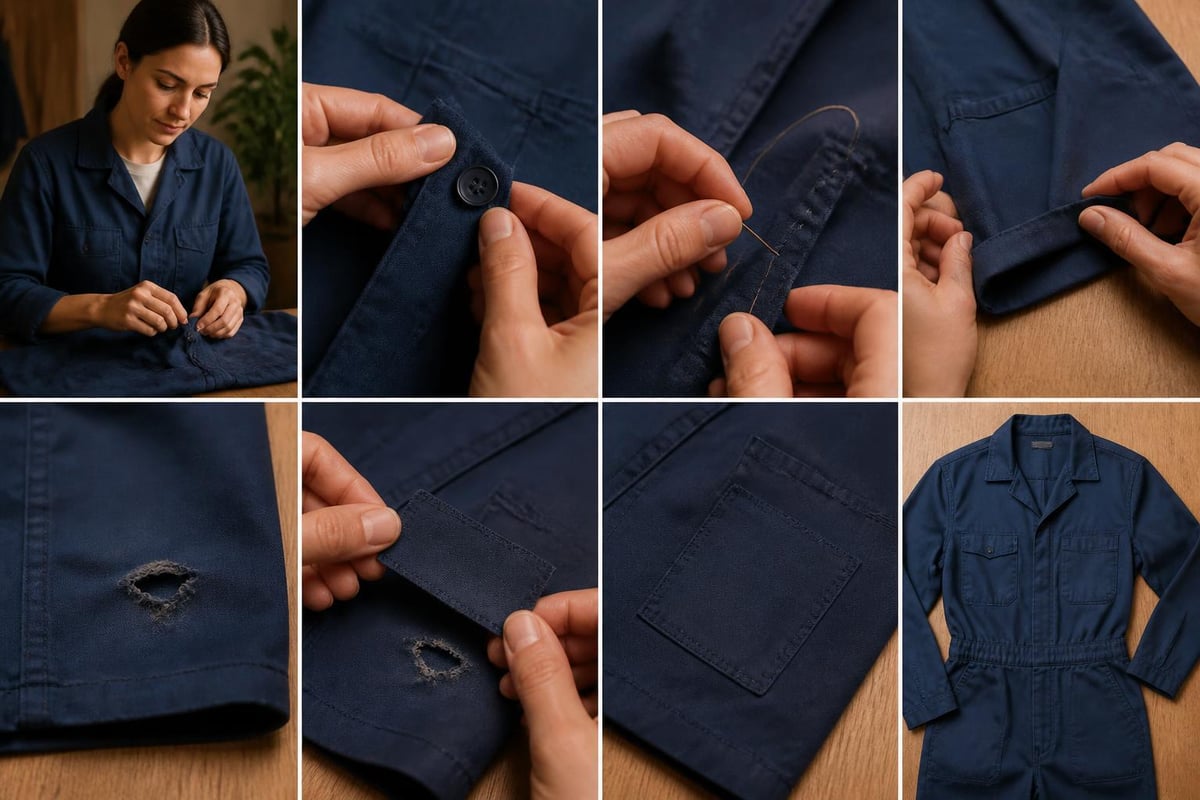
Minor repairs significantly extend garment life. Learning basic sewing skills for button replacement, small tear mending, and hem adjustments prevents premature retirement of otherwise serviceable workwear.
For more complex repairs, alteration services typically charge £5-£15, still considerably less than replacement costs. Many dry cleaners offer basic repair services alongside cleaning.
Styling Budget Workwear Professionally
Affordable workwear can look polished and professional with thoughtful styling approaches. Presentation matters across all industries, from boardrooms to building sites.
Fit Matters Most
A well-fitted £20 garment appears more professional than an ill-fitting £100 piece. If budget workwear doesn't fit perfectly off-the-rack, factor tailoring costs into your budget.
Basic alterations like trouser hemming (£8-£12) or taking in waistbands (£10-£15) transform how garments look and feel. The improved fit extends comfortable wear time and enhances your professional appearance.
Accessorising Within Budget
Strategic accessories elevate basic workwear considerably. A quality watch, simple jewellery, or professional bags add polish without requiring entire outfit replacements.
For corporate environments, explore style tips for polished but budget-friendly workwear that demonstrate how small touches create significant impact.
Focus accessories investment on items used daily rather than occasionally. A quality work bag endures daily use for years, whilst statement jewellery might wear weekly at most.
Maintaining Professional Presentation
Regardless of garment cost, professional presentation requires cleanliness and good repair. Stained, wrinkled, or damaged workwear undermines credibility regardless of the label inside.
Develop a weekly routine: inspect garments on Sunday, address any repairs or cleaning needs, and prepare outfits for the week ahead. This prevents last-minute discoveries of missing buttons or stains requiring emergency treatment.
Multi-Pack Advantages and Mix-and-Match Strategies
Purchasing workwear in multi-packs often delivers per-item savings of 20-40% compared to individual purchases. This approach works particularly well for basics like polo shirts, t-shirts, and plain trousers.
Coordinating Multi-Pack Purchases
When buying multi-packs, choose colours that coordinate with existing wardrobe pieces rather than matching exactly. Three navy polo shirts in slightly different shades appear intentional rather than repetitive when worn across a week.
Effective multi-pack colour combinations:
- Black trousers + white/grey/navy tops
- Navy trousers + white/light blue/burgundy tops
- Charcoal bottoms + jewel-toned tops
- Khaki/tan bottoms + earth-toned tops
This creates visual variety whilst maintaining cohesive professionalism and maximising per-piece wearability.
Branded Versus Unbranded Options
Many industries require company branding on workwear. Purchasing plain garments and adding logos separately often costs less than buying pre-branded alternatives, particularly for small teams.
In-house embroidery services provide cost-effective branding solutions, with prices decreasing substantially for larger orders. This approach also allows flexibility when staff changes occur, as you're not left with personalised unusable stock.
Sustainable Budget Choices
Affordability and sustainability increasingly align as consumers recognise that durable, repairable workwear reduces both financial and environmental costs.
Second-Hand and Pre-Loved Options
Whilst second-hand shopping for safety-critical PPE isn't advisable, many professional workwear items function perfectly when pre-owned. Blazers, trousers, and non-safety footwear from charity shops or online marketplaces offer significant savings.
Inspect second-hand workwear carefully for wear patterns, particularly at stress points like knees, elbows, and seams. Avoid items showing thinning fabric, permanent staining, or structural damage.
Clothing Swaps and Sharing Schemes
Some workplaces organise clothing swaps where staff exchange outgrown, surplus, or style-changed workwear. These schemes work particularly well in healthcare settings where standard colours and styles dominate.
Professional networks and industry groups sometimes facilitate broader exchange programmes. Online communities dedicated to specific professions often include classified sections for selling or trading workwear.
Employer Contributions and Tax Considerations
Understanding what employers must provide versus what employees fund personally affects budgeting strategies significantly.
Statutory Requirements
UK law requires employers to provide necessary PPE free of charge when work activities present safety risks. This includes items like hi-vis clothing for construction workers, safety footwear for warehouse staff, and protective aprons for hospitality workers handling hazardous substances.
However, employers aren't obligated to provide standard workwear that isn't safety-critical. Many do offer uniform allowances or subsidies, but these vary widely between organisations.
Tax Relief on Work Clothing
HMRC allows tax relief on specialist clothing required for work that couldn't be worn outside professional contexts. This includes branded uniforms, protective clothing, and industry-specific garments.
Standard business attire like suits or unbranded office wear doesn't qualify, even if purchased exclusively for work. The relief applies through either employer reimbursement schemes or personal tax returns, potentially recovering 20-40% of eligible costs.
Understanding these distinctions helps prioritise spending on items requiring personal investment versus those your employer should fund.
Planning Annual Workwear Budgets
Structured financial planning prevents workwear emergencies that force purchases at unfavourable times or prices.
Calculating Realistic Requirements
Most professionals require at least five days' worth of workwear to allow for laundering and unexpected situations. Calculate costs based on this minimum, then prioritise purchases across the year.
Sample annual budget breakdown:
| Quarter | Priority Purchases | Estimated Cost |
|---|---|---|
| Q1 (Jan-Mar) | Spring/summer basics during sales | £80-£120 |
| Q2 (Apr-Jun) | Footwear replacement if needed | £40-£80 |
| Q3 (Jul-Sep) | Autumn/winter additions during clearance | £60-£100 |
| Q4 (Oct-Dec) | Emergency replacement fund | £40-£60 |
This distributes purchases across the year, avoiding large single outlays whilst ensuring adequate clothing availability.
Emergency Replacement Funds
Unexpected workwear needs arise. Garments tear, stains become permanent, or sizing changes necessitate replacements outside planned purchasing cycles.
Maintaining an emergency fund of £40-£60 prevents crisis purchases at full price from limited suppliers. This small buffer provides peace of mind and shopping flexibility.
Navigating Online Sizing and Returns
Online shopping offers access to competitive pricing but introduces sizing challenges. Understanding how to navigate virtual fitting reduces returns hassle and associated costs.
Measuring and Size Guides
Always measure yourself before ordering, as sizing varies substantially between manufacturers. Compare your measurements to each supplier's specific size guide rather than assuming your usual size translates across brands.
Key measurements for workwear include bust/chest, waist, hip, and inside leg for trousers. Recording these measurements and keeping them accessible streamlines the ordering process.
Understanding Returns Policies
Before purchasing womens workwear cheap online, review the delivery and returns policies carefully. Factor return shipping costs into price comparisons, as free delivery with expensive returns might cost more overall than slightly higher initial prices with free returns.
Keep all packaging until you've tried garments and confirmed they fit correctly. Many suppliers won't accept returns in non-original packaging, leaving you with unusable items.
Building Professional Relationships with Suppliers
Developing relationships with reliable workwear suppliers delivers long-term benefits beyond individual purchase savings.
Loyalty Programmes and Repeat Customer Benefits
Many workwear suppliers offer loyalty schemes providing points, early sale access, or percentage discounts for repeat customers. These programmes reward ongoing custom and can reduce overall spending by 10-15% annually.
Subscribe to newsletters from trusted suppliers like Cobra Workwear to receive exclusive promotional codes and advance notice of clearance events.
Feedback and Custom Solutions
Suppliers value customer feedback, particularly regarding fit, durability, and value. Providing constructive reviews helps improve future offerings whilst potentially earning vouchers or discounts.
For businesses requiring multiple uniforms, discussing specific needs with suppliers often yields customised packages at competitive rates. Bulk ordering, consistent repeat business, and long-term commitments provide negotiating leverage.
The workwear industry in 2026 continues adapting to contemporary professional needs. Several emerging trends affect both product availability and pricing.
Many manufacturers now produce workwear from recycled materials and sustainable sources without premium pricing. As production scales increase, these eco-conscious options reach price parity with traditional alternatives, allowing budget-conscious shoppers to make environmentally responsible choices.
Technology-Enhanced Fabrics at Accessible Prices
Performance fabrics featuring moisture-wicking, anti-bacterial, and temperature-regulating properties previously commanded luxury prices. Increased adoption across workwear segments has reduced costs substantially, with many budget ranges now incorporating these beneficial technologies.
When evaluating womens workwear cheap options, specifically seek moisture-wicking and easy-care properties that reduce laundering frequency and ironing requirements, delivering ongoing cost savings beyond initial purchase prices.
Inclusive Sizing and Adaptive Designs
The workwear industry increasingly offers extended size ranges and adaptive designs at standard prices rather than premium charges. This democratisation ensures all professionals can access affordable, well-fitting workwear regardless of size or physical requirements.
Explore comprehensive guides to women's workwear for every budget that highlight suppliers committed to inclusive sizing and accessible pricing structures.
Finding quality womens workwear cheap requires strategic thinking, smart shopping techniques, and understanding true value beyond initial price tags. By focusing on cost-per-wear, timing purchases strategically, and maintaining garments properly, professionals across all industries can build comprehensive work wardrobes that perform excellently without straining budgets. Whether you need a single outfit or uniforms for an entire team, Cobra Workwear offers extensive ranges of durable, affordable workwear across multiple industries, with in-house customisation services ensuring your professional image remains polished and consistent whilst respecting financial constraints.
