

Selecting appropriate work construction clothes represents a critical decision that directly impacts worker safety, productivity, and regulatory compliance on building sites across the United Kingdom. The construction industry presents unique challenges that demand clothing specifically engineered to withstand harsh environments, protect against hazards, and maintain durability throughout extended use. From high-visibility requirements to flame-resistant materials, the right workwear serves as the first line of defence against workplace injuries whilst ensuring professionals can perform their duties comfortably and efficiently.
Understanding Regulatory Requirements for Work Construction Clothes
Construction sites operate under strict safety regulations that mandate specific clothing standards to protect workers from occupational hazards. OSHA's personal protective equipment guidelines outline comprehensive requirements for construction workwear, emphasising that employers must assess workplace hazards and provide appropriate protective clothing at no cost to employees.
In the UK, construction workwear must comply with various British Standards and European regulations that define minimum performance criteria. These standards cover everything from high-visibility properties to resistance against specific hazards such as abrasion, cuts, and chemical exposure. Understanding these requirements helps businesses make informed purchasing decisions whilst ensuring workers receive adequate protection.
Compliance with Building Standards
The Code of Federal Regulations defines construction work parameters that influence clothing requirements, though UK construction firms must primarily adhere to Health and Safety Executive (HSE) guidance. Work construction clothes must meet specified performance levels for the tasks being undertaken, whether that involves groundwork, structural work, or finishing trades.
For companies specialising in timber frame buildings, workers require clothing that accommodates both precision carpentry and exposure to weather elements during construction. The same principle applies across all construction disciplines, where task-specific hazards dictate appropriate clothing specifications.

Essential Fabric Choices for Construction Workwear
The foundation of effective work construction clothes lies in fabric selection, where durability, comfort, and protection must balance seamlessly. Modern construction workwear utilises advanced textile technologies that enhance traditional materials whilst introducing innovative synthetic blends designed for extreme conditions.
Cotton remains a staple in construction workwear due to its breathability, comfort, and natural fire-resistant properties. However, pure cotton lacks the durability required for intensive construction work, leading manufacturers to develop polycotton blends that combine cotton's comfort with polyester's strength and quick-drying characteristics. Choosing the right fabric for construction workwear involves considering multiple factors including abrasion resistance, tear strength, and weather protection.
Performance Fabric Technologies
| Fabric Type | Benefits | Best Applications |
|---|---|---|
| Polycotton (65/35) | Balance of comfort and durability | General construction, carpentry |
| Ripstop Nylon | Excellent tear resistance | High-wear areas, reinforcement panels |
| Canvas (Heavy Cotton) | Superior abrasion resistance | Heavy industrial work, welding |
| Cordura | Exceptional durability | Knee pads, reinforcement zones |
| Waterproof Membranes | Weather protection with breathability | Outdoor construction, winter work |
Advanced fabrics incorporate moisture-wicking properties that draw perspiration away from the skin, maintaining comfort during physically demanding tasks. This becomes particularly important during summer months when construction workers face heat stress risks. The integration of antimicrobial treatments further enhances garment longevity by preventing odour-causing bacteria growth.
Some specialist applications require flame-retardant or chemical-resistant fabrics that provide additional protection layers. Durable materials for construction industry workwear emphasise resistance to wear and tear whilst maintaining protective properties throughout the garment's lifecycle.
Key Features of High-Performance Work Construction Clothes
Beyond fabric selection, specific design features distinguish professional-grade work construction clothes from standard workwear. These features directly address the practical needs of construction professionals whilst enhancing safety and functionality on active building sites.
Reinforcement zones represent critical areas where additional fabric layers or stronger materials protect high-wear points. Knees, elbows, shoulders, and seat areas experience significantly more stress than other garment sections, necessitating strategic reinforcement that extends garment lifespan considerably.
Functional Design Elements
- Multiple pocket configurations for tools, devices, and personal items
- Adjustable waistbands and cuffs for personalised fit and weather protection
- Articulated knees allowing natural movement whilst accommodating knee pads
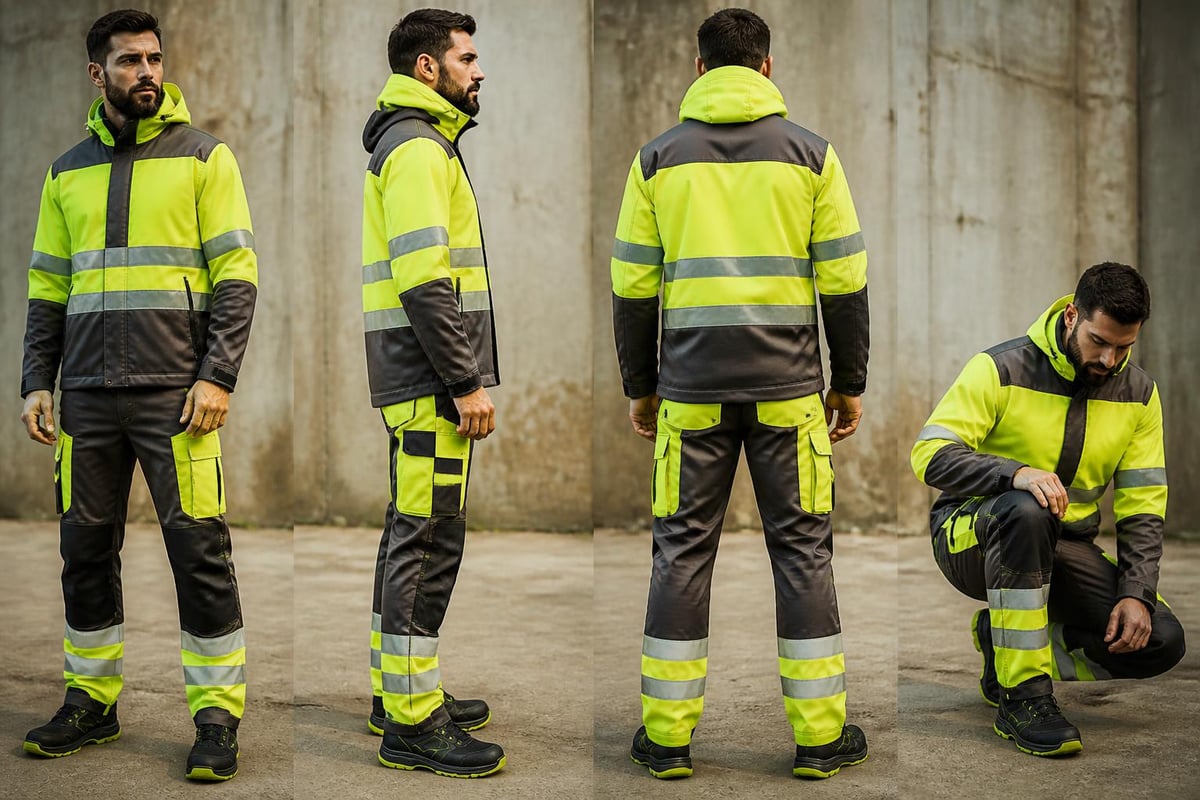
- High-visibility reflective strips positioned for maximum visibility from all angles
- Ventilation panels in strategic locations to enhance airflow
- Hammer loops and tool attachments integrated into trouser and jacket designs
The importance of hi-vis clothing in construction cannot be overstated, particularly on sites with vehicle movement or low-light conditions. Work construction clothes must feature fluorescent background materials combined with retroreflective strips that ensure workers remain visible from 360 degrees, day and night.
Durability Considerations and Reinforcement Techniques
Construction environments subject clothing to extreme wear that quickly degrades inferior garments. Understanding what makes workwear durable helps businesses invest in garments that provide genuine value through extended service life rather than requiring frequent replacement.
What makes workwear durable extends beyond fabric weight to encompass stitching methods, reinforcement placement, and component quality. Triple-stitched seams distribute stress more effectively than standard stitching, preventing seam failure at critical junction points where garment panels meet.
Construction-Specific Reinforcement Strategies
Professional work construction clothes incorporate multiple reinforcement layers at predictable wear points. Knee areas receive particular attention, with many garments featuring internal pockets that accommodate removable knee pad inserts for enhanced protection and comfort during kneeling tasks.
Bar-tacking at stress points such as pocket corners and belt loops prevents tearing when tools snag or pull against the fabric. This simple yet effective technique significantly extends garment life by distributing force across larger fabric areas rather than concentrating stress at single points.
The comparison between construction versus industrial workwear requirements highlights how construction clothing prioritises flexibility and weather resistance, whereas industrial settings may emphasise chemical or thermal protection. This distinction influences reinforcement placement and material selection throughout the garment.
Seasonal Adaptations for Work Construction Clothes
British weather demands that work construction clothes accommodate dramatic seasonal variations whilst maintaining core protective functions. Summer and winter garments serve distinctly different purposes, though both must uphold safety standards and durability expectations.
Summer workwear prioritises breathability and moisture management to prevent heat stress during warm months. Lightweight fabrics with ventilation panels allow air circulation whilst maintaining adequate protection against construction hazards. Many construction professionals appreciate polo shirts with company logos embroidered for a professional appearance during warmer weather, though these must be complemented with appropriate protective outerwear when required.
Winter Weather Protection
| Garment Type | Key Features | Protection Level |
|---|---|---|
| Insulated Jackets | Thermal lining, water-resistant outer | Cold and wet weather |
| Softshell Layers | Wind resistance, breathability | Moderate cold, high activity |
| Fleece Mid-layers | Warmth without bulk, quick-drying | Temperature regulation |
| Waterproof Overtrousers | Full weather protection, reinforced knees | Heavy rain, muddy conditions |
Winter construction work requires layering systems that allow workers to adjust insulation levels throughout the day as activity levels and weather conditions change. Base layers with moisture-wicking properties prevent sweat accumulation that can lead to dangerous chilling when activity decreases.
Work construction clothes designed for winter use must maintain flexibility despite additional insulation. Bulky garments restrict movement and increase accident risk, making it essential to select garments engineered specifically for construction work rather than general outdoor wear.
Selecting Work Construction Clothes for Different Trades
Construction encompasses diverse trades, each presenting unique challenges that influence appropriate workwear selection. Whilst all construction clothing must meet baseline safety requirements, trade-specific considerations optimise comfort, functionality, and protection.
Groundworkers and excavation specialists require heavily reinforced trousers with waterproof properties, as they frequently work in muddy conditions whilst kneeling or crouching. Their work construction clothes must withstand constant contact with abrasive materials and wet conditions without compromising movement or comfort.
Trade-Specific Requirements
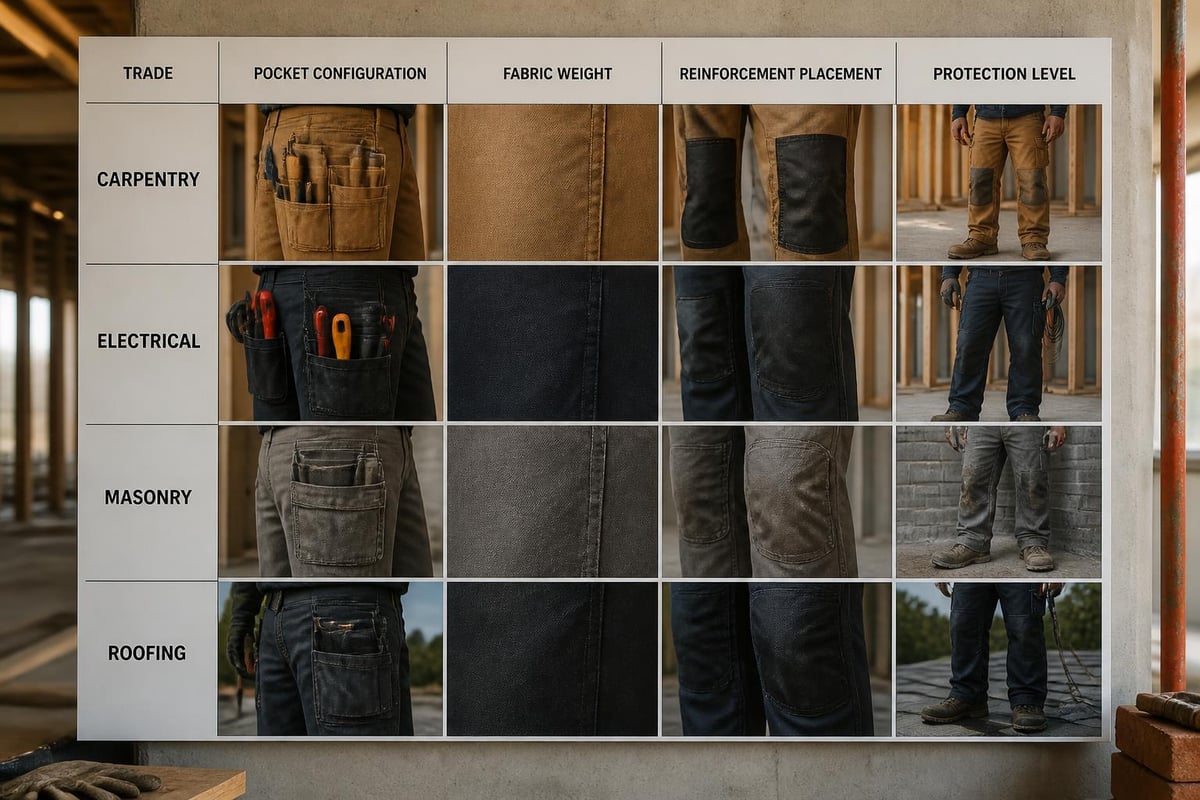
- Carpentry and Joinery: Emphasis on pocket configurations for measuring tools, pencils, and small components; lighter-weight fabrics with excellent tear resistance
- Bricklaying and Masonry: Heavy-duty knee protection; abrasion-resistant materials that withstand constant contact with brick, block, and mortar
- Electrical Work: Flame-retardant properties; anti-static fabrics; precise pocket placements for testing equipment and small components
- Roofing: Enhanced grip features; lightweight construction for working at height; maximum flexibility for climbing and reaching
- Painting and Decorating: Stain-resistant treatments; easy-clean fabrics; minimal external attachments that might mark finished surfaces
Understanding these trade-specific needs helps businesses provide appropriate work construction clothes that support worker efficiency whilst maintaining safety compliance. Embroidery services allow companies to add branding whilst ensuring garments meet trade-specific requirements, creating professional uniformity across diverse construction teams.
Maintenance and Care for Extended Garment Life
Proper maintenance significantly extends the service life of work construction clothes, maximising return on investment whilst ensuring garments maintain their protective properties throughout their lifecycle. Caring for workwear involves specific practices that differ from standard laundry procedures due to the specialised fabrics and treatments used in construction garments.
High-visibility properties degrade with repeated washing, particularly when using harsh detergents or excessive heat. Manufacturers specify maximum wash temperatures and cycles to preserve retroreflective strip adhesion and fluorescent fabric brightness. Exceeding these parameters accelerates deterioration, potentially rendering garments non-compliant with safety standards.
Washing and Storage Best Practices
- Separate heavily soiled garments from lightly worn items to prevent unnecessary wear
- Use industry-specific detergents designed for technical workwear fabrics
- Avoid fabric softeners that can compromise flame-retardant treatments
- Repair minor damage immediately to prevent progressive deterioration
- Store garments in dry, ventilated areas away from direct sunlight
- Inspect high-visibility elements regularly for compliance with safety standards
Pre-treating stains before washing prevents permanent marking whilst reducing the need for aggressive washing cycles that accelerate fabric wear. Construction work inevitably exposes clothing to various substances including cement, paint, oils, and adhesives, each requiring specific treatment approaches for effective removal.
Regular inspection identifies wear patterns and damage before garments become unsafe or non-compliant. This proactive approach allows timely replacement of individual items rather than emergency bulk purchases when multiple garments fail simultaneously.
Budgeting and Cost Considerations
Investment in quality work construction clothes generates significant long-term savings compared to purchasing cheaper alternatives that require frequent replacement. Initial purchase prices represent only one component of total cost of ownership, with durability, maintenance requirements, and replacement frequency substantially impacting overall expenditure.
Comparing garment specifications rather than focusing solely on price reveals meaningful quality differences that justify premium investments. Higher-density fabrics, reinforced stitching, and quality component selection extend garment life by multiples compared to budget alternatives, ultimately reducing per-wear costs substantially.
Total Cost of Ownership Analysis
| Cost Factor | Budget Workwear | Premium Workwear |
|---|---|---|
| Initial Purchase | £25-35 per item | £50-80 per item |
| Expected Lifespan | 6-9 months | 18-36 months |
| Replacement Frequency | 3-4 times/3 years | Once per 3 years |
| Total 3-Year Cost | £75-140 per item | £50-80 per item |
| Productivity Impact | Higher due to comfort issues | Minimal, enhanced comfort |
Bulk purchasing programmes and framework agreements with specialised suppliers deliver additional savings whilst ensuring consistent sizing and specifications across workforces. Many UK businesses establish relationships with workwear specialists who understand industry requirements and provide best workwear for men alongside comprehensive customisation services.
Corporate branding through embroidery or printing adds minimal cost when incorporated during initial purchase, particularly through suppliers offering in-house customisation services. This professional presentation enhances company image whilst improving site security through clear worker identification.
Sizing and Fit Considerations
Properly fitted work construction clothes enhance both safety and comfort, yet achieving correct sizing across diverse workforces presents ongoing challenges. Ill-fitting garments restrict movement, create snag hazards, and reduce the effectiveness of protective features, making accurate sizing essential rather than optional.
Modern workwear manufacturers offer extended size ranges including tall, short, and wide-fit options that accommodate various body types without compromising garment proportions. Generic sizing assumes standardised proportions that rarely match real-world workforce diversity, particularly regarding leg length, waist-to-hip ratios, and shoulder width.
Achieving Proper Fit
Try-before-you-buy programmes eliminate sizing uncertainty by allowing workers to evaluate actual garments rather than relying on size charts that vary between manufacturers. This approach reduces return rates whilst ensuring workers receive garments that enhance rather than hinder their work performance.
Key fit indicators for work construction clothes include adequate shoulder room allowing arm movement without binding, trouser lengths that prevent tripping hazards whilst providing adequate coverage when kneeling, and waist adjustability accommodating natural size fluctuations without requiring belt dependency.
Women's construction workwear requires specific pattern adjustments beyond simple scaling of men's designs. Purpose-designed women's construction clothes account for different body proportions whilst maintaining the same protective standards and durability requirements as men's equivalents.
Corporate Branding and Professional Appearance
Work construction clothes serve dual purposes as protective equipment and corporate identity markers. Professional appearance influences client perceptions, reinforces company values, and creates cohesive team identity that enhances workplace culture and employee pride.
Embroidered logos present superior durability compared to printed alternatives, withstanding repeated industrial washing whilst maintaining sharp definition throughout the garment's lifespan. How to add logos to workwear explores positioning, sizing, and colour considerations that maximise brand visibility without compromising garment functionality.
Consistent branding across all work construction clothes creates unified professional image whether workers interact with clients, work on public sites, or represent the company during off-site activities. This consistency extends beyond logo placement to encompass colour coordination, font selection, and supplementary branding elements such as name badges or department identifiers.
Quality embroidery requires precision equipment and experienced operators who understand how different fabrics accept thread penetration. In-house embroidery capabilities ensure faster turnaround times and better quality control compared to outsourced decoration services, particularly for rush orders or replacement items.
Selecting appropriate work construction clothes requires balancing regulatory compliance, durability, comfort, and professional presentation whilst managing budgets effectively. Understanding fabric technologies, reinforcement techniques, and trade-specific requirements enables informed decisions that protect workers and enhance productivity simultaneously. Whether you need high-visibility garments for site work or branded workwear that represents your company professionally, Cobra Workwear provides comprehensive solutions backed by in-house embroidery services and extensive industry expertise across the UK construction sector.
