

Selecting appropriate men clothes for work requires careful consideration of industry requirements, company culture, and practical functionality. Whether you're dressing for a corporate office, a construction site, or a hospitality environment, your work attire directly impacts how colleagues, clients, and customers perceive your professionalism. In 2026, the landscape of workplace clothing continues to evolve, blending traditional standards with modern comfort and performance features. Understanding what to wear and how to build a versatile work wardrobe can enhance your confidence and ensure you meet the expectations of your specific professional environment.
Understanding Different Work Environments
The foundation of selecting suitable men clothes for work begins with recognizing that different industries demand distinct approaches to professional dress. Office environments typically maintain a spectrum ranging from formal business attire to business casual, whilst manual labour sectors prioritise safety, durability, and functionality.
Corporate and Office Settings
Professional office environments often require a polished appearance that communicates competence and attention to detail. The shift toward elevated workwear trends in 2026 reflects a growing emphasis on refined materials and thoughtful design elements that bridge traditional formality with contemporary style.
Essential office wardrobe components include:
- Tailored trousers in neutral colours (navy, charcoal, grey)
- Button-down shirts in white, blue, and subtle patterns
- Blazers and sport coats for layering
- Leather dress shoes and matching belts
- Optional ties and pocket squares for formal occasions
Business casual environments offer more flexibility, allowing for polo shirts with embroidered company logos to create a professional yet approachable appearance. This adaptability has become increasingly popular as companies recognise the value of comfort without sacrificing workplace standards.
Trade and Construction Sectors
For those working in construction, engineering, or other manual trades, men clothes for work must prioritise protection and durability above all else. Construction workwear incorporates reinforced fabrics, high-visibility elements, and features designed to withstand demanding physical conditions.
| Work Environment | Primary Requirements | Key Features |
|---|---|---|
| Construction Sites | Safety, visibility, durability | Hi-vis strips, reinforced knees, multiple pockets |
| Warehouse Operations | Comfort, movement, protection | Breathable fabrics, steel-toe compatibility, layering options |
| Outdoor Trades | Weather resistance, functionality | Water-resistant materials, thermal properties, practical storage |
The importance of properly branded workwear extends beyond aesthetics, creating team cohesion and professional identity whilst meeting safety regulations.

Building a Versatile Work Wardrobe
Creating an efficient collection of men clothes for work requires strategic planning and investment in quality pieces that serve multiple purposes. Rather than purchasing numerous low-quality items, focus on building a capsule wardrobe with interchangeable components.
Core Foundation Pieces
Start with versatile staples that form the backbone of your work attire. These foundational garments should coordinate seamlessly, allowing for numerous outfit combinations without excessive closet space.
Priority investments include:
- Two to three pairs of well-fitted trousers in complementary neutral shades
- Five to seven dress shirts or work-appropriate tops
- One quality blazer or work jacket suitable for your environment
- Appropriate footwear for your industry requirements
- Layering options for temperature regulation
The guide to professional and functional office attire emphasises the importance of considering seasonal factors when building your collection. Summer months may require lightweight, breathable fabrics, whilst winter demands thermal layers and weather-resistant outer garments.
Quality Over Quantity
Investing in higher-quality men clothes for work delivers long-term value through improved durability and professional appearance. Well-constructed garments maintain their shape, resist wear, and project a more polished image than cheaper alternatives.
Consider these quality indicators:
- Fabric composition: Natural fibres like cotton and wool typically outlast synthetic alternatives
- Construction details: Reinforced seams, quality buttons, and proper stitching indicate superior craftsmanship
- Fit and tailoring: Properly fitted clothing enhances comfort and appearance
- Brand reputation: Established workwear manufacturers often provide better warranties and customer support
For businesses seeking best workwear for men across their teams, partnering with specialists who understand industry-specific requirements ensures compliance and consistency.
Industry-Specific Considerations
Different professional sectors impose unique requirements on men clothes for work, necessitating tailored approaches to workplace attire selection.
Hospitality and Customer-Facing Roles
Workers in hospitality, retail, and customer service require clothing that balances professionalism with practical functionality. These environments often mandate specific uniform standards whilst allowing some personal expression through approved choices.
Hospitality considerations:
- Stain-resistant and easily washable fabrics
- Professional appearance throughout extended shifts
- Comfort for standing and moving throughout the day
- Brand representation through consistent styling
Understanding how to add logos to workwear helps hospitality businesses maintain brand identity whilst ensuring staff feel confident and comfortable.
Healthcare and Clinical Settings
Medical professionals require men clothes for work that meet stringent hygiene standards whilst providing comfort during demanding shifts. Scrubs, lab coats, and specialised footwear dominate these environments, with specific colour coding often indicating different roles or departments.
Creative and Tech Industries
The evolution toward athleisure and relaxed workwear reflects the changing dress codes in technology and creative sectors. These industries typically embrace casual attire, though maintaining a professional standard remains important for client meetings and presentations.

Seasonal Adaptations and Layering Strategies
Effective management of men clothes for work requires adapting to seasonal temperature variations whilst maintaining professional standards throughout the year. British weather patterns demand particular attention to versatile layering systems.
Spring and Summer Approaches
Warmer months present challenges in maintaining professional appearance whilst managing heat and humidity. Lightweight, breathable fabrics become essential for comfort and presentability.
| Season | Fabric Choices | Styling Tips |
|---|---|---|
| Spring | Cotton blends, linen | Light layers, transitional jackets |
| Summer | Performance fabrics, moisture-wicking materials | Short-sleeve options, breathable weaves |
| Autumn | Medium-weight wool, cotton | Layering with waistcoats, cardigans |
| Winter | Thermal fabrics, insulated outerwear | Heavy coats, base layers, weather protection |
The modern utility focus in workwear design emphasises performance features that regulate temperature without compromising professional appearance.
Winter Weather Preparation
Cold weather demands thoughtful layering without creating bulk that restricts movement or appears unprofessional. Base layers, insulating mid-layers, and protective outer shells work together to maintain warmth.
Effective winter strategies include:
- Thermal base layers beneath dress shirts
- Wool or fleece waistcoats for core warmth
- Weather-resistant outer coats suitable for your commute
- Appropriate accessories like scarves and gloves for outdoor work
Maintenance and Care Practices
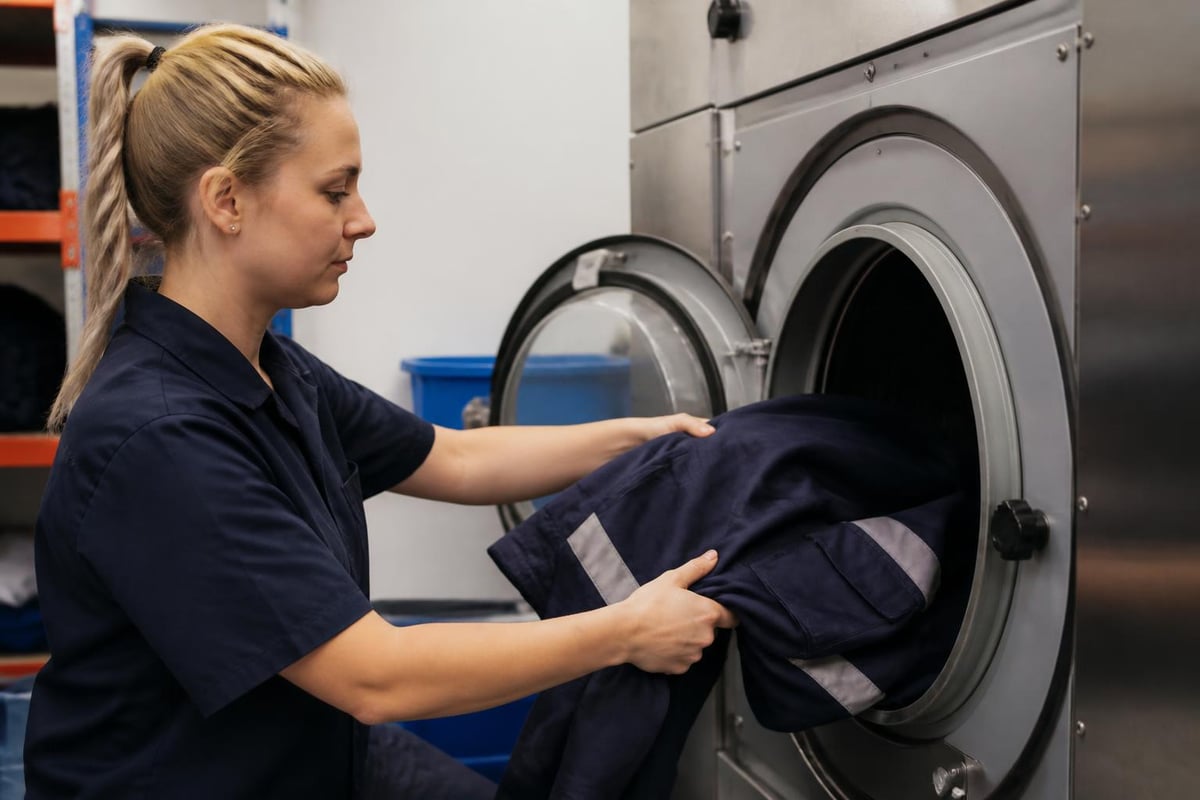
Protecting your investment in men clothes for work requires establishing proper maintenance routines that extend garment lifespan and preserve professional appearance. Regular care prevents premature wear and maintains the crisp, polished look essential in professional settings.
Daily and Weekly Routines
Simple habits significantly impact how long your work clothing remains serviceable. Hanging garments properly, addressing stains promptly, and rotating items prevent excessive wear on favourite pieces.
Essential maintenance practices:
- Hang trousers and jackets immediately after wearing
- Use appropriate hangers that maintain garment shape
- Address spills and stains before they set
- Allow shoes to rest between wears with shoe trees
- Check for loose buttons or damaged seams regularly
For embroidered workwear, following specialised care guidelines preserves logo quality and fabric integrity through numerous wash cycles.
Professional Cleaning and Repairs
Some men clothes for work require professional dry cleaning to maintain their structure and appearance. Establishing relationships with quality cleaners ensures consistent results and extends the useful life of investment pieces.
Sustainable and Cost-Effective Choices
Environmental consciousness increasingly influences purchasing decisions around men clothes for work. Selecting durable, ethically produced garments reduces waste whilst often providing better long-term value.
Evaluating Cost Per Wear
Rather than focusing solely on initial purchase price, calculate the true cost by dividing the price by expected number of wears. A £100 jacket worn 200 times costs just 50p per wear, whilst a £30 jacket lasting only 20 wears costs £1.50 per use.
The appeal of workwear-inspired wardrobes centres on durable fabrics and practical designs that withstand regular use, making them economically sensible choices for daily professional wear.
Eco-Friendly Options
Sustainable men clothes for work increasingly feature organic cotton, recycled polyester, and responsible manufacturing processes. These choices align with corporate social responsibility initiatives whilst meeting performance requirements.
Sustainable considerations include:
- Certifications like Oeko-Tex and GOTS
- Locally manufactured products reducing transportation emissions
- Repair and alteration services extending garment life
- Recycling programmes for worn-out workwear
Businesses exploring eco-friendly embroidered workwear can demonstrate environmental commitment whilst equipping their teams professionally.
Navigating Dress Codes and Company Policies
Understanding and adhering to workplace dress codes ensures your men clothes for work align with employer expectations and industry norms. Company policies vary significantly, making clarity essential before investing in new wardrobe pieces.
Formal Business Standards
Traditional corporate environments maintain strict dress codes requiring suits, ties, and polished leather shoes. These standards communicate professionalism and respect for established business protocols.
Formal requirements typically include:
- Dark suits in navy, charcoal, or black
- White or light blue dress shirts
- Conservative ties in solid colours or subtle patterns
- Polished leather oxford or derby shoes
- Minimal jewellery and conservative grooming
Business Casual Interpretation
The term "business casual" creates confusion due to varying interpretations across organisations. Generally, this dress code eliminates suits and ties whilst maintaining a professional appearance through quality separates.
Consulting your company handbook or observing senior colleagues provides guidance on acceptable standards. When uncertain, erring on the side of formality demonstrates respect for workplace culture.
Smart Casual and Casual Fridays
Some workplaces implement relaxed dress codes on specific days or throughout the week. Smart casual for men typically includes chinos or dark jeans paired with collared shirts or quality knitwear, whilst completely casual environments may permit trainers and informal tops.
The transformation of traditional workwear in office settings reflects evolving attitudes toward professional dress, with some companies embracing practical, heritage-inspired pieces previously reserved for manual trades.
Personalisation and Brand Identity
For businesses, customised men clothes for work serve dual purposes: creating team unity and promoting brand recognition. Embroidered or printed company logos transform standard garments into professional uniforms that reinforce organisational identity.
Benefits of Branded Workwear
Companies investing in personalised clothing for their teams enjoy numerous advantages beyond simple identification. Cohesive appearance builds customer trust, whilst employees often report increased pride in their roles when wearing quality branded attire.
Key advantages include:
- Enhanced professional image in customer interactions
- Improved team cohesion and company culture
- Free advertising through logo visibility
- Simplified morning clothing decisions for staff
- Consistent brand representation across locations
Choosing between embroidery versus screen printing depends on factors including fabric type, logo complexity, and quantity requirements.
Selecting Appropriate Customisation
The placement, size, and style of company branding significantly impact the professional appearance of men clothes for work. Subtle, well-executed logos enhance rather than overwhelm garment design.
Customisation considerations:
- Logo placement that complements garment structure
- Size proportionate to the item being branded
- Colour choices that coordinate with garment hues
- Thread quality ensuring durability through washing
- Consistent application across all branded items
Understanding the benefits of in-house embroidery services helps businesses achieve faster turnaround times and quality control over branded workwear production.
Modern Trends and Style Evolution
Contemporary approaches to men clothes for work reflect broader fashion movements whilst respecting professional requirements. The 2026 workwear trends demonstrate how classic pieces receive fresh updates through refined details and modern silhouettes.
Functional Fashion Integration
Today's professional clothing increasingly incorporates performance features previously reserved for athletic wear. Moisture-wicking properties, stretch fabrics, and temperature-regulating materials enhance comfort without sacrificing professional appearance.
The Paris Men's Fashion Week showcase highlighted the emphasis on functionality and structural innovation, with exaggerated shoulders and sharp tailoring creating statement pieces suitable for creative professional environments.
Colour and Pattern Considerations
Whilst neutral colours remain workplace staples, contemporary men clothes for work permit more personality through thoughtful use of colour and pattern. Subtle checks, micro-patterns, and complementary colour blocking add visual interest whilst maintaining professionalism.
Colour psychology in workwear:
- Navy conveys trustworthiness and authority
- Grey projects sophistication and neutrality
- White communicates cleanliness and precision
- Burgundy and forest green add warmth without excessive boldness
Understanding the relationship between fashion and workplace identity helps individuals select clothing that authentically represents their professional persona.
Selecting appropriate men clothes for work demands consideration of industry requirements, personal comfort, and professional presentation standards. Whether you need formal office attire or durable construction wear, investing in quality garments that suit your specific workplace creates confidence and projects competence. Cobra Workwear provides comprehensive workwear solutions across industries, with in-house embroidery services ensuring your team presents a unified, professional image that reflects your company's values and standards.
