

In today's competitive business landscape, first impressions carry significant weight. Branded workwear has evolved from a simple uniform requirement into a strategic business tool that communicates professionalism, builds brand recognition, and fosters team unity. Whether you're managing a construction crew, running a hospitality venue, or operating a healthcare facility, the clothing your team wears represents far more than protection and comfort. It's a mobile advertisement, a trust signal, and a powerful statement about your company's values and standards.
The Strategic Value of Branded Workwear
Branded workwear serves multiple strategic purposes within modern business operations. Beyond the obvious functional requirements, it creates a cohesive visual identity that customers instantly recognize and associate with your services.
Building Brand Recognition
Every interaction your employees have with the public becomes an opportunity for brand exposure. When your team wears consistent, professionally branded clothing, your company logo, colours, and identity become ingrained in customers' minds. This repeated exposure builds familiarity and trust over time.
Key recognition benefits include:
- Increased visibility in public-facing environments
- Consistent brand messaging across all touchpoints
- Enhanced memorability amongst competitors
- Professional appearance that builds credibility
Research indicates that visual consistency across team presentation significantly impacts customer perception. When potential clients see your uniformed employees, they immediately understand they're dealing with an established, professional organization rather than an individual contractor.

Enhancing Professional Identity
The psychological impact of wearing branded workwear extends to employees themselves. Team members who wear company-branded clothing often report feeling more connected to their organization and take greater pride in their work. This sense of belonging translates directly into improved customer service and workplace morale.
Professional identity through branded workwear encompasses several dimensions:
- Authority and Expertise: Uniforms signal competence and training to customers
- Team Cohesion: Shared appearance creates unity across departments
- Role Clarity: Distinct workwear helps customers identify staff quickly
- Pride and Ownership: Employees feel valued when provided quality branded clothing
The importance of professional identity through workwear cannot be overstated, particularly in industries where customer interaction defines success.
Industry-Specific Applications
Different sectors demand different approaches to branded workwear. Understanding industry-specific requirements ensures your investment delivers maximum value whilst meeting safety and functional standards.
Construction and Trade Sectors
Construction environments require branded workwear that balances visibility, protection, and brand presentation. High-visibility clothing must meet regulatory standards whilst incorporating company branding effectively.
| Requirement | Solution | Brand Benefit |
|---|---|---|
| Safety compliance | Hi-vis jackets with reflective strips | Logo placement on compliant garments |
| Durability | Heavy-duty fabrics and reinforced stitching | Long-lasting brand presentation |
| Weather protection | Waterproof and thermal options | Year-round brand visibility |
| Identification | Contrasting company colours | Instant site recognition |
Construction teams benefit from tiered branding approaches. Supervisors might wear different coloured branded clothing than general operatives, creating clear hierarchies whilst maintaining overall brand consistency.
Hospitality and Service Industries
The hospitality sector relies heavily on appearance to convey quality and service standards. Branded workwear in restaurants, hotels, and catering businesses must reflect the establishment's atmosphere whilst remaining practical for daily operations.
Front-of-house staff require smart, well-fitted branded clothing that projects professionalism. Polo shirts with embroidered company logos offer an excellent balance of comfort, durability, and professional appearance for customer-facing roles in hospitality settings.
Hospitality workwear considerations:
- Fabric breathability for active environments
- Easy-care materials for frequent laundering
- Colour schemes matching brand aesthetics
- Comfortable fits for extended wear periods
Back-of-house teams, including kitchen staff, need aprons and chef clothing that prioritize hygiene and safety whilst incorporating subtle branding elements.
Healthcare and Medical Settings
Healthcare environments present unique challenges for branded workwear. Clothing must meet stringent hygiene standards, provide comfort during long shifts, and help patients identify staff roles quickly.
Tunics and medical scrubs with embroidered logos and department-specific colour coding create clear visual distinctions between roles. This system helps patients navigate care environments more confidently whilst reinforcing your practice's professional image.

Customization Methods and Quality Considerations
The longevity and appearance of branded workwear depends significantly on the customization method selected. Understanding the strengths and applications of different branding techniques ensures optimal results.
Embroidery Versus Printing
Two primary methods dominate workwear customization: embroidery and screen printing. Each offers distinct advantages depending on your requirements and budget.
| Factor | Embroidery | Screen Printing |
|---|---|---|
| Durability | Exceptional; lasts garment lifetime | Good; fades with repeated washing |
| Appearance | Raised, textured, premium look | Flat, vibrant colour reproduction |
| Best for | Logos, small text, premium items | Large designs, photographic images |
| Cost | Higher per item | Lower for bulk orders |
| Fabric suitability | Works on most materials | Better on smooth, flat fabrics |
Embroidery services provide the most durable and professional-looking results for company logos and names. The technique works particularly well on polo shirts, jackets, and fleeces where the raised stitching creates a premium appearance.
Choosing Quality Workwear Brands
The foundation of effective branded workwear starts with selecting quality base garments. Choosing reputable workwear brands ensures durability, comfort, and long-term value that protects your branding investment.
Quality indicators include:
- Reinforced seams and stress points
- Colourfast fabrics that resist fading
- Appropriate weight and density for intended use
- Compliance with relevant safety standards
- Manufacturer warranties and guarantees
Investing in premium base garments reduces replacement frequency, maintaining consistent brand presentation and delivering better long-term value despite higher initial costs.
Implementing a Successful Branded Workwear Programme
Rolling out branded workwear across your organization requires planning and consideration. A structured approach ensures adoption and maintains standards over time.
Assessing Your Needs
Begin by conducting a thorough assessment of your workwear requirements across different roles and departments:
- Identify role-specific needs: What does each position require functionally?
- Determine quantity requirements: How many team members need outfitting?
- Establish replacement cycles: How frequently will garments need replacing?
- Set budget parameters: What investment can you allocate initially and ongoing?
- Define brand guidelines: What logos, colours, and placement standards apply?
Consider seasonal variations and growth projections when calculating quantities. Maintaining adequate stock ensures new employees receive proper workwear immediately, reinforcing professional standards from day one.
Sizing and Fit Considerations
Poorly fitting branded workwear undermines its professional impact and reduces employee satisfaction. Implementing proper sizing procedures prevents waste and ensures team comfort.
Effective sizing strategies:
- Provide detailed measurement guides to employees
- Order sample sizes for fitting sessions
- Account for diverse body types in your range
- Include adjustable options where possible
- Plan for size exchanges in your budget
Some employees may require multiple garment sizes depending on the item type. Flexibility in sizing ensures everyone presents professionally whilst remaining comfortable throughout their workday.
Sustainability and Modern Workwear Choices
Environmental consciousness increasingly influences purchasing decisions across all business sectors. Sustainable branded workwear options appeal to eco-minded employees and customers whilst reducing environmental impact.
Eco-Friendly Materials and Production
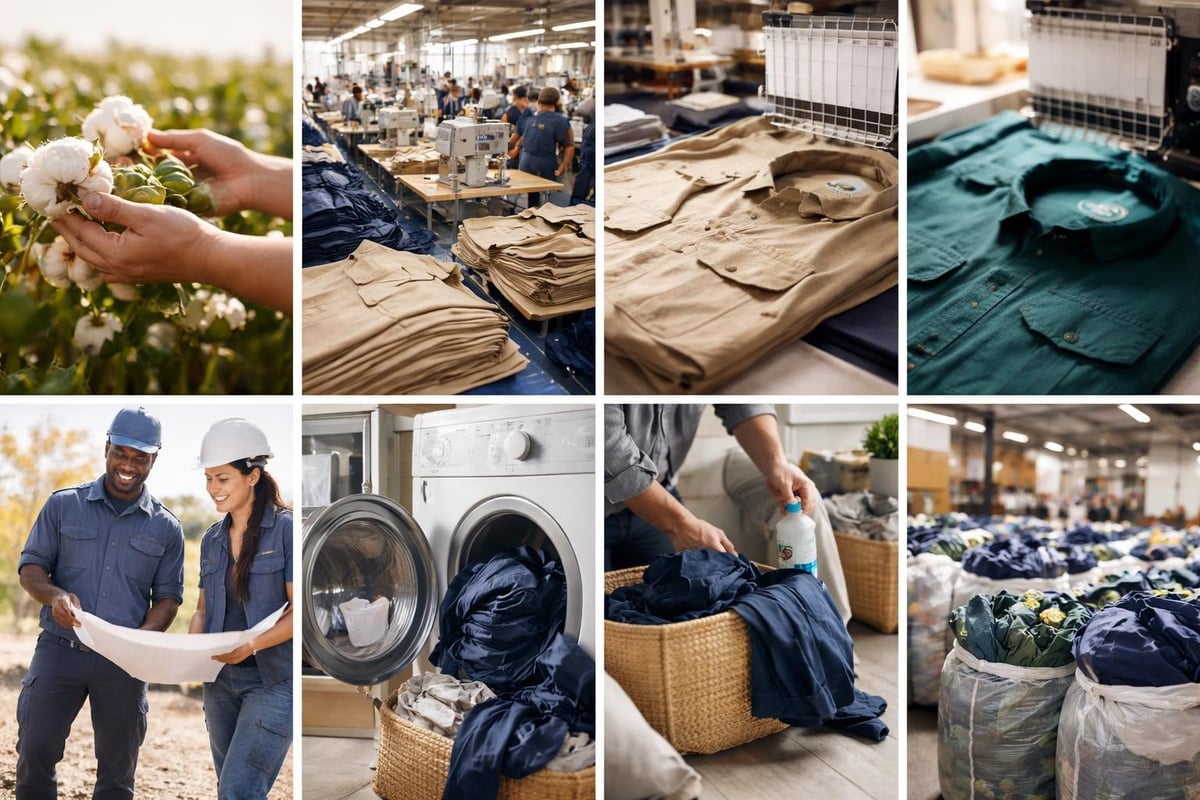
The workwear industry has embraced sustainability through innovative materials and production methods. Recycled polyester, organic cotton, and responsibly sourced fabrics provide environmentally sound alternatives to traditional workwear materials.
Sustainable workwear options include:
- Garments made from recycled plastic bottles
- Organic cotton grown without harmful pesticides
- Fabrics produced using water-saving techniques
- Locally manufactured items reducing transportation emissions
- Durable construction extending garment lifespan
Choosing sustainable branded workwear aligns your visual brand identity with environmental values, appealing to increasingly conscious consumers and employees.
Longevity and Lifecycle Planning
Sustainability extends beyond material choices to encompass garment longevity and end-of-life planning. Quality branded workwear that lasts multiple years delivers better environmental outcomes than frequently replaced cheaper alternatives.
Implement lifecycle planning by:
- Selecting durable fabrics and construction methods
- Establishing care and maintenance guidelines
- Creating garment return and recycling programmes
- Partnering with suppliers offering take-back schemes
- Educating employees on proper garment care
Cost Management and Return on Investment
Branded workwear represents a significant investment that delivers measurable returns when managed effectively. Understanding the total cost of ownership and potential benefits helps justify expenditure and maximize value.
Calculating True Costs
The price tag on branded workwear represents just one component of total ownership costs. Comprehensive budgeting accounts for all associated expenses:
| Cost Component | Considerations |
|---|---|
| Initial purchase | Base garment costs plus customization fees |
| Replacement cycle | Expected lifespan and replenishment frequency |
| Maintenance | Laundering, repairs, and upkeep requirements |
| Storage | Space for maintaining inventory stocks |
| Administration | Time spent managing the programme |
Bulk ordering typically reduces per-unit costs significantly. Many suppliers, including those offering key account services, provide preferential pricing for larger commitments.
Measuring ROI and Business Impact
Branded workwear delivers returns across multiple dimensions, some more quantifiable than others. Tracking these metrics demonstrates programme value and informs future decisions.
Measurable benefits include:
- Increased brand awareness and customer recognition
- Enhanced customer trust and conversion rates
- Improved employee satisfaction and retention
- Reduced recruitment costs through better employer branding
- Time savings from simplified dress code management
- Potential tax benefits from uniform provision
Customer surveys can directly measure brand recall and professional perception improvements attributed to uniformed staff. Employee feedback sessions reveal morale and pride impacts that influence retention rates.
Managing Your Branded Workwear Programme
Ongoing programme management ensures branded workwear continues delivering value long after initial implementation. Systematic approaches maintain standards and control costs.
Inventory and Distribution Systems
Efficient inventory management prevents stockouts whilst minimizing excess holdings. Establish clear procedures for:
- Stock level monitoring: Regular audits of available sizes and styles
- Reordering triggers: Automated systems flagging replenishment needs
- Distribution protocols: Clear processes for issuing garments to employees
- Return and exchange handling: Simple procedures for fit issues
- Damage and wear assessments: Criteria for replacement decisions
Digital inventory systems streamline management, particularly for larger organizations with multiple locations or departments. Cloud-based platforms enable real-time visibility across your entire workwear stock.
Quality Control and Standards Maintenance
Maintaining consistent quality standards preserves your brand image over time. Regular inspections identify issues before they impact professional presentation.
Implement quality checks covering:
- Logo placement and stitching quality
- Colour consistency across batches
- Fabric condition and wear patterns
- Compliance with safety standards
- Overall appearance and cleanliness
Establish clear replacement criteria based on wear patterns rather than arbitrary timelines. A slightly worn but well-maintained garment may serve longer than a newer item showing visible damage.
Emerging Trends in Branded Workwear
The workwear sector continues evolving with technological advances and changing workplace expectations. Staying informed about emerging trends positions your branded workwear programme for future success.
Smart Fabrics and Functional Innovation
Technological integration transforms traditional workwear into performance-enhancing garments. Smart fabrics incorporating moisture-wicking, antimicrobial treatments, and temperature regulation improve comfort whilst maintaining professional appearance.
Recent innovations include:
- Moisture-wicking technologies keeping employees dry
- Antimicrobial treatments reducing odour and extending wear
- Stretch fabrics providing enhanced movement freedom
- Thermal regulation maintaining comfortable body temperature
- Stain-resistant finishes simplifying maintenance
These functional enhancements increase employee satisfaction with branded workwear, encouraging consistent wearing and proper care.
Customization and Personalization Options
Beyond company logos, modern branded workwear increasingly incorporates individual personalization. Names, roles, and achievements can be added alongside corporate branding, creating stronger personal connections whilst maintaining professional standards.
Personalization benefits include:
- Enhanced customer service through name visibility
- Increased employee pride in individual recognition
- Improved internal communication and identification
- Greater attachment to garments reducing loss
- Stronger sense of belonging within teams
Adding personalized logos through embroidery or printing creates truly unique branded workwear that serves both corporate and individual identity needs.
Supplier Selection and Partnership Considerations
Choosing the right branded workwear supplier significantly impacts programme success. The ideal partner provides quality products, reliable service, and expert guidance throughout your relationship.
Evaluating Potential Suppliers
Thorough supplier evaluation prevents future disappointments and ensures long-term satisfaction. Key assessment criteria include:
- Product quality and brand selection
- Customization capabilities and turnaround times
- Pricing structure and volume discounts
- Customer service responsiveness and expertise
- Delivery reliability and logistics capabilities
- Return and exchange policies
- Additional services like design assistance
Request samples before committing to large orders. Physical inspection reveals quality standards and allows team feedback on comfort and appearance.
Building Long-Term Partnerships
The most successful branded workwear programmes develop through ongoing supplier relationships rather than transactional purchases. Long-term partnerships deliver:
- Consistent quality: Established specifications maintained across orders
- Preferential pricing: Loyalty rewards and volume discounts
- Priority service: Faster turnaround and dedicated support
- Proactive advice: Industry insights and product recommendations
- Simplified reordering: Streamlined processes based on order history
Contract services provide structured frameworks for ongoing workwear provision, ensuring consistency whilst reducing administrative burden.
Branded workwear delivers far-reaching benefits that extend well beyond simple uniform requirements, creating professional identity, building customer trust, and providing measurable business value across industries. Successfully implementing and managing a branded workwear programme requires careful planning, quality investment, and ongoing commitment to maintaining standards. Cobra Workwear combines extensive product ranges with expert in-house embroidery and printing services, helping UK businesses across construction, hospitality, healthcare, and beyond create professional branded workwear solutions that strengthen their market presence and team unity.
