

Choosing the right brands of work clothes can significantly impact your team's performance, safety, and professional image. With the workwear market evolving rapidly to meet new demands for durability, style, and functionality, understanding which brands deliver quality and value has become essential for business owners across the UK. Whether you're outfitting a construction crew, hospitality staff, or healthcare professionals, the brand you select reflects directly on your company's commitment to employee welfare and professional standards.
Understanding the Workwear Brand Landscape
The global workwear market continues to expand, with industry analysis showing substantial growth driven by increased safety regulations and rising demand for professional attire across sectors. Recent market research indicates that brands are increasingly integrating sustainable materials and smart technologies into their offerings, reshaping what businesses can expect from their workwear suppliers.
The modern workwear brand must balance several critical factors:
- Durability and longevity under demanding conditions
- Compliance with industry-specific safety standards
- Professional appearance that enhances brand image
- Value for money across bulk orders
- Availability of customisation options
Different industries require different performance characteristics from their chosen brands of work clothes. Construction demands high-visibility features and reinforced materials, whilst hospitality sectors prioritise clean aesthetics and stain resistance. Understanding these distinctions helps businesses make informed purchasing decisions.

Premium Heritage Brands
Carhartt remains one of the most recognised names in workwear, with over a century of heritage manufacturing robust clothing for demanding environments. Their duck canvas jackets and reinforced trousers have become industry standards for construction and outdoor work. The brand's reputation stems from consistent quality control and innovative fabric treatments that extend garment lifespan.
Dickies offers another premium option, particularly popular in automotive and manufacturing sectors. Their 874 work trouser has achieved iconic status, whilst their expanding range covers everything from basic work shirts to specialised flame-resistant garments. The brand successfully balances affordability with performance, making it accessible for businesses of various sizes.
| Brand | Founded | Core Strength | Ideal Sectors |
|---|---|---|---|
| Carhartt | 1889 | Extreme durability | Construction, outdoor |
| Dickies | 1922 | Value-performance balance | Manufacturing, automotive |
| Portwest | 1904 | Safety compliance | High-risk industries |
| Snickers | 1975 | Ergonomic design | Construction, trades |
British Workwear Excellence
UK-based brands of work clothes bring local expertise and understanding of British working conditions. Portwest, whilst Irish in origin, maintains strong UK presence and offers comprehensive catalogues covering protective workwear for virtually every industry. Their commitment to workplace safety standards makes them particularly valuable for high-risk sectors.
Dickies Redhawk line specifically targets the British market with sizing and features suited to UK workplaces. These garments incorporate moisture-wicking technology and reinforced stress points, addressing the variable weather conditions British workers face daily.
Key advantages of choosing British-focused brands include:
- Understanding of UK safety regulations and compliance requirements
- Climate-appropriate fabric choices and treatments
- Sizing standards matching British body types
- Faster delivery times and easier returns processing
- Customer service during UK business hours
Companies like Cobra Workwear enhance these advantages by offering in-house embroidery services, allowing businesses to add logos to workwear efficiently whilst maintaining quality control throughout the customisation process.
American Workwear Innovators
The United States has produced several influential brands of work clothes that dominate global markets. Analysis of the US workwear sector reveals that Carhartt, Dickies, and Cintas lead consumer search interest, demonstrating their market dominance and brand recognition strength.
Red Kap specialises in industrial workwear with particular expertise in automotive and manufacturing sectors. Their ripstop fabrics and industrial wash programmes ensure garments maintain appearance even under harsh laundering cycles required in industrial settings.
Wrangler's workwear division leverages the brand's denim expertise to create durable work jeans and shirts. Their Riggs Workwear line incorporates room2move technology, providing enhanced mobility without compromising professional appearance.
Scandinavian Technical Excellence
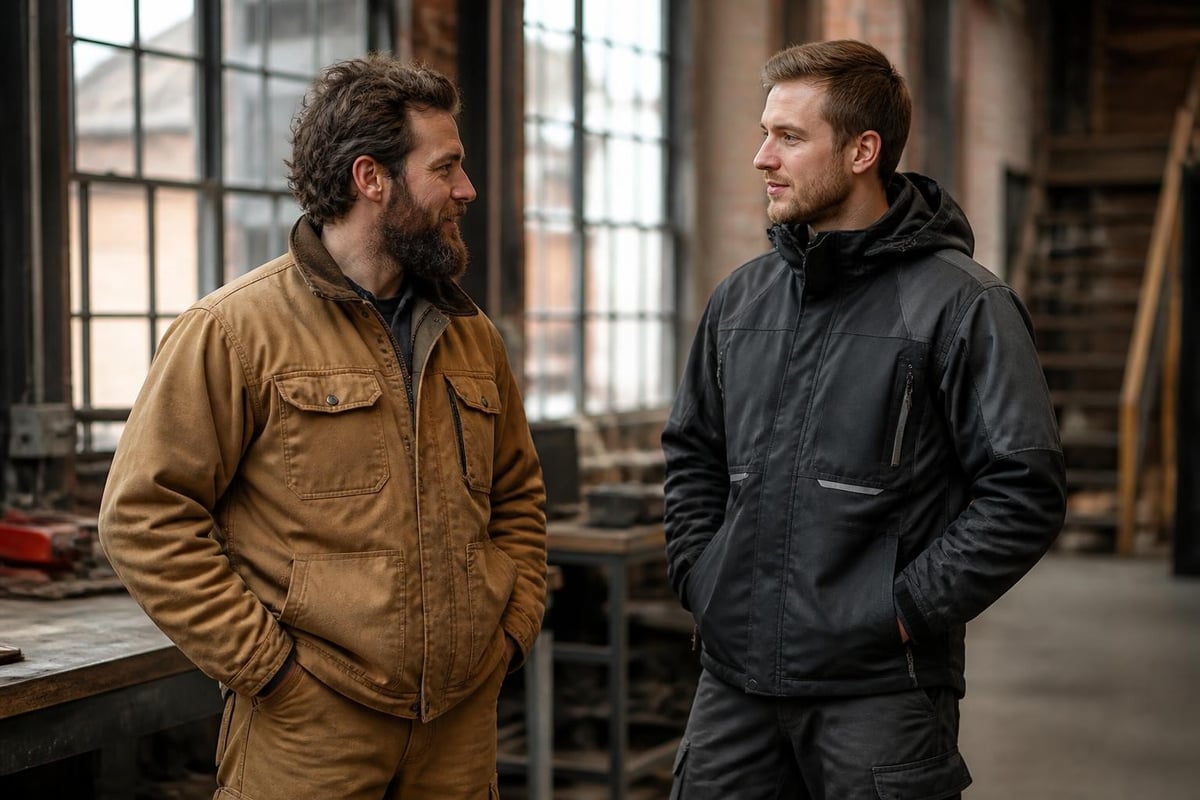
Scandinavian brands of work clothes have revolutionised technical workwear through innovative design thinking. Snickers Workwear from Sweden pioneered the concept of holster pockets and ergonomic placement of tool loops, reducing physical strain on workers carrying equipment throughout their shifts.
Helly Hansen brings marine-grade waterproofing technology to land-based workwear applications. Their Helly Tech fabrics provide breathability alongside weather protection, making them ideal for outdoor workers facing unpredictable British weather.
Scandinavian brand innovations include:
- Articulated knee designs reducing joint stress
- Strategic ventilation zones preventing overheating
- Stretch fabric panels in high-mobility areas
- Reflective elements integrated into garment design
- Modular systems allowing seasonal adaptation
These technical advances have influenced the broader workwear industry, with many brands now incorporating similar features into their ranges. Companies seeking high-quality workwear benefit from these innovations through improved employee comfort and productivity.
Budget-Conscious Options Without Compromise
Not every business requires premium pricing, and several brands of work clothes deliver reliable performance at accessible price points. Portwest's extensive catalogue includes budget lines that maintain safety compliance whilst reducing per-garment costs, particularly valuable for businesses outfitting large teams.
Uneek Clothing focuses on value without sacrificing essential quality markers. Their polo shirts and basic workwear staples provide blank canvases perfect for customisation, allowing businesses to create branded workwear without excessive initial investment.
| Price Tier | Example Brands | Best For | Typical Lifespan |
|---|---|---|---|
| Budget | Portwest basics, Uneek | Large teams, high turnover | 6-12 months |
| Mid-range | Dickies standard, Carhartt basics | Regular professional use | 12-24 months |
| Premium | Snickers, Carhartt WIP | Demanding conditions | 24-48 months |
| Specialist | Helly Hansen Pro, Arc'teryx | Extreme environments | 36+ months |
Calculating total cost of ownership rather than initial purchase price reveals that mid-range brands often provide superior value. A garment lasting twice as long justifies a 50% higher initial cost, whilst reducing replacement frequency and associated administrative burden.
Sector-Specific Brand Selection
Construction professionals require brands of work clothes engineered for physical demands and safety compliance. CAT Workwear leverages Caterpillar's industrial heritage to create garments with reinforced knees, multiple pocket configurations, and high-visibility options meeting EN ISO 20471 standards.
For hospitality sectors, brands like Premier Workwear and Alexandra emphasise clean lines and professional aesthetics. Their ranges include easy-care fabrics that maintain appearance after commercial laundering, crucial for maintaining consistent brand presentation.
Healthcare workwear demands different performance characteristics entirely. Cherokee and Landau specialise in medical scrubs with antimicrobial treatments and fluid-resistant fabrics. These brands understand the unique requirements of clinical environments where hygiene and functionality intersect.
Industry-specific brand considerations:
- Construction: Prioritise abrasion resistance and safety certification
- Hospitality: Focus on appearance retention and comfort for long shifts
- Healthcare: Require antimicrobial properties and easy decontamination
- Manufacturing: Need flame resistance and chemical protection options
- Logistics: Value high-visibility and reinforced seating areas
Companies serving industrial sectors, such as LTJ Industrial Services providing welding and fabrication services, often select flame-resistant brands like Bulwark or Carhartt FR to protect workers from specific occupational hazards whilst maintaining durability standards.
Fashion Meets Function
The evolution of workwear into mainstream fashion has influenced how brands of work clothes position themselves. Carhartt WIP (Work In Progress) successfully bridges workwear heritage with contemporary style, creating garments equally suited to construction sites and creative studios.
This trend benefits businesses seeking workwear that employees actually want to wear. When work clothes align with current fashion sensibilities, compliance with dress codes improves and brand perception strengthens.
The utility aesthetic has driven several workwear trends:
- Visible stitching and reinforcement becoming design features
- Heritage colourways like duck brown and navy becoming fashion staples
- Functional details like hammer loops appearing on non-work garments
- Durability marketed as sustainable fashion choice
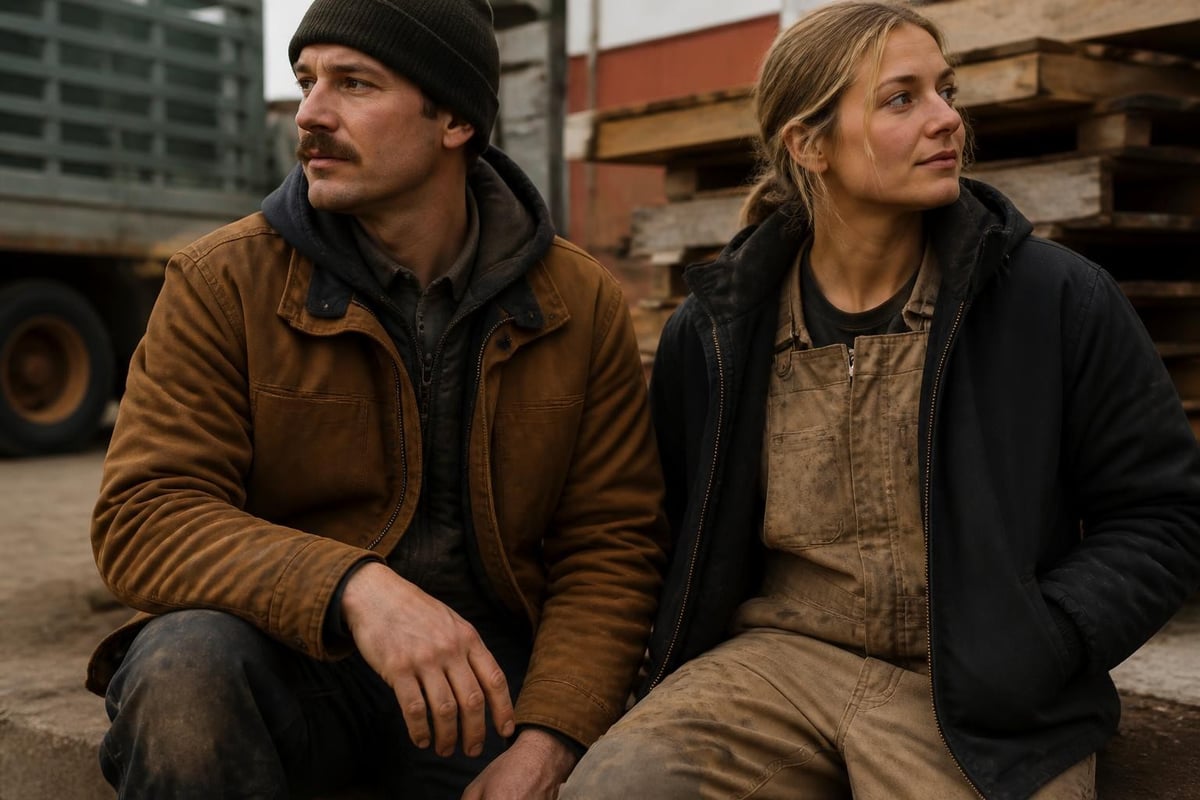
Understanding these trends helps businesses select brands that enhance rather than compromise professional image. Fashion and identity in workwear increasingly influence purchasing decisions, particularly for customer-facing roles.
Customisation and Branding Capabilities
Selecting brands of work clothes requires considering customisation potential. Some manufacturers design garments specifically for embroidery or printing, incorporating features like reinforced chest areas and appropriate fabric weights.
Brands like Fruit of the Loom and Gildan excel as customisation bases, offering consistent sizing and reliable fabric quality across large orders. Their straightforward designs provide ideal canvases for company branding without competing visual elements.
When planning custom work clothing programmes, consider these factors:
- Fabric composition affecting embroidery quality
- Colour consistency across production batches
- Availability of matching items for coordinated uniforms
- Garment construction allowing durable logo placement
- Supplier reliability for reordering specific styles
The choice between embroidery versus screen printing depends partly on base garment characteristics. Dense weaves support embroidery better, whilst smooth surfaces suit printing techniques. Selecting appropriate brands of work clothes for your chosen customisation method ensures professional results.
Sustainable and Ethical Considerations
Modern businesses increasingly prioritise sustainability when selecting brands of work clothes. Stanley/Stella leads the sustainable workwear movement, offering GOTS-certified organic cotton and recycled polyester garments with transparent supply chain documentation.
Patagonia's workwear division combines environmental responsibility with technical performance. Their Worn Wear programme accepts used garments for repair and resale, extending product lifecycle and reducing waste.
Sustainable workwear features to consider:
- Organic or recycled fabric content
- Fair Trade certification ensuring ethical manufacturing
- Durable construction reducing replacement frequency
- Repair services extending garment lifespan
- Take-back programmes for end-of-life recycling
Eco-friendly workwear options increasingly match conventional alternatives in performance whilst reducing environmental impact. This alignment allows businesses to meet sustainability commitments without compromising worker safety or comfort.
Women's Workwear Advancement
Historic neglect of women's sizing in brands of work clothes has driven recent market evolution. Dedicated women's workwear brands now offer properly fitted garments rather than merely scaled-down men's designs.
Dovetail Workwear designs specifically for women's body proportions, incorporating features like gusseted crotches and curved waistbands that accommodate different body shapes. Their approach recognises that effective workwear must fit properly to function safely.
She Weld creates specialist garments for women in trades, addressing gaps left by traditional manufacturers. Their input from female welders and fabricators ensures practical features that support rather than hinder demanding work.
Advances in women's workwear include:
- Extended size ranges accommodating diverse body types
- Anatomically appropriate pocket placement and depth
- Adjustable features allowing personalised fit
- Equivalent safety ratings to men's counterparts
- Professional styling avoiding unnecessary feminisation
Businesses committed to inclusive workwear programmes benefit from improved employee satisfaction and broader talent recruitment when all team members access appropriate, well-fitting work clothes regardless of gender.
Emerging Brand Innovations
Technology integration distinguishes next-generation brands of work clothes from traditional manufacturers. Companies like Ministry of Supply incorporate phase-change materials that regulate body temperature, whilst others experiment with conductive fabrics enabling integrated communication systems.
Smart workwear remains nascent but shows promising applications. Embedded sensors can monitor worker fatigue, environmental hazards, or ergonomic strain patterns, providing data that improves workplace safety protocols.
| Innovation Type | Example Applications | Current Availability | Future Potential |
|---|---|---|---|
| Temperature regulation | Phase-change fabrics | Commercially available | Personalised climate control |
| Integrated sensors | Fatigue monitoring | Limited production | Comprehensive health tracking |
| Enhanced visibility | LED-integrated fabrics | Prototype stage | Dynamic hazard signalling |
| Antimicrobial treatments | Silver-ion fabrics | Widely available | Self-cleaning properties |
These innovations will likely filter from specialist applications into mainstream brands of work clothes over coming years. Early adopters gain competitive advantages through enhanced worker protection and productivity improvements.
Making the Final Selection
Evaluating brands of work clothes requires balancing multiple factors against specific business requirements. Creating a weighted scoring system helps objectify decisions that might otherwise rely on subjective preferences.
Consider developing evaluation criteria including:
- Initial cost per garment (20% weight)
- Expected lifespan and durability (25% weight)
- Industry-specific feature requirements (20% weight)
- Customisation compatibility (15% weight)
- Supplier reliability and delivery times (10% weight)
- Sustainability credentials (10% weight)
Testing sample garments before committing to large orders identifies potential issues with sizing, comfort, or functionality. Many suppliers provide trial programmes allowing businesses to evaluate real-world performance before finalising purchasing decisions.
Workwear care and maintenance significantly affects longevity regardless of brand selection. Establishing proper laundering protocols and repair systems maximises return on investment across any workwear programme.
Building Long-Term Supplier Relationships
Consistency in brands of work clothes simplifies inventory management and ensures uniform appearance across your workforce. Establishing relationships with reliable suppliers who understand your specific requirements streamlines reordering and reduces administrative burden.
Many businesses benefit from working with workwear specialists who maintain stock of preferred brands and sizes, enabling rapid fulfilment of replacement needs without minimum order quantities that might apply to direct manufacturer purchases.
Advantages of dedicated workwear partnerships include:
- Consolidated ordering across multiple brand ranges
- Expert guidance on product selection and specifications
- Streamlined customisation services with quality control
- Flexible payment terms and volume discounts
- Ongoing support for programme management
The value of these relationships extends beyond transactional convenience. Experienced workwear providers understand how different brands perform in various applications and can recommend alternatives when preferred items face availability issues or discontinuation.
Selecting the right brands of work clothes involves balancing quality, functionality, cost, and brand image to meet your specific industry requirements. Understanding the strengths of different manufacturers and how they align with your operational needs ensures your workforce remains protected, comfortable, and professionally presented. Whether you're outfitting a small team or managing enterprise-scale uniform programmes, Cobra Workwear offers expert guidance and comprehensive customisation services to help you implement effective workwear solutions that enhance your brand whilst supporting your employees' daily performance.
