

In today's competitive business landscape, first impressions matter more than ever. Custom work clothing has evolved from a simple uniform requirement into a strategic branding tool that shapes how customers perceive your business and how employees view their role within your organisation. Whether you operate in construction, hospitality, healthcare, or any other sector, investing in personalised workwear demonstrates professionalism whilst building team cohesion and brand recognition. This comprehensive guide explores everything you need to know about selecting, designing, and implementing custom work clothing for your UK business in 2026.
Understanding the Strategic Value of Custom Work Clothing
Custom work clothing serves multiple purposes beyond simply covering employees during their shifts. It functions as a walking advertisement, a safety requirement, and a morale booster all at once.
Brand visibility represents one of the most significant advantages. When your team wears branded apparel, they become mobile ambassadors for your business. Every interaction with customers, suppliers, or the general public becomes an opportunity to reinforce your brand identity. Professional custom workwear enhances brand image and creates memorable impressions that translate into customer trust and loyalty.
Building Employee Morale and Unity
Providing quality custom work clothing demonstrates that you value your workforce. Employees who receive well-fitted, comfortable, branded attire often report higher job satisfaction and stronger connection to their employer.
Consider these psychological benefits:
- Enhanced sense of belonging to a professional team
- Reduced morning decision fatigue about what to wear
- Pride in representing a reputable organisation
- Equality across different roles and departments
- Professional identity that boosts confidence in customer interactions

The evolution of customizable workwear has made it easier than ever to cater to individual preferences whilst maintaining brand consistency. Modern suppliers offer extensive sizing ranges, style variations, and personalisation options that ensure every team member feels comfortable and valued.
Selecting the Right Garments for Your Industry
Different sectors require different approaches to custom work clothing. Understanding industry-specific needs ensures your investment delivers maximum value.
| Industry | Primary Requirements | Recommended Garments | Key Considerations |
|---|---|---|---|
| Construction | Durability, visibility, safety | Hi-vis jackets, reinforced trousers, work boots | Compliance with PPE regulations |
| Hospitality | Comfort, appearance, hygiene | Aprons, polo shirts, chef whites | Easy laundering, stain resistance |
| Healthcare | Hygiene, identification, comfort | Tunics, scrubs, lab coats | Antimicrobial fabrics, colour coding |
| Office | Professional appearance, comfort | Shirts, blouses, smart trousers | Brand colours, corporate aesthetics |
| Retail | Brand alignment, approachability | Branded t-shirts, smart casual wear | Customer-facing appeal |
Fabric Selection and Durability
Choosing appropriate fabrics significantly impacts both employee comfort and garment longevity. Natural fibres like cotton offer breathability and comfort, making them ideal for indoor environments and warmer months. However, they may lack the durability required for physically demanding roles.
Synthetic blends provide excellent durability and moisture-wicking properties. Polyester-cotton combinations offer the best of both worlds, delivering comfort alongside resistance to wear, shrinkage, and fading. For specialised applications, consider technical fabrics with specific properties such as flame resistance, water repellence, or antimicrobial treatments.
When selecting workwear, assess the typical working conditions your employees face. Outdoor workers benefit from weather-resistant materials, whilst those in temperature-controlled environments prioritise breathability and comfort.
Designing Effective Custom Work Clothing
Creating custom work clothing involves balancing aesthetic appeal with practical functionality. Your design should reflect your brand identity whilst ensuring employee comfort and compliance with any relevant safety standards.
Logo Placement and Branding Strategy
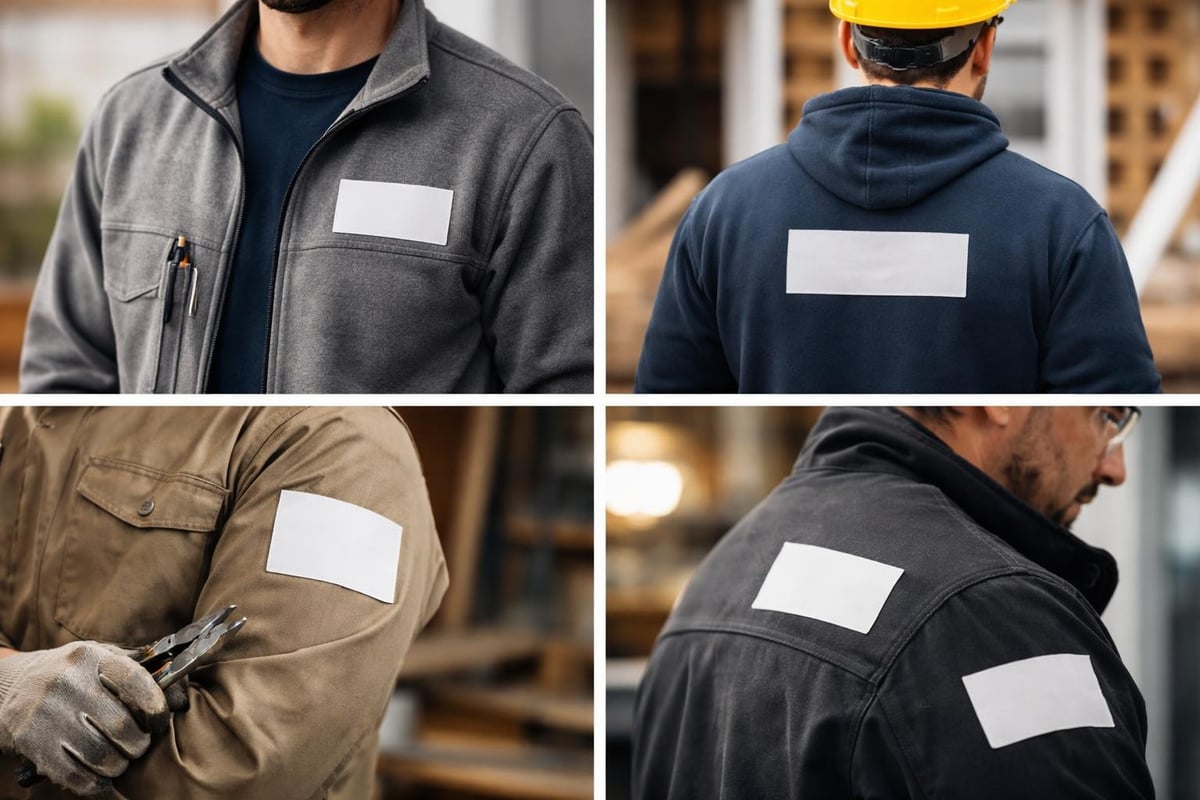
Strategic logo placement maximises visibility without compromising garment functionality or aesthetics. The most effective positions include:
- Left chest: Classic placement for smaller logos, visible during face-to-face interactions
- Back: Large-scale branding visible from distance, excellent for outdoor workers
- Sleeves: Additional branding real estate without cluttering the front
- High on the back (between shoulders): Ideal for roles requiring high-visibility compliance
Maintain consistency across all garments to strengthen brand recognition. Your logo should appear in the same position and size across different clothing items, creating a cohesive professional appearance. Understanding how to add logos to workwear ensures your branding enhances rather than detracts from garment functionality.
Colour Psychology and Practical Considerations
Colour choices communicate specific messages about your brand whilst influencing how employees are perceived. Navy blue conveys professionalism and trustworthiness, making it popular in corporate and healthcare settings. Black projects sophistication and authority whilst hiding stains effectively in hospitality environments.
Bright colours enhance visibility and create energetic, approachable impressions suitable for creative industries or customer service roles. However, practical considerations matter equally. Lighter colours show dirt more readily, requiring more frequent laundering in physically demanding environments.
For businesses requiring high-visibility clothing, compliance with safety standards dictates colour choices. Fluorescent yellow, orange, and red with reflective striping ensure workers remain visible in low-light conditions or hazardous environments.
Customisation Methods: Embroidery Versus Printing
Two primary methods dominate custom work clothing decoration: embroidery and screen printing. Each offers distinct advantages depending on your requirements, budget, and aesthetic preferences.
Embroidery Benefits and Applications
Embroidery creates a premium, professional appearance that elevates perceived brand value. Thread stitched directly into fabric withstands repeated washing and general wear far better than printed designs. This durability makes embroidery ideal for garments subjected to harsh conditions or frequent laundering.
The dimensional, textured quality of embroidered logos adds sophistication that printing cannot replicate. This makes embroidery particularly suitable for corporate environments, management uniforms, and businesses positioning themselves as premium service providers.
Working with providers offering in-house embroidery services ensures faster turnaround times and better quality control compared to outsourced decoration. You benefit from direct communication with decorators who understand your specific requirements and can accommodate last-minute adjustments.
Screen Printing Advantages
Screen printing excels at reproducing complex, multi-colour designs with photographic detail impossible to achieve through embroidery. It proves more cost-effective for large quantities and works exceptionally well on lighter fabrics where embroidery might feel heavy or cause puckering.
Modern printing techniques deliver impressive durability, though not quite matching embroidery's longevity. For promotional events, temporary staff uniforms, or designs requiring extensive colour ranges, screen printing offers excellent value and visual impact.
| Feature | Embroidery | Screen Printing |
|---|---|---|
| Durability | Excellent | Good |
| Detail capability | Limited | Excellent |
| Cost per unit | Higher | Lower |
| Best for | Professional attire, small logos | Large designs, promotional items |
| Fabric suitability | Most fabrics | Best on cotton and blends |
| Perceived value | Premium | Standard |
Implementing Your Custom Work Clothing Programme
Successfully rolling out custom work clothing requires careful planning beyond simply ordering garments. Consider these implementation strategies to maximise adoption and satisfaction.
Accurate Sizing and Fit
Ill-fitting clothing undermines the professional image you're trying to create whilst causing employee discomfort that affects productivity and morale. Arrange fitting sessions where employees can try samples before placing bulk orders. This investment in time prevents costly returns and ensures higher satisfaction rates.
Maintain detailed size records for each employee to streamline future orders. Bodies change over time, so schedule annual reviews to ensure continued proper fit. For growing businesses, establish relationships with suppliers who maintain stock of your chosen garments, allowing you to order additional items as you recruit new team members.
When designing personalized work uniforms, consider offering multiple fit options where possible. Modern workwear increasingly includes tailored fits, regular fits, and relaxed fits to accommodate different body types and personal preferences.
Setting Clear Uniform Policies
Ambiguity around uniform requirements creates inconsistency that dilutes your brand image. Develop comprehensive uniform policies specifying:
- Which garments must be worn in which situations
- How clothing should be maintained and laundered
- Replacement procedures for damaged or worn items
- Personalisation limitations (additional embroidery, accessories)
- Consequences for non-compliance
Communicate these policies clearly during onboarding and make them easily accessible for reference. Consider creating a visual guide showing acceptable and unacceptable uniform presentations to eliminate confusion.
Maintaining Custom Work Clothing Quality
The longevity of custom work clothing depends significantly on proper care and maintenance. Educate employees about best practices to protect your investment.
Laundering and Storage Best Practices
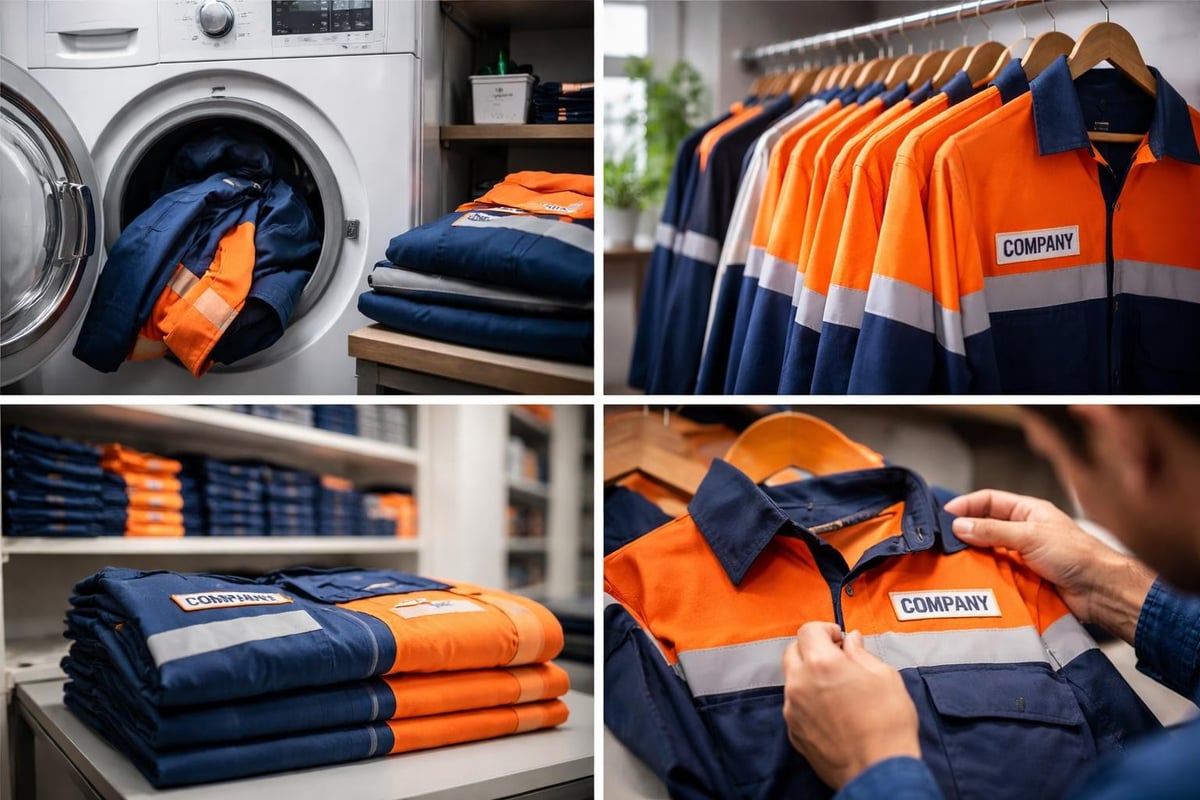
Embroidered garments require gentler care than plain clothing. Wash items inside out using cool or warm water rather than hot, which can fade colours and damage thread. Avoid harsh detergents containing bleach that deteriorate both fabric and embroidery over time.
Air drying extends garment life compared to tumble drying, which causes shrinkage and weakens fibres. When ironing proves necessary, use moderate heat and avoid ironing directly over embroidered areas to prevent thread damage or shine.
Proper storage prevents unnecessary wear. Provide employees with adequate hanging space rather than requiring them to fold uniforms into cramped lockers. For businesses maintaining uniform stock on-site, climate-controlled storage prevents moisture damage and odour development.
Establishing Replacement Schedules
Even well-maintained custom work clothing eventually requires replacement. Establish clear criteria for when garments should be retired, such as visible fabric wear, faded colours, or damaged embroidery. Regular replacement maintains professional appearance whilst preventing the reputational damage of employees wearing shabby, worn-out clothing.
Budget for systematic replacement rather than reactive purchasing. A phased approach where a percentage of uniforms are renewed annually spreads costs whilst ensuring your team always looks professional. Consider caring for embroidered workwear as an investment in brand perception rather than an ongoing expense.
Cost Considerations and Budgeting
Custom work clothing represents a significant investment that delivers substantial returns when approached strategically. Understanding cost factors helps you make informed decisions aligned with your budget and objectives.
Initial Investment Versus Long-Term Value
Quality custom work clothing costs more upfront than basic, unbranded alternatives. However, superior garments last significantly longer, reducing replacement frequency and overall lifetime costs. Premium fabrics and construction withstand industrial laundering and daily wear that would quickly destroy cheaper options.
Calculate total cost of ownership rather than focusing solely on initial purchase price. A £15 garment requiring replacement every six months costs more over three years than a £30 item lasting the full period. Factor in the hidden costs of frequent reordering: administrative time, shipping fees, and business disruption.
Volume discounts significantly reduce per-unit costs for custom work clothing. Consolidate ordering across departments or coordinate with other businesses to reach higher quantity thresholds. Some suppliers offer special programmes for repeat customers that deliver ongoing savings beyond initial bulk discounts.
Hidden Costs to Consider
Beyond garment and decoration costs, budget for these often-overlooked expenses:
- Initial sizing sessions and sample garments
- Replacement items for damaged or lost clothing
- Additional personalisation for new employees
- Laundering services for employers providing cleaning
- Storage solutions for maintaining uniform inventory
When comparing suppliers, examine total programme costs rather than just headline prices. A supplier offering slightly higher garment costs but including free storage, flexible reordering, and quick turnaround may deliver better overall value than the cheapest option.
Choosing Your Custom Work Clothing Supplier
Supplier selection significantly impacts both initial satisfaction and long-term programme success. Evaluate potential partners across multiple dimensions beyond price alone.
Quality and Reliability Indicators
Request physical samples before committing to large orders. Examine stitching quality, fabric weight, colour accuracy, and decoration precision. Inferior suppliers often promise impressive results but deliver disappointing quality that damages your brand image.
Investigate supplier reputation through reviews and testimonials from businesses similar to yours. Companies with established track records and positive feedback demonstrate reliability that reduces risk of disappointment or delivery failures.
Consider geographic proximity for UK-based businesses. Working with local suppliers simplifies communication, enables faster turnaround, and supports your local economy. Domestic production also reduces carbon footprint compared to importing garments from overseas manufacturers.
Service Level Expectations
Beyond product quality, evaluate the service experience. Responsive customer support proves invaluable when you need quick answers about sizing, reordering, or addressing quality concerns. Suppliers offering dedicated account management provide consistency and develop understanding of your specific needs over time.
Flexible minimum order quantities matter for smaller businesses or those testing custom work clothing for the first time. Some suppliers impose prohibitively high minimums that force you to over-order, tying up capital in excess inventory.
Turnaround time impacts your ability to onboard new employees promptly and respond to urgent replacement needs. Understanding delivery timeframes helps you plan orders appropriately and avoid disruptions caused by unexpected delays.
Adapting Custom Work Clothing for Modern Workplaces
Workplace dynamics have shifted dramatically, with hybrid working, casualisation trends, and increased focus on sustainability reshaping uniform requirements in 2026.
Hybrid Work Considerations
Many businesses now operate with split teams working partially from home and partially on-site. Custom work clothing strategies must adapt to these realities. Consider providing fewer garments per employee since they're not needed daily, or create tiered uniform requirements where customer-facing roles maintain full uniforms whilst back-office staff receive more casual branded options.
Some organisations adopt "branded casual" approaches where employees receive comfortable, high-quality items like hoodies or polo shirts suitable for video calls and occasional office attendance. This maintains brand consistency without requiring traditional formal uniforms that feel excessive for hybrid environments.
Sustainability and Ethical Sourcing
Environmental consciousness increasingly influences purchasing decisions across all sectors. Customers and employees alike favour businesses demonstrating commitment to sustainability through responsible sourcing and ethical practices.
Investigate supplier commitments to eco-friendly workwear made from organic cotton, recycled polyester, or other sustainable materials. These options typically cost slightly more but align with corporate social responsibility goals whilst appealing to environmentally conscious stakeholders.
Consider garment longevity as a sustainability factor. Durable, well-made custom work clothing that lasts years generates less waste than cheap alternatives requiring frequent replacement. Quality embroidery and construction reduce environmental impact over the product lifecycle.
Measuring Return on Investment
Quantifying the value delivered by custom work clothing helps justify expenditure and refine your approach over time. Track both tangible and intangible benefits to assess programme effectiveness.
Tangible Metrics
Monitor customer feedback specifically mentioning professional appearance or staff presentation. Increased positive comments about team appearance suggest your custom work clothing investment positively impacts customer perception. Similarly, track any changes in customer trust scores or satisfaction ratings following uniform implementation.
Employee retention rates may improve following introduction of quality custom work clothing, particularly in industries where workers frequently move between employers. Reduced turnover delivers substantial savings in recruitment and training costs that offset uniform expenditure.
Brand recognition metrics including aided and unaided awareness can reflect the cumulative effect of your team serving as mobile advertisements through their branded attire. Whilst difficult to isolate custom work clothing's specific contribution, improved recognition often correlates with consistent uniform programmes.
Intangible Benefits
Employee pride and morale improvements manifest in numerous subtle ways that defy precise measurement but deliver genuine value. Staff who feel professional and valued through quality custom work clothing often demonstrate increased engagement, better customer service, and stronger company loyalty.
The importance of custom workwear in conveying professionalism extends beyond immediate visual impact. Uniformed teams project organisational competence and attention to detail that influences how customers perceive service quality before any interaction occurs.
Internal culture benefits include reduced workplace hierarchy visibility and stronger team cohesion when everyone wears similar branded attire regardless of role or seniority. This equality fosters collaboration and mutual respect that strengthens organisational effectiveness.
Custom work clothing represents far more than a practical necessity-it's a strategic investment in brand identity, employee satisfaction, and professional presentation. By carefully selecting appropriate garments, implementing thoughtful design choices, and partnering with reliable suppliers, you create a powerful tool that enhances every aspect of your business operations. Cobra Workwear specialises in helping UK businesses across construction, hospitality, healthcare, and beyond develop custom work clothing programmes that deliver lasting value through quality garments, expert in-house decoration, and dedicated customer service tailored to your specific requirements.
