

Black work polo shirts have become a cornerstone of professional attire across countless UK industries, from construction sites to corporate offices. Their versatility, practicality, and professional appearance make them an ideal choice for businesses seeking to establish a cohesive brand identity whilst providing employees with comfortable, durable workwear. This timeless garment combines the casual comfort of a t-shirt with the polished look of traditional business attire, creating a perfect balance that suits modern workplace requirements. Whether you're outfitting a team of hospitality staff, healthcare professionals, or tradespeople, understanding the benefits and considerations of black work polo shirts can help you make informed decisions that enhance both your brand image and employee satisfaction.
Why Black Remains the Preferred Colour for Work Polo Shirts
The dominance of black in workplace uniforms isn't merely a fashion statement. Black offers practical advantages that directly impact operational efficiency and cost-effectiveness. As a neutral colour, black conceals minor stains and marks far better than lighter alternatives, maintaining a professional appearance throughout extended shifts. This characteristic proves particularly valuable in demanding environments where employees face exposure to dirt, grease, or other workplace substances.
The psychological impact of black workwear shouldn't be underestimated either. Black conveys authority, professionalism, and competence, making it an excellent choice for customer-facing roles. Studies in colour psychology consistently demonstrate that black garments create an impression of reliability and expertise, factors that can influence customer perception and trust.
Versatility Across Industry Sectors
Black work polo shirts adapt seamlessly across diverse industry requirements. In the construction sector, they provide a smart alternative to traditional hi-vis wear during non-essential visibility periods, whilst maintaining professional standards. Hospitality venues favour black polos for their ability to transition from front-of-house service to back-of-house operations without compromising appearance standards.
Healthcare environments increasingly adopt black polos for administrative and support staff, creating clear visual distinctions from clinical personnel whilst maintaining a cohesive institutional identity. The colour's versatility allows businesses to implement standardised uniforms across departments without sacrificing functional requirements specific to each area.

Fabric Technology and Performance Features
Modern black work polo shirts incorporate advanced fabric technologies that dramatically outperform traditional cotton alternatives. Understanding these technical specifications helps businesses select garments that deliver genuine value beyond initial purchase price.
Key Performance Features:
- Moisture-wicking properties that draw perspiration away from skin, maintaining comfort during physically demanding tasks
- Snag-resistant fabrics engineered to withstand contact with rough surfaces and equipment
- Antimicrobial treatments that reduce odour development during extended wear
- UV protection integrated into fabric structure for outdoor work environments
- Quick-dry capabilities enabling efficient laundering and reduced downtime
Many premium work polo shirts now feature polyester-cotton blends that combine durability with breathability. These engineered fabrics resist shrinkage and colour fading, ensuring uniforms maintain their appearance through hundreds of wash cycles. The investment in quality fabric technology translates directly into reduced replacement costs and consistent brand presentation.
Durability Standards for Demanding Environments
When evaluating black work polo shirts, fabric weight serves as a primary durability indicator. Garments ranging from 5-7 ounces per square yard typically provide sufficient robustness for moderate-wear environments, whilst heavy-duty applications demand fabrics exceeding 7 ounces. The construction quality, including double-stitched seams and reinforced stress points, determines longevity under sustained use.
| Fabric Weight | Typical Applications | Expected Lifespan | Cost Range |
|---|---|---|---|
| 4-5 oz | Retail, light hospitality | 6-12 months | £8-£15 |
| 5-7 oz | General office, healthcare | 12-18 months | £15-£25 |
| 7+ oz | Construction, heavy industry | 18-24+ months | £25-£40 |
The correlation between fabric quality and total cost of ownership often surprises businesses focused solely on initial purchase price. A premium black work polo shirt priced at £30 that lasts 24 months delivers better value than a £12 alternative requiring replacement every 6 months, particularly when factoring in embroidery or printing costs for branded replacements.
Branding Opportunities and Logo Placement
Black work polo shirts provide an exceptional canvas for corporate branding, with the dark background creating striking contrast for logo embroidery and printing. The psychological principle of figure-ground contrast means that lighter-coloured logos achieve maximum visibility against black fabric, ensuring brand elements capture attention without requiring oversized designs.
Professional embroidery on black polos offers superior durability compared to printed alternatives, with quality threadwork maintaining clarity and colour vibrancy through years of regular laundering. Businesses should consider logo placement carefully, as positioning influences both aesthetic appeal and functional practicality.
Strategic Logo Positioning Options
Standard placement locations include:
- Left chest position (traditional and professional, ideal for corporate environments)
- Right chest or sleeve (alternative placement for medical or service sectors)
- Back shoulder or upper back (high visibility for team identification)
- Sleeve cuff (subtle branding maintaining minimalist aesthetic)
Understanding embroidery placement helps businesses maximise brand impact whilst respecting garment functionality. Oversized logos can interfere with safety equipment or create discomfort, whilst undersized branding fails to achieve desired visibility. The optimal size typically ranges from 3-4 inches for chest placement, ensuring legibility at conversational distances.
Colour selection for embroidery on black work polo shirts deserves careful consideration. Whilst white thread provides maximum contrast, incorporating brand colours creates stronger identity connections. Many businesses opt for multicolour embroidery that reproduces their full logo, accepting the higher cost in exchange for enhanced brand recognition.
Sizing and Fit Considerations for Workforce Diversity
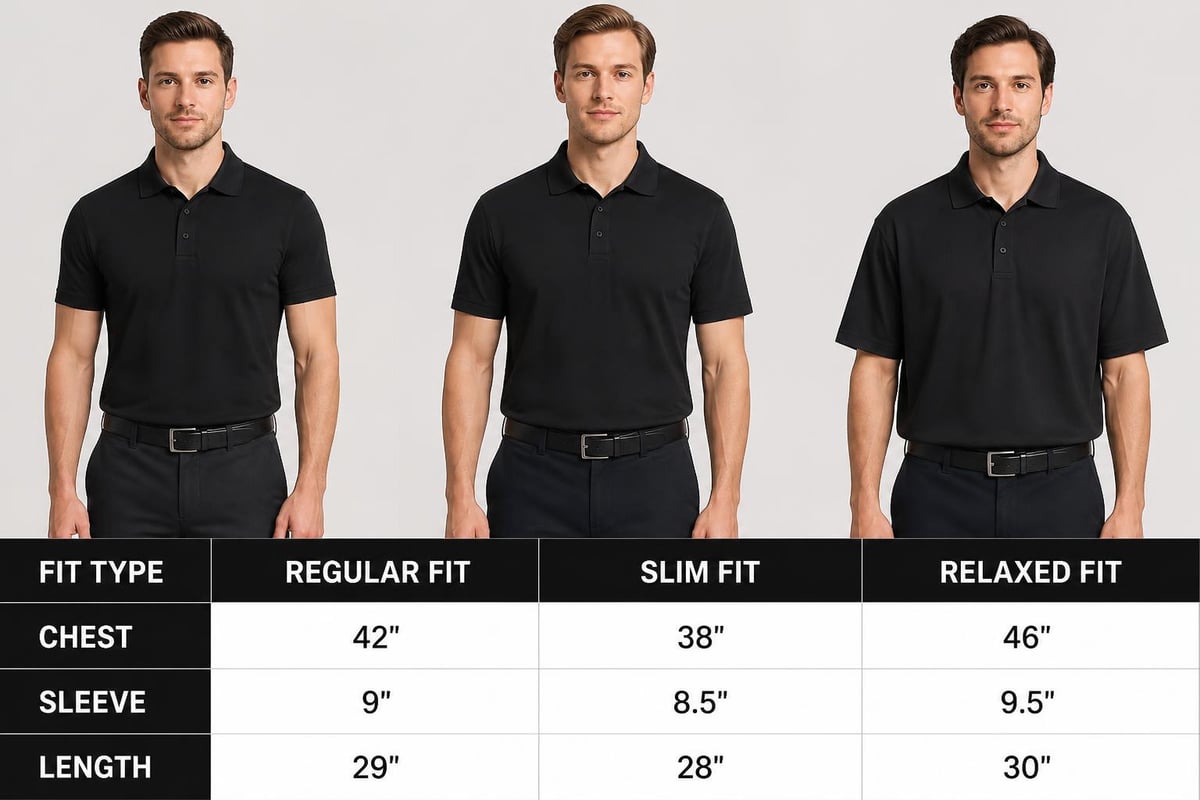
Proper fit dramatically influences employee satisfaction and professional appearance. Black work polo shirts that fit poorly create an unkempt impression regardless of fabric quality or brand elements. Modern workplaces serve increasingly diverse populations, requiring comprehensive sizing ranges that accommodate various body types and preferences.
The distinction between regular, slim, and relaxed fits allows businesses to provide options suiting different roles and employee preferences. Construction workers typically prefer relaxed fits accommodating movement and layering, whilst corporate environments often favour slimmer cuts projecting contemporary professionalism. Quality workwear suppliers offer detailed measurement guides preventing costly sizing errors that necessitate returns and exchanges.
Gender-Inclusive Uniform Programmes
Progressive businesses recognise that traditional men's and women's sizing often fails to serve all employees effectively. Offering black work polo shirts in both gendered and unisex styles demonstrates inclusivity whilst ensuring comfort across your workforce. Women's-specific cuts typically feature tapered waists and adjusted sleeve lengths, whilst unisex options provide neutral alternatives for employees preferring non-gendered garments.
Tall and petite sizing extends your uniform programme's accessibility, eliminating the compromise between garments that are too short or excessively long. When selecting work uniforms, businesses should conduct proper fit sessions, allowing employees to try multiple sizes and styles before committing to bulk orders. This investment in proper fitting prevents dissatisfaction and reduces waste from ill-fitting inventory.
Maintenance and Care for Longevity
The operational lifespan of black work polo shirts depends heavily upon proper maintenance protocols. Even premium garments deteriorate rapidly under improper laundering, whilst budget options can exceed expected lifespans with appropriate care. Establishing clear care guidelines protects your uniform investment whilst maintaining consistent professional appearance standards.
Black fabrics present unique maintenance challenges, particularly regarding lint attraction and colour fading. Industrial washing processes can accelerate wear, making it essential to balance hygiene requirements with garment preservation. Many businesses provide laundering guidelines as part of their uniform policy, ensuring employees understand their role in maintaining garment quality.
Essential Maintenance Guidelines:
- Wash black polos separately or with similar colours to prevent lint transfer
- Use cold or warm water (30-40°C) rather than hot cycles that accelerate fading
- Turn garments inside out to protect exterior surfaces and embroidery
- Avoid chlorine bleach, which damages fabric fibres and causes discolouration
- Remove promptly from washing machines to minimise wrinkles
- Air dry when possible, as tumble drying can cause shrinkage and fabric stress
For businesses providing embroidered workwear, special care protects logo integrity. Quality embroidery withstands normal laundering, but aggressive washing or high heat can loosen threads or distort designs. Turning garments inside out before washing provides additional protection for embroidered areas, preserving professional appearance through extended use.
Cost Analysis and Budgeting for Uniform Programmes
Implementing a comprehensive black work polo shirt programme requires careful financial planning beyond simple per-garment costs. Total programme expenses encompass initial purchase, customisation, replacement cycles, and maintenance considerations. Businesses often underestimate these cumulative costs, leading to budget shortfalls or compromised quality standards.
The quantity discount structure for bulk orders significantly impacts unit pricing. Ordering 50 black work polo shirts typically reduces per-garment costs by 15-25% compared to purchasing 10 units. However, businesses must balance volume discounts against storage requirements and cash flow considerations, particularly when outfitting smaller teams or pilot programmes.
| Order Quantity | Typical Unit Cost | Embroidery Cost | Total Per Unit | Break-Even Timeline |
|---|---|---|---|---|
| 10-24 units | £18-£22 | £6-£8 | £24-£30 | 18-24 months |
| 25-49 units | £15-£19 | £5-£7 | £20-£26 | 15-20 months |
| 50-99 units | £12-£16 | £4-£6 | £16-£22 | 12-18 months |
| 100+ units | £10-£14 | £3-£5 | £13-£19 | 10-15 months |
Replacement budgeting requires realistic assessment of garment lifespan within your specific operational context. Office environments typically see 18-24 month replacement cycles, whilst physically demanding roles may necessitate 12-month replacements. Building contingency inventory for unexpected sizing needs or new employee onboarding prevents emergency orders at premium pricing.
Seasonal Considerations and Layering Options
Black work polo shirts serve as versatile foundation pieces within comprehensive uniform systems, adapting across seasonal temperature variations through strategic layering. This adaptability reduces total uniform costs by extending the utility of core garments rather than maintaining separate seasonal wardrobes. Understanding layering principles helps businesses design uniform programmes that function effectively year-round.
During warmer months, black work polo shirts perform as standalone garments, with moisture-wicking fabrics providing comfort in elevated temperatures. The dark colour does absorb more heat than lighter alternatives, making fabric selection crucial for outdoor summer work. Lightweight, breathable constructions with ventilation features help mitigate heat retention whilst maintaining the professional appearance and practical benefits of black workwear.
Winter Layering Strategies
Cooler weather transforms black work polo shirts into base or mid-layers within structured uniform systems. Wearing polos under work jackets or fleeces maintains brand visibility whilst providing thermal comfort. This layering approach allows businesses to invest in quality outer layers featuring prominent branding, whilst using simpler polo designs for intermediate garments.
Effective layering combinations include:
- Black work polo + branded fleece jacket (professional appearance, moderate warmth)
- Black work polo + high-visibility vest (safety compliance, brand visibility)
- Black work polo + softshell jacket (weather resistance, corporate presentation)
- Black work polo + quarter-zip pullover (versatile indoor/outdoor option)
The compatibility of black work polo shirts with various outer layers simplifies uniform management and reduces inventory complexity. Employees can mix foundation pieces with seasonal additions, creating appropriate combinations for daily conditions without maintaining extensive wardrobes. This flexibility particularly benefits businesses operating across varied environments or experiencing significant temperature fluctuations.

Industry-Specific Applications and Requirements
Different sectors impose unique demands on black work polo shirts, from fabric specifications to design features. Understanding these industry-specific requirements ensures uniform selections meet both functional needs and regulatory standards. The versatility of workwear across sectors makes proper specification essential for programme success.
Hospitality and Food Service
Hospitality environments prioritise stain resistance and professional presentation. Black work polo shirts in this sector often feature antimicrobial treatments preventing odour development during extended shifts. Many establishments specify performance fabrics rather than cotton blends, as synthetic materials better resist absorption of food odours and release stains more readily during laundering.
Button-free designs or hidden plackets gain preference in food preparation areas, eliminating potential contamination vectors and reducing laundering complexity. The ability to maintain appearance through multiple service periods makes black an economical choice for restaurants and hotels managing high-volume uniform requirements.
Healthcare and Medical Facilities
Healthcare settings implement strict hygiene protocols influencing workwear specifications. Whilst clinical staff typically wear scrubs, administrative and support personnel often adopt black work polo shirts creating professional appearance without suggesting clinical authority. Fabric selections must withstand frequent high-temperature laundering and aggressive disinfection protocols without compromising colour stability or structural integrity.
The distinction between different staff categories through varied uniform elements helps patients and visitors navigate facilities effectively. Black polos might designate reception staff, maintenance teams, or administrative personnel, with colour-coded name badges or embroidery details providing additional identification information.
Corporate and Office Environments
Professional office settings favour black work polo shirts for their smart-casual aesthetic bridging formal and relaxed dress codes. The growing prevalence of casual Fridays and flexible workplace cultures positions polos as appropriate alternatives to traditional shirting. However, corporate applications demand higher-quality fabrics and refined finishing compared to industrial contexts, with details like mother-of-pearl buttons and finer gauge knits elevating perceived quality.
Many corporate uniform programmes incorporate black work polo shirts specifically for casual days or summer months, maintaining brand consistency whilst acknowledging seasonal comfort preferences. When specifying polos for branded workwear programmes, businesses should consider contexts where employees might wear garments, ensuring appropriate formality levels for customer interactions and internal meetings.
Supplier Selection and Quality Assurance
Choosing suppliers for black work polo shirts significantly impacts programme success beyond simple product quality. Reliable suppliers provide consistent sizing, colour matching across orders, and dependable delivery schedules preventing uniform shortages. The relationship with your workwear supplier should extend beyond transactional purchasing into partnership supporting your operational requirements.
When evaluating potential suppliers, request fabric samples and test garments before committing to volume orders. Physical examination reveals quality indicators that product descriptions might obscure, from stitching density to fabric hand-feel. Reputable suppliers readily provide samples, understanding that businesses need confidence before substantial investments.
Quality Control Checkpoints
Essential evaluation criteria include:
- Consistent colour matching between batches
- Accurate sizing across entire range
- Durable stitching at stress points
- Quality control inspection before dispatch
- Clear care and composition labelling
- Responsive customer service for issues
The value of domestic UK suppliers often justifies modest price premiums over international alternatives. Reduced shipping times, easier communication, and simpler returns processes offset slightly higher per-unit costs. Additionally, UK-based embroidery services typically offer faster turnaround and better quality control than offshore customisation, particularly for smaller orders or rush requirements.
Establishing minimum quality standards prevents cost-cutting measures that compromise programme effectiveness. Whilst budget pressures exist across organisations, specifying non-negotiable requirements (minimum fabric weight, specific performance features, acceptable colour fastness ratings) ensures purchases meet operational needs rather than simply achieving lowest price points.
Environmental Considerations and Sustainable Options
Growing awareness of environmental impacts influences uniform procurement decisions, with businesses increasingly seeking sustainable alternatives to conventional workwear. Black work polo shirts manufactured from organic cotton, recycled polyester, or other eco-friendly materials reduce environmental footprints whilst maintaining professional performance standards. The availability of eco-friendly embroidered workwear allows businesses to align uniform programmes with broader sustainability commitments.
Recycled polyester fabrics, created from post-consumer plastic bottles, deliver performance characteristics matching virgin materials whilst diverting waste from landfills. Many employees value working for organisations demonstrating environmental responsibility, making sustainable uniform choices an element of employer branding and recruitment strategy. However, businesses should verify sustainability claims through recognised certifications rather than accepting marketing assertions at face value.
The longevity of black work polo shirts contributes significantly to environmental impact, regardless of source materials. Garments lasting 24 months create less waste and require fewer replacement resources than alternatives needing annual renewal. Investing in durable, quality workwear aligns environmental and financial interests, reducing both costs and ecological footprints through extended service life.
Ordering Processes and Lead Time Management
Efficient procurement processes ensure adequate uniform inventory without excessive capital tied up in excess stock. Understanding typical lead times for black work polo shirts, particularly customised options, prevents last-minute shortages compromising professional standards. Standard unbranded garments often ship within 3-5 working days, whilst embroidered or printed options typically require 10-15 working days from order confirmation to delivery.
Seasonal demand fluctuations affect supplier capacity and lead times. Ordering during peak periods (typically spring and early summer) may extend production schedules as suppliers manage increased volumes. Strategic businesses plan uniform procurement during quieter periods, securing better pricing and faster turnaround whilst avoiding operational pressures of peak seasons.
Optimised ordering timeline:
- Initial research and sample requests (2-3 weeks before decision)
- Staff fitting sessions and size collection (1-2 weeks)
- Order placement with confirmed quantities and specifications
- Production and customisation period (10-15 working days)
- Delivery and distribution to staff (1 week)
- Feedback collection and adjustment orders (2-4 weeks post-delivery)
Maintaining relationships with multiple suppliers provides backup options for urgent requirements or stock shortages. Whilst primary suppliers handle routine orders, secondary sources offer contingency capacity preventing disruptions when unexpected needs arise. This redundancy proves particularly valuable for businesses experiencing rapid growth or seasonal workforce fluctuations requiring short-notice uniform procurement.
For businesses seeking quality black work polo shirts with professional embroidery services, Cobra Workwear offers comprehensive options suitable across diverse industries. Their in-house embroidery capabilities ensure consistent quality and faster turnaround compared to suppliers outsourcing customisation work.
Employee Input and Satisfaction
Successful uniform programmes incorporate employee perspectives during garment selection. Staff wearing black work polo shirts daily provide invaluable insights regarding comfort, practicality, and durability that decision-makers might overlook. Conducting surveys or focus groups before final specifications helps identify preferences and concerns, increasing programme acceptance and compliance.
Common employee feedback addresses fit preferences, fabric comfort, and practical features like pocket configurations or button styles. Whilst businesses cannot accommodate every individual preference, identifying consensus opinions helps select options satisfying majority needs. This consultation process demonstrates respect for employee input, fostering positive attitudes toward uniform requirements.
The psychological impact of well-fitting, comfortable uniforms extends beyond mere appearance. Employees wearing garments they find comfortable and professional report higher job satisfaction and take greater pride in their work presentation. These intangible benefits, whilst difficult to quantify, contribute meaningfully to workplace culture and customer interactions. Understanding the benefits of high-quality workwear helps businesses justify investments in premium uniform programmes that enhance both employee experience and brand presentation.
Black work polo shirts represent a strategic investment in professional presentation, employee comfort, and brand consistency across diverse UK industries. Their versatility, durability, and branding potential make them essential components of effective uniform programmes serving everyone from hospitality teams to construction professionals. By carefully considering fabric technology, sizing options, maintenance requirements, and supplier relationships, businesses can implement polo shirt programmes delivering exceptional value and sustained performance. Cobra Workwear provides comprehensive workwear solutions with in-house embroidery services, helping UK businesses across all sectors create professional, durable uniform programmes that enhance brand identity and employee satisfaction.
