

When employees spend their working days exposed to the elements, the right workwear outdoor clothing becomes more than just a uniform choice. It's a critical investment in worker safety, productivity, and wellbeing. From construction sites in driving rain to landscaping teams facing unpredictable British weather, selecting appropriate outdoor workwear requires understanding both regulatory requirements and practical performance characteristics. This comprehensive guide explores the essential considerations for businesses equipping their outdoor workforce with clothing that performs when it matters most.
Understanding the Specific Demands of Outdoor Work Environments
Working outdoors presents unique challenges that standard indoor workwear simply cannot address. Temperature fluctuations, precipitation, wind exposure, and UV radiation all place exceptional demands on both workers and their clothing.
The workwear industry continues to evolve to meet these challenges, with manufacturers developing fabrics that balance protection with breathability. This balance is crucial because workwear outdoor clothing must shield workers from harsh conditions whilst allowing moisture vapour to escape during physical exertion.
Weather Protection Technologies
Modern outdoor workwear incorporates several key protective features:
- Waterproof membranes that prevent rain penetration whilst maintaining breathability
- Windproof fabrics that reduce heat loss in exposed conditions
- Insulated layers for cold weather protection without restricting movement
- UV-resistant materials for prolonged sun exposure during summer months
Different outdoor occupations require varying levels of protection. A utilities worker repairing power lines in February faces different challenges than a groundskeeper maintaining parkland in July. Understanding these distinctions helps businesses select appropriate workwear outdoor clothing for specific roles.
Regulatory Compliance and Safety Standards
Selecting workwear outdoor clothing involves more than comfort considerations. Multiple safety regulations and standards govern protective clothing for outdoor workers, particularly those in high-risk sectors.
Understanding CE marking requirements for workwear is essential for businesses operating within UK and European markets. CE certification indicates that clothing meets minimum safety standards for its intended use.
Key Compliance Areas
| Standard Type | Application | Key Requirements |
|---|---|---|
| EN ISO 20471 | High-visibility clothing | Fluorescent background material and retroreflective strips |
| EN 343 | Rain protection | Waterproofness and breathability ratings |
| EN 14058 | Cold weather protection | Thermal insulation values |
| EN ISO 13688 | General requirements | Basic safety, ergonomics, sizing, and labelling |
For businesses operating outdoor teams, PPE standards outlined by regulatory bodies provide frameworks for protecting workers from occupational hazards. Whilst OSHA standards apply primarily to the United States, they offer valuable guidance that aligns with international best practices.
The regulations governing outdoor workwear standards in the UK place specific responsibilities on employers. These include providing appropriate protective clothing at no cost to workers and ensuring that clothing is properly maintained and replaced when necessary.
Material Selection and Performance Characteristics
The fabrics used in workwear outdoor clothing directly impact both protection levels and garment longevity. Material technology has advanced significantly in recent years, offering superior performance without compromising durability.
Breathable Waterproof Fabrics
Traditional waterproof materials created a barrier that trapped perspiration, leaving workers uncomfortably damp from the inside. Modern breathable waterproof fabrics solve this problem through microporous membranes or hydrophilic coatings that allow water vapour to escape whilst blocking liquid water entry.
Performance specifications to consider include:
- Hydrostatic head rating: Measured in millimetres, indicating water pressure resistance (minimum 5,000mm for basic protection, 20,000mm+ for extreme conditions)
- Moisture vapour transmission rate (MVTR): Measured in grams per square metre over 24 hours, indicating breathability (minimum 5,000g/m²/24hrs for active outdoor work)
- Durability rating: Measured in Martindale rubs, indicating abrasion resistance
Cotton-rich fabrics offer comfort and breathability for moderate conditions, whilst synthetic blends provide superior weather resistance and quick-drying properties. For businesses investing in high-quality workwear for employees, understanding these technical specifications ensures appropriate protection levels.
Layering Systems for Seasonal Adaptability
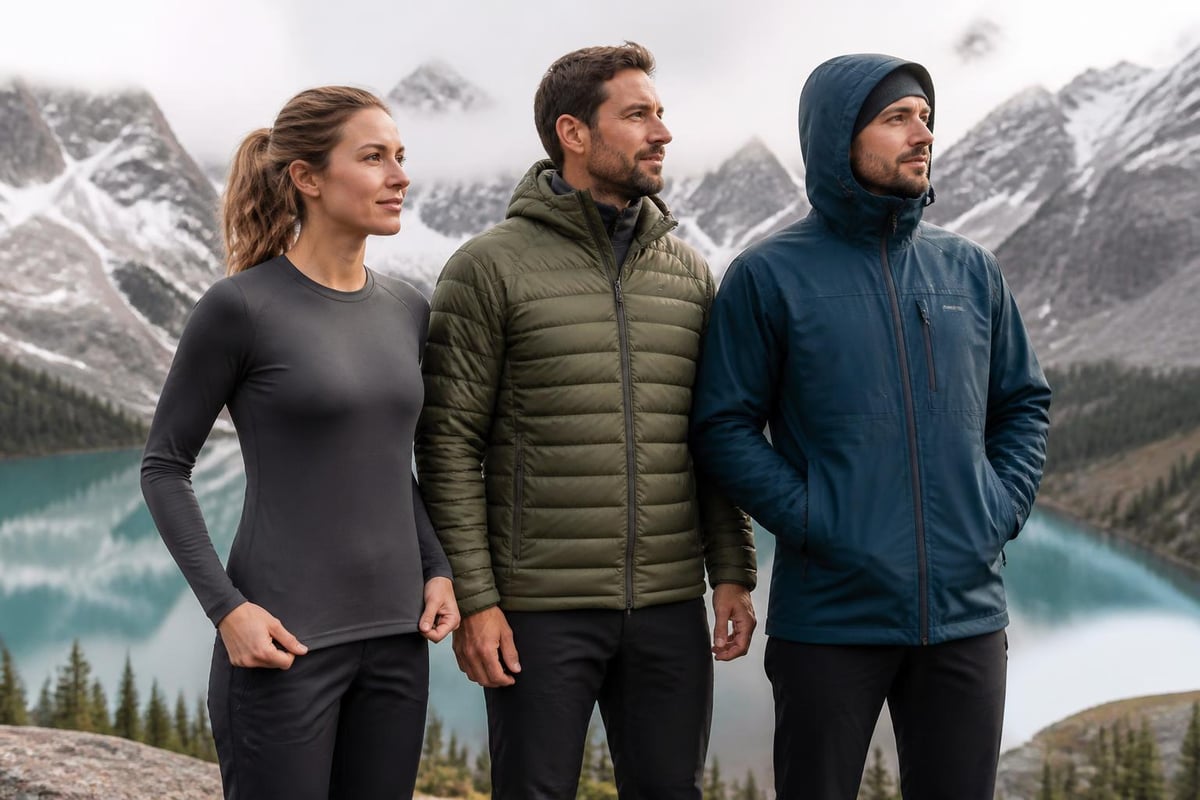
Effective workwear outdoor clothing often relies on layering rather than single heavy garments. This approach provides flexibility across changing weather conditions and varying activity levels throughout the workday.
The Three-Layer Approach
Base Layer (Moisture Management)
The foundation of any outdoor clothing system wicks perspiration away from skin, keeping workers dry and maintaining body temperature. Merino wool and technical synthetic fibrics excel in this role, offering superior moisture transport compared to cotton.
Mid Layer (Insulation)
This layer traps warm air close to the body whilst allowing moisture to pass through to outer layers. Fleece fabrics, synthetic insulation, and down provide varying levels of warmth-to-weight ratios suitable for different temperature ranges.
Outer Layer (Weather Protection)
The shell layer shields against wind, rain, and snow whilst allowing moisture vapour to escape. Hardshell jackets offer maximum protection for severe weather, whilst softshell garments provide moderate protection with enhanced breathability for high-activity work.
Businesses can reduce costs whilst maintaining protection by selecting versatile mid-layers that workers can wear beneath different outer shells throughout the year. This modular approach also simplifies inventory management for companies managing large outdoor teams.
High-Visibility Requirements for Outdoor Workers
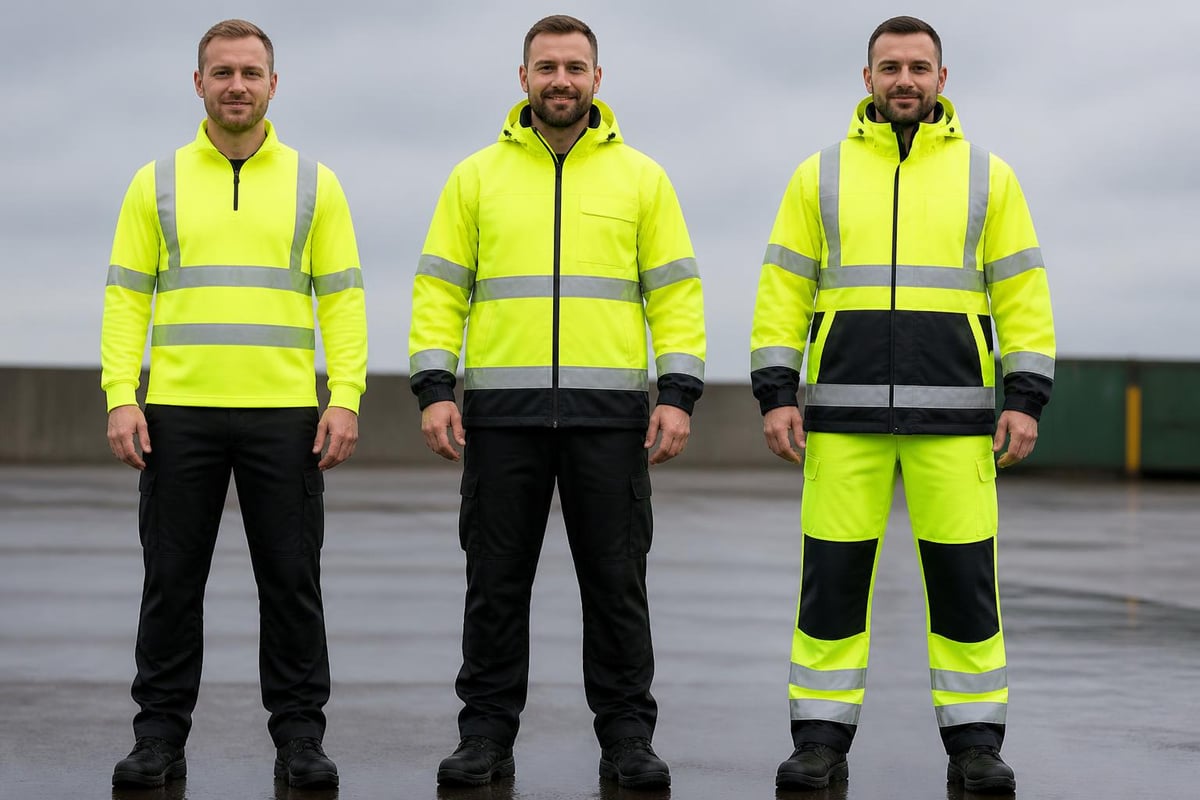
Many outdoor occupations require high-visibility workwear outdoor clothing to ensure worker safety near vehicular traffic or in low-light conditions. Understanding visibility classifications helps businesses select appropriate garments for specific risk levels.
Comprehensive guidance on high-visibility safety workwear standards explains the technical requirements for compliant clothing. The EN ISO 20471 standard defines three classes of high-visibility clothing based on the amount of fluorescent background material and retroreflective tape.
Visibility Classifications
- Class 1: Minimum visibility for low-risk environments with good lighting and minimal traffic
- Class 2: Medium visibility for workers near moderate traffic or in varied lighting conditions
- Class 3: Maximum visibility for high-risk situations involving fast-moving traffic or poor visibility
Weather protection adds complexity to high-visibility requirements. Rain can obscure retroreflective materials, whilst dirt accumulation reduces fluorescent fabric effectiveness. Workwear outdoor clothing for high-risk environments should feature sealed seams to prevent water penetration whilst maintaining visibility performance.
For construction workers requiring both weather protection and visibility, understanding why hi-vis clothing matters helps reinforce safety culture alongside compliance requirements.
Durability and Maintenance Considerations
Outdoor work environments subject clothing to exceptional wear. Abrasion from tools and materials, repeated exposure to weather extremes, and frequent laundering all challenge garment longevity. Selecting durable workwear outdoor clothing delivers better long-term value despite potentially higher initial costs.
Reinforcement Features
Quality outdoor workwear incorporates reinforcement in high-stress areas:
- Knee and seat panels in trousers, often using Cordura or similar abrasion-resistant fabrics
- Shoulder and elbow reinforcement in jackets to withstand tool belt and equipment contact
- Bar-tack stitching at stress points including pocket corners and closure points
- Triple-stitched seams throughout main construction areas
For businesses providing embroidered or printed branded workwear, proper care for embroidered garments extends both the clothing lifespan and brand presentation quality. Outdoor workwear requires specific maintenance approaches to preserve both protective performance and appearance.
Industry-Specific Outdoor Workwear Requirements
Different sectors place unique demands on workwear outdoor clothing, requiring tailored solutions rather than one-size-fits-all approaches.
Construction and Building Trades
Construction sites demand high-visibility clothing combined with robust weather protection. Multiple pockets for tools and materials, reinforced knees for kneeling work, and durable fabrics that withstand contact with rough materials are essential features.
Landscaping and Groundskeeping
Workers in these roles require clothing that performs across all seasons whilst allowing freedom of movement for physical tasks. Stretch panels in key areas, moisture-wicking fabrics for warm weather work, and water-resistant outer layers for wet conditions balance comfort with protection.
Utilities and Infrastructure Maintenance
Utilities workers often face prolonged exposure to severe weather whilst performing precise technical tasks. Workwear outdoor clothing for these roles must provide exceptional weather protection without restricting dexterity, often incorporating features like storm cuffs, adjustable hems, and articulated sleeves.
Agriculture and Farming
Agricultural workers require clothing that stands up to daily contact with animals, equipment, and natural materials whilst protecting against weather extremes. Easy-clean fabrics, reinforced construction, and practical features like chest pockets for essentials suit these demanding conditions.
| Industry Sector | Priority Features | Common Standards |
|---|---|---|
| Construction | High-visibility, reinforcement, tool storage | EN ISO 20471, EN 14404 (knee pads) |
| Landscaping | Breathability, stretch, seasonal adaptability | EN 343 (rain), EN 14058 (cold) |
| Utilities | Weather protection, dexterity, visibility | EN ISO 20471, EN 343 |
| Agriculture | Durability, easy cleaning, practical design | EN ISO 13688 (general requirements) |
Customisation and Branding for Outdoor Teams
Professional appearance matters even in outdoor work environments. Branded workwear outdoor clothing reinforces company identity, enhances team cohesion, and projects competence to clients and the public.
Polo Shirts with embroidered company logos provide a professional foundation for outdoor teams during warmer months, particularly for customer-facing roles in landscaping, utilities, and maintenance sectors. Combining branded base layers with weather-appropriate outer garments maintains brand visibility across changing conditions.
When adding logos to outdoor workwear, placement and technique matter. Embroidery typically withstands outdoor conditions better than printing, maintaining appearance through repeated weather exposure and laundering cycles. However, the comparison between embroidery and screen printing reveals situations where each technique excels.
Sizing and Fit Considerations for Layered Systems
Proper fit becomes more complex with workwear outdoor clothing designed for layering. Garments must accommodate underlayers without restricting movement or creating uncomfortable bulk.
Fit Guidelines for Layered Outdoor Workwear
Base Layers: Should fit snugly against skin without compression, allowing full range of motion. These garments work through direct skin contact, so loose fit reduces moisture-wicking effectiveness.
Mid Layers: Require enough room to fit comfortably over base layers whilst maintaining proximity to the body for effective insulation. Excessive looseness creates cold air pockets that reduce thermal efficiency.
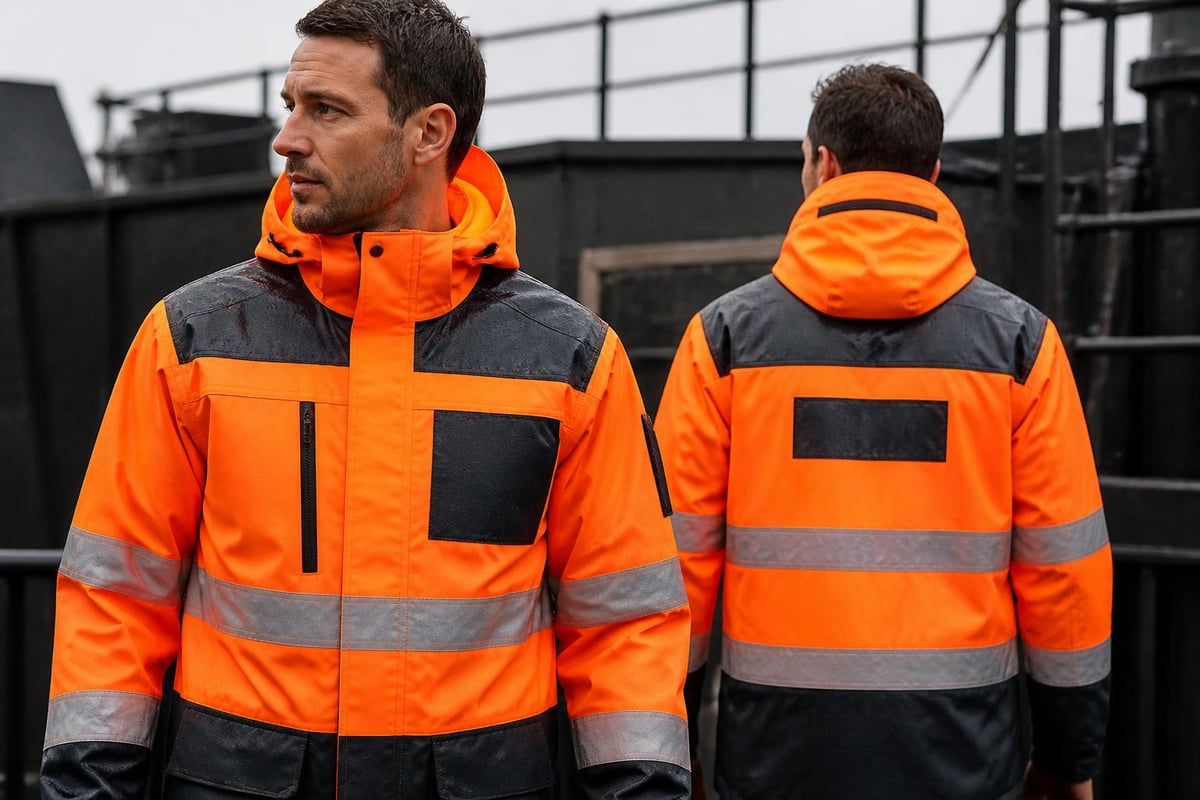
Outer Shells: Must provide sufficient space for both base and mid-layers without excessive bulk. Articulated sleeves, gusseted underarms, and action backs enhance mobility in multi-layer systems.
Many outdoor workers prefer sizing up for outer layers to ensure comfortable layering, but this approach can compromise weather protection if excess fabric allows wind and rain entry. Quality workwear outdoor clothing incorporates design features that provide layering space without oversizing.
For businesses ordering custom work clothing for outdoor teams, providing detailed sizing information and considering fit samples before bulk orders reduces returns and ensures worker satisfaction.
Cost Management and Return on Investment
Quality workwear outdoor clothing represents a significant investment, particularly for businesses maintaining large outdoor teams. However, the total cost of ownership extends beyond initial purchase price.
Calculating True Cost
Consider these factors when evaluating workwear outdoor clothing investments:
- Replacement frequency: Durable garments costing 40% more but lasting twice as long deliver better value
- Worker productivity: Comfortable, well-protected workers maintain higher productivity in adverse weather
- Safety incident reduction: Appropriate protective clothing reduces injury risks and associated costs
- Brand perception: Professional appearance influences customer confidence and company reputation
A systematic approach to buying work uniforms helps businesses balance these considerations whilst managing budgets effectively. Establishing relationships with reliable suppliers who understand specific industry requirements often delivers better long-term value than lowest-price purchasing strategies.
Emerging Trends in Outdoor Workwear Technology
The workwear outdoor clothing sector continues evolving, with several emerging trends reshaping available options for 2026 and beyond.
Sustainability Initiatives
Environmental concerns increasingly influence workwear selection. Recycled polyester from post-consumer plastic bottles, organic cotton alternatives, and PFC-free water-repellent treatments reduce environmental impact whilst maintaining performance standards. For businesses interested in eco-friendly workwear options, sustainable alternatives now match or exceed conventional materials in durability and protection.
Smart Fabric Integration
Temperature-regulating fabrics that adapt to changing conditions, moisture indicators that signal when workers need hydration, and embedded stretch technologies that enhance mobility represent the cutting edge of workwear outdoor clothing development.
Improved Visibility Solutions
Beyond traditional retroreflective tape, newer visibility technologies include LED-integrated clothing, photoluminescent materials that glow after dark exposure, and prismatic retroreflective materials offering enhanced performance in varied lighting conditions.
Enhanced Fit Technologies
3D body scanning and custom sizing options increasingly complement traditional sizing systems, ensuring better fit for diverse body types whilst reducing the sizing complexity that challenges many outdoor workwear programmes.
Supplier Selection and Quality Assurance
Choosing reliable suppliers for workwear outdoor clothing directly impacts garment quality, delivery reliability, and long-term satisfaction. Comprehensive workwear standards guides help businesses evaluate supplier claims against recognised certification requirements.
Quality assurance should extend beyond initial garment inspection to include:
- Certification verification: Confirming that claimed standards compliance includes valid testing documentation
- Sample testing: Evaluating garments under actual working conditions before committing to bulk orders
- Supplier transparency: Understanding manufacturing processes, quality control procedures, and supply chain ethics
- After-sales support: Ensuring suppliers provide replacement services, sizing support, and warranty coverage
Businesses should verify that suppliers maintain appropriate quality and certification standards throughout their product ranges, not just for flagship items. Consistency across product lines indicates robust quality management systems.
Selecting appropriate workwear outdoor clothing requires balancing regulatory compliance, performance requirements, durability expectations, and budget constraints whilst ensuring worker comfort and safety across varied conditions. By understanding material technologies, layering principles, and industry-specific requirements, businesses can equip outdoor teams with clothing that protects effectively whilst delivering long-term value. Whether you're outfitting construction crews, landscaping teams, or utilities workers, Cobra Workwear provides the expertise and product range to meet your outdoor workwear needs with quality garments and professional embroidery services.
