

A work uniform with logo represents far more than simple attire for your employees. It serves as a mobile advertisement, a trust signal to customers, and a powerful tool for building team unity across your organisation. In 2026, British businesses increasingly recognise that professional workwear featuring company branding delivers measurable returns on investment through enhanced visibility, improved customer perception, and strengthened workplace culture. Whether you operate in construction, hospitality, healthcare, or any other sector requiring professional presentation, understanding how to effectively implement branded uniforms can transform your business identity.
Strategic Benefits of Branded Work Uniforms
Implementing a work uniform with logo across your organisation delivers advantages that extend well beyond aesthetics. The benefits of branded workwear include enhanced security, reinforced brand reputation, and measurable improvements in employee morale.
Brand Recognition and Visibility
Every employee becomes a walking advertisement for your company. When your team wears uniforms featuring your logo, they create countless daily impressions with potential customers, suppliers, and partners. This consistent exposure builds familiarity and trust within your local community.
Professional Image Enhancement
Customers immediately perceive uniformed staff as more professional, trustworthy, and competent. This psychological response occurs automatically, making branded workwear one of the most cost-effective marketing investments available to businesses.
- First impressions form within seven seconds of meeting
- Uniformed employees receive 40% more customer trust
- Professional appearance correlates directly with perceived service quality
- Brand consistency across touchpoints strengthens market position
Team Unity and Employee Pride
A work uniform with logo fosters equality and belonging amongst staff members. When everyone wears the same branded attire, hierarchical barriers diminish, and team cohesion naturally increases. Employees feel part of something larger than themselves, which significantly impacts retention and performance.

Choosing the Right Garments for Logo Application
Selecting appropriate workwear depends entirely on your industry requirements, working conditions, and brand positioning. Different sectors demand different functionality whilst maintaining professional branding standards.
Industry-Specific Considerations
| Industry | Essential Features | Popular Garment Types |
|---|---|---|
| Construction | Durability, visibility, protection | Hi-vis jackets, work trousers, safety boots |
| Hospitality | Comfort, style, easy maintenance | Polo shirts, aprons, chef whites |
| Healthcare | Hygiene, flexibility, identification | Tunics, scrubs, soft shell jackets |
| Corporate | Professional appearance, comfort | Shirts, blazers, smart trousers |
The best workwear for men varies significantly based on daily tasks and environmental factors. Construction workers require robust, protective clothing that withstands harsh conditions, whilst hospitality staff need comfortable, presentable garments that remain fresh throughout long shifts.
Fabric Quality and Longevity
Investing in premium fabrics ensures your work uniform with logo maintains its appearance through countless wash cycles and demanding work conditions. Cheap materials fade quickly, causing logos to lose clarity and your brand to appear unprofessional.
Superior fabrics deliver:
- Extended lifespan reducing replacement frequency
- Better logo retention through washing
- Enhanced comfort improving employee satisfaction
- Professional appearance maintenance
Seasonal Variations and Layering
British weather demands versatile uniform programmes that accommodate temperature fluctuations. Planning for seasonal requirements ensures employees remain comfortable whilst maintaining brand consistency throughout the year.
Consider offering:
- Lightweight polo shirts or t-shirts for summer months
- Mid-layer fleeces or hoodies for transitional seasons
- Insulated jackets for winter conditions
- Waterproof outerwear for wet weather protection
Polo shirts with embroidered company logos provide excellent versatility across seasons, functioning as standalone summer wear or comfortable base layers during cooler months whilst maintaining professional presentation standards.
Logo Design Principles for Workwear
Creating an effective work uniform with logo requires careful consideration of design elements that translate well onto fabric whilst maintaining brand integrity.
Size and Proportion Balance
Understanding how logo size affects uniform design balance proves crucial for achieving professional results. Oversized logos appear gaudy and unprofessional, whilst undersized branding becomes invisible from normal viewing distances.
Optimal sizing guidelines:
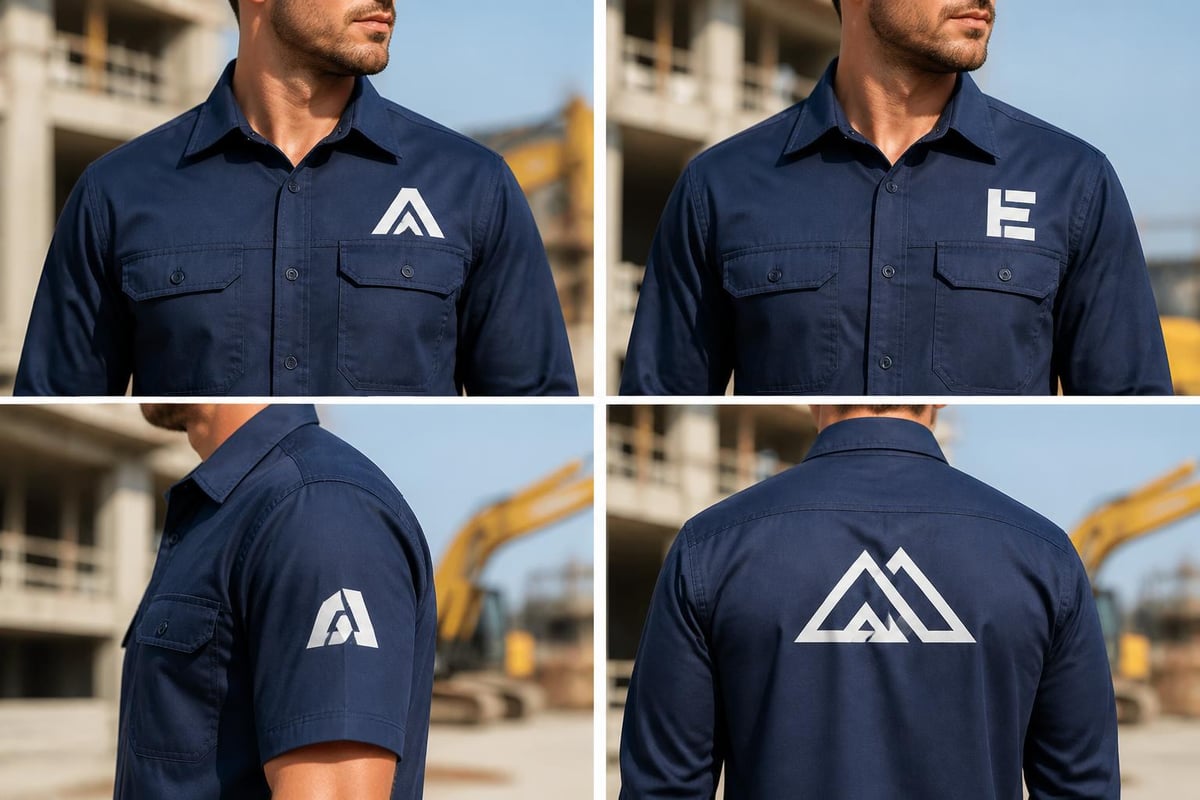
- Left chest placement: 8-10cm width for most garments
- Back placement: 25-30cm width for maximum visibility
- Sleeve placement: 5-7cm width for subtle branding
- Scale proportionally for different garment sizes
Colour Considerations
Logo colours must provide sufficient contrast against garment backgrounds whilst aligning with your established brand guidelines. Dark logos on light fabrics and vice versa ensure maximum visibility and professional appearance.
Practical colour planning:
- Test logo variations on different coloured fabrics before committing to large orders
- Consider industry standards - construction often uses bright colours, corporate prefers neutral tones
- Account for fading - certain thread colours lose vibrancy faster through industrial washing
- Maintain brand consistency across all uniform pieces and touchpoints
Logo Placement Strategies
The workwear logo placement guide explores various positioning options, each offering distinct advantages depending on your visibility goals and garment types.
Traditional Placement Options
Left Chest Position
The most popular location for work uniform with logo applications. This position aligns with the viewer's natural eye line during conversation, ensuring consistent brand exposure during customer interactions.
Advantages:
- Professional and conventional appearance
- Visible during face-to-face conversations
- Suitable for all garment types
- Aligns with traditional business attire standards
Right Chest Alternative
Sometimes utilised when left chest positioning conflicts with pocket placements or when companies want to differentiate from competitors. Less common but equally professional when executed properly.
Enhanced Visibility Positions
| Position | Visibility Level | Best Applications | Considerations |
|---|---|---|---|
| Left chest | Medium | Office, retail, hospitality | Professional standard |
| Right chest | Medium | Alternative branding | Pocket conflicts |
| Centre back | High | Construction, events | Maximum exposure |
| Sleeve | Low-Medium | Subtle branding | Limited space |
| Leg/trouser | Low | Work trousers | Durability concerns |
Back Placement for Maximum Exposure
Large back logos create substantial visibility, particularly valuable for construction workers, event staff, or any roles where employees are frequently viewed from behind. This positioning transforms your work uniform with logo into a mobile billboard.
The relationship between fashion and identity in workwear demonstrates how strategic logo placement reinforces professional identity whilst supporting practical functionality.
Customisation Methods and Durability
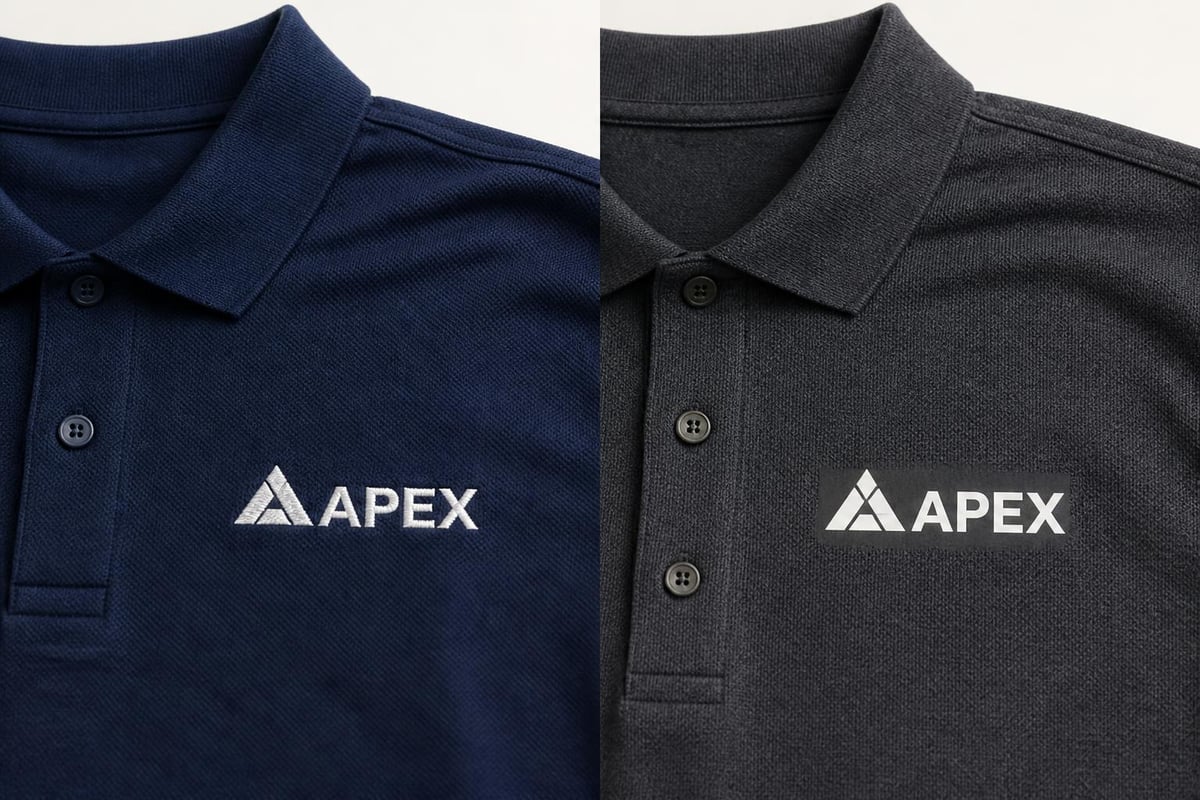
Different logo application techniques offer varying advantages regarding appearance, longevity, and cost-effectiveness. Understanding embroidery vs screen printing helps determine the optimal method for your work uniform with logo requirements.
Embroidery Excellence
Embroidery creates a premium, three-dimensional appearance that conveys quality and permanence. This technique proves ideal for logos featuring bold text and simple designs without excessive detail.
Embroidery advantages:
- Exceptional durability through industrial washing
- Professional, textured appearance
- Colour fastness superior to printing methods
- Premium brand perception
- Suitable for most fabric types
Embroidery limitations:
- Higher per-unit cost for complex designs
- Not ideal for photographic images
- Thread count restrictions affect fine details
- Setup costs for new designs
Screen Printing Applications
Screen printing excels for large orders, complex colour gradients, and photographic images that embroidery cannot replicate. This method delivers vibrant colours and precise detail reproduction.
When to choose screen printing:
- Large quantity orders reducing per-unit costs
- Complex designs with multiple colours or gradients
- Photographic logos or detailed artwork
- Budget-conscious projects
- T-shirts and lightweight fabrics
Essential tips for customising workwear uniforms emphasise selecting methods that withstand industrial laundering whilst maintaining professional appearance throughout the garment's lifespan.
Implementing Your Uniform Programme
Successfully rolling out a work uniform with logo across your organisation requires strategic planning, clear communication, and attention to employee needs.
Sizing and Fitting Considerations
Comprehensive Size Ranges
Modern workforces demand inclusive sizing that accommodates all body types comfortably. Offering extended size ranges demonstrates respect for employee diversity whilst ensuring everyone presents professionally.
Provide:
- Unisex sizing from XS through 5XL minimum
- Gender-specific cuts where appropriate
- Tall and petite variations for better fit
- Sample garments for staff try-ons before ordering
Fit Sessions and Feedback
Organising fitting sessions before placing large orders prevents costly mistakes and employee dissatisfaction. Allow staff to try different sizes and styles, providing feedback that informs final purchasing decisions.
Quantity Planning and Budgeting
Determining appropriate quantities per employee depends on several factors including washing frequency, work intensity, and whether uniforms remain on-site or go home with staff.
Standard allocation guidelines:
- Office/retail roles: 3-5 shirts per employee
- Construction/outdoor: 5-7 items minimum for rotation
- Hospitality: 4-6 pieces accounting for spillage/staining
- Healthcare: 5-7 sets for hygiene requirements
Maintenance and Care Standards
Preserving the appearance of your work uniform with logo requires establishing clear care protocols that employees understand and follow consistently. The importance of caring for embroidered workwear cannot be overstated for maximising garment lifespan and maintaining professional brand presentation.
Washing and Cleaning Protocols
Temperature and Detergent Selection
Following manufacturer guidelines prevents premature fading, shrinkage, and logo degradation. Most work uniforms perform best when washed at 40-60°C using non-biological detergents that protect embroidery threads and printed designs.
Essential washing rules:
- Turn garments inside out protecting exterior branding
- Avoid fabric softeners that can damage technical fabrics
- Separate colours preventing dye transfer
- Don't overload washing machines allowing proper agitation
- Remove promptly after washing preventing creasing
Professional Laundering Services
For industries requiring industrial-grade cleaning or businesses providing laundry services to employees, professional laundering ensures consistent results whilst extending garment lifespan significantly beyond domestic washing.
Replacement and Refresh Cycles
Even premium workwear eventually requires replacement. Establishing replacement schedules maintains professional standards whilst controlling costs through predictable budgeting.
Typical replacement timeframes:
- Heavy-duty construction wear: 12-18 months
- Standard office attire: 18-24 months
- Healthcare uniforms: 12-18 months (hygiene standards)
- Hospitality clothing: 15-20 months
Regularly assess uniform condition, replacing items showing excessive wear, fading, or logo degradation before they negatively impact your brand image.
Measuring Return on Investment
Quantifying the value delivered by your work uniform with logo programme helps justify ongoing investment whilst identifying optimisation opportunities.
Brand Visibility Metrics
Impression Calculations
Each uniformed employee generates hundreds of daily brand impressions. Calculating these touches demonstrates substantial marketing value relative to traditional advertising costs.
Formula: (Number of employees × average daily customer contacts × working days) = Annual brand impressions
For a 20-employee business where each staff member interacts with 50 people daily: 20 × 50 × 250 working days = 250,000 annual impressions
Compare this exposure value against equivalent advertising costs to understand true ROI.
Employee Satisfaction Indicators
The benefits of branding employee uniforms include fostering connection and professional pride. Monitoring satisfaction through surveys and feedback sessions reveals whether your programme successfully enhances workplace culture.
Key satisfaction metrics:
- Comfort ratings across different garment types
- Pride in wearing company branding
- Perceived professional image enhancement
- Preference for uniform provision versus personal clothing
- Suggested improvements for future orders
Understanding how to add logos to workwear that enhance your brand ensures your investment delivers maximum marketing impact whilst supporting employee satisfaction.
Supplier Selection and Quality Assurance
Choosing the right partner for your work uniform with logo needs significantly impacts programme success, product quality, and long-term satisfaction.
Essential Supplier Criteria
In-House Capabilities
Suppliers offering in-house embroidery and printing services typically deliver faster turnaround times, better quality control, and more competitive pricing compared to companies outsourcing customisation work. The advantages of in-house embroidery for fast turnaround and quality become particularly evident when managing large orders or requiring rush services.
Evaluate suppliers on:
- Production facilities and equipment quality
- Turnaround time guarantees
- Minimum order quantities and flexibility
- Sample provision before full production
- Quality assurance processes
Industry Experience and Portfolio
Reviewing supplier portfolios reveals their experience with businesses similar to yours. Providers familiar with your sector understand specific requirements, compliance standards, and practical considerations that generic suppliers might overlook.
Quality Control Processes
| Quality Factor | Importance | Verification Method |
|---|---|---|
| Fabric quality | Critical | Request fabric samples and specifications |
| Logo accuracy | Critical | Approve digital mock-ups before production |
| Sizing consistency | High | Check measurement charts against samples |
| Colour matching | High | Review colour swatches and Pantone references |
| Stitching quality | Medium | Examine sample products for defects |
Examining branded workwear options from established UK suppliers ensures you receive products meeting British quality standards whilst supporting local manufacturing capabilities.
Sustainability and Ethical Considerations
Modern businesses increasingly prioritise environmental responsibility and ethical manufacturing when selecting work uniform with logo suppliers.
Eco-Friendly Material Options
Sustainable fabric choices demonstrate corporate responsibility whilst often delivering superior comfort and performance characteristics. Eco-friendly workwear and embroidered apparel manufactured from organic and recycled materials reduces environmental impact without compromising professional appearance.
Sustainable options include:
- Organic cotton reducing pesticide usage
- Recycled polyester from plastic bottles
- Bamboo fabrics offering natural antibacterial properties
- Hemp blends providing exceptional durability
Supply Chain Transparency
Reputable suppliers willingly share information about manufacturing locations, labour practices, and environmental policies. This transparency ensures your branded workwear aligns with corporate values and customer expectations.
Longevity Over Disposability
Investing in premium work uniform with logo items that last significantly longer than budget alternatives reduces waste whilst delivering better long-term value. Quality garments withstand more wash cycles, maintain appearance longer, and require less frequent replacement.
The environmental benefits compound:
- Reduced manufacturing demand
- Lower transportation emissions
- Decreased landfill contribution
- Better resource utilisation
Advanced Branding Opportunities
Beyond basic logo application, creative customisation approaches can differentiate your work uniform with logo programme whilst strengthening brand identity.
Personalisation Elements
Adding individual employee names creates accountability, facilitates customer relationships, and enhances professional presentation. Name embroidery costs relatively little whilst delivering substantial relationship-building value, particularly in customer-facing roles.
Additional branding positions:
- Department identifiers on sleeves
- Role titles beneath logos
- Service credentials or qualifications
- Years of service recognition
Exploring creative embroidery ideas for uniforms and accessories reveals innovative approaches that extend brand presence beyond standard logo placement.
Coordinated Accessories
Complete your uniform programme with branded accessories that reinforce professional image across all customer touchpoints. Caps, bags, safety equipment, and outerwear featuring coordinated branding create comprehensive visual consistency.
Complementary items include:
- Embroidered caps for outdoor workers
- Branded bags for tools or equipment
- Hi-vis vests with logo application
- Fleeces and jackets for layering
Understanding why hi-vis clothing matters in construction ensures safety requirements integrate seamlessly with branding objectives without compromising visibility standards.
Implementing a professional work uniform with logo transforms how customers perceive your business whilst building team unity and brand recognition across every customer interaction. Success requires careful consideration of garment selection, logo design principles, placement strategies, and ongoing maintenance standards that preserve your investment's value. Cobra Workwear provides comprehensive embroidered workwear solutions with in-house customisation services, ensuring your team presents professionally whilst your brand gains maximum visibility across construction, hospitality, healthcare, and corporate sectors throughout the UK.
