

Selecting appropriate tops workwear for your workforce represents a crucial decision that impacts safety, comfort, productivity, and brand perception. Whether you're outfitting a construction team, hospitality staff, or healthcare professionals, understanding the nuances of workwear tops ensures your employees perform at their best whilst representing your company effectively. This comprehensive guide explores the essential considerations for choosing tops workwear that meets regulatory requirements, enhances team identity, and delivers lasting value.
Understanding Tops Workwear Categories
The landscape of tops workwear encompasses far more than basic t-shirts. Different industries require specific garment types that balance functionality with professionalism.
Core Workwear Top Types
Polo shirts remain the cornerstone of professional workwear across numerous sectors. These versatile garments offer a smart appearance whilst maintaining comfort throughout long shifts. The collar provides a professional touch that elevates brand perception, particularly in customer-facing roles.
T-shirts serve as practical solutions for physically demanding environments where breathability and freedom of movement take priority. Modern work t-shirts incorporate advanced moisture-wicking fabrics and reinforced stitching that withstands industrial laundering cycles.
High-visibility tops are mandatory in many industries, particularly construction, roadwork, and logistics. These specialised garments incorporate fluorescent materials and reflective tape that ensure worker visibility in low-light conditions or high-risk environments.
Fleece tops and sweatshirts provide essential thermal insulation for outdoor workers or those in temperature-controlled facilities. These layering pieces allow workers to adapt to changing conditions throughout their shift.
| Garment Type | Best For | Key Features | Typical Industries |
|---|---|---|---|
| Polo Shirts | Professional settings | Collar, breathable, smart appearance | Hospitality, retail, office |
| T-Shirts | Active work | Lightweight, moisture-wicking, durable | Construction, warehousing, manufacturing |
| Hi-Vis Tops | Safety environments | Reflective tape, fluorescent fabric | Construction, highways, logistics |
| Fleece/Sweatshirts | Variable conditions | Thermal insulation, layering capability | Outdoor work, facilities management |

Regulatory Standards and Safety Compliance
When selecting tops workwear, compliance with industry-specific regulations protects both employees and employers from potential liabilities.
Understanding OSHA standards provides the foundation for workplace safety in apparel requirements. These regulations establish minimum safety thresholds that employers must meet across various industries.
High-Visibility Requirements
For roles requiring high-visibility clothing, EN ISO 20471 standards dictate the minimum amounts of fluorescent background material and reflective tape. The three classification levels determine appropriate garments based on risk assessment:
- Class 1: Minimal risk environments with good visibility
- Class 2: Medium risk areas with moderate traffic or poor visibility
- Class 3: High-risk environments requiring maximum conspicuity
Detailed guidance on high-visibility workwear helps employers identify which classification applies to their operations. Selecting the wrong class can result in serious safety incidents and regulatory penalties.
The specific requirements for reflective tape placement, colour combinations, and material performance ensure that tops workwear delivers genuine protection rather than cosmetic compliance. When designing work clothes, these standards must inform every specification decision.
Material Selection and Performance Features
The fabrics chosen for tops workwear dramatically influence comfort, durability, and maintenance costs over the garment's lifecycle.
Fabric Technology Advancements
Modern workwear textiles incorporate sophisticated performance features:
Moisture management systems draw perspiration away from skin, preventing discomfort and maintaining body temperature regulation. Polyester-cotton blends typically offer superior moisture-wicking compared to pure cotton whilst retaining softness.
Anti-microbial treatments inhibit bacterial growth, reducing odours and extending time between washes. This feature proves particularly valuable in healthcare and food service environments where hygiene standards are paramount.
Stretch fabrics incorporating elastane allow greater freedom of movement, reducing restriction during physical tasks. This seemingly minor feature significantly impacts worker comfort during repetitive movements.
Flame-resistant materials provide essential protection in industries with fire or arc flash hazards. FR-treated cotton or inherently flame-resistant fibres meet stringent safety certifications.
Understanding various types of workwear helps employers match fabric specifications to operational requirements rather than selecting based purely on cost.
Branding and Corporate Identity
Tops workwear serves as mobile advertising, transforming employees into brand ambassadors during every customer interaction and site visit.
Customisation Techniques
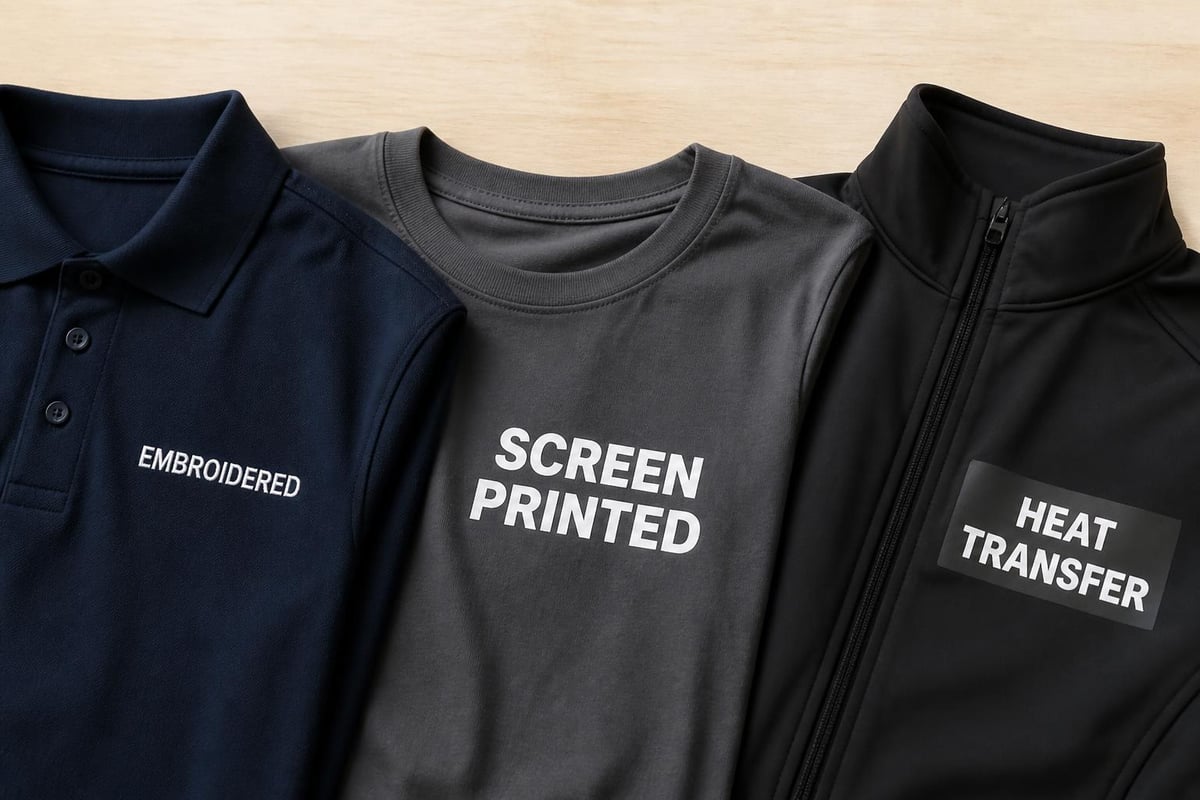
Embroidery remains the premium choice for adding company logos and employee names to workwear. The technique offers exceptional durability that withstands hundreds of industrial wash cycles without degradation. Embroidery services can accommodate complex designs with multiple thread colours, creating professional results that enhance perceived quality.
Screen printing provides cost-effective branding for large quantities, particularly on t-shirts where vibrant colours and large designs make maximum impact. The process suits simpler logo designs and allows for creative placement across the garment.
Heat transfer offers flexibility for small batches or complex full-colour designs, though longevity typically falls short of embroidery standards.
When considering how to add logos to workwear, placement, sizing, and colour coordination require careful consideration. Logos positioned on the left chest create professional recognition whilst remaining unobtrusive. Larger back prints suit teams requiring visibility from all angles.
Sizing and Fit Considerations
Poorly fitting tops workwear undermines comfort, safety, and professional appearance regardless of garment quality.
Comprehensive Sizing Strategies
Offering inclusive size ranges ensures all team members access appropriate workwear. Standard sizing typically spans XS through 5XL, with some manufacturers extending to 8XL for true inclusivity.
Gender-specific cuts acknowledge physiological differences, providing better fit and comfort. Women's workwear tops feature adjusted shoulder widths, torso lengths, and body contours that eliminate the makeshift appearance of modified men's garments.
Adjustable features such as side vents, elasticated panels, and convertible sleeves accommodate body type variations within single size categories.
Establishing clear size charts with chest measurements, sleeve lengths, and body lengths helps employees select appropriate sizes before ordering. Many businesses conduct fitting sessions where workers trial multiple sizes to identify optimal fit before bulk ordering.
The importance of quality workwear extends beyond initial comfort to long-term sizing consistency after repeated washing and wear.
Seasonal Adaptability
Year-round operations require tops workwear strategies that adapt to British weather variability whilst maintaining consistent branding.
Layering Systems
Developing coherent layering systems allows workers to regulate body temperature without compromising safety or appearance:
- Base layer: Lightweight t-shirts provide moisture management
- Mid layer: Polo shirts or long-sleeve tops offer moderate insulation
- Outer layer: Fleece tops or hooded sweatshirts deliver thermal protection
Colour coordination across layers maintains brand consistency even when outer layers are removed during warmer periods. Polo shirts embroidered with company branding serve excellently as versatile mid-layer options that transition seamlessly between seasons.
Sleeve options warrant consideration. Short-sleeve, long-sleeve, and convertible-sleeve variants provide flexibility within uniform programmes. Some businesses stock both short and long-sleeve versions of core garments, allowing workers to select based on personal preference and working conditions.
Fabric weight variations within the same garment style enable seasonal differentiation. Summer-weight polo shirts in 180gsm fabric contrast with winter-weight 220gsm versions whilst maintaining identical appearance and branding.
Durability and Lifecycle Costs
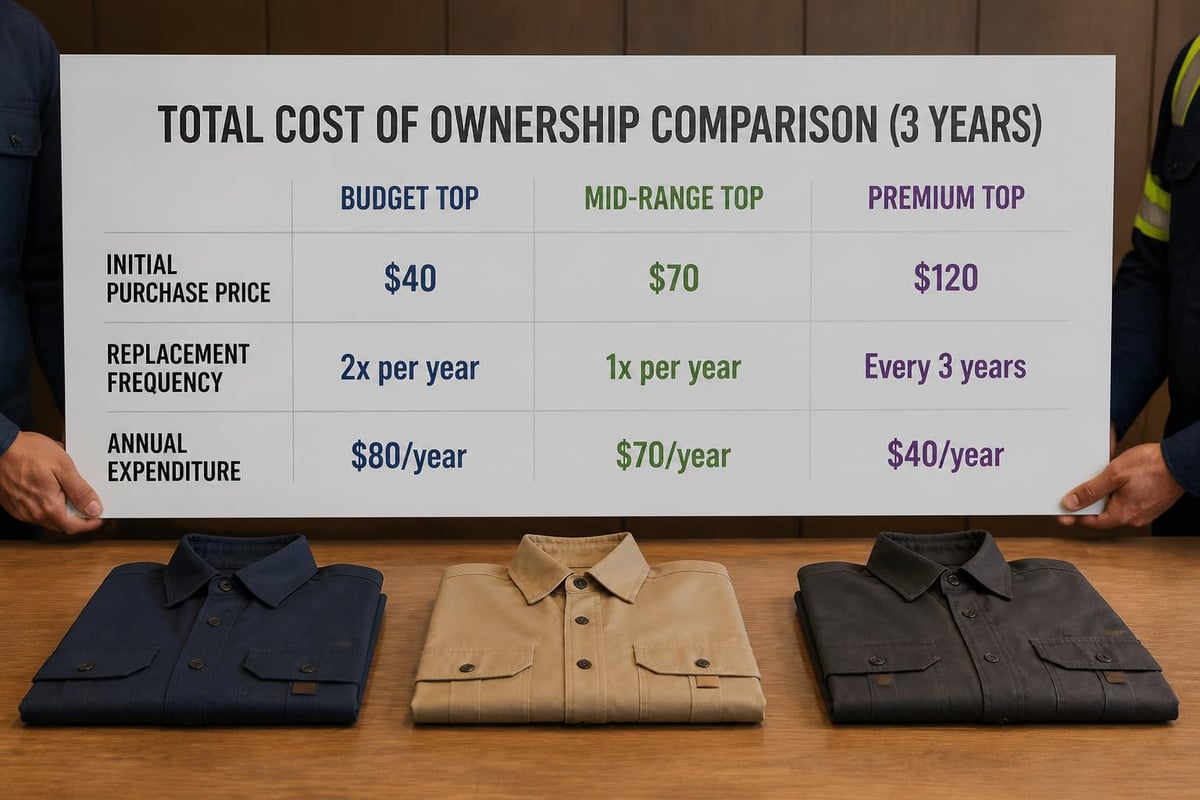
Initial purchase price represents only one component of tops workwear total cost of ownership.
Calculating True Value
Garment longevity depends on construction quality, fabric durability, and maintenance practices. Reinforced stress points at shoulder seams, underarm areas, and hem edges extend serviceable life significantly.
Colour fastness determines how well garments maintain appearance after repeated washing. Industrial-grade dyes resist fading, preserving brand colours and professional appearance throughout the garment lifecycle.
Replacement frequency multiplied by individual garment cost reveals annual expenditure. A £15 t-shirt requiring replacement every 6 months costs more annually than a £25 garment lasting 18 months.
| Quality Tier | Initial Cost | Average Lifespan | Annual Cost | Professional Appearance |
|---|---|---|---|---|
| Budget | £8-12 | 3-6 months | £16-48 | Poor after 10 washes |
| Mid-range | £15-25 | 12-18 months | £10-25 | Good throughout life |
| Premium | £30-45 | 24-36 months | £10-22.50 | Excellent throughout |
Caring for embroidered workwear properly extends garment life and preserves branding investment. Simple practices like turning garments inside-out before washing and avoiding excessive heat during drying prevent premature degradation.
Industry-Specific Requirements
Different sectors impose unique demands on tops workwear based on operational hazards, customer expectations, and regulatory frameworks.
Construction and Building Services
Construction environments demand robust tops workwear that withstands abrasion, snagging, and frequent laundering. High-visibility clothing in construction isn't optional-it's a legal requirement in most site environments.
Class 2 or Class 3 hi-vis t-shirts with reflective tape provide essential conspicuity whilst managing heat during physical labour. Reinforced fabrics resist tears from sharp edges and rough materials encountered during typical construction tasks.
Hospitality and Food Service
Customer-facing roles require tops workwear that projects professionalism and cleanliness. Polo shirts in company colours create cohesive team identity whilst maintaining smart-casual standards appropriate for dining environments.
Stain-resistant treatments help garments maintain fresh appearance despite inevitable spills and splashes. Dark colours or strategic patterning can disguise minor marks between shifts, reducing laundry frequency without compromising presentation.
Healthcare and Medical
Healthcare settings require tops workwear that withstands high-temperature washing cycles essential for infection control. Polyester-cotton blends maintain colour and shape through repeated 60°C or 75°C washes.
Antimicrobial treatments provide additional hygiene assurance, though these complement rather than replace proper laundering protocols. Comfortable fits that allow free movement prove essential during 12-hour shifts requiring constant patient care activities.
Warehousing and Logistics
Temperature-variable warehouse environments benefit from layering-friendly tops workwear. T-shirts under fleece tops allow workers to adapt as they move between refrigerated storage and ambient areas.
Breathable fabrics prevent overheating during physically demanding picking and packing activities. Reflective elements enhance safety in facilities with forklift traffic, even when full hi-vis garments aren't mandated.
Procurement Strategies
Efficient purchasing approaches reduce administrative burden whilst ensuring consistent workwear availability.
Bulk Ordering Benefits
Consolidating purchases generates cost savings through:
- Volume discounts reducing per-garment costs
- Simplified inventory management
- Consistent sizing and colour batches
- Reduced administrative processing time
Buying work uniforms strategically means forecasting requirements based on workforce size, replacement cycles, and seasonal variations. Maintaining buffer stock prevents emergency orders at premium pricing.
New Starter Provisions
Establishing starter packs ensures new employees receive complete tops workwear kits immediately. Typical packs include:
- Three garments enabling rotation during wash cycles
- Appropriate sizing based on pre-employment measurements
- Pre-branded items ready for immediate use
- Welcome documentation explaining care requirements
This systematic approach creates positive first impressions and ensures compliance from day one.
Ongoing Replenishment
Implementing wear-and-tear replacement policies maintains workforce appearance without requiring employees to request replacements. Annual or bi-annual replacements based on role demands prevent shabby garments undermining brand perception.
Some organisations operate exchange programmes where worn garments are surrendered when receiving replacements, preventing personal stockpiling whilst ensuring old uniforms don't circulate inappropriately.
Sustainable Workwear Practices
Environmental responsibility increasingly influences tops workwear decisions as businesses recognise sustainability's role in corporate responsibility and brand reputation.
Eco-Friendly Material Options
Organic cotton eliminates pesticide use during cultivation, reducing environmental impact compared to conventional cotton. Whilst slightly more expensive, eco-friendly workwear options demonstrate environmental commitment that resonates with environmentally conscious customers and employees.
Recycled polyester diverts plastic bottles from landfills whilst delivering identical performance to virgin polyester. This closed-loop approach reduces resource extraction and manufacturing emissions.
Sustainable manufacturing processes including low-impact dyes, water recycling systems, and renewable energy usage reduce the carbon footprint of garment production.
Extending Garment Lifecycles
Proper maintenance dramatically reduces environmental impact by decreasing replacement frequency:
- Washing only when necessary rather than after every wear
- Using appropriate water temperatures avoiding unnecessary hot washes
- Line drying when possible to reduce energy consumption
- Repairing minor damage rather than discarding garments
Best practices for caring for workwear align cost savings with environmental benefits, creating win-win scenarios for businesses and the planet.
Legal and Compliance Considerations
Employers bear legal responsibilities regarding workwear provision that extend beyond simply purchasing garments.
Regulatory Obligations
Workwear regulations in the United States provide useful context, though UK businesses must primarily focus on British and European standards. Health and Safety at Work Act provisions require employers to provide appropriate protective equipment without cost to employees.
Personal Protective Equipment Regulations mandate that PPE-classified workwear meets relevant safety standards. High-visibility tops falling under PPE classification must carry CE marking indicating conformity with applicable directives.
Employment Law Implications
Uniform policies requiring specific tops workwear must be clearly communicated during recruitment and documented in employment contracts. Deducting costs from wages without contractual agreement risks employment tribunal claims.
Policies must accommodate reasonable adjustments for disabilities, religious observances, and gender identity. Flexibility in garment selection whilst maintaining brand consistency demonstrates inclusive employment practices.
Quality Assurance and Supplier Selection
Choosing reliable workwear suppliers impacts garment quality, delivery reliability, and long-term partnership success.
Evaluation Criteria
Product quality assessment requires examining samples before bulk ordering. Check stitching integrity, fabric weight, colour consistency, and finishing details. Request wash-test results demonstrating performance after multiple laundry cycles.
Customisation capabilities vary significantly between suppliers. In-house embroidery services offer faster turnaround and better quality control compared to outsourced decoration.
Delivery reliability prevents workwear shortages disrupting operations. Suppliers with stock-holding programmes ensure common sizes remain available for immediate dispatch whilst specialist sizes are produced to order.
Customer service responsiveness resolves issues efficiently. Suppliers offering dedicated account management provide consistent points of contact understanding your specific requirements.
Building Supplier Relationships
Long-term partnerships deliver benefits beyond transactional purchases:
- Preferential pricing based on loyalty and volume
- Priority production during peak demand periods
- Customised solutions addressing unique requirements
- Proactive communication regarding product updates or discontinuations
Regular reviews assess whether supplier relationships continue delivering value as business needs evolve.
Selecting appropriate tops workwear requires balancing safety compliance, brand representation, comfort, durability, and cost-effectiveness whilst adapting to seasonal variations and industry-specific demands. Whether you need high-visibility construction wear, professional hospitality garments, or comfortable warehouse clothing, the right supplier makes all the difference. Cobra Workwear provides comprehensive tops workwear solutions with in-house embroidery services ensuring fast turnaround and exceptional quality for businesses across the UK-explore our range today to outfit your team with professional, durable workwear that enhances both safety and brand identity.
