

Professional workwear serves as both protective equipment and brand representation, making the design process a critical investment for businesses across all sectors. When you design work clothes, you're not simply selecting garments; you're creating functional solutions that must withstand demanding environments whilst projecting a professional image. The right approach to workwear design balances practical requirements with aesthetic considerations, ensuring employees feel comfortable and confident whilst maintaining safety standards and brand consistency throughout their working day.
Understanding the Fundamentals of Workwear Design
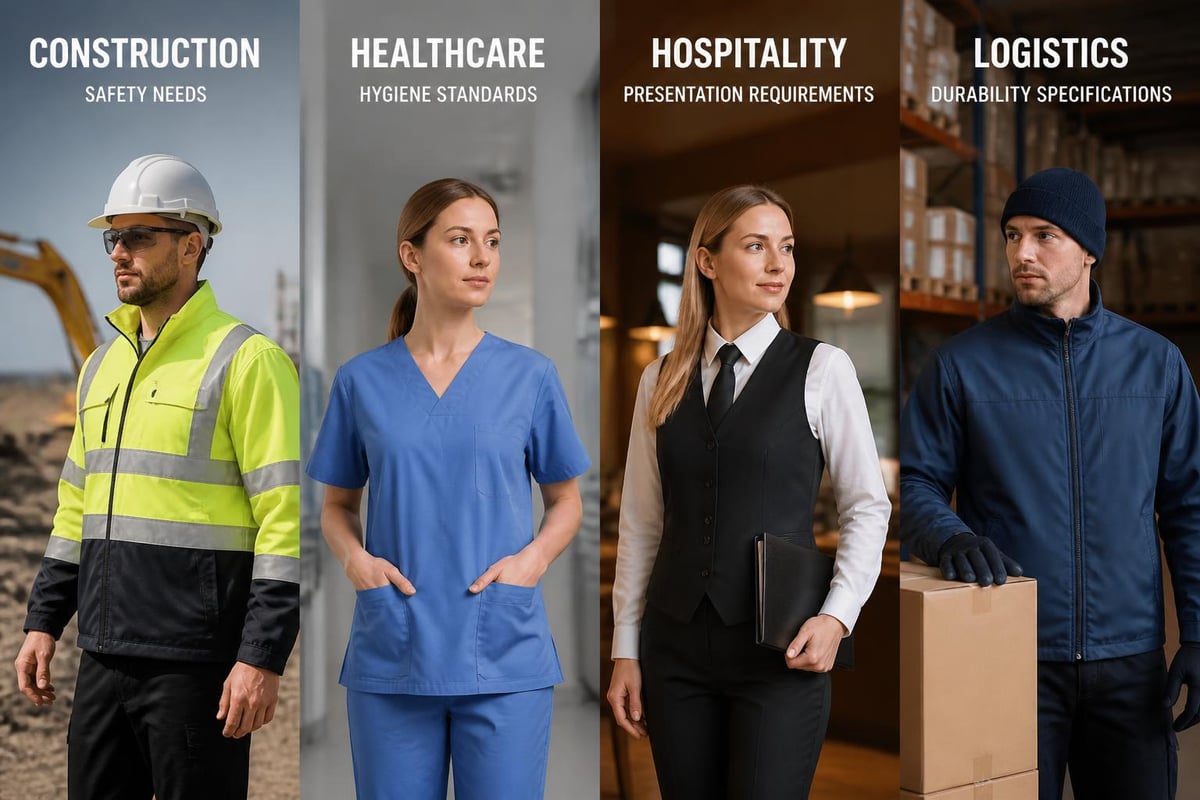
When you set out to design work clothes, the foundation lies in understanding your industry's specific requirements. Different sectors demand vastly different approaches, from construction work clothes that prioritize durability and safety features to hospitality uniforms focused on appearance and ease of movement.
The process begins with identifying your workforce's daily challenges. Construction teams require reinforced knees and multiple pockets for tools, whilst healthcare professionals need antimicrobial fabrics and easy-access compartments. Warehouse staff benefit from breathable materials and reflective elements, whereas corporate environments may prioritize smart-casual aesthetics with subtle branding.
Industry-Specific Requirements
Each sector brings unique demands that influence every design decision:
- Construction and trades: Impact resistance, high-visibility elements, tool storage, weather protection
- Healthcare: Fluid resistance, easy laundering, infection control, movement flexibility
- Hospitality: Stain resistance, professional appearance, temperature regulation, wrinkle resistance
- Logistics: Durability, visibility, comfort during repetitive movements, secure pocket placement
- Corporate: Smart presentation, minimal maintenance, subtle branding, seasonal adaptability
Understanding workwear essentials ensures you're building from a solid knowledge base before making design decisions.
Key Design Considerations for Functional Workwear
Successfully design work clothes by addressing five critical elements that determine both performance and longevity. These considerations form the backbone of effective workwear that employees will actually want to wear.
Fabric Selection and Performance
Material choice directly impacts comfort, durability, and safety. Modern workwear fabrics offer specialized properties that traditional materials cannot match. Moisture-wicking polyester blends keep workers dry during physical activity, whilst cotton-rich fabrics provide breathability for lighter tasks. For outdoor workers, weather-resistant treatments and thermal properties become essential considerations.
| Fabric Type | Primary Benefits | Best Applications | Maintenance Level |
|---|---|---|---|
| Cotton/Poly Blend | Comfort, durability, breathability | General workwear, polo shirts | Low |
| Ripstop Polyester | Tear resistance, lightweight | Active outdoor work | Low |
| Canvas/Duck Cotton | Heavy-duty protection, structure | Protective outerwear, aprons | Medium |
| Technical Synthetics | Moisture-wicking, quick-dry | High-activity roles | Low |
When selecting fabrics, consider the practical steps to designing a garment that meets both functional and aesthetic requirements.
Safety Compliance and Visibility
Regulatory compliance isn't optional when you design work clothes for high-risk environments. Understanding high-visibility best practices ensures your designs meet required safety standards whilst maintaining professional appearance.
High-visibility clothing follows strict ANSI classifications:
- Class 1: Minimal risk environments, parking attendants, warehouse workers away from traffic
- Class 2: Moderate risk, roadwork crews, railway workers, airport ground staff
- Class 3: High-risk environments, highway construction, emergency responders, traffic control
Beyond visibility requirements, consider industry-specific certifications for flame resistance, chemical protection, or electrical hazard protection. These standards influence fabric choices, construction methods, and overall design approach.
Incorporating Brand Identity Into Work Clothes Design
Professional workwear functions as mobile advertising, making brand integration a crucial design element. When you design work clothes with branding in mind, you're creating consistency across every customer touchpoint whilst building team unity.
Strategic Logo Placement
Effective branding requires thoughtful placement that balances visibility with aesthetics. The chest area provides prime visibility for customer-facing roles, whilst shoulder or sleeve placements work well for technical positions. Back yoke positioning offers larger canvas space for company names or detailed designs.
Adding logos to workwear requires considering both decoration method and garment type. Embroidery provides durability and professional appearance, whilst printing offers cost-effectiveness for larger designs or photographic elements.
Common placement strategies include:
- Left chest: Classic, professional, suitable for all industries
- Sleeve: Visible during work, ideal for team identification
- Back panel: Large format opportunity, perfect for company names
- Pocket placement: Subtle branding, functional design integration
- Multiple locations: Maximum visibility, premium positioning
Colour Psychology and Corporate Identity
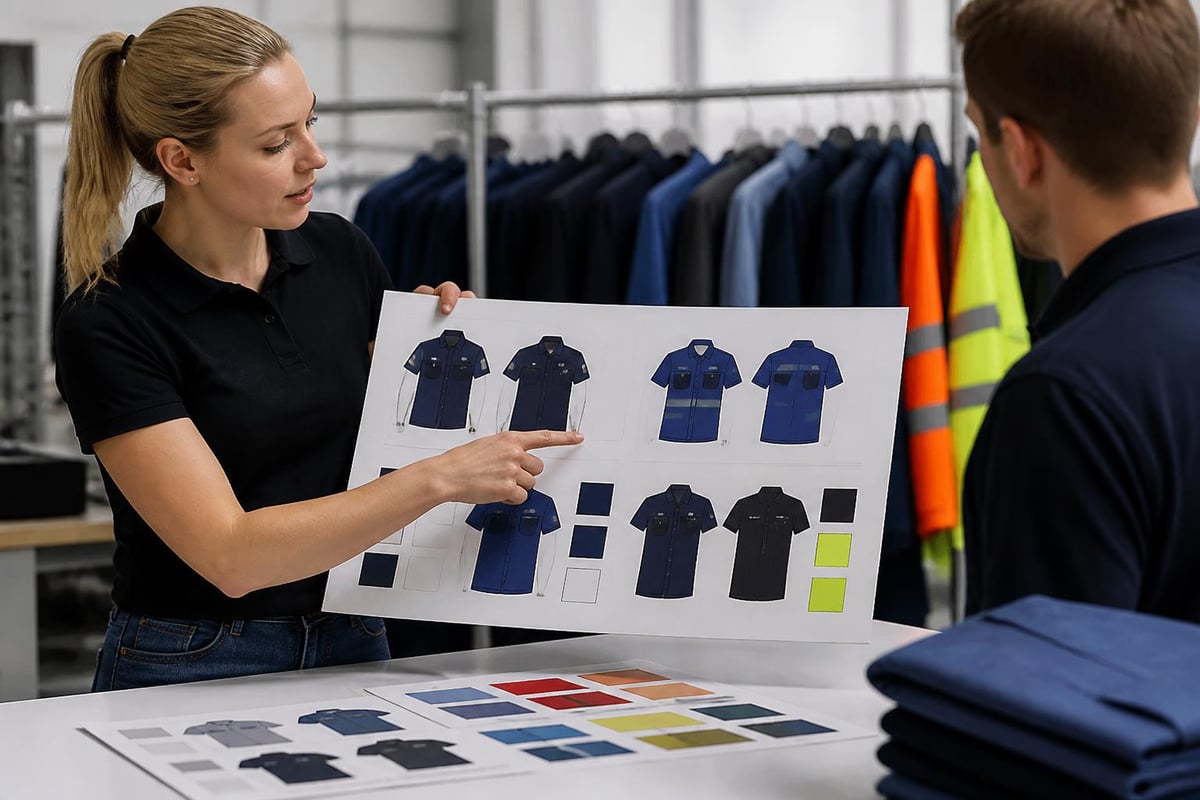
Colour selection extends beyond personal preference. Different industries carry colour expectations that influence customer perception. Healthcare traditionally favours blues and whites suggesting cleanliness and trust, whilst construction often utilizes high-visibility yellows and oranges for safety.
Consider how colours perform in your working environment. Dark colours conceal dirt in industrial settings but may increase heat absorption outdoors. Light colours reflect heat but show stains more readily. Many businesses adopt a two-tone approach, combining practical dark bases with branded accent colours.
Designing for Comfort and Mobility
The most beautifully designed workwear fails if employees find it uncomfortable. When you design work clothes, ergonomic considerations directly impact productivity, safety, and employee satisfaction.
Movement and Fit Engineering
Modern workwear design incorporates articulated construction that mirrors natural body movement. Gusseted underarms allow overhead reaching without restriction, whilst pre-bent sleeves reduce fabric bunching at the elbow. Action backs provide shoulder mobility for manual tasks, and stretch panels at key stress points prevent tearing whilst improving comfort.
Sizing strategy requires careful consideration. Standard sizing suits general populations, but many industries benefit from extended size ranges or gender-specific cuts. Athletic fits appeal to younger demographics, whilst traditional cuts accommodate diverse body types. Some forward-thinking companies now offer multiple fit options within the same style, allowing employees to choose their preferred silhouette.
Climate Control Features
Temperature regulation significantly impacts worker comfort and productivity. Design work clothes with built-in ventilation systems through mesh panels, breathable fabric zones, or strategically placed vents. Layering systems allow workers to adapt to changing conditions throughout the day.
Summer considerations:
- Lightweight, breathable fabrics
- Mesh ventilation zones
- Moisture-wicking treatments
- UV protection for outdoor workers
Winter considerations:
- Insulated linings or layering compatibility
- Wind-resistant outer shells
- Thermal base layer integration
- Extended coverage for exposed areas
When sustainability matters to your brand values, consider incorporating eco-friendly practices into your workwear programme, as businesses increasingly seek suppliers who align with their environmental commitments, similar to how sustainable lifestyle brands curate products with environmental impact in mind.
Production Planning and Specification Development
Translating design concepts into manufactured reality requires detailed technical specifications. Professional workwear production demands precision that ensures consistency across orders and sizes.
Creating Factory-Ready Specifications
Transform creative ideas into factory-ready files through comprehensive technical documentation. Tech packs should include flat sketches showing front, back, and detail views, precise measurements for each size, fabric specifications including weight and composition, construction details with stitch types, and trim specifications for zippers, buttons, and reinforcements.
Successful production requires clear communication between design teams and manufacturers. Include tolerance ranges for measurements, quality control checkpoints, and packaging requirements. Specify decoration methods with exact positioning coordinates and colour matching systems like Pantone references.
Quality Control Standards
Establish quality benchmarks before production begins. When you design work clothes for demanding environments, quality control prevents costly returns and ensures safety compliance. Inspection points should cover seam strength, fabric consistency, accurate sizing, correct label placement, and decoration quality.
| Quality Check | Standard Requirement | Testing Method |
|---|---|---|
| Seam Strength | Minimum 30kg breaking force | Tensile testing |
| Colour Fastness | Grade 4 minimum | Wash testing |
| Dimensional Stability | <3% shrinkage | Pre/post wash measurement |
| Decoration Durability | 50+ industrial washes | Accelerated wash testing |
Customization Options and Personalization
Modern workwear programmes increasingly embrace customization opportunities that enhance both functionality and team morale. When you design work clothes with personalization in mind, you create stronger employee engagement.
Decoration Methods Comparison
Different decoration techniques suit different applications. Understanding these methods helps you design work clothes that accommodate your chosen branding approach:
Embroidery: Premium appearance, exceptional durability, ideal for polo shirts and corporate wear, limited colour complexity, slightly higher cost.
Screen Printing: Cost-effective for large quantities, vibrant colours, suitable for simple designs, less durable than embroidery, heat sensitivity considerations.
Heat Transfer: Photographic quality possible, complex designs achievable, moderate durability, suitable for low-volume orders, application limitations on certain fabrics.
Direct-to-Garment: No minimum quantities, full-colour capability, quick turnaround, best on light-coloured cotton, moderate wash durability.
Individual Personalization Elements
Beyond company branding, consider individual personalization that builds team identity. Name embroidery, department identification, role-specific colour coding, or achievement badges all contribute to professional pride whilst maintaining cohesive appearance.
Some organizations implement tiered personalization systems where basic staff receive standard branding, whilst senior team members or long-service employees receive enhanced customization. This approach rewards loyalty whilst maintaining budget control.
Budgeting and Cost Management
Financial planning proves crucial when you design work clothes for your workforce. Understanding cost drivers enables informed decisions that balance quality with budget constraints.
Price Factors and Value Analysis
Workwear costs extend beyond initial purchase price. When evaluating options, consider total cost of ownership including replacement frequency, decoration charges, laundering requirements, and quantity discounts.
Primary cost drivers include:
- Fabric quality and technical features
- Construction complexity and reinforcements
- Decoration method and design complexity
- Order quantity and minimum requirements
- Customization level and personalization
- Import duties and shipping considerations
Higher initial investment in quality workwear often reduces long-term costs through extended garment life and improved employee satisfaction. Calculate cost-per-wear rather than focusing solely on purchase price.
Strategic Procurement Approaches
Many businesses benefit from establishing ongoing relationships with workwear suppliers who understand their specific needs. Regular ordering patterns often unlock volume discounts, whilst consistent specifications reduce setup costs for decorated items.
Consider implementing a work uniform purchasing strategy that balances immediate needs with long-term planning. Seasonal ordering, employee allowance programmes, or centralized procurement all offer distinct advantages depending on organizational structure.
Testing and Feedback Integration
Before full-scale rollout, prototype testing reveals practical issues that paper designs cannot predict. When you design work clothes, employee input proves invaluable for identifying necessary adjustments.
Pilot Programme Development
Select representative employees across different roles and body types for initial testing. Provide garments for extended wear periods, typically 2-4 weeks, allowing thorough evaluation under real working conditions. Structured feedback forms should address comfort, functionality, durability, appearance, and suggested improvements.
Common testing areas include:
- Pocket placement and accessibility during tasks
- Range of motion during typical activities
- Temperature comfort across different conditions
- Laundering performance and care requirements
- Brand presentation and professional appearance
Iterative Design Refinement
Few designs achieve perfection in the first iteration. Collecting systematic feedback enables targeted improvements that address genuine user needs rather than assumptions. Consider key factors when designing work uniforms to ensure all essential elements receive proper attention.
Document all design changes with clear rationale, creating institutional knowledge that informs future workwear decisions. This historical record proves particularly valuable when staff turnover occurs or organizational needs evolve.
Digital Design Tools and Technologies
Modern technology streamlines the process when you design work clothes, offering visualization capabilities that reduce errors and accelerate approval cycles. Digital tools enable stakeholders to see realistic representations before committing to production.
3D Visualization Software
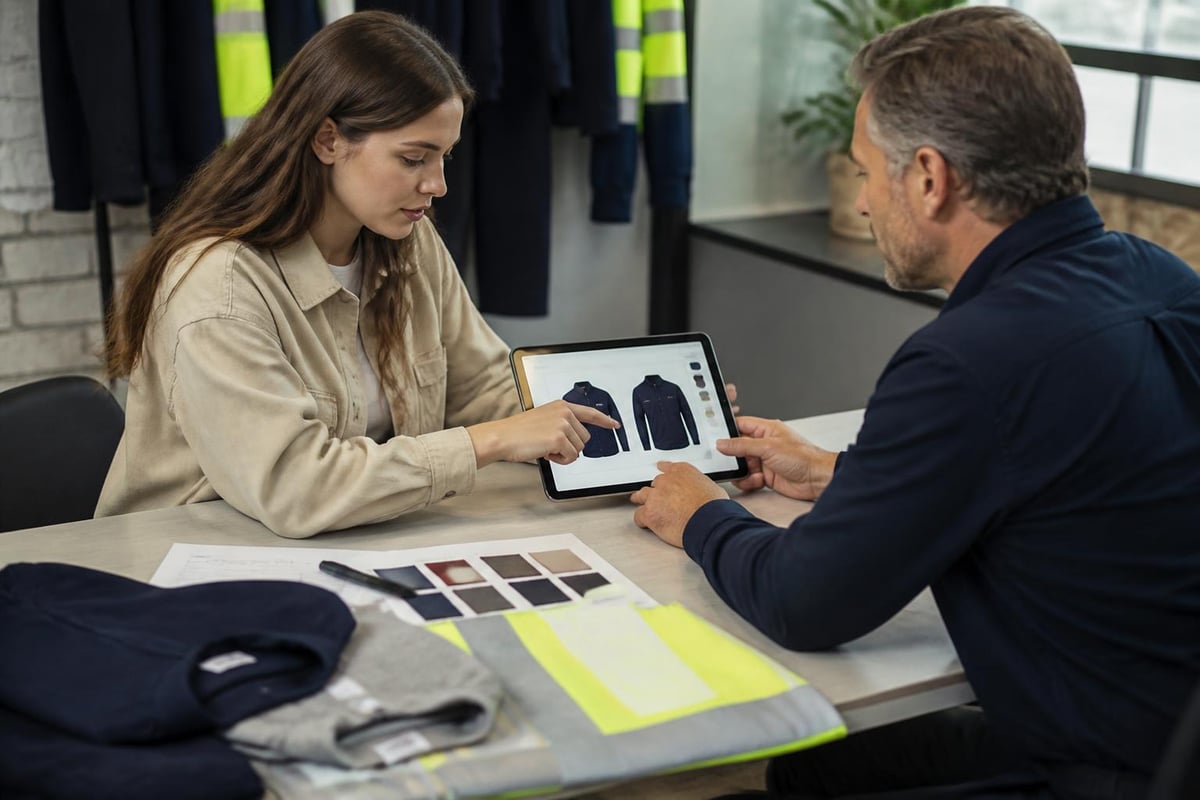
Advanced platforms now render garments on customizable avatars, showing how designs drape and move on different body types. These tools allow colour experimentation, fit adjustments, and branding placement testing without physical samples. Some systems integrate directly with manufacturer databases, ensuring designed specifications match available production capabilities.
Digital mockups facilitate remote collaboration between design teams, management, and employee representatives. Stakeholders review options simultaneously regardless of location, accelerating decision-making whilst reducing travel requirements and environmental impact.
Pattern Making and Sizing Technology
Computer-aided design systems generate precise patterns that ensure consistency across size ranges. Automated grading maintains proportional relationships as designs scale from smallest to largest sizes, preventing fit issues that plague manual grading methods. These systems export directly to cutting equipment, reducing human error whilst maximizing fabric efficiency.
Some advanced platforms incorporate body scanning data, allowing custom-fit workwear for employees with non-standard proportions. Whilst still emerging in mainstream workwear markets, this technology offers solutions for inclusive sizing that standard ranges cannot accommodate.
Sustainability and Ethical Considerations
Environmental consciousness increasingly influences how businesses design work clothes. Sustainable practices span material sourcing, production methods, product longevity, and end-of-life disposal considerations.
Material Sustainability Options
Eco-friendly fabric choices include organic cotton grown without harmful pesticides, recycled polyester manufactured from post-consumer plastic bottles, and innovative materials like bamboo or Tencel offering renewable alternatives. Each option carries distinct environmental profiles and practical performance characteristics.
Durability represents perhaps the most impactful sustainability feature. Garments lasting five years rather than two years reduce environmental impact by over 50% regardless of material composition. When you design work clothes prioritizing longevity through quality construction and timeless styling, you make meaningful environmental contributions.
Ethical Production Standards
Transparent supply chains ensure workwear production aligns with ethical labour practices. Certifications like Fair Trade, WRAP, or SA8000 verify manufacturer compliance with worker welfare standards. Many businesses now require supplier audits confirming safe working conditions, fair wages, and environmental compliance.
Consider exploring comprehensive guides on workwear design and supply to understand how ethical considerations integrate throughout the entire procurement process.
Managing Workwear Programmes Long-Term
Successful workwear extends beyond initial design and procurement. Ongoing programme management ensures sustained value and consistent professional appearance.
Inventory Management Systems
Centralized inventory tracking prevents shortages whilst avoiding excessive stock levels. Digital systems monitor size distribution, replacement rates, and seasonal demands. Automatic reordering triggers maintain adequate supplies without manual monitoring.
Employee onboarding processes should include workwear provision as standard procedure. New starter kits with complete uniform sets create positive first impressions whilst ensuring immediate compliance with appearance standards.
Maintenance and Replacement Protocols
Establish clear guidelines for garment care and replacement timing. Industrial laundering services maintain hygiene standards whilst extending garment life through professional care. Alternatively, if employees launder personally, provide specific care instructions that preserve decoration quality and fabric performance.
Replacement schedules based on wear patterns rather than arbitrary timeframes optimize both appearance and budget. Customer-facing roles may require more frequent replacement than back-office positions, whilst high-visibility clothing demands replacement when reflective elements degrade regardless of overall garment condition.
Building Employee Buy-In and Pride
The most thoughtfully designed workwear fails if employees resist wearing it. Creating genuine enthusiasm requires involving staff throughout the design process and addressing their practical concerns.
Participation and Consultation
When employees influence design decisions, they develop ownership over the outcome. Survey teams regarding preferences for style, colour, and features. Hold focus groups discussing practical requirements specific to different roles. Present multiple design options allowing democratic selection where appropriate.
Communication throughout development maintains engagement and manages expectations. Share progress updates, explain decision rationale, and demonstrate how feedback shaped final designs. This transparency builds trust whilst preventing surprise or disappointment at rollout.
Launch and Ongoing Support
Formal introduction events celebrate new workwear programmes whilst providing sizing appointments and initial distribution. Demonstrate proper care techniques and explain available support for issues or concerns. Consider appointing departmental champions who address questions and collect feedback.
Regular review cycles assess programme performance and identify improvement opportunities. Annual surveys gauge satisfaction levels, whilst usage monitoring reveals practical adoption rates. This ongoing attention demonstrates organizational commitment to employee experience whilst enabling continuous enhancement.
Designing effective work clothes requires balancing numerous competing demands from safety compliance and durability to comfort and brand presentation. Success comes from understanding your specific industry requirements, involving employees throughout the process, and partnering with suppliers who appreciate the importance of quality workwear. Whether you need protective outerwear for construction teams or smart uniforms for hospitality staff, Cobra Workwear combines extensive product ranges with expert customization services to bring your workwear vision to reality.
