

Custom construction workwear has evolved significantly beyond basic safety compliance to become a strategic investment for UK construction companies in 2026. Construction shirts custom designed for your team serve multiple purposes: enhancing worker safety, building brand recognition, and creating a professional unified appearance across job sites. Whether you manage a small construction crew or a large contracting firm, understanding how to select, design, and implement custom construction shirts can directly impact your operational efficiency and team morale. This comprehensive guide explores everything from fabric selection and safety regulations to branding strategies and cost considerations.
Why Construction Shirts Custom Matter for UK Businesses
The construction industry faces unique challenges that make generic off-the-shelf workwear insufficient for many applications. Custom solutions address specific needs that standard garments simply cannot meet.
Brand visibility on construction sites creates immediate recognition for your company. When your team wears construction shirts custom branded with your logo and colours, they become walking advertisements. This visibility matters particularly during multi-contractor projects where distinguishing your workforce from others is essential.
Safety compliance represents another critical factor. Regulations governing construction workwear have tightened considerably, with personal protective equipment standards requiring specific visibility and durability features. Custom shirts allow you to meet these requirements whilst maintaining your brand identity.
Practical Benefits of Customisation
Beyond branding and compliance, custom construction shirts deliver tangible operational advantages:
- Team cohesion improves when everyone wears matching, professional attire
- Employee retention increases when workers receive quality, personalised gear
- Client confidence strengthens through consistent, professional appearance
- Theft deterrence occurs naturally when garments bear clear company branding
Construction companies report that investing in quality custom workwear reduces replacement costs over time. Workers treat branded, personalised garments with greater care than generic alternatives.

Essential Features for Construction Shirts Custom
Selecting appropriate features ensures your construction shirts custom perform effectively in demanding environments. Understanding these elements helps you make informed decisions that balance cost, functionality, and worker satisfaction.
Fabric Technology and Durability
Modern construction fabrics incorporate advanced technologies that traditional materials cannot match. Polyester-cotton blends offer the optimal balance between breathability and durability for most applications. Pure cotton provides comfort but deteriorates faster under harsh conditions.
Moisture-wicking properties have become standard in premium construction shirts. This technology pulls perspiration away from skin, helping workers maintain comfortable body temperature throughout long shifts. Particularly relevant during summer months, moisture management reduces heat stress and improves concentration.
When evaluating essential features before purchasing construction shirts, fabric weight deserves careful consideration. Lightweight options (130-160 GSM) suit warmer conditions, whilst heavier fabrics (180-220 GSM) provide better protection in challenging environments.
| Fabric Type | Weight (GSM) | Best Conditions | Durability Rating |
|---|---|---|---|
| Polyester/Cotton Blend | 150-180 | Year-round | Excellent |
| Pure Cotton | 160-200 | Moderate temperatures | Good |
| Technical Polyester | 130-160 | Hot conditions | Very Good |
| Heavy-Duty Blend | 200-220 | Heavy-use environments | Outstanding |
High-Visibility Requirements
High-visibility construction shirts represent a critical safety category. Many construction environments mandate hi-vis clothing, particularly near traffic or heavy machinery. Understanding compliance standards ensures your construction shirts custom meet legal requirements.
The UK follows EN ISO 20471 standards for high-visibility clothing. These regulations specify:
- Minimum fluorescent material coverage based on garment class
- Reflective tape placement and width requirements
- Colour specifications for background and reflective materials
Class 2 hi-vis shirts provide adequate protection for most construction applications. This classification requires 0.50 square metres of fluorescent background material and 0.13 square metres of reflective tape. For higher-risk environments, Class 3 garments offer enhanced visibility through increased material coverage.
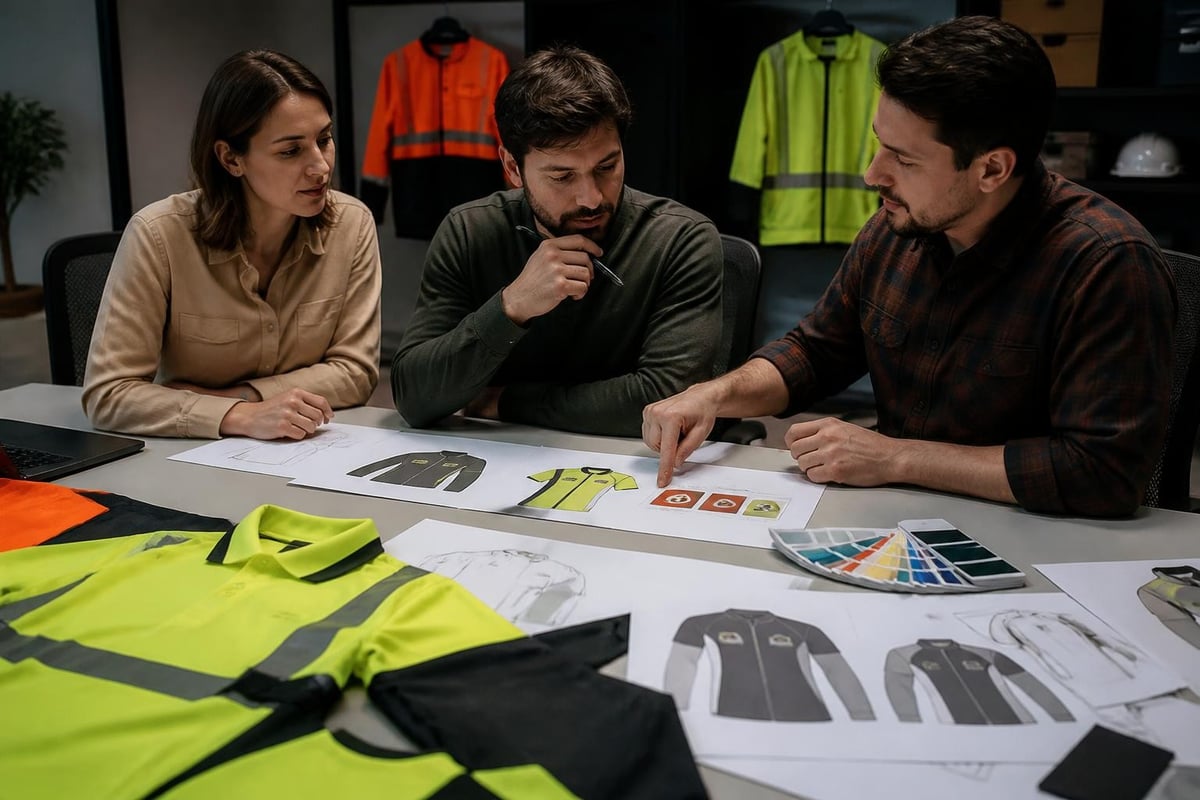
When designing high-visibility polo shirts for professional construction teams, balance safety requirements with brand presentation. Modern printing and embroidery techniques allow prominent logo placement without compromising reflective tape effectiveness.
Designing Construction Shirts Custom for Maximum Impact
Effective design transforms basic workwear into powerful brand assets. The design process requires balancing aesthetics, functionality, and budget constraints.
Logo Placement and Branding Strategy
Strategic logo placement maximises brand visibility whilst maintaining professional appearance. Consider these positioning options:
- Left chest - Classic, professional placement ideal for embroidered logos
- Full back - Maximum visibility for larger graphics and company names
- Sleeve - Additional branding space without overwhelming the design
- Collar - Subtle positioning for secondary logos or text
Polo shirts with company logo embroidery offer versatile solutions that transition seamlessly between job sites and client meetings. The collar provides a more professional appearance than standard crew-neck alternatives.
Colour selection significantly impacts both visibility and brand recognition. Whilst hi-vis requirements may dictate fluorescent yellow or orange for certain roles, consider how these colours integrate with your existing brand palette. Many companies develop specific hi-vis colourways that complement their standard branding.
Customisation Techniques Comparison
Different decoration methods suit different applications. Understanding these techniques helps you select appropriate options for your construction shirts custom.
Embroidery provides the most durable and professional finish. Thread-based designs withstand repeated industrial washing and maintain appearance longer than printed alternatives. Particularly suitable for logos and text on chest areas, embroidery adds perceived value that workers appreciate.
Screen printing offers cost-effective solutions for larger designs and higher quantities. Modern screen printing delivers vibrant colours and excellent durability. This method works particularly well for full-back designs or larger graphics that would prove expensive to embroider.
Direct-to-garment printing enables photographic quality images and complex designs without setup costs. Whilst slightly less durable than screen printing, DTG technology has improved considerably and now provides acceptable longevity for construction environments.
| Method | Initial Cost | Per-Unit Cost | Durability | Design Complexity |
|---|---|---|---|---|
| Embroidery | Medium | Higher | Excellent | Limited colours |
| Screen Printing | Higher | Lower | Very Good | Unlimited colours |
| DTG Printing | Low | Medium | Good | Photographic quality |
| Heat Transfer | Low | Medium | Fair | Good for small runs |
Selecting the Right Construction Shirts Custom Styles
Different construction roles demand different shirt styles. Matching garment types to job functions ensures both safety and comfort.
Polo Shirts vs T-Shirts vs Button-Down Options
Polo shirts strike an excellent balance between professionalism and practicality. The collar provides a smarter appearance beneficial when interacting with clients or working in semi-formal environments. Polo shirts also offer better sun protection for the neck area compared to crew-neck alternatives.
Traditional t-shirts remain popular for heavy labour roles where maximum breathability and freedom of movement take priority. Modern technical t-shirts incorporate moisture-wicking and anti-odour technologies that make them surprisingly practical for construction applications. When considering buying work uniforms, assess whether your team's primary activities justify the additional cost of polo shirts over t-shirts.
Button-down work shirts provide maximum protection and professional appearance. Long sleeves protect arms from sun exposure, minor abrasions, and debris. However, they prove less popular during warmer months unless constructed from lightweight, breathable fabrics.
Seasonal Considerations
Successful construction shirts custom programmes account for seasonal variation. Workers require different garments for summer heat versus winter conditions.
Summer construction shirts prioritise ventilation and sun protection. Look for:
- Light-coloured fabrics that reflect rather than absorb heat
- Mesh panels in high-perspiration areas
- UPF-rated materials for sun protection
- Longer sleeves in lightweight fabrics (counterintuitively cooler than short sleeves)
Cooler weather options might include heavier-weight shirts or layering pieces. Long-sleeve construction shirts in mid-weight fabrics work well for spring and autumn conditions. Winter typically requires moving beyond shirts to jackets and insulated layers, though heavy-duty work shirts serve as effective base layers.
Compliance and Safety Regulations for Construction Workwear
Navigating safety regulations ensures your construction shirts custom meet legal requirements whilst protecting your workforce. Non-compliance exposes your business to significant liability.
Understanding UK and International Standards
The UK construction industry operates under comprehensive safety regulations that extend to workwear specifications. The Personal Protective Equipment at Work Regulations 2022 mandate that employers provide appropriate protective equipment, including suitable clothing for specific tasks.
When selecting custom construction shirts for your crew, verify that chosen garments meet relevant standards. High-visibility requirements fall under EN ISO 20471, whilst flame-resistant options must comply with EN ISO 11612. Different job sites and contractors may impose additional requirements beyond legal minimums.
Documentation matters when demonstrating compliance. Reputable suppliers provide certification confirming that garments meet claimed standards. Retain these documents as evidence of due diligence should incidents occur.
Risk Assessment and Garment Selection
Conducting thorough risk assessments determines which construction shirts custom your team requires. Different work zones present varying hazards that appropriate clothing can mitigate.
- Identify specific hazards at your typical job sites (traffic, machinery, sharp objects, chemicals)
- Match garment specifications to identified risks
- Consider multi-hazard environments requiring combined protective features
- Review incident history to identify patterns suggesting workwear improvements
- Consult workers about comfort and functionality concerns
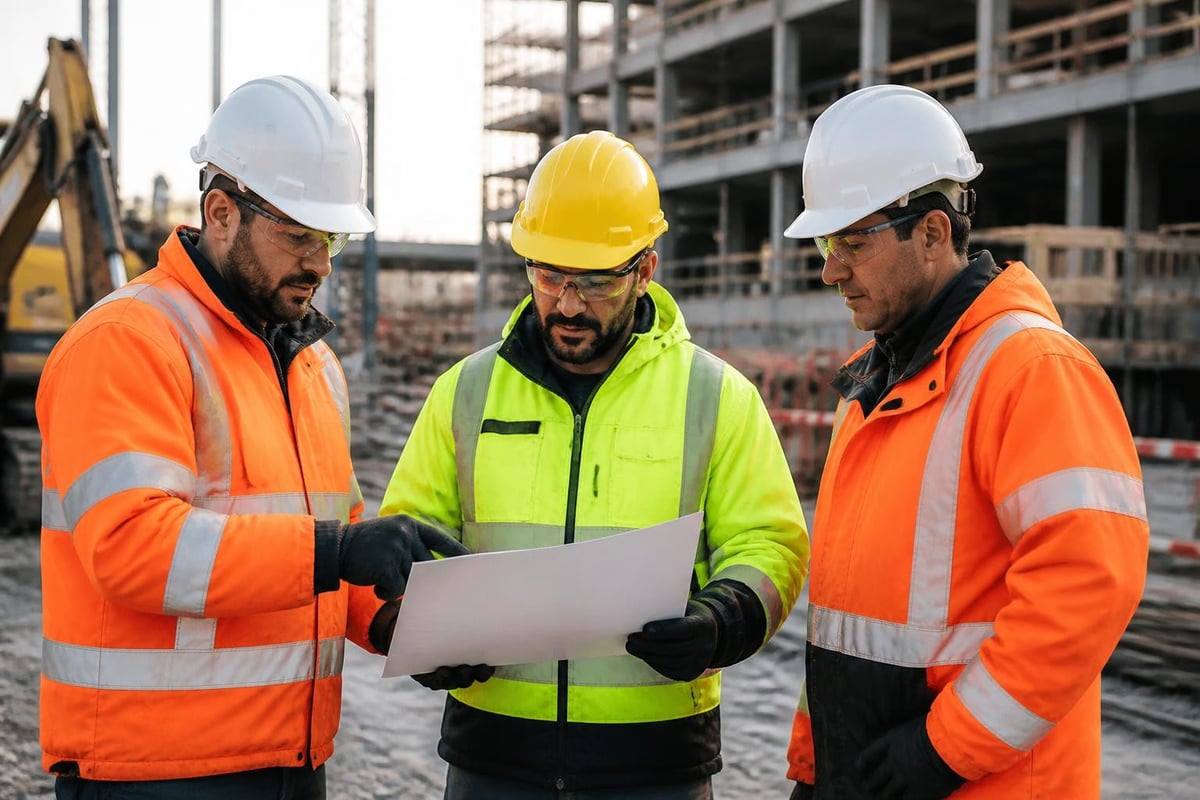
Sites near active roadways demand Class 2 or Class 3 hi-vis shirts as a minimum. Environments with electrical hazards may require flame-resistant materials. Understanding how regulations address hi-vis t-shirt safety helps you make informed decisions appropriate to your specific circumstances.
Ordering and Implementation Strategy
Successfully implementing construction shirts custom requires planning beyond simply placing an order. Strategic approaches maximise value and minimise disruption.
Sizing and Fit Considerations
Proper fit directly impacts both comfort and safety. Ill-fitting garments reduce effectiveness and worker satisfaction. Most suppliers offer comprehensive size charts, but construction teams benefit from ordering sample sizes before committing to bulk purchases.
Consider body type variations within your workforce. Standard sizing assumes average proportions that may not suit all workers. Many manufacturers now offer tall, short, and broad-fit options addressing diverse body types.
Request samples in multiple sizes and have workers trial them during actual work activities. This practical testing reveals issues that size charts alone cannot identify. Pay particular attention to:
- Shoulder seam placement and movement restriction
- Sleeve length for various arm positions
- Torso length and whether shirts stay tucked during bending
- Overall comfort during typical work activities
Quantity Planning and Budget Allocation
Determining appropriate quantities requires balancing immediate needs against budget constraints. Most customisation costs decrease significantly with larger orders, creating tension between economy and inventory management.
Calculate requirements based on:
- Number of employees requiring shirts
- Shirts per employee (typically 3-5 for regular rotation)
- Seasonal variation in workforce size
- Expected turnover and new hire needs
- Replacement cycle as garments wear out
Many construction companies find that ordering annual supplies during quiet periods maximises discounts whilst ensuring adequate stock. Others prefer quarterly orders maintaining fresher designs and accommodating workforce changes more flexibly.
Working with Suppliers
Selecting reliable suppliers significantly impacts satisfaction with your construction shirts custom. When designing work clothes, partner with providers offering comprehensive services rather than just garment supply.
Evaluate potential suppliers on:
- In-house decoration capabilities (embroidery and printing services)
- Quality guarantees and replacement policies
- Turnaround times from order to delivery
- Minimum order quantities and flexibility
- Design assistance and artwork requirements
- Sample provision before bulk ordering
Establish clear timelines accounting for design approval, production, and delivery. Rush orders typically incur premium charges, so plan procurement well ahead of need. Building ongoing relationships with suppliers often yields preferential pricing and service.
Maintaining and Replacing Construction Shirts Custom
Maximising garment lifespan protects your investment and maintains professional appearance. Proper care extends durability significantly.
Washing and Care Guidelines
Construction environments subject workwear to harsh conditions that accelerate deterioration. Appropriate washing practices preserve garment integrity and appearance.
Industrial washing differs substantially from domestic laundry. High-visibility garments particularly require specific care to maintain reflective properties. Excessive heat, harsh detergents, and fabric softeners degrade fluorescent materials and reflective tape.
Provide workers with care instructions emphasising:
- Washing in warm (not hot) water to preserve colours and reflectivity
- Avoiding bleach and fabric softeners that damage technical fabrics
- Turning garments inside-out to protect embroidery and prints
- Air-drying when possible rather than high-heat tumble drying
- Inspecting regularly for damage requiring repair or replacement
Some construction companies offer laundry services ensuring garments receive appropriate care whilst removing this burden from workers. This approach maintains consistent appearance and extends garment life but adds ongoing operational costs.
Replacement Indicators
Knowing when to replace construction shirts custom prevents safety compromises and maintains professional standards. Establish clear criteria for retiring garments.
Safety-critical items like hi-vis shirts require replacement when:
- Fluorescent material shows significant fading (typically after 50 wash cycles)
- Reflective tape peels, cracks, or loses reflectivity
- Fabric develops holes or tears compromising coverage
- Garments no longer meet visibility standards
Regular inspections identify problems before they compromise safety. Many companies implement quarterly reviews where supervisors examine each worker's clothing and flag items requiring replacement.
Cost Analysis and Return on Investment
Understanding the true cost of construction shirts custom helps justify investment and optimise spending.
Initial Investment vs Long-Term Value
Custom construction shirts require higher initial outlay than generic alternatives. However, total cost of ownership often favours custom solutions when accounting for durability, replacement frequency, and intangible benefits.
Direct costs include:
- Base garment price
- Customisation charges (embroidery or printing)
- Shipping and handling
- Replacement inventory
Hidden savings from quality custom shirts include:
- Reduced replacement frequency due to better durability
- Lower injury rates from appropriate safety features
- Improved worker retention reducing recruitment costs
- Enhanced professional image supporting higher pricing
Calculate cost-per-wear rather than simply comparing purchase prices. A £25 custom polo shirt lasting 100 wears costs £0.25 per use. A £15 generic alternative lasting only 40 wears costs £0.375 per use, making the custom option more economical despite higher initial price.
Comparing Supplier Pricing
Construction shirts custom pricing varies considerably between suppliers. Understanding what drives these differences prevents overpaying whilst avoiding false economy.
| Price Factor | Budget Option | Premium Option | Impact on Value |
|---|---|---|---|
| Base Garment Quality | Standard fabrics | Technical performance fabrics | Significant |
| Decoration Method | Basic printing | High-quality embroidery | Moderate |
| Minimum Order | 50+ units | 10+ units | Flexibility |
| Design Services | Template only | Full custom design | Aesthetic quality |
| Turnaround Time | 3-4 weeks | 7-10 days | Convenience |
Request detailed quotations breaking down costs transparently. This clarity enables meaningful comparison and identifies where premium charges deliver genuine value versus unnecessary expense.
Maximising Team Engagement with Custom Workwear
Successfully implementing construction shirts custom extends beyond procurement to fostering genuine worker buy-in.
Involving Workers in Design Decisions
Employees who participate in selecting their workwear demonstrate greater satisfaction and care for garments. Create opportunities for input without surrendering essential decision-making authority.
Feedback mechanisms might include:
- Surveys asking workers to rate design options
- Focus groups discussing comfort and functionality preferences
- Trial periods testing different styles before final selection
- Suggestion programmes rewarding helpful input
Balance worker preferences with practical and budgetary constraints. Explain reasoning behind final decisions, particularly when worker preferences conflict with safety requirements or cost limitations.
Building Pride Through Quality
Workers recognise and appreciate quality construction shirts custom that demonstrate employer investment in their wellbeing. This appreciation translates into measurable benefits including better garment care and enhanced company loyalty.
Emphasise quality through:
- Presenting new workwear as valued benefit rather than basic requirement
- Explaining features and technologies incorporated in garments
- Highlighting safety benefits protecting worker health
- Reinforcing professional image workers project wearing branded clothing
Some construction companies create formal presentation ceremonies for new starter kits, elevating workwear to symbolic importance beyond mere clothing. This approach costs nothing but significantly impacts how workers perceive and value their gear.
Selecting and implementing construction shirts custom represents a strategic decision that impacts safety, brand visibility, and operational efficiency throughout 2026 and beyond. By carefully considering fabric technology, compliance requirements, design elements, and implementation strategies, construction companies create workwear programmes delivering measurable value whilst protecting and empowering their workforce. Whether you need high-visibility polo shirts for site supervisors or durable t-shirts for general labourers, investing in quality custom construction shirts proves its worth through enhanced safety, professional appearance, and team cohesion. Cobra Workwear combines comprehensive product ranges with in-house embroidery and printing services to deliver construction shirts custom that meet your exact specifications, backed by expertise serving UK construction, hospitality, and healthcare sectors for years.
