

The connection between appropriate workwear and safety in the workplace has never been more critical. As industries evolve and regulatory frameworks become increasingly sophisticated, organisations must ensure their employees are equipped with garments that not only protect against immediate hazards but also comply with stringent national and international standards. Understanding the relationship between clothing specifications and safety outcomes enables businesses to make informed decisions that safeguard their workforce whilst maintaining operational efficiency.
Understanding Workplace Hazard Categories
Every workplace presents unique challenges that require specific protective measures. Identifying these hazards forms the foundation of an effective workwear and safety programme.
Physical Hazards
Physical hazards represent the most common risks in industrial environments. These include:
- Impact from falling objects or moving machinery
- Cuts and abrasions from sharp materials
- Extreme temperatures affecting worker comfort and safety
- Electrical conductivity requiring specialised insulation
- Noise exposure necessitating additional protective equipment
Manufacturing facilities, construction sites, and warehousing operations typically face multiple physical hazards simultaneously. A comprehensive approach to hazard prevention requires employers to conduct thorough risk assessments before selecting appropriate garments.
Chemical and Biological Risks
Healthcare settings, laboratories, and food processing facilities encounter distinct challenges. Chemical splashes, biological contaminants, and infection control measures demand specialised fabrics with barrier properties. The fabric composition, seam construction, and overall garment design must align with the specific substances workers handle daily.

Regulatory Frameworks Governing Workwear
Compliance with established regulations protects both employees and employers from liability whilst ensuring workplace standards meet societal expectations.
UK and European Standards
The Personal Protective Equipment (PPE) Regulation governs workwear and safety equipment across the United Kingdom. Following Brexit, the UK maintains its own conformity assessment system whilst remaining largely aligned with European standards. Businesses must ensure their protective clothing carries appropriate CE or UKCA markings depending on when products entered the market.
British Standards Institution (BSI) provides detailed specifications for various garment types. BS EN ISO 20471 addresses high-visibility clothing, whilst BS EN 343 covers protection against rain. Understanding which standards apply to your specific industry prevents costly compliance failures.
International Standards Framework
Global operations require awareness of multiple regulatory systems. The United States follows OSHA regulations which establish minimum requirements for workplace safety equipment. These standards often differ from European specifications, creating challenges for multinational organisations.
| Region | Primary Authority | Key Standards |
|---|---|---|
| United Kingdom | HSE, BSI | BS EN ISO series |
| European Union | CEN | EN standards |
| United States | OSHA | ANSI/ISEA series |
| International | ISO | ISO 11612, 20471, 13688 |
ISO standards for workwear provide globally recognised benchmarks that facilitate international trade whilst ensuring consistent protection levels.
Selecting Appropriate Protective Garments
Matching garments to specific workplace requirements involves analysing multiple factors beyond basic compliance.
Fabric Technology and Performance
Modern workwear fabrics incorporate advanced technologies that enhance protection without compromising comfort. Moisture-wicking properties maintain thermal regulation during physical labour, whilst antimicrobial treatments reduce odour and bacterial growth. Flame-resistant fabrics undergo specialised treatment or inherently possess protective qualities through fibre composition.
The balance between durability and breathability determines long-term garment performance. High-thread-count fabrics offer superior tear resistance but may trap heat. Three-layer membrane constructions provide waterproofing whilst allowing vapour transmission, essential for outdoor workers facing unpredictable British weather.
Industry-Specific Requirements
Construction professionals require robust garments with reinforced stress points and ample pocket configurations for tools. The high-visibility clothing essential for roadside operations must meet retroreflective performance standards that ensure visibility in low-light conditions.
Healthcare workers need fluid-resistant fabrics that withstand repeated industrial laundering whilst maintaining barrier properties. Hospitality staff benefit from stain-resistant treatments and professional aesthetics that align with brand presentation. Understanding these sector-specific needs ensures workwear programmes deliver practical value.
Implementation Strategies for Safety Programmes
Developing an effective workwear and safety programme requires strategic planning and ongoing management.
Conducting Comprehensive Risk Assessments
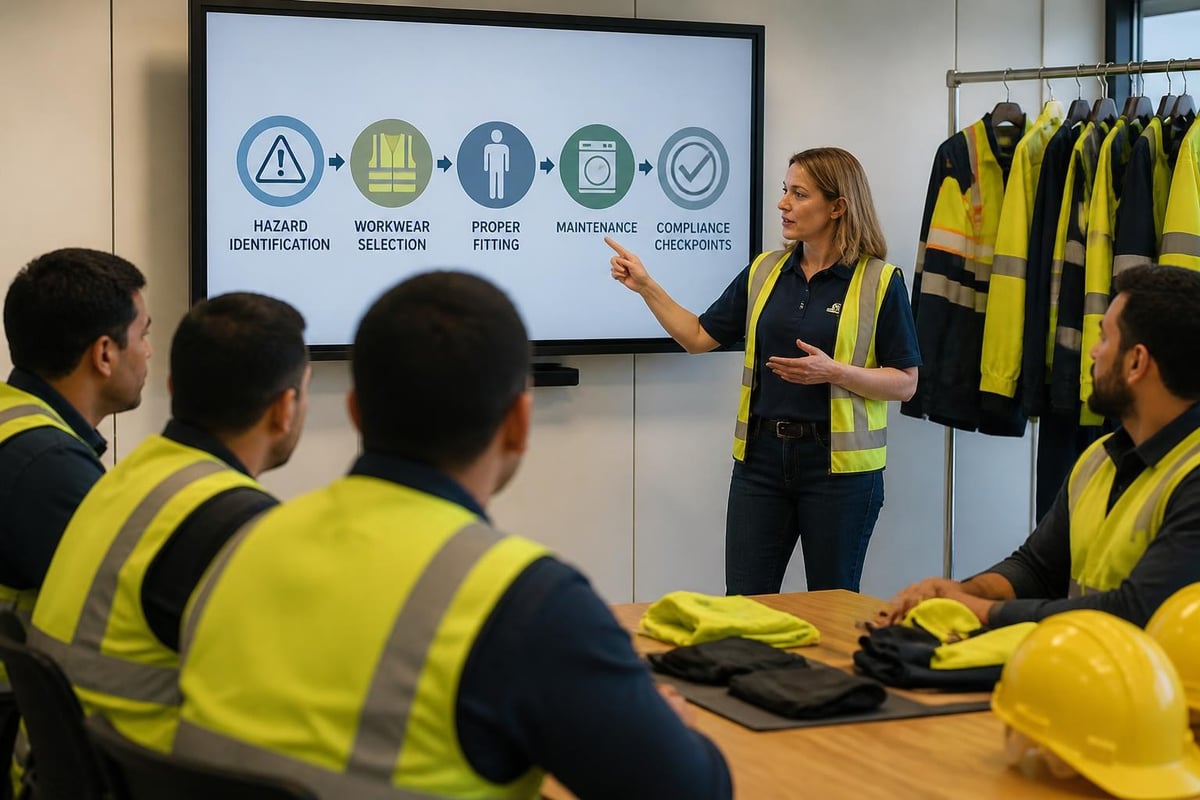
Begin with detailed workplace evaluations that identify all potential hazards. Document the frequency and severity of each risk, considering both immediate dangers and cumulative exposure effects. Engage frontline employees in this process, as their practical experience often reveals risks overlooked in theoretical assessments.
- Map all work zones and identify specific hazards in each area
- Evaluate existing protective measures and identify gaps
- Prioritise risks based on likelihood and potential impact
- Select appropriate garments matching identified hazards
- Establish replacement schedules based on wear patterns
- Implement tracking systems for garment distribution and maintenance
Training and Compliance Monitoring
Even premium protective garments fail when improperly worn or maintained. Comprehensive training programmes educate employees about proper workwear use and care procedures. Regular inspections verify compliance whilst identifying damaged garments requiring replacement.
Maintenance and Lifecycle Management
Protective properties degrade through normal wear and laundering, requiring systematic replacement protocols.
Laundering Requirements
Industrial laundering maintains hygiene standards whilst preserving garment integrity. High-visibility garments lose retroreflective properties after approximately 50 wash cycles, depending on detergent selection and water temperature. Flame-resistant treatments require specific detergents that avoid coating fibres with flammable residues.
Establish clear laundering protocols that specify:
- Maximum water temperatures for different fabric types
- Approved detergent formulations
- Drying methods that prevent shrinkage or damage
- Inspection procedures following laundering
- Repair or replacement criteria
Tracking and Replacement Systems
Digital inventory systems streamline garment distribution whilst ensuring regulatory documentation remains current. Barcode or RFID tracking monitors individual garment lifecycles, triggering automatic reorders when stocks diminish. This systematic approach prevents situations where employees work without adequate protection due to administrative oversights.
| Garment Type | Typical Lifespan | Replacement Trigger |
|---|---|---|
| High-visibility vests | 6-12 months | Fading, tears, or reflective deterioration |
| Flame-resistant clothing | 12-18 months | 50-100 washes or visible damage |
| Waterproof jackets | 18-24 months | Seam failure or membrane breakdown |
| Standard workwear | 12-18 months | Excessive wear or compliance changes |
Emerging Technologies and Future Developments
Innovation continues transforming workwear and safety equipment through smart textiles and sustainable materials.
Smart Workwear Integration
Embedded sensors monitor environmental conditions and physiological responses, alerting supervisors when workers face excessive heat stress or hazardous gas exposure. GPS tracking enhances lone worker safety programmes, particularly valuable in construction and utilities sectors. These technologies integrate seamlessly into traditional garment designs without compromising comfort or mobility.
Battery life and washability present ongoing challenges for smart textiles. Current solutions typically require component removal before laundering, adding complexity to garment care protocols. As technology matures, fully integrated washable systems will become standard across safety-critical industries.
Sustainability Considerations
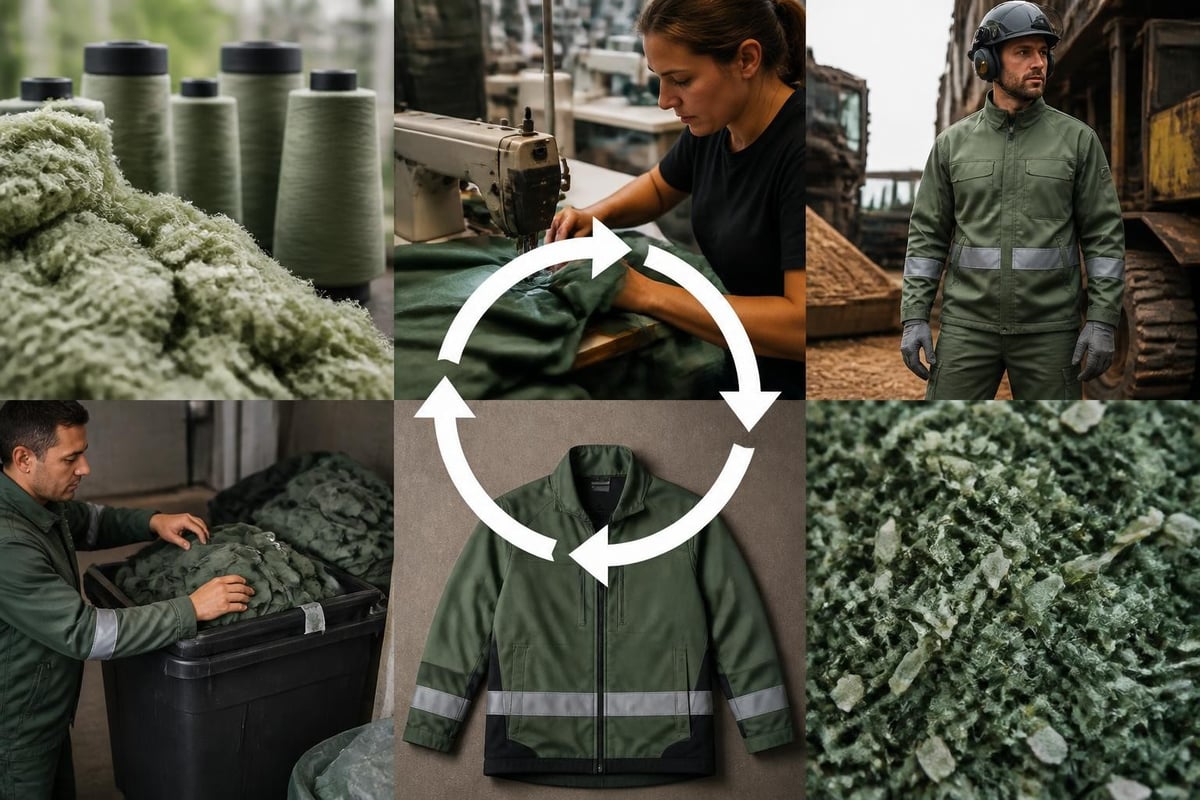
Environmental concerns increasingly influence procurement decisions. Recycled polyester reduces petroleum dependency whilst maintaining performance characteristics. Organic cotton cultivation avoids harmful pesticides, benefiting agricultural workers and reducing environmental contamination. Global workwear safety standards now incorporate sustainability metrics alongside traditional protection criteria.
Circular economy principles encourage garment recycling programmes that recover materials from worn items. Some manufacturers accept returned garments, separating fabrics for reprocessing into new products. This approach reduces landfill waste whilst potentially lowering long-term procurement costs.
Branding and Professional Presentation
Safety compliance need not compromise professional appearance. Modern workwear accommodates corporate branding whilst maintaining protective properties.
Customisation Options
Embroidery and screen printing allow organisations to display logos and employee identification without affecting garment performance. Strategic placement ensures branding remains visible whilst avoiding areas subject to abrasion or chemical exposure. Companies offering custom work shirts with logo options understand these placement considerations, ensuring decorations enhance rather than compromise garment functionality.
Colour coordination across departments facilitates quick visual identification during emergencies. Maintenance teams might wear navy garments, whilst supervisors wear distinctive colours that signal authority. This visual hierarchy enhances operational efficiency without requiring complex identification systems.
Fit and Comfort Considerations
Ill-fitting garments compromise safety through restricted movement or gaps in coverage. Comprehensive sizing programmes ensure each employee receives properly fitted protection. Gender-specific cuts accommodate diverse body types more effectively than traditional unisex designs, improving both comfort and compliance rates.
Adjustable features like elasticated waistbands, Velcro closures, and drawstring hems allow minor fit modifications without custom manufacturing. These adaptations prove particularly valuable for organisations with fluctuating workforce sizes or temporary staff requirements.
Cost-Benefit Analysis of Quality Workwear
Initial procurement costs represent only one component of total ownership expenses.
Premium garments typically deliver superior durability, reducing replacement frequency and associated administrative costs. Enhanced comfort increases employee satisfaction and compliance, potentially reducing incidents caused by workers removing uncomfortable protective equipment.
Calculate total cost of ownership by considering:
- Initial purchase price per garment
- Expected lifespan under normal use conditions
- Laundering and maintenance expenses
- Administrative costs for inventory management
- Potential liability reduction through enhanced protection
- Employee productivity impacts from improved comfort
Budget-conscious organisations often find that mid-tier products offer optimal value, balancing affordability with acceptable durability. The cheapest options frequently require replacement so often that total ownership costs exceed premium alternatives.
Seasonal Adaptations and Climate Considerations
British weather variability demands flexible workwear and safety programmes accommodating rapid condition changes.
Layering Systems
Three-layer approaches provide adaptable protection across temperature ranges. Base layers manage moisture, mid-layers provide insulation, and outer shells protect against wind and precipitation. This system allows workers to adjust protection levels throughout the day without compromising safety standards.
Compatibility between layers requires careful selection. Bulky combinations restrict movement, whilst incompatible fabrics create moisture trapping that reduces thermal efficiency. Coordinated systems designed for layering eliminate these issues through integrated sizing and complementary fabric properties.
Extreme Weather Protocols
Heat stress prevention requires breathable fabrics with moisture management properties. Regular hydration breaks and shaded rest areas complement appropriate workwear selections. Winter operations demand insulated garments that maintain dexterity, as excessive bulk impairs tool use and increases accident risk.
Effective workwear and safety programmes protect your workforce whilst ensuring regulatory compliance across evolving standards. By understanding industry-specific hazards, selecting appropriate protective garments, and implementing systematic maintenance protocols, organisations create safer working environments that enhance productivity and reduce liability. Cobra Workwear provides comprehensive solutions tailored to your industry requirements, combining quality protective garments with professional customisation services that maintain your brand identity whilst safeguarding your team.
