

Selecting the right work t-shirts mens requires careful consideration of fabric durability, comfort standards, and professional presentation. Whether you're outfitting a construction crew, hospitality team, or healthcare professionals, the humble work t-shirt serves as a foundation garment that balances practicality with brand identity. In 2026, businesses across the United Kingdom are increasingly recognising that quality workwear isn't merely protective clothing but an investment in employee satisfaction, safety, and company image. This comprehensive guide explores everything from fabric technology to customisation options, helping you make informed decisions that benefit both your workforce and your bottom line.
Understanding Work T-Shirt Fabric Technologies
The foundation of any quality work t-shirt begins with fabric selection. Modern work t-shirts mens have evolved far beyond basic cotton offerings, incorporating advanced textile technologies designed to withstand rigorous workplace demands.
Cotton remains the traditional choice for numerous reasons. It breathes exceptionally well, absorbs moisture naturally, and provides comfort during extended wear periods. However, pure cotton presents challenges in high-intensity work environments where durability and quick-drying properties matter most.
Poly-cotton blends have emerged as the industry standard for professional workwear. These combinations typically feature:
- 65% polyester and 35% cotton for maximum durability
- Enhanced shape retention after repeated washing
- Reduced shrinkage compared to pure cotton alternatives
- Improved colour fastness for branded garments
- Quick-drying properties for active work environments
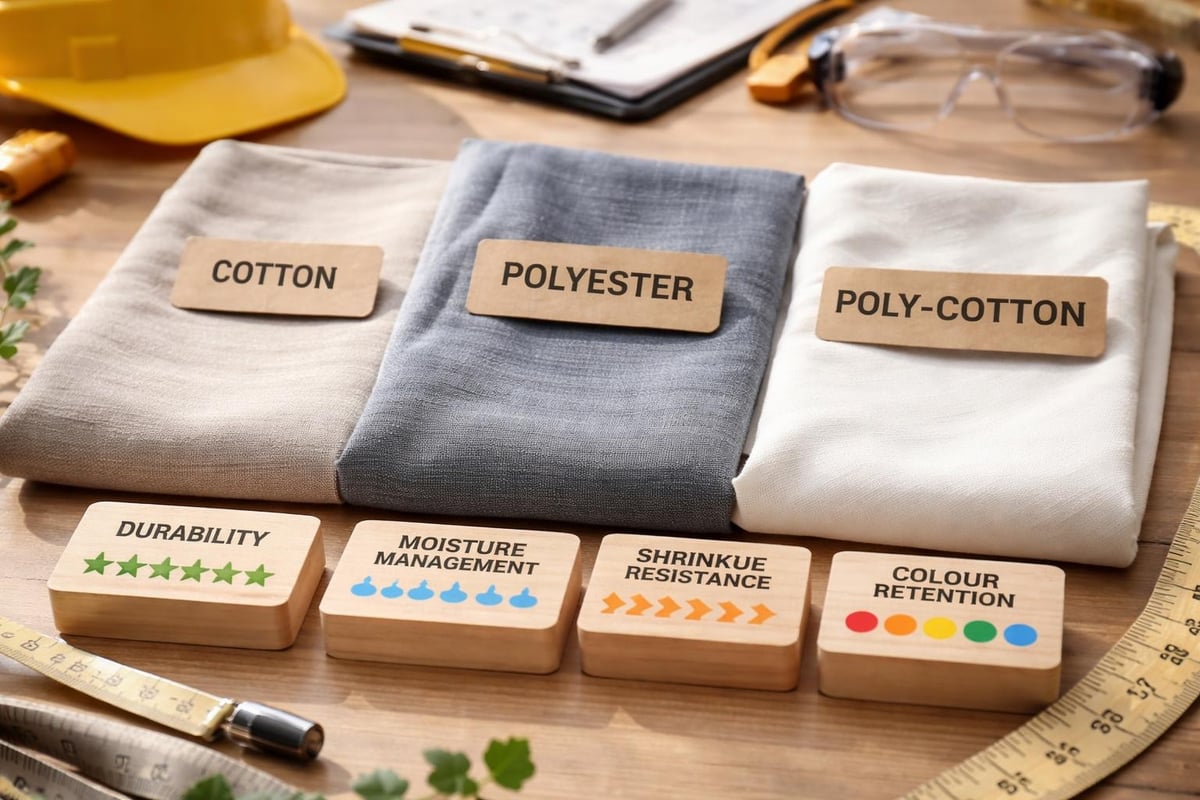
Performance fabrics represent the premium tier of work t-shirts mens. These technical textiles integrate moisture-wicking fibres that draw perspiration away from the skin, antimicrobial treatments that reduce odour, and UV protection for outdoor workers. Understanding different fabric choices helps businesses select appropriate options for specific workplace requirements.
Weight and Thickness Considerations
Work t-shirt fabric weight, measured in GSM (grams per square metre), directly impacts durability and comfort. Standard classifications include:
| Weight Category | GSM Range | Best Applications |
|---|---|---|
| Lightweight | 145-160 GSM | Indoor hospitality, retail environments |
| Midweight | 165-185 GSM | General trade work, warehousing |
| Heavyweight | 190-220 GSM | Construction, outdoor maintenance |
Heavier fabrics withstand abrasion better and maintain professional appearance longer. However, they may prove uncomfortable in warm environments or during physically demanding tasks. The optimal weight depends entirely on your specific industry requirements and seasonal considerations.
Essential Features for Professional Workwear
Beyond fabric selection, several design features distinguish professional work t-shirts mens from casual alternatives. These elements enhance functionality whilst maintaining the clean, unified appearance businesses require.
Reinforced stitching at stress points prevents premature garment failure. Double-stitched hems, shoulder seams, and sleeve attachments significantly extend garment lifespan, particularly in physically demanding roles. This construction method reduces replacement frequency, ultimately lowering long-term workwear costs.
Neckline durability deserves particular attention. Crew necks remain the most popular choice for work t-shirts mens, offering professional appearance and excellent shape retention. V-neck alternatives provide additional ventilation but may lose shape more quickly with frequent laundering.
Fit and Size Specifications
Proper fit ensures both comfort and professional presentation. Work t-shirts mens typically follow these sizing approaches:
- Regular fit: Traditional cut with moderate room through chest and waist
- Slim fit: Contemporary styling with tapered torso, suited to customer-facing roles
- Loose fit: Generous cut allowing unrestricted movement for manual labour
Consider your workforce demographics when selecting sizes. Offering extended size ranges demonstrates inclusivity and ensures every team member receives properly fitting workwear. Poor fit compromises both comfort and safety, particularly in active work environments.
Sleeve length variations accommodate different preferences and workplace requirements. Standard short sleeves suit most applications, whilst raglan sleeves provide enhanced shoulder mobility for physically intensive tasks.
Customisation and Branding Solutions
Branded work t-shirts mens transform employees into walking advertisements whilst fostering team unity and professional identity. Modern decoration techniques offer varying durability levels, visual impact, and cost considerations.
Embroidery services provide the most durable and professional branding solution. This technique creates raised logos that withstand countless wash cycles without fading or cracking. Embroidery particularly suits corporate environments, trade businesses, and any organisation prioritising premium presentation.
Screen printing represents a cost-effective alternative for larger orders. This method delivers:
- Vibrant, full-colour designs
- Excellent coverage on darker fabrics
- Economical pricing for bulk quantities
- Smooth, lightweight finish
Direct-to-garment (DTG) printing has revolutionised small-batch customisation. This digital printing technology produces photographic-quality images on individual garments without minimum order requirements, perfect for specialist roles or trial programmes.
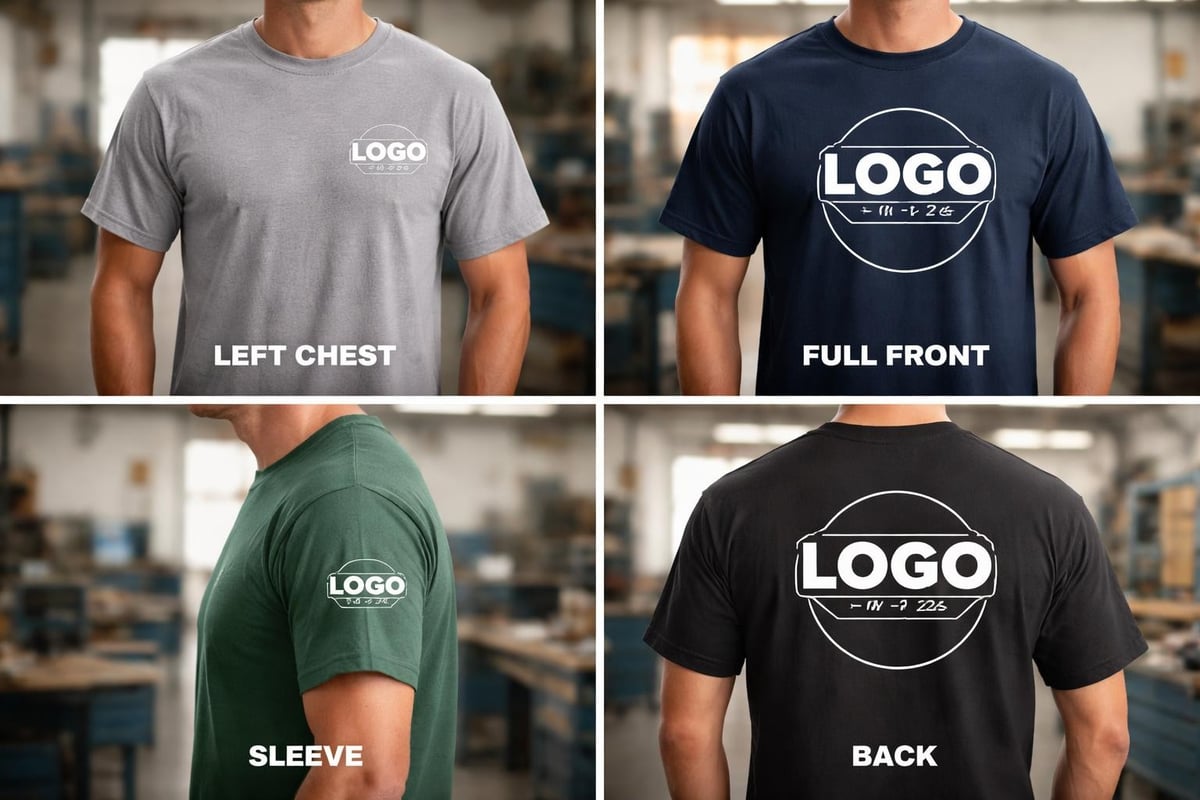
Placement and Design Strategies
Strategic logo placement maximises brand visibility whilst maintaining professional aesthetics. Common positioning includes:
- Left chest: Traditional corporate placement, typically 10cm wide
- Centre chest: Bold statement positioning for retail and hospitality
- Upper back: Ensures visibility from all angles in customer-facing roles
- Sleeve: Subtle branding option for multi-logo requirements
Colour selection significantly impacts both visual appeal and practicality. Navy, black, and grey work t-shirts mens conceal stains effectively in manual trades, whilst white and lighter colours suit healthcare and hospitality sectors requiring visible cleanliness.
Industry-Specific Requirements
Different sectors demand distinct characteristics from work t-shirts mens. Understanding these nuanced requirements ensures appropriate selection for your specific application.
Construction and trades require heavyweight, durable fabrics resistant to snagging and abrasion. High-visibility options may be mandatory on certain sites, either through bright fabric colours or reflective tape integration. These garments should feature reinforced construction and looser fits accommodating layering during colder months.
Hospitality environments prioritise appearance and comfort. Smart casual work t-shirts mens in sophisticated colours with subtle branding maintain professional presentation. Moisture-wicking properties prove essential in busy kitchen environments or during service rushes. Exploring eco-friendly printing options appeals to environmentally conscious establishments seeking sustainable workwear solutions.
Healthcare settings demand specific hygiene standards. Antimicrobial treatments prevent bacterial growth, whilst easy-care fabrics withstand frequent high-temperature washing. Many healthcare providers specify particular colours for different roles, creating instant visual identification throughout facilities.
| Industry | Primary Requirements | Recommended Fabric | Typical Colours |
|---|---|---|---|
| Construction | Durability, visibility | 190+ GSM poly-cotton | Orange, yellow, navy |
| Hospitality | Appearance, comfort | 160-180 GSM blends | Black, white, burgundy |
| Healthcare | Hygiene, identification | Easy-care performance fabrics | Navy, teal, white |
| Retail | Professional presentation | 165 GSM soft-touch cotton | Brand-specific colours |
Maintenance and Longevity
Proper care extends the serviceable life of work t-shirts mens significantly. Establishing clear garment care protocols ensures consistent appearance and maximises return on workwear investment.
Washing temperature affects both hygiene and garment longevity. Most poly-cotton work t-shirts mens withstand 40-60°C washing without significant degradation. However, embroidered logos perform best when washed inside-out at lower temperatures, preventing thread abrasion.
Avoiding tumble drying whenever possible preserves fabric integrity and print quality. Line drying or flat drying maintains garment shape better, though this may not prove practical for large workforces requiring quick turnaround times.
Rotation Systems
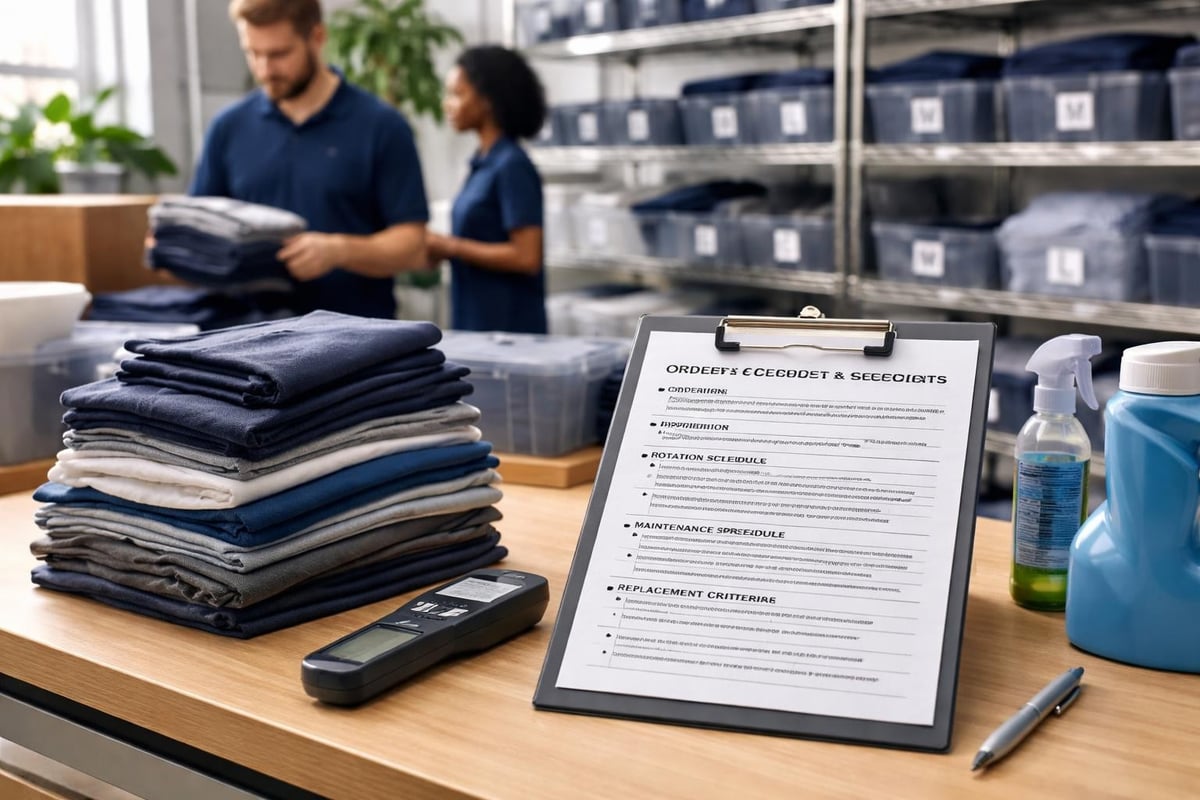
Implementing garment rotation systems prevents premature wear. Providing each employee with multiple work t-shirts mens allows proper rest periods between wears, during which fabrics recover their shape and elastic properties.
Recommended rotation schedules include:
- Light duty roles: 3-4 garments per person
- Moderate activity: 5-6 garments per person
- Heavy duty/outdoor: 7-10 garments per person
This approach distributes wear evenly across multiple garments, significantly extending the overall lifespan of your workwear investment.
Sizing and Ordering Strategies
Efficient procurement processes ensure your workforce receives appropriate work t-shirts mens without excessive inventory or stockout situations. Strategic ordering balances immediate needs with long-term requirements.
Conducting sizing surveys before initial orders prevents costly returns and ensures employee satisfaction. Providing physical samples in common sizes allows team members to assess fit accurately before committing to bulk purchases. Remember that different manufacturers interpret sizing differently, making brand-specific sizing crucial.
Establishing minimum stock levels based on workforce size and replacement cycles prevents emergency orders at premium prices. Many suppliers offer tiered pricing, where per-unit costs decrease significantly with volume. Calculate your annual requirements and explore bulk purchasing arrangements for optimal value.
For businesses requiring embroidered or printed t-shirts with company logos, planning adequate production time ensures timely delivery. Decoration processes typically add 5-10 working days to standard delivery times, though rush services may be available at additional cost.
Budget Considerations
Work t-shirts mens pricing varies considerably based on fabric quality, decoration complexity, and order volume. Establishing realistic budgets requires understanding total cost of ownership rather than focusing solely on initial purchase price.
Consider these cost factors:
- Base garment: £3-15 per unit depending on quality
- Embroidery: £3-8 per position for standard logos
- Screen printing: £1-4 per position with setup fees
- Replacement frequency: Quality garments lasting 18-24 months versus budget options requiring replacement every 6-12 months
Premium work t-shirts mens costing twice as much initially may prove more economical if they deliver triple the serviceable lifespan. Factor in replacement costs, reordering administration, and potential productivity impacts from uncomfortable or worn-looking workwear.
Sustainability and Ethical Considerations
Environmental consciousness increasingly influences purchasing decisions across British businesses. Sustainable work t-shirts mens offer multiple benefits beyond environmental responsibility, including enhanced brand reputation and employee satisfaction.
Organic cotton production eliminates harmful pesticides whilst supporting better farming practices. Though typically commanding 20-30% price premiums over conventional cotton, organic options appeal to organisations prioritising environmental stewardship. These garments often feature superior softness and breathability as additional benefits.
Recycled polyester diverts plastic waste from landfills whilst requiring significantly less energy during production compared to virgin polyester. Modern recycled polyester performs identically to conventional alternatives, making this an invisible sustainability enhancement.
Ethical manufacturing standards deserve equal consideration. Ensuring your work t-shirts mens originate from facilities providing fair wages and safe working conditions aligns with corporate social responsibility commitments. Many suppliers provide transparency regarding manufacturing locations and labour practices, enabling informed purchasing decisions.
Circular Economy Approaches
Forward-thinking organisations implement garment lifecycle planning that extends beyond initial use. Options include:
- Garment collection programmes: Retiring worn workwear for textile recycling rather than landfill disposal
- Repurposing initiatives: Converting old work t-shirts into cleaning rags or other utility materials
- Donation schemes: Providing serviceable but outdated branded workwear to charitable organisations after logo removal
These approaches demonstrate environmental commitment whilst potentially reducing waste disposal costs. Some textile recyclers even offer rebates for collected materials, offsetting replacement expenses partially.
Quality Assessment and Supplier Selection
Identifying reliable suppliers for work t-shirts mens requires evaluating multiple factors beyond headline pricing. Thorough supplier assessment prevents costly mistakes and ensures consistent quality delivery.
Requesting physical samples remains essential before committing to significant orders. Assess fabric weight, stitching quality, colour accuracy, and overall construction. Wash samples multiple times to evaluate shrinkage, colour fastness, and general durability under realistic conditions.
Supplier credentials indicating quality commitment include:
- Industry certification and accreditation
- Transparent manufacturing information
- Comprehensive size charts and specification sheets
- Clear returns and exchange policies
- Responsive customer service teams
Reviewing customer testimonials provides insight into real-world supplier performance. Focus particularly on comments regarding delivery reliability, quality consistency across orders, and how suppliers handle problems when they arise.
Consider geographical factors when selecting suppliers. UK-based providers often offer faster delivery, easier communication across matching time zones, and simplified returns processes compared to international alternatives. Supporting local workwear suppliers also reduces transportation emissions whilst strengthening regional economies.
Selecting appropriate work t-shirts mens involves balancing fabric technology, branding requirements, industry-specific needs, and budget constraints whilst considering long-term value over initial cost savings. Quality workwear enhances employee comfort and satisfaction whilst projecting professional brand identity to customers and clients. Whether you're outfitting a small team or managing enterprise-level workwear programmes, Cobra Workwear provides comprehensive solutions with in-house embroidery and printing services designed specifically for British businesses across construction, hospitality, healthcare, and beyond.
