

Selecting the appropriate uniform for construction workers goes far beyond simply providing clothing for employees to wear on site. In 2026, construction uniforms represent a critical safety investment, combining regulatory compliance, worker protection, and professional brand presentation. The right workwear can prevent injuries, enhance visibility in hazardous conditions, and create a cohesive team identity that instills confidence in clients and the public. With evolving safety standards and materials technology, understanding what constitutes proper construction attire has never been more important for contractors, site managers, and procurement professionals.
Understanding Regulatory Requirements for Construction Uniforms
The OSHA construction standards establish clear requirements for personal protective equipment across all construction sites. These regulations aren't optional recommendations but legally binding standards that employers must follow to protect their workforce.
Core Safety Standards That Impact Uniform Selection
When selecting a uniform for construction workers, compliance with personal protective equipment regulations forms the foundation of every decision. The Occupational Safety and Health Administration mandates specific protections for head, eye, face, hand, and foot safety, with each element requiring careful consideration during uniform procurement.
Key regulatory areas include:
- High-visibility clothing requirements for workers near traffic or operating machinery
- Flame-resistant materials for specific trades involving welding or electrical work
- Weather-appropriate layering that maintains safety standards in varying conditions
- Properly fitted garments that don't create entanglement hazards
Understanding 29 CFR Part 1926 construction standards helps employers build comprehensive uniform programmes that meet all federal requirements whilst providing practical workwear solutions.

High-Visibility Requirements and Classifications
The importance of high-visibility clothing in construction cannot be overstated, particularly for workers operating near moving vehicles, heavy machinery, or public roadways. OSHA's high-visibility requirements specify when and where workers must wear compliant garments.
High-visibility garments fall into three classes based on risk level:
| Class | Background Material | Retroreflective Material | Typical Use Cases |
|---|---|---|---|
| Class 1 | 155 sq. inches | 10 linear inches | Low-traffic areas, parking attendants |
| Class 2 | 775 sq. inches | 201 linear inches | Roadway workers, general construction |
| Class 3 | 1,240 sq. inches | 310 linear inches | High-speed traffic, complex backgrounds |
Professional construction companies increasingly standardise on Class 2 or Class 3 garments to ensure maximum protection across varying site conditions. This proactive approach eliminates confusion about which garments workers should wear in different zones.
Essential Components of Construction Worker Uniforms
A comprehensive uniform for construction workers comprises multiple layers and elements, each serving specific protective and practical functions. Rather than viewing workwear as a single garment, successful programmes integrate various components that workers can adjust based on task requirements and environmental conditions.
Base Layer and Mid-Layer Garments
The foundation of construction workwear starts with appropriate base layers that manage moisture, regulate temperature, and provide a comfortable platform for outer protective garments. Quality base layers use moisture-wicking fabrics that prevent overheating during physical labour whilst maintaining warmth in cooler conditions.
Mid-layer options such as polo shirts provide practical solutions for construction teams seeking professional appearance alongside functionality, with the added benefit of company branding through embroidery that reinforces team identity.
Construction-appropriate mid-layers should feature:
- Breathable fabrics that prevent heat stress
- Reinforced seams that withstand repetitive movements
- Tag-free designs that prevent irritation during long shifts
- Colours that complement high-visibility outer layers
Outer Protective Garments and Weather Considerations
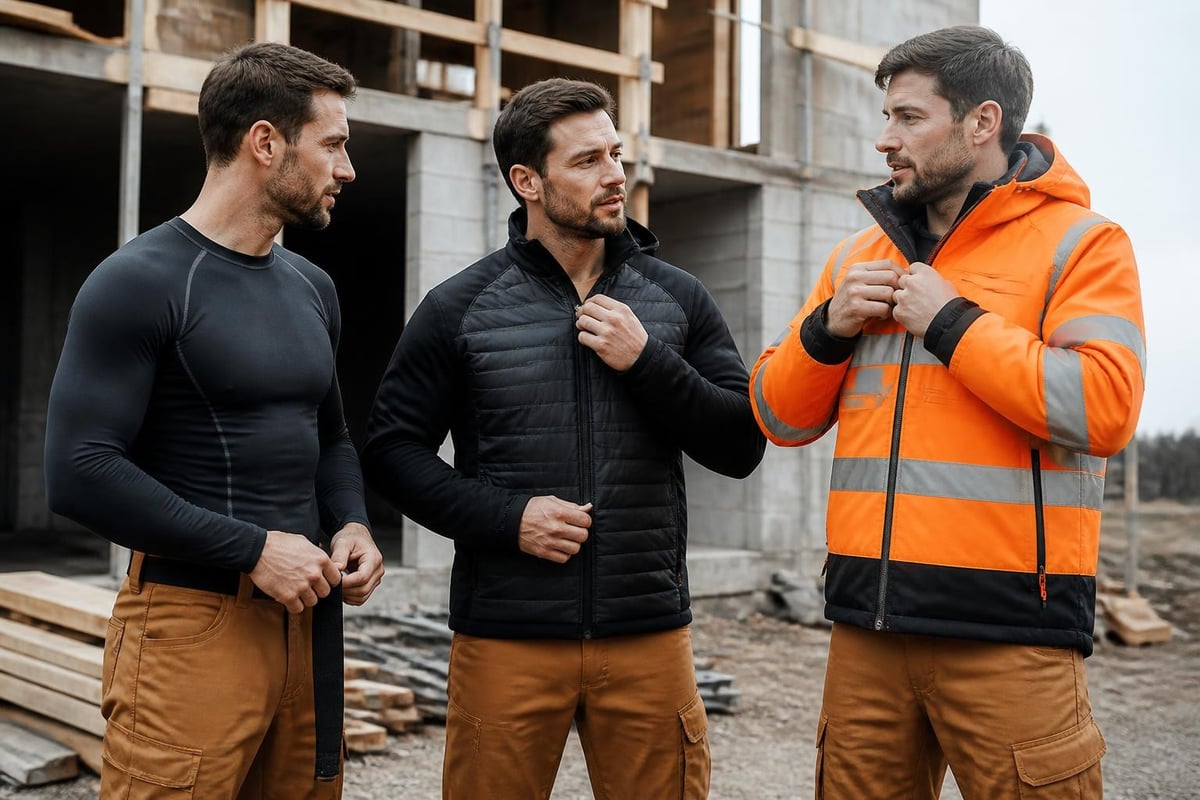
Outer layers form the most visible component of the uniform for construction workers, combining safety features with weather protection. These garments typically include high-visibility vests, jackets, or coveralls that meet regulatory standards whilst protecting workers from environmental hazards.
Modern construction outerwear incorporates advanced materials that balance protection with comfort. Breathable waterproof membranes keep workers dry without causing excessive perspiration, whilst insulated options provide warmth without restricting movement. Health and safety considerations for work uniforms emphasise the importance of selecting materials appropriate for specific working conditions.
Selecting Durable Materials for Construction Environments
Construction sites present uniquely challenging environments where clothing endures constant abrasion, potential chemical exposure, and extreme wear. Material selection directly impacts both uniform lifespan and worker safety, making it a critical consideration for any workwear programme.
Fabric Technology and Performance Characteristics
Modern construction uniforms leverage advanced textile engineering to deliver superior performance compared to traditional workwear. Ripstop fabrics resist tearing when snagged, whilst reinforced panels at high-stress points extend garment life significantly.
Cotton-polyester blends remain popular for their balance of comfort and durability, typically in 65/35 or 60/40 ratios. Pure cotton offers excellent breathability but wrinkles easily and provides less durability. Synthetic blends dry faster and maintain their shape but may feel less comfortable in hot conditions.
Performance fabric considerations:
- Abrasion resistance measured in Martindale cycles (minimum 50,000 for construction)
- Tear strength particularly at seams and stress points
- Colour fastness to maintain high-visibility properties through repeated washing
- Dimensional stability ensuring garments maintain proper fit after laundering
- Chemical resistance for trades involving potential exposure to hazardous substances
Specialised Fabric Treatments and Finishes
Beyond base fabric selection, treatments and finishes enhance the uniform for construction workers' protective qualities. Flame-resistant treatments prove essential for welding and electrical trades, whilst water-resistant finishes keep workers comfortable during light precipitation.
Anti-microbial treatments prevent odour development during extended wear periods, particularly important for garments worn in warm conditions. UV protection treatments extend the useful life of fabrics exposed to constant sunlight whilst protecting worker skin.
| Treatment Type | Primary Benefit | Maintenance Considerations |
|---|---|---|
| Flame Resistant | Prevents ignition, self-extinguishes | Special washing procedures required |
| Water Resistant | Sheds light moisture | Reapplication needed after repeated washing |
| Anti-Microbial | Reduces odour, bacteria growth | Permanent treatments preferred |
| UV Protection | Extends fabric life, protects skin | Built-in treatments more reliable |
Sizing, Fit, and Comfort Considerations
Even the highest-quality materials and safety features prove ineffective if garments don't fit properly. The uniform for construction workers must accommodate a wide range of body types whilst allowing full range of motion for physical tasks.
Importance of Proper Fit for Safety and Performance
Poorly fitted uniforms create multiple hazards on construction sites. Loose garments can catch on equipment or machinery, whilst excessively tight clothing restricts movement and may prevent workers from reacting quickly to hazards. Fall protection standards emphasise how proper clothing fit allows safety harnesses and other equipment to function as designed.
Professional uniform programmes offer multiple sizing options, including:
- Extended size ranges accommodating all body types
- Regular, tall, and short length options
- Adjustable features such as elastic waistbands or drawcords
- Gender-specific cuts that provide appropriate fit
Workers should be able to comfortably raise their arms overhead, bend, crouch, and perform typical work movements without restriction. Testing garments during normal work activities before large-scale procurement ensures the selected uniform meets practical requirements.
Seasonal Adaptability and Layering Systems
Construction work continues year-round in most regions, requiring uniform for construction workers that adapts to seasonal temperature variations. Effective programmes provide lightweight options for summer months and insulated alternatives for winter conditions, all whilst maintaining consistent safety standards and brand appearance.
A well-designed layering system allows workers to add or remove garments as conditions change throughout the day. Base layers wick moisture during strenuous activity, mid-layers provide insulation when needed, and outer shells protect against wind and precipitation whilst maintaining high visibility.
Brand Identity and Professional Presentation
Beyond safety and functionality, the uniform for construction workers serves as a powerful branding tool that shapes client perceptions and builds team cohesion. Professional appearance instills confidence in potential clients and differentiates companies in competitive markets.
Strategic Logo Placement and Brand Consistency
Thoughtful logo placement on workwear maximises brand visibility whilst maintaining a professional appearance. Common placement areas include left chest, back yoke, and sleeve positions, with each offering different visibility benefits.
Embroidered logos provide superior durability compared to printed alternatives, maintaining crisp appearance through hundreds of wash cycles. In-house embroidery services enable faster turnaround times and consistent quality control, essential factors when maintaining uniform programmes for large construction teams.
Brand consistency across uniform elements creates cohesive visual identity:
- Standardised colour schemes across all garment types
- Consistent logo sizing and placement
- Coordinated high-visibility elements that reinforce brand colours
- Professional typography for any text elements
Enhancing Team Cohesion Through Uniform Standards
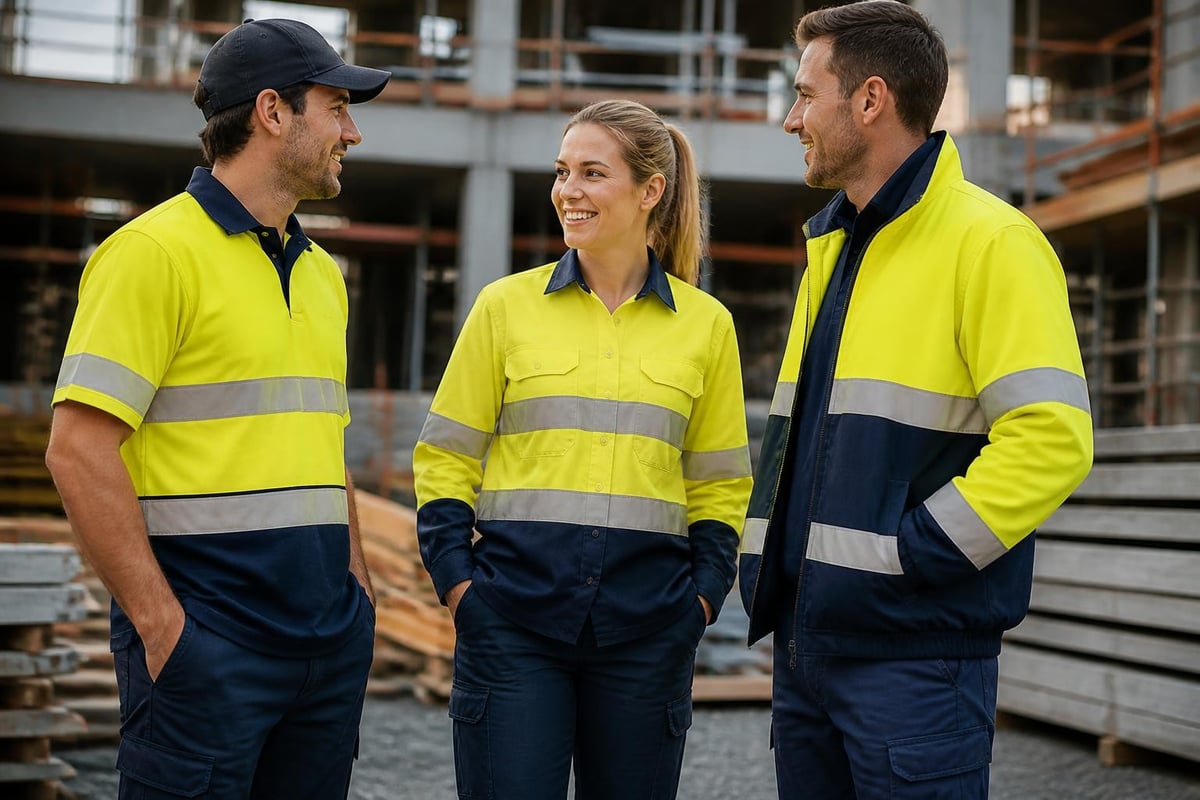
Standardised uniforms create immediate visual identification of team members on multi-contractor sites. This recognition improves communication, enhances security, and reinforces professional standards. Workers wearing quality, branded uniforms report higher job satisfaction and stronger connection to their employer.
The benefits of high-quality workwear extend beyond appearance, directly impacting retention and recruitment. Prospective employees view comprehensive uniform programmes as evidence of professional operations and employer investment in workforce welfare.
Procurement and Programme Management
Establishing an effective uniform for construction workers programme requires strategic planning beyond initial garment selection. Successful programmes balance quality, cost, availability, and ongoing management requirements.
Vendor Selection and Quality Assurance
Choosing reliable uniform suppliers impacts programme success substantially. Evaluate potential vendors based on product quality, inventory availability, customisation capabilities, and delivery reliability. Brands of work clothes vary significantly in durability and suitability for construction applications, making brand selection a critical procurement decision.
Quality assurance processes should include:
- Sample testing under actual working conditions before bulk orders
- Wash testing to verify durability claims and colour fastness
- Fit testing across representative employee body types
- Documentation review confirming safety standard compliance
- Ongoing quality monitoring of delivered products
Establishing relationships with suppliers offering contract embroidery services streamlines reordering processes and ensures consistent branding across multiple orders.
Inventory Management and Replacement Cycles
Efficient inventory management prevents uniform shortages whilst avoiding excessive stock levels. Track garment distribution, monitor wear patterns, and establish replacement cycles based on actual garment lifespan rather than arbitrary timelines.
Most construction uniforms require replacement every 6-12 months depending on job role, working conditions, and garment quality. High-wear positions such as concrete workers or demolition specialists may need more frequent replacements, whilst administrative staff on construction sites may extend garment life considerably.
| Job Role | Average Replacement Cycle | Primary Wear Factors |
|---|---|---|
| General Labourer | 6-8 months | Abrasion, heavy soiling |
| Equipment Operator | 9-12 months | Moderate wear, weather exposure |
| Site Supervisor | 12-18 months | Light wear, professional appearance priority |
| Specialist Trade | 6-12 months | Role-specific hazards, chemical exposure |
Maintenance and Care Protocols
Proper maintenance extends the uniform for construction workers' useful life whilst preserving safety features and professional appearance. Establishing clear care protocols protects your uniform investment and ensures garments continue meeting safety standards.
Washing and Cleaning Best Practices
Construction workwear accumulates significant soiling requiring effective cleaning whilst avoiding damage to fabric treatments or high-visibility properties. Industrial laundering services specialising in workwear understand these requirements, though many companies opt for employee-responsible care programmes.
Care guidelines for embroidered workwear recommend washing inside-out in cool water, avoiding chlorine bleach that degrades high-visibility materials, and line-drying when possible to extend fabric life.
Key maintenance practices include:
- Prompt treatment of stains to prevent permanent discolouration
- Separate washing of heavily soiled garments
- Inspection for damage before each use
- Immediate replacement of garments with compromised safety features
- Proper storage to maintain garment shape and prevent mildew
Inspection and Retirement Standards
Regular inspection identifies uniform for construction workers requiring repair or replacement before safety becomes compromised. High-visibility garments losing retroreflective properties, flame-resistant treatments showing wear, or structural damage affecting fit all warrant immediate retirement.
Establish clear criteria for garment retirement that employees and managers understand. Visible damage, fading below minimum visibility standards, or compromised protective treatments require immediate replacement regardless of garment age. Safety vest guidance provides specific criteria for assessing high-visibility garment condition.
Addressing Common Uniform Programme Challenges
Even well-planned programmes encounter obstacles requiring practical solutions. Understanding common challenges allows proactive planning that minimises disruptions.
Accommodating Diverse Workforce Needs
Modern construction teams include workers with varying body types, preferences, and requirements. Successful uniform for construction workers programmes offer sufficient variety to accommodate this diversity whilst maintaining safety standards and brand consistency.
Consider offering:
- Multiple garment styles achieving the same safety standards
- Options for different climate preferences (insulated vs. non-insulated)
- Adaptive features for workers with physical limitations
- Culturally appropriate options respecting diverse workforce
Balancing Cost and Quality
Budget constraints tempt some organisations toward cheaper uniform options, but this approach typically increases long-term costs through frequent replacements and potential safety compromises. Quality garments lasting twice as long at 40% higher cost deliver better value whilst providing superior protection.
Calculate total cost of ownership including:
- Initial purchase price
- Expected replacement frequency
- Maintenance and laundering costs
- Employee satisfaction and retention impact
- Brand perception and client confidence factors
Quality investment in the uniform for construction workers demonstrates commitment to workforce welfare whilst delivering practical financial benefits through extended garment life and reduced replacement frequency.
Selecting and maintaining appropriate uniform for construction workers requires balancing regulatory compliance, worker safety, durability, and professional presentation. By understanding safety standards, choosing quality materials, implementing effective procurement processes, and establishing clear maintenance protocols, construction companies create comprehensive workwear programmes that protect employees whilst enhancing brand identity. Cobra Workwear specialises in providing construction-grade workwear with in-house embroidery services, offering durable, compliant garments customised to your specifications with fast turnaround times for growing construction teams across the UK.
