

The landscape of professional attire has undergone remarkable transformation over recent years, with men in workwear facing evolving expectations around functionality, presentation, and brand representation. Today's workplace demands garments that perform across multiple dimensions whilst maintaining a polished appearance that reflects organisational values. Whether in construction, hospitality, healthcare, or corporate environments, the standards for men's work clothing continue to adapt to contemporary needs whilst respecting traditional requirements for durability and professionalism.
The Shifting Standards of Professional Dress
Modern workplaces have fundamentally reconsidered what constitutes appropriate attire for men in workwear contexts. The rigid formality of previous decades has given way to more practical approaches that acknowledge the diverse nature of contemporary work environments. This evolution reflects broader changes in workplace culture, where functionality and comfort increasingly complement traditional notions of professionalism.
The distinction between different sectors remains crucial. Construction and manufacturing environments prioritise safety features and durability, whilst hospitality and corporate settings emphasise presentation alongside practicality. Understanding these sector-specific requirements enables businesses to select appropriate workwear that serves both protective and representational functions.
Industry-Specific Requirements
Different sectors impose distinct demands on men in workwear, requiring tailored approaches to garment selection and specification. The construction industry mandates high-visibility elements, reinforced stitching, and weather-resistant materials. Healthcare professionals require easy-care fabrics that withstand frequent laundering whilst maintaining colour fastness and professional appearance. Hospitality workers need garments that project brand identity whilst allowing freedom of movement during extended shifts.

Manufacturing and logistics environments present unique challenges where durability intersects with safety compliance. Men working in these settings require garments capable of withstanding repetitive stress whilst incorporating reflective elements and protective features. The comprehensive guide to workwear standards outlines the technical specifications that govern these requirements.
| Industry Sector | Primary Requirements | Key Features |
|---|---|---|
| Construction | Safety, visibility, durability | Reinforced seams, reflective strips, weather resistance |
| Healthcare | Hygiene, comfort, professionalism | Antimicrobial fabrics, easy-care materials, classic styling |
| Hospitality | Brand presentation, movement, durability | Wrinkle-resistant fabrics, comfortable fit, logo placement |
| Corporate | Professional appearance, comfort | Quality fabrics, tailored fit, subtle branding |
Functionality Meets Fashion in 2026
The convergence of practical requirements and style considerations has defined workwear evolution, with men in workwear benefiting from innovations that enhance both performance and appearance. Contemporary designs incorporate technical fabrics originally developed for athletic wear, offering moisture-wicking properties and temperature regulation without sacrificing professional aesthetics.
This integration of performance features represents a significant departure from traditional workwear design philosophy. Modern garments achieve durability through advanced fabric construction rather than excessive weight, creating more comfortable options for extended wear. The shift towards versatile workwear staples demonstrates how professional attire has embraced both practical innovation and contemporary styling.
Material Innovation and Sustainability
Fabric technology has revolutionised the options available for men in workwear, with manufacturers developing materials that address multiple performance criteria simultaneously. Poly-cotton blends offer optimal balance between durability and comfort, whilst advanced synthetic fibres provide specialised benefits such as flame resistance or chemical protection.
Sustainability considerations increasingly influence material selection, with businesses seeking workwear options that minimise environmental impact without compromising quality. Recycled polyester, organic cotton, and responsibly sourced materials have moved from niche offerings to mainstream availability. Companies prioritising sustainable workwear choices recognise the long-term benefits of environmentally conscious procurement decisions.
The durability equation extends beyond initial fabric quality to encompass garment construction and finishing details. Reinforced stress points, quality fasteners, and professional-grade stitching contribute significantly to garment longevity. These elements prove particularly crucial for businesses managing large workwear programmes where replacement costs and downtime impact operational efficiency.
Branding Through Professional Attire
The strategic value of branded workwear extends far beyond simple identification, transforming men in workwear into mobile brand ambassadors who project organisational identity and values. Professional embroidery and printing services enable businesses to customise garments whilst maintaining quality appearance through repeated wear and laundering cycles.
Key branding considerations include:
- Logo placement and sizing for optimal visibility
- Colour coordination with corporate identity guidelines
- Typography selection for text elements
- Consistency across different garment types
- Quality of decoration application methods
Embroidered logos offer exceptional durability and professional appearance, particularly suitable for polo shirts and other garments where long-term brand visibility justifies the investment. Screen printing provides cost-effective solutions for larger designs or text-heavy applications, whilst modern direct-to-garment technologies enable complex graphics with minimal setup costs.
The positioning of branded elements requires careful consideration of garment function and wearer comfort. Chest placement provides traditional visibility, whilst sleeve and back locations offer alternatives that maximise brand exposure without interfering with work activities. Understanding how custom work shirts with logo enhance professional presentation helps businesses optimise their workwear investment.
Sizing and Fit Considerations
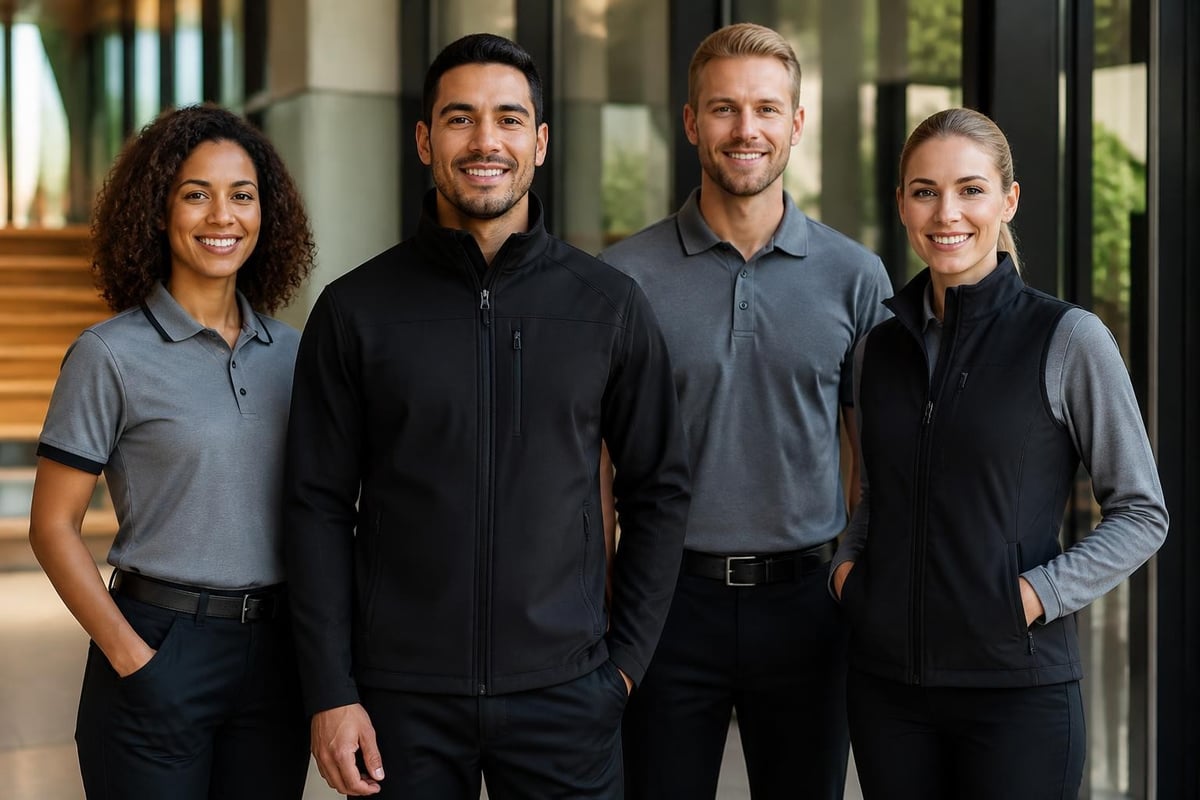
Appropriate fit represents a critical yet frequently overlooked aspect of successful workwear programmes for men in workwear. Garments that fit properly enhance professional appearance, improve comfort during extended wear, and contribute to workplace safety by eliminating excess fabric that might create hazards.
Establishing Sizing Standards
Businesses implementing workwear programmes benefit from systematic sizing approaches that accommodate workforce diversity whilst maintaining consistency. Individual measurements ensure optimal fit, particularly for roles where garment performance directly impacts worker safety or customer interaction quality.
Essential measurement points include:
- Chest circumference at fullest point
- Waist measurement at natural waistline
- Hip measurement for trouser sizing
- Sleeve length from centre back to wrist
- Inside leg measurement for trousers
Modern sizing charts incorporate broader fit categories acknowledging different body types and personal preferences. Slim, regular, and relaxed fits serve different workplace contexts and individual requirements. The evolution of menswear staples reflects broader acceptance of fit variation as legitimate professional choice rather than deviation from standard.
Garment specifications should account for layering requirements, particularly in industries where men in workwear transition between different environmental conditions. Construction workers may require outer layers sized to accommodate insulating garments, whilst healthcare professionals need scrubs that permit comfortable movement without excess material.
Quality Indicators and Value Assessment
Discerning quality in men's workwear requires understanding the characteristics that distinguish durable, professional garments from economy options that prove costly through frequent replacement. Fabric weight, measured in grams per square metre, provides initial quality indication, with heavier fabrics generally offering superior durability for physically demanding roles.
Stitching quality represents another crucial indicator, with double-stitched seams and reinforced stress points indicating garments constructed for extended service life. Fastener quality, from buttons to zips, significantly impacts garment longevity and user experience. Industrial-grade components justify initial cost through reliable performance over thousands of use cycles.
| Quality Factor | Premium Indicators | Economy Indicators |
|---|---|---|
| Fabric Weight | 200-280 GSM | Under 150 GSM |
| Seam Construction | Double-stitched, reinforced | Single stitch, standard seams |
| Fasteners | Metal zips, reinforced buttons | Plastic zips, standard buttons |
| Colour Fastness | Industrial dyeing process | Standard dyeing |
| Finishing | Preshrunk, treated fabrics | Untreated materials |
The total cost of ownership calculation extends beyond initial purchase price to encompass replacement frequency, laundering costs, and brand presentation value. Premium garments commanding higher upfront investment often deliver superior value through extended service life and maintained appearance. This economic reality particularly affects businesses managing workwear for large teams where replacement costs accumulate significantly.
Seasonal Adaptation and Layering Systems
Men in workwear across British industries face variable weather conditions requiring adaptable clothing solutions that maintain comfort and functionality throughout the year. Effective layering systems enable workers to regulate temperature whilst preserving professional appearance and safety compliance.
Base layers provide moisture management and thermal regulation, mid-layers offer insulation, and outer layers protect against weather elements. This systematic approach enables customisation for individual comfort preferences whilst maintaining consistent professional presentation through standardised outer garments.
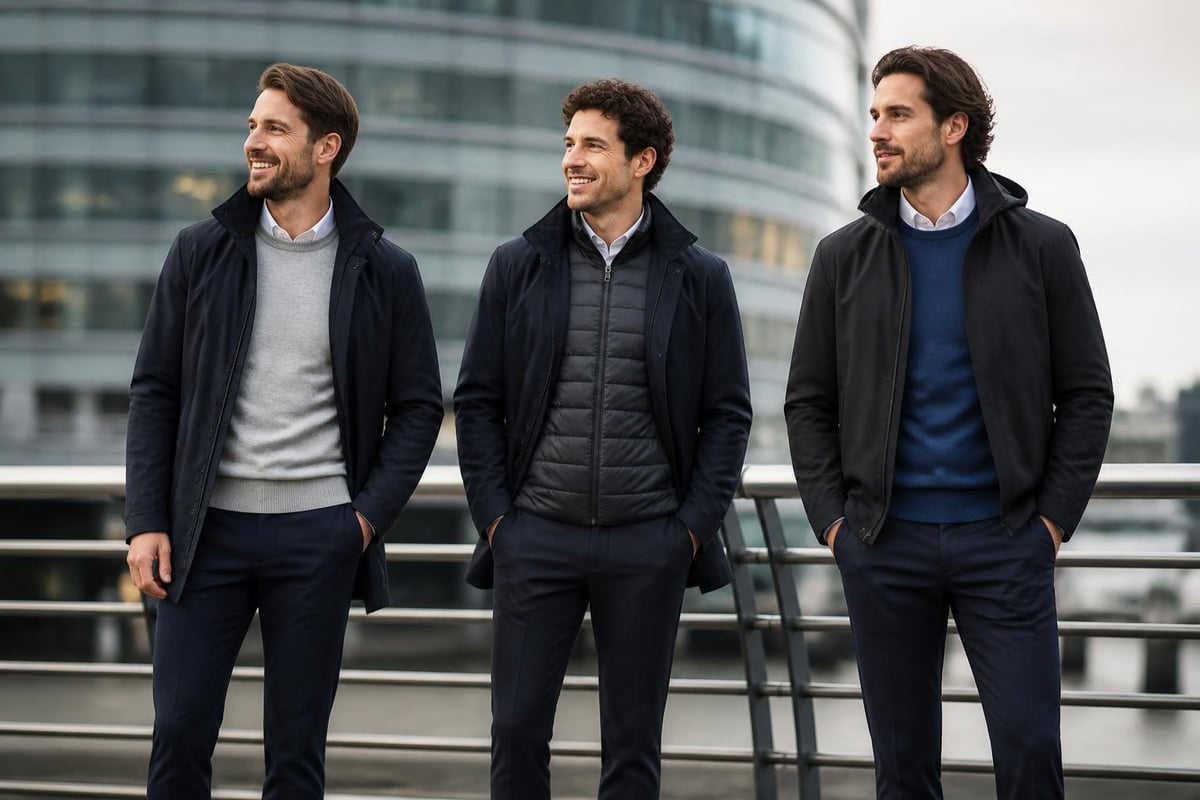
The transformation of office fashion in 2026 demonstrates how professional environments increasingly accommodate practical adaptation to environmental conditions. Softshell jackets combine weather resistance with breathability, providing versatile solutions for outdoor workers. Fleece mid-layers offer warmth without bulk, fitting comfortably beneath protective outer garments.
Weather-Specific Considerations
Winter conditions demand particular attention to thermal performance without sacrificing mobility or safety. Insulated jackets, thermal base layers, and weather-resistant trousers enable men in workwear to maintain productivity during adverse conditions. High-visibility elements must remain effective across all seasonal layers, requiring careful specification of reflective materials and colour contrasts.
Summer presents different challenges where heat management and comfort become paramount. Breathable fabrics, moisture-wicking properties, and appropriate garment weights prevent heat stress whilst maintaining professional appearance. The exploration of workwear transitioning to athleisure influences highlights how performance fabric technologies enhance traditional work garments.
Maintenance and Care Protocols
Proper maintenance significantly extends the service life of men in workwear whilst preserving professional appearance and protective features. Establishing clear care protocols ensures garments maintain their intended performance characteristics through repeated use and laundering cycles.
Industrial laundering differs substantially from domestic washing, with commercial processes designed to remove heavy soiling whilst preserving garment integrity. Temperature selection, detergent choice, and drying methods all impact garment longevity and appearance retention. Businesses managing workwear programmes benefit from establishing relationships with commercial laundry services experienced in workwear care requirements.
Essential care guidelines include:
- Separating heavily soiled garments from lightly worn items
- Following manufacturer washing temperature recommendations
- Avoiding fabric softeners that may compromise technical features
- Inspecting garments regularly for damage requiring repair
- Replacing worn items before they compromise safety or appearance
The economic argument for proper maintenance proves compelling when calculated across large workwear fleets. Extending garment life by 20% through appropriate care protocols delivers substantial cost savings whilst maintaining consistent professional presentation. Many businesses find that investing in quality brands of work clothes paired with proper maintenance protocols delivers optimal value.
Procurement Strategies for Business Efficiency
Systematic approaches to workwear procurement enable businesses to optimise costs whilst ensuring consistent availability of appropriate garments for men in workwear across their organisation. Centralised purchasing leverages volume discounts, whilst standardised specifications simplify reordering and ensure consistency.
Establishing approved garment lists reduces decision complexity whilst ensuring compliance with safety standards and brand guidelines. This systematic approach proves particularly valuable for businesses with multiple locations or diverse workforce requirements. The availability of embroidery services integrated with garment supply streamlines the procurement process.
Inventory Management Approaches
Effective inventory strategies balance availability against storage costs and capital investment. Just-in-time approaches minimise storage requirements but demand reliable supplier relationships and accurate forecasting. Buffer stock strategies provide security against supply disruptions but increase carrying costs and capital commitment.
Seasonal planning anticipates changing requirements across the calendar year, ensuring appropriate garments remain available when needed. Construction businesses might increase orders for weather-protective outer layers ahead of winter, whilst hospitality operations prepare for peak trading periods with adequate uniform stock.
The 2025 fashion trends influencing broader menswear provide context for understanding how professional attire evolves, though workplace requirements typically demand more conservative adoption of stylistic changes. Balancing contemporary appearance with timeless professionalism ensures workwear investments remain appropriate throughout their service life.
Technology Integration in Modern Workwear
Contemporary innovations extend beyond fabric technology to encompass functional elements that enhance the utility of garments for men in workwear. Integrated pockets designed for mobile devices, reinforced loops for tool attachment, and concealed compartments for security passes demonstrate how design responds to modern workplace requirements.
Some advanced applications incorporate RFID tags for inventory tracking, enabling automated management of workwear distribution and return. This technology proves particularly valuable for businesses managing large uniform pools where garment accountability presents operational challenges. Temperature-regulating fabrics utilise phase-change materials that actively respond to body heat, maintaining comfort across varying activity levels.
The integration of smart textile elements remains relatively nascent in mainstream workwear but shows promise for specialised applications. Conductive threads enabling device charging, embedded sensors monitoring worker safety metrics, and self-cleaning fabric treatments represent emerging capabilities that may become standard features in coming years. The defining trends of Autumn/Winter 2025 showcase how fashion innovation eventually influences professional attire.
Men in workwear represent the face of businesses across diverse industries, making appropriate garment selection crucial for operational success and brand presentation. The intersection of functionality, professional appearance, and brand identity requires careful consideration of fabric technology, construction quality, and customisation options. Cobra Workwear provides comprehensive solutions for businesses seeking reliable workwear programmes, offering extensive product ranges alongside in-house embroidery and printing services that ensure consistent brand presentation. Contact their team to discuss how professional workwear can enhance your organisation's image and support your workforce effectively.
