

High-visibility workwear serves a dual purpose in modern industries. Not only does it protect workers by making them visible in hazardous environments, but it also provides an excellent opportunity for corporate branding. A hi vis shirt with logo effectively combines safety compliance with professional identity, transforming essential safety equipment into mobile brand ambassadors. Understanding how to customise these garments properly whilst maintaining safety standards is crucial for businesses across construction, utilities, highways maintenance, and numerous other sectors where visibility matters.
Understanding High-Visibility Standards and Logo Compliance
Before adding any branding to a hi vis shirt with logo, understanding safety regulations is paramount. In the United Kingdom, high-visibility clothing must comply with EN ISO 20471:2013, which specifies requirements for conspicuity materials and minimum areas of fluorescent background material and retroreflective strips.
The standard categorises garments into three classes based on the amount of visible material. Class 3 provides the highest level of visibility, whilst Class 1 offers the lowest. When adding logos or other customisation, you must ensure the modification doesn't reduce the garment below its certified class.
Key compliance requirements include:
- Maintaining minimum fluorescent material area
- Avoiding placement that obscures retroreflective tape
- Using appropriate colours that don't compromise visibility
- Ensuring logos don't cover more than 50% of background material
- Preserving the horizontal and vertical retroreflective band configuration
Understanding high-visibility safety standards ensures your branded workwear remains legally compliant. Many businesses inadvertently void safety certification by placing logos incorrectly, potentially exposing workers to danger and the company to liability.
Material Considerations for Logo Application
The fabric composition of hi vis shirts affects both the garment's performance and the quality of logo application. Polyester-cotton blends dominate the market due to their durability, breathability, and excellent printing characteristics. Pure polyester offers superior moisture-wicking properties but may present challenges for certain customisation methods.
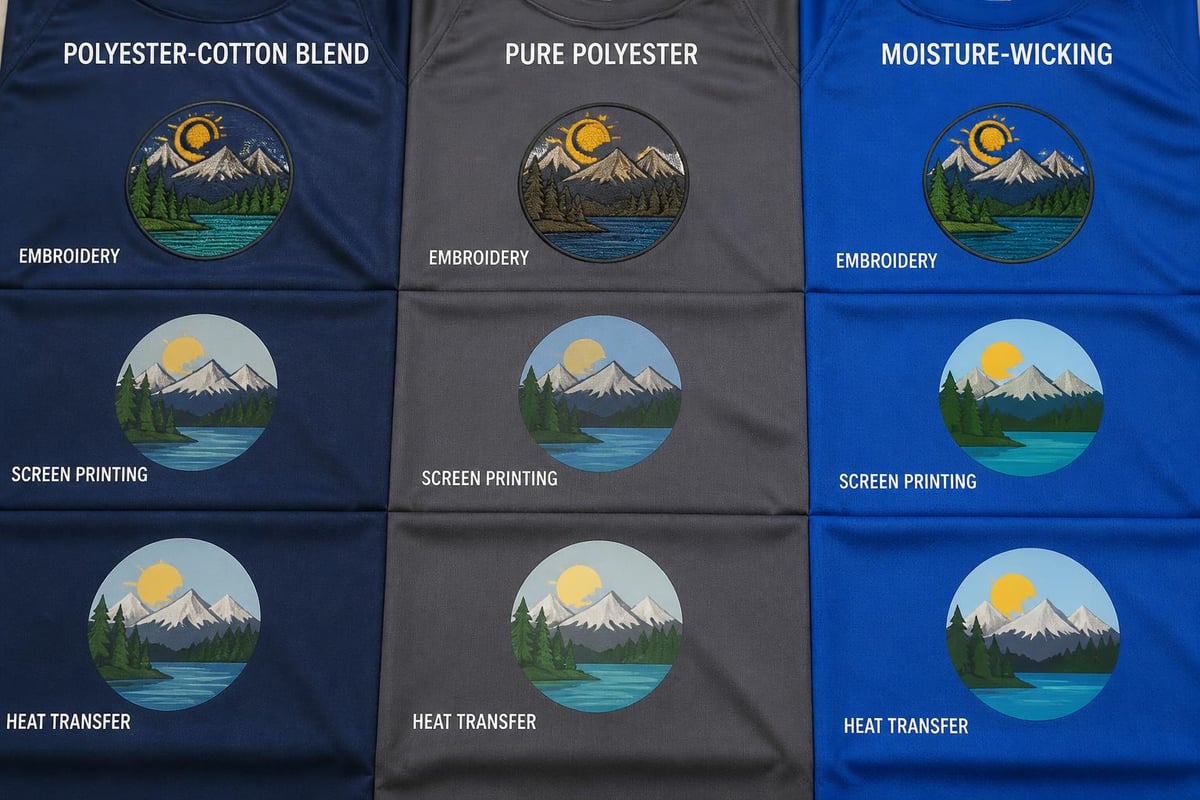
| Fabric Type | Durability | Print Quality | Embroidery Suitability | Best Use Case |
|---|---|---|---|---|
| 65/35 Poly-Cotton | Excellent | Very Good | Excellent | General construction |
| 100% Polyester | Very Good | Good | Good | Utility work |
| Moisture-Wicking Tech | Good | Very Good | Fair | Summer conditions |
| Cotton-Rich Blends | Fair | Excellent | Excellent | Light-duty work |
Strategic Logo Placement for Maximum Impact
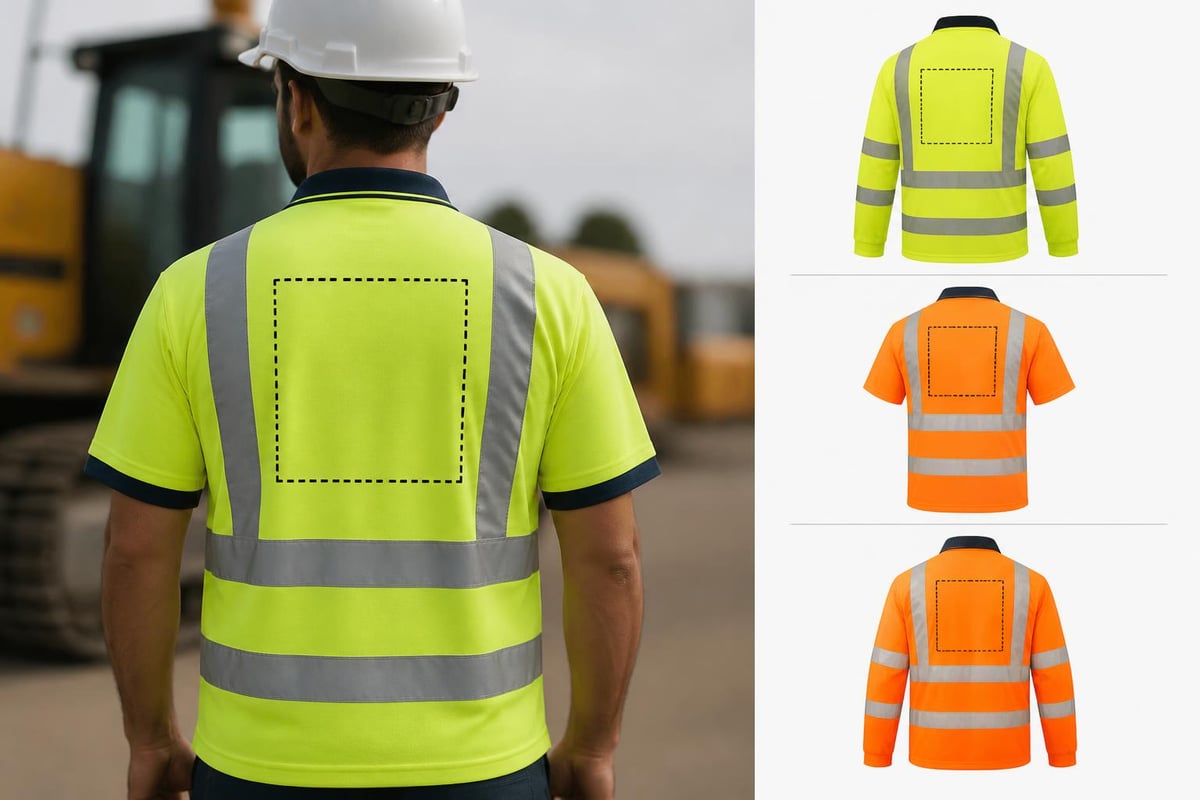
Positioning your logo on a hi vis shirt with logo requires balancing brand visibility with safety compliance. The chest area traditionally offers the most prominent placement, though proper logo placement on high-visibility workwear demands careful consideration of safe zones.
Recommended placement zones:
- Left chest area - Most popular for company logos, typically 10-12cm wide
- Upper back - Ideal for larger branding, often 25-30cm wide
- Right chest - Suitable for secondary logos or employee names
- Sleeve - Effective for additional branding without compromising safety areas
The chest placement works exceptionally well because it sits naturally within the wearer's line of sight during conversations and remains visible when wearing additional safety equipment like harnesses. Back placement ensures visibility from all angles, particularly important for workers turning away from traffic or machinery.
Avoid placing logos on or immediately adjacent to retroreflective tape. This interference can reduce the tape's effectiveness and potentially invalidate safety certification. Maintaining at least 5cm clearance from reflective elements ensures compliance whilst maximising brand impact.
Designing Effective Logos for Hi Vis Application
Creating a logo specifically for a hi vis shirt with logo differs from standard graphic design. The fluorescent background colours - typically yellow, orange, or red - significantly impact colour contrast and legibility. Designing logos for hi-vis vests requires special attention to these unique challenges.
Design principles for high-visibility workwear:
- Simplify complex logos to ensure clarity at smaller sizes
- Use bold, sans-serif fonts for text elements
- Create strong contrast against fluorescent backgrounds
- Avoid fine details that may not reproduce well
- Consider how colours appear on different fluorescent shades
- Test designs at actual application size before production
Dark colours like navy, black, or dark grey provide excellent contrast against yellow or orange backgrounds. White logos work effectively on darker hi vis colours but may lack impact on lighter shades. When your existing brand palette doesn't suit hi vis backgrounds, consider creating an adapted version specifically for safety workwear whilst maintaining brand recognition through shape and typography.
Customisation Methods: Embroidery vs Printing
Selecting the appropriate customisation technique for your hi vis shirt with logo significantly impacts durability, appearance, and cost-effectiveness. Each method offers distinct advantages depending on your requirements, budget, and design complexity.
Embroidery Applications
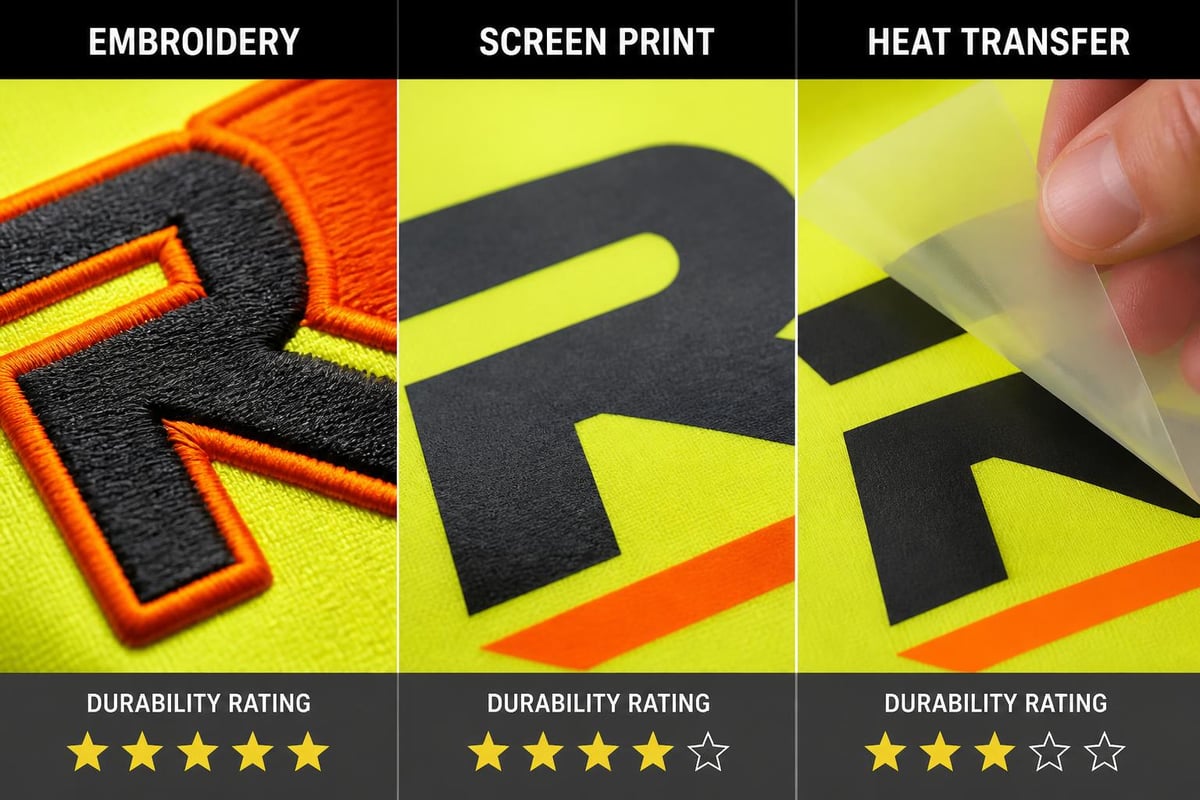
Embroidery delivers a premium, professional appearance that withstands industrial laundering exceptionally well. This method creates a textured, three-dimensional effect that communicates quality and permanence. For embroidered workwear, the raised stitching provides excellent durability even in harsh working conditions.
Embroidery advantages:
- Superior wash durability (100+ industrial washes)
- Professional, high-end appearance
- Excellent on technical fabrics
- Resistant to fading and cracking
- Adds perceived value to garments
Embroidery limitations:
- Higher cost per unit than printing
- Not ideal for complex gradients or photographs
- Limited to simpler designs
- Can feel bulky on lightweight fabrics
Screen Printing and Transfer Methods
Screen printing offers vibrant colours and cost efficiency for larger quantities. This traditional method excels at reproducing detailed designs with multiple colours. Heat transfer methods provide flexibility for smaller orders and full-colour images, though durability varies depending on transfer quality.
Screen printing services typically become cost-effective at quantities exceeding 25-50 units due to setup costs. For smaller orders or frequently changing designs, digital transfer methods offer greater flexibility.
Sizing Guidelines and Visual Balance
Determining appropriate logo dimensions for a hi vis shirt with logo involves understanding both aesthetic proportion and safety requirements. Oversized logos can overwhelm the garment and risk safety compliance, whilst undersized branding fails to achieve marketing objectives.
Standard sizing recommendations:
| Placement Location | Recommended Width | Maximum Width | Typical Height |
|---|---|---|---|
| Left Chest | 10-12cm | 15cm | 8-10cm |
| Full Back | 25-30cm | 35cm | 20-25cm |
| Right Chest | 8-10cm | 12cm | 6-8cm |
| Upper Sleeve | 7-9cm | 10cm | 5-7cm |
These dimensions ensure your branding remains visible and professional without compromising the garment's primary safety function. Remember that customizing hi-vis gear requires balancing multiple considerations including safety messaging, company branding, and regulatory compliance.
Multi-Location Branding Strategies
Combining multiple logo placements on a hi vis shirt with logo maximises brand exposure whilst maintaining safety standards. A common configuration places the company logo on the left chest, employee name on the right chest, and a larger logo version across the upper back.
This approach ensures visibility from all angles whilst providing clear identification. However, excessive branding can appear cluttered and unprofessional. Limit customisation to two or three strategic locations, ensuring each element serves a clear purpose - whether brand recognition, worker identification, or safety messaging.
Industry-Specific Considerations
Different sectors have unique requirements when customising a hi vis shirt with logo. Understanding these nuances ensures your workwear meets both branding objectives and industry-specific standards.
Construction and Building Sites
Construction environments demand maximum durability. Workers frequently encounter abrasive materials, sharp edges, and harsh weather conditions. Embroidery typically outperforms printing in these settings, as the stitched logos resist snagging and tearing better than printed alternatives.
Many construction firms add employee names and trade identifications alongside company logos. This practice improves site management, security, and professional accountability. Consider including certifications or qualifications on garments for workers requiring specific credentials.
Utilities and Emergency Services
Utility workers often operate near traffic or in low-light conditions where maximum visibility is critical. Why hi vis clothing matters in construction applies equally to utilities, where workers face similar hazards from vehicles and machinery.
These sectors typically require Class 3 garments with extensive retroreflective coverage. Logo placement must avoid any interference with reflective elements. Many utility companies opt for smaller, discrete chest logos whilst using back placement for larger branding that doesn't compromise safety features.
Highways and Traffic Management
Roadside workers face extreme visibility requirements. A hi vis shirt with logo for highways maintenance must prioritise compliance above branding considerations. Many organisations choose minimal front branding with larger back logos positioned above the retroreflective 'X' or 'H' pattern required for Class 3 garments.
Reflective logo printing offers an innovative solution for highways work, incorporating branding directly into reflective elements. This specialist technique maintains safety performance whilst enhancing brand visibility in low-light conditions. However, it requires specialist suppliers and carries higher costs than standard customisation methods.
Ordering and Production Considerations
Successfully implementing a hi vis shirt with logo programme requires careful planning around quantities, timelines, and quality control. Understanding production processes helps set realistic expectations and avoid common pitfalls.
Minimum Order Quantities and Pricing
Customisation methods significantly impact minimum order requirements. Embroidery typically accommodates smaller quantities (sometimes as low as 10 units) because setup costs are lower. Screen printing becomes economical at larger volumes, usually 25-50+ units, due to screen preparation expenses.
Pricing factors include:
- Base garment cost and quality grade
- Customisation method selected
- Logo complexity and colour count
- Number of placement locations
- Order quantity and repeat business
- Turnaround time requirements
Volume discounts apply across most suppliers, with price breaks often occurring at 25, 50, 100, and 250 units. Planning annual workwear requirements allows bulk ordering that maximises cost efficiency whilst ensuring consistent branding across your workforce.
Quality Control and Sampling
Before committing to large production runs, request samples of your hi vis shirt with logo. This step verifies that colours, sizing, and placement meet expectations. Digital mockups provide initial guidance, but physical samples reveal how logos actually appear on fluorescent fabric under various lighting conditions.
Check that customisation doesn't affect garment certification. Reputable suppliers provide documentation confirming that branded garments maintain their original safety classification. This certification protects both workers and employers from liability.
When exploring options for custom work clothing, requesting detailed specifications helps compare suppliers effectively. Consider factors beyond price, including turnaround times, minimum quantities, artwork requirements, and post-production support.
Maintaining Branded Hi Vis Workwear
Proper care extends the lifespan of both the garment and customisation. A hi vis shirt with logo requires specific washing and maintenance practices to preserve both safety performance and brand appearance.
Maintenance best practices:
- Wash inside-out to protect customisation
- Use mild detergents without bleach
- Avoid fabric softeners that reduce fluorescent effectiveness
- Tumble dry on low or air dry
- Inspect regularly for damage to logos or reflective tape
- Replace when fluorescence fades or reflective performance degrades
Industrial laundering services understand hi vis care requirements, though they may accelerate logo wear compared to gentle domestic washing. Embroidered logos typically withstand industrial laundering better than most printing methods. When specifying garments, consider the laundering environment your workwear will encounter.
Replacement Cycles and Inventory Management
High-visibility clothing deteriorates over time, regardless of customisation. Fluorescent materials lose effectiveness through UV exposure and repeated washing, typically requiring replacement every 12-24 months depending on usage intensity.
Establish replacement schedules that account for this natural degradation. Maintaining inventory of common sizes ensures new employees receive properly branded workwear promptly. Some businesses implement quarterly ordering cycles that spread costs whilst ensuring consistent supply.
Consider seasonal variations when planning a hi vis shirt with logo programme. Summer months might require additional lightweight shirts, whilst winter demands may shift toward long-sleeved variants or hi vis jackets. Coordinating all high-visibility workwear with consistent branding creates a professional, cohesive appearance across different garment types.
Measuring Return on Investment
Investing in branded hi vis workwear delivers benefits beyond simple safety compliance. Quantifying these advantages helps justify the expenditure and refine your approach.
Brand Visibility Metrics
Each worker wearing a hi vis shirt with logo becomes a mobile advertisement. Calculate exposure by considering daily interactions, site visibility, and public presence. A highways maintenance crew working on busy roads potentially generates thousands of brand impressions daily.
Track enquiries or recognition that employees attribute to branded workwear. Many service businesses report increased customer confidence and professional credibility from consistent, well-branded safety apparel. This perception can influence contract awards and customer retention.
Employee Pride and Retention
Quality branded workwear contributes to employee satisfaction and company culture. Workers appreciate employers who invest in their safety and professional appearance. This investment often correlates with reduced turnover, particularly in sectors facing recruitment challenges.
Survey employees about their perception of company-branded workwear. Many organisations find that high-quality, well-designed hi vis clothing with professional branding enhances team identity and pride in their employer.
Advanced Customisation Options
Beyond standard logo application, several innovative techniques enhance a hi vis shirt with logo whilst maintaining safety compliance.
Reflective Logo Printing
Specialist reflective printing incorporates logos directly into retroreflective materials. This advanced technique ensures branding remains visible in low-light conditions alongside standard reflective elements. The method suits organisations prioritising night-time visibility, such as emergency services or 24-hour utility companies.
Reflective printing costs more than conventional methods but delivers unique benefits for specific applications. Understanding imprinting options for safety vests reveals numerous possibilities beyond basic embroidery or screen printing.
QR Codes and Digital Integration
Forward-thinking organisations incorporate QR codes into hi vis shirt with logo designs. These codes link to safety information, training resources, or employee credentials. Scanning a worker's shirt can verify certifications, access emergency contacts, or report safety observations.
This digital integration transforms workwear into an interactive safety tool whilst maintaining traditional branding functions. As technology adoption increases across industries, expect greater integration between physical workwear and digital systems.
Personalisation at Scale
Modern production techniques enable individual personalisation without sacrificing efficiency. Adding employee names, departments, or identification numbers to each hi vis shirt with logo improves accountability and site management.
Digital embroidery and printing technologies make personalisation economically viable even for moderate quantities. This capability proves particularly valuable for larger organisations managing extensive workforces across multiple sites or projects.
Implementing a hi vis shirt with logo programme successfully balances safety compliance, brand visibility, and practical durability. Understanding regulations, choosing appropriate customisation methods, and maintaining quality ensures your investment delivers lasting value across safety, branding, and employee satisfaction objectives. Whether you're equipping a small team or managing enterprise-wide workwear requirements, Cobra Workwear provides expert guidance and in-house customisation services to bring your branded hi vis vision to life with precision and professionalism.
