

Finding reliable garment embroidery near me has become increasingly important for businesses seeking to strengthen their brand identity through professional workwear and promotional items. Whether you're outfitting a construction team, hospitality staff, or healthcare professionals, embroidered garments offer durability, professionalism, and consistent brand representation that printing alone cannot match. The embroidery industry has experienced significant growth, with the garment decoration market expanding rapidly as businesses recognise the value of customised workwear. This comprehensive guide explores everything you need to know about selecting the right embroidery service, understanding pricing structures, and ensuring quality results that represent your business effectively.
Understanding Garment Embroidery Services
Garment embroidery involves stitching designs, logos, or text directly onto fabric using specialised machinery and thread. Unlike screen printing or heat transfers, embroidery creates a three-dimensional, textured finish that withstands repeated washing and daily wear.
Professional embroidery services typically offer several key features:
- Digitising services that convert your logo into an embroidery-compatible format
- Thread colour matching to ensure precise brand colour reproduction
- Multiple garment placement options including left chest, back, sleeves, and caps
- Volume discounts for bulk orders
- Sample production before full production runs
When searching for garment embroidery near me, you'll encounter two primary types of providers: dedicated embroidery shops and full-service workwear companies that offer in-house embroidery capabilities. Each has distinct advantages depending on your specific requirements.
The Technology Behind Quality Embroidery
Modern embroidery relies on computerised multi-head machines that can stitch thousands of stitches per minute with remarkable precision. The industrial embroidery machine market continues to advance, incorporating features like automatic thread cutting, colour changes, and pattern recognition.
Quality embroidery requires more than just machinery. Experienced operators understand fabric types, stabiliser selection, and thread tension adjustments that prevent puckering, thread breaks, and distortion. Machine setup practices significantly impact final results, making operator expertise as important as equipment quality.

Evaluating Local Embroidery Providers
Not all embroidery services deliver the same quality or customer experience. When searching for garment embroidery near me, consider these critical evaluation criteria:
| Evaluation Factor | What to Look For | Why It Matters |
|---|---|---|
| Portfolio Quality | Crisp edges, consistent density, no puckering | Indicates technical skill and machine quality |
| Turnaround Time | Clear timelines with contingency planning | Ensures reliability for time-sensitive orders |
| Minimum Orders | Flexible minimums or no-minimum options | Important for small businesses or test orders |
| Pricing Structure | Transparent pricing with itemised costs | Prevents unexpected charges |
| Customer Service | Responsive communication and problem-solving | Essential for managing revisions and issues |
Questions to Ask Potential Providers
Before committing to a garment embroidery service, gather detailed information through targeted questions:
- What file formats do you accept for logo submission? Most professionals work with vector files (AI, EPS, PDF) but should accommodate high-resolution raster images.
- Do you charge for digitising, and is it a one-time fee? Understanding digitising costs prevents budget surprises.
- What garments can you embroider? Some providers specialise in specific items whilst others handle everything from polo shirts to bags and caps.
- How do you handle colour matching? Brand consistency requires precise Pantone or thread manufacturer colour matching.
- What is your typical production timeline? Realistic expectations prevent disappointment and planning issues.
Many businesses discover that working with a dedicated workwear provider offering embroidery services simplifies the entire process, from garment selection through final delivery.
Cost Considerations for Embroidered Workwear
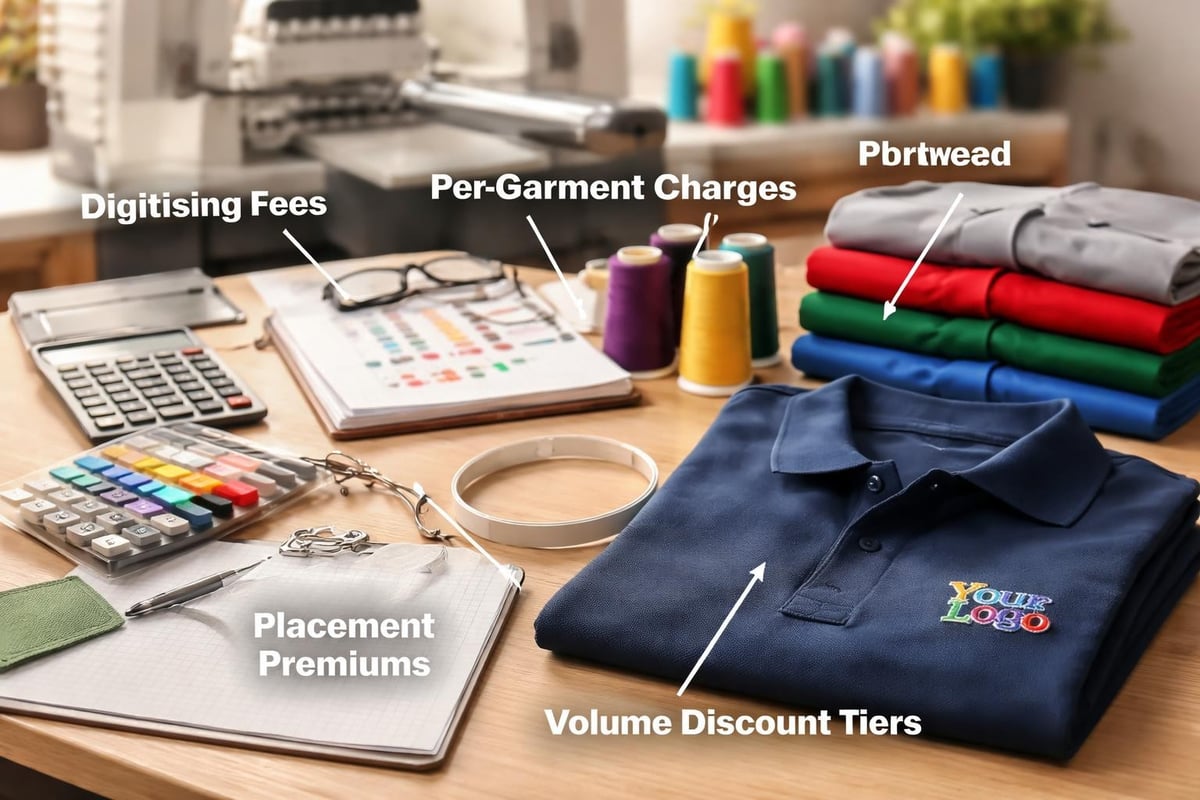
Understanding pricing structures helps you budget effectively and compare providers accurately. Garment embroidery near me typically involves several cost components.
Setup and Digitising Fees
Most providers charge a one-time digitising fee to convert your logo into an embroidery file. This ranges from £20 to £80 depending on design complexity. Simple text designs cost less than intricate logos with multiple colours and fine details. Once digitised, the file remains on record for future orders without additional digitising charges.
Per-Garment Embroidery Costs
Embroidery pricing typically depends on stitch count, with higher stitch counts requiring more thread and machine time. Small left-chest logos might cost £3-5 per garment, whilst larger back designs could range from £8-15. Multiple placement locations increase costs proportionally.
Balancing Quality and Budget
The personalisation trend in fashion has driven demand for embroidered items, but smart purchasing strategies help control costs:
- Order in larger quantities to access volume discounts
- Standardise placement and sizes to reduce setup complexity
- Choose thread colours readily available rather than custom matching
- Combine orders when possible rather than multiple small batches
- Select appropriate garments as thicker fabrics may require additional stabilisation
For businesses requiring regular embroidery services, establishing a relationship with a single provider often yields better pricing and service priority.
Quality Indicators in Embroidered Garments
Recognising quality embroidery helps you assess samples and finished products effectively. Professional embroidery displays specific characteristics that separate superior work from substandard results.
Visual Quality Markers
Examine embroidered samples under good lighting:
- Smooth, consistent thread coverage without fabric showing through
- Clean edges on letters and design elements
- Uniform density throughout the design
- No thread tails or loose stitches on the garment interior
- Straight alignment with garment seams and plackets
Tactile Quality Assessment
Feel the embroidered area to check for:
- Flexibility without excessive stiffness
- No puckering or distortion of the surrounding fabric
- Comfortable interior backing without scratchy stabiliser remnants
- Secure thread attachment that doesn't pull away easily
Durability Testing
Quality embroidery withstands industrial laundering and daily wear. Ask providers about their wash testing protocols and request references from clients in similar industries. Construction workwear requires different durability standards than hospitality uniforms, so ensure your provider understands your specific requirements.
The embroidery industry statistics demonstrate that consumers increasingly value quality and durability over price alone, making investment in superior embroidery worthwhile for long-term brand representation.
Choosing the Right Garments for Embroidery
Not all fabrics accept embroidery equally well. Understanding fabric compatibility ensures optimal results when ordering embroidered workwear.
Best Fabrics for Embroidery
| Fabric Type | Embroidery Suitability | Considerations |
|---|---|---|
| Cotton twill | Excellent | Dense weave supports detailed designs |
| Polyester fleece | Very good | Requires proper stabilisation |
| Cotton piqué (polo fabric) | Excellent | Traditional choice for corporate wear |
| Canvas | Excellent | Ideal for bags and heavy-duty items |
| Nylon | Good | Lightweight but may require special techniques |
| Stretchy knits | Challenging | Requires expert handling to prevent distortion |
Garment Selection Tips
When searching for garment embroidery near me providers, discuss garment selection early in the process. Professional services can recommend specific items that accept embroidery well whilst meeting your functional requirements. For example, workwear polo shirts offer an ideal combination of professional appearance and embroidery-friendly fabric construction.
Consider these factors when selecting garments:
- Industry requirements: Healthcare, hospitality, and construction each have specific functional needs
- Washing frequency: Choose durable fabrics if garments require daily laundering
- Comfort: Employee satisfaction increases when workwear feels comfortable throughout shifts
- Brand representation: Select styles that align with your company image
- Budget constraints: Balance quality with cost-effectiveness for your specific application
Working with Contract Embroidery Services
Many businesses benefit from contract embroidery arrangements that provide consistent service, predictable pricing, and priority scheduling. These partnerships work particularly well for companies with ongoing uniform needs.
Benefits of Contract Arrangements
Establishing a contract relationship with a garment embroidery near me provider offers several advantages:
- Locked-in pricing for budget predictability
- Priority production scheduling during busy periods
- Stored digitised files for quick reorders
- Dedicated account management
- Quality consistency across all orders
Building Effective Provider Relationships
Successful embroidery partnerships require clear communication and mutual understanding. Provide detailed specifications for each order, including:
- Exact placement measurements from garment reference points
- Thread colour specifications with Pantone or manufacturer codes
- Quantity breakdowns by size and style
- Delivery deadlines with reasonable lead times
- Quality expectations with reference samples when possible
Regular communication helps prevent misunderstandings and ensures satisfaction with finished products. Schedule periodic reviews to discuss quality, timing, and opportunities for process improvement.

Industry-Specific Embroidery Considerations
Different sectors have unique embroidery requirements that affect design, placement, and garment selection. Understanding these nuances ensures embroidered workwear meets both functional and regulatory needs.
Construction and Trades
Construction workwear demands durability above all else. Embroidery must withstand:
- Frequent washing in harsh detergents
- Abrasion from tools and materials
- Exposure to weather and environmental elements
- Physical stress from bending and reaching
Choose reinforced placement areas and simpler designs that maintain visibility even as garments age. High-visibility requirements may dictate specific placement restrictions to avoid obscuring reflective materials.
Hospitality and Service Industries
Restaurant, hotel, and service sector embroidery prioritises professional appearance and brand consistency. These industries typically prefer:
- Subtle left-chest logo placement
- Elegant script or refined fonts
- Coordinated thread colours matching brand palettes
- Frequent replacement cycles maintaining pristine appearance
Healthcare and Medical Settings
Medical facilities require embroidery that withstands industrial laundering whilst meeting infection control standards. Consider antimicrobial threads for certain applications and ensure embroidery doesn't create areas where contaminants could collect.
Maximising Brand Impact Through Embroidery
Strategic embroidery placement and design choices significantly impact brand recognition and professional image. The growth of custom-made embroidered products reflects increasing recognition of embroidery's branding value.
Design Optimisation Strategies
Effective embroidered branding requires thoughtful design adaptation:
- Simplify complex logos by removing fine details that don't translate well to thread
- Increase letter sizes to ensure readability at typical viewing distances
- Limit colour counts to reduce costs whilst maintaining brand recognition
- Consider proportions appropriate to garment size and placement location
- Test samples before committing to large production runs
Placement Psychology
Logo placement communicates different messages and serves varying practical purposes:
- Left chest: Traditional, professional, ideal for corporate environments
- Right chest: Alternative placement when left chest carries name badges
- Sleeves: Increases visibility, popular for trades and outdoor work
- Back: Maximum impact, suitable for team identification
- Caps: Effective for outdoor workers and brand visibility
Strategic placement decisions should consider both aesthetic preferences and functional requirements. For businesses requiring consistent workwear near me solutions, coordinated embroidery across multiple garment types creates cohesive brand presentation.
Digital Embroidery Advances in 2026
Embroidery technology continues evolving, offering new possibilities for businesses seeking garment embroidery near me. Understanding current capabilities helps you leverage the latest techniques for superior results.
Technological Innovations
Recent advances include:
- 3D puff embroidery creating raised, dimensional designs
- Appliqué combinations reducing stitch counts whilst adding visual interest
- Metallic and specialty threads offering premium aesthetic options
- Improved digitising software enabling more accurate logo reproduction
- Faster production speeds reducing turnaround times
The textile embroidery machine market growth demonstrates continued investment in technology that benefits businesses through improved quality and efficiency.
Sustainable Embroidery Practices
Environmental consciousness increasingly influences embroidery choices. The lace and embroidery industry trend toward sustainability extends to workwear applications through:
- Recycled polyester threads
- Organic cotton garments
- Water-based backing materials
- Energy-efficient production equipment
- Local sourcing reducing transportation emissions
Businesses committed to sustainability should discuss eco-friendly options with garment embroidery near me providers, as many now offer environmentally conscious alternatives without compromising quality.
Managing Embroidery Projects Effectively
Successful embroidery outcomes require careful project management from initial concept through final delivery. Implementing structured processes prevents common pitfalls and ensures satisfaction.
Project Planning Checklist
Follow this framework for smooth embroidery projects:
- Define requirements including quantities, styles, colours, and deadlines
- Obtain accurate logo files in vector format when possible
- Request digital mockups showing embroidery placement and sizing
- Order samples before committing to full production
- Review samples carefully checking quality, placement, and colour accuracy
- Approve production only after complete satisfaction with samples
- Coordinate delivery allowing buffer time before required date
- Inspect finished goods upon receipt and document any issues immediately
Common Mistakes to Avoid
Learn from frequent embroidery project errors:
- Providing low-resolution images requiring extensive digitising work
- Rushing production without sample approval
- Failing to specify exact placement measurements
- Ordering inappropriate garment styles for embroidery
- Underestimating required lead times
- Neglecting to communicate special requirements
- Accepting substandard quality to meet deadlines
Professional providers appreciate detailed specifications and realistic timelines. Quality garment embroidery near me services will guide you through proper procedures rather than rushing projects that yield disappointing results.
Finding Reliable Local Providers
Location matters when selecting embroidery services. Local providers offer advantages including personal consultations, sample reviews, and faster turnaround times for urgent orders.
Evaluation Methods
Research garment embroidery near me options through multiple channels:
- Online reviews and testimonials from similar businesses
- Industry associations and trade organisations
- Recommendations from business networks
- Portfolio reviews on provider websites
- In-person facility visits when possible
Many successful businesses establish relationships with full-service workwear companies that combine garment supply with professional decoration services. This integrated approach simplifies ordering, ensures compatibility, and often provides better value than sourcing garments and embroidery separately.
Red Flags and Warning Signs
Avoid providers exhibiting these concerning characteristics:
- Unwillingness to provide samples before production
- Vague or inconsistent pricing information
- Poor communication or delayed responses
- Lack of portfolio or reference clients
- Pressure to commit without adequate information
- Inability to explain technical processes
- No quality guarantees or revision policies
Reputable providers welcome questions, provide transparent information, and stand behind their work with satisfaction guarantees.
Selecting the right garment embroidery service requires careful consideration of quality, pricing, capabilities, and customer service. By evaluating providers thoroughly, understanding cost structures, and communicating requirements clearly, businesses secure embroidered workwear that enhances brand identity whilst meeting practical needs. Whether you need embroidered polo shirts for hospitality staff or high-visibility jackets for construction teams, Cobra Workwear combines quality garments with professional in-house embroidery services, delivering consistent results that represent your business with pride throughout 2026 and beyond.
