

Embroidery UK has evolved from a centuries-old craft into a sophisticated industry serving businesses across every sector. Whether you're outfitting a construction team, establishing brand identity for hospitality staff, or creating professional uniforms for healthcare workers, embroidery remains the gold standard for durable, professional garment decoration. This traditional technique has seamlessly integrated modern technology, allowing businesses throughout the United Kingdom to access high-quality customisation that withstands industrial washing, daily wear, and the demands of challenging work environments. Understanding the landscape of embroidery services, techniques, and emerging trends helps businesses make informed decisions about their workwear investments.
The Evolution of Embroidery Services in the United Kingdom
The heritage of embroidery UK extends back centuries, with traditional embroidery techniques forming an integral part of British textile history. The Royal School of Needlework has preserved these artisan skills whilst modern commercial embroidery has transformed into a technology-driven industry.
Today's embroidery businesses combine traditional craftsmanship with computerised machinery capable of producing thousands of identical logos with precision accuracy. This marriage of heritage and innovation creates opportunities for businesses seeking consistent branding across their workforce.
Key developments shaping modern embroidery UK include:
- Multi-head commercial machines enabling rapid production
- Digital design software allowing complex logo recreation
- Advanced thread technologies providing enhanced durability
- Sustainable practices reducing environmental impact
- Integration with inventory management systems
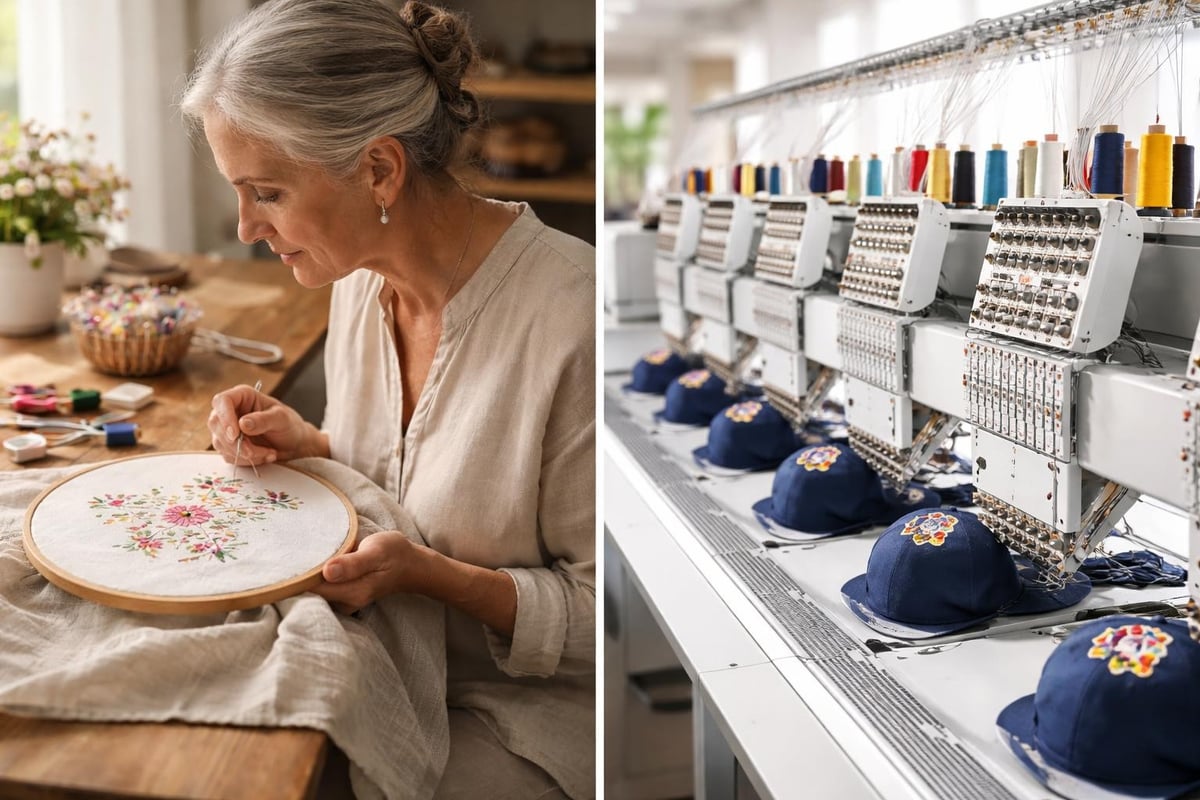
The commercial embroidery sector has experienced significant growth, with market analysis indicating consistent expansion driven by corporate branding demands and personalisation trends.
Understanding Commercial Embroidery Techniques
Different embroidery methods suit various applications, fabrics, and design requirements. Businesses selecting embroidery services should understand these fundamental techniques to ensure optimal results for their specific needs.
| Technique | Best Applications | Fabric Compatibility | Durability Rating |
|---|---|---|---|
| Flat Embroidery | Logos, text, simple designs | Cotton, polyester, blends | Excellent |
| 3D Puff Embroidery | Caps, raised logos | Structured fabrics | Very Good |
| Appliqué | Large designs, cost reduction | Heavy-duty workwear | Excellent |
| Chenille | Varsity-style branding | Fleece, jackets | Good |
Flat embroidery remains the most versatile option for workwear applications, delivering crisp logo reproduction on garments ranging from polo shirts to hi-vis jackets. The technique uses digitised designs converted into stitch patterns that commercial machines execute with remarkable precision.
Three-dimensional puff embroidery creates raised designs particularly effective on headwear and premium garments. A foam layer placed beneath stitching creates depth and visual impact, though this technique requires specific fabric structures to support the dimensional effect.
Embroidery UK Applications Across Industries
Different sectors prioritise distinct aspects of embroidery services based on their operational requirements, safety standards, and branding objectives. Understanding industry-specific needs helps businesses select appropriate suppliers and techniques.
Construction and Trades
Construction companies require embroidery that withstands harsh conditions, frequent washing, and extended wear periods. High-visibility workwear demands particular attention, as embroidered logos must not compromise reflective properties or safety certifications.
Durable thread selections and reinforced stitching patterns ensure logos remain legible throughout garment lifecycles. Many construction firms maintain consistent branding across hi-vis clothing, fleeces, and protective wear, creating professional team identity whilst maintaining safety compliance.
Hospitality and Service Industries
Hotels, restaurants, and service businesses use embroidery to project professionalism and brand consistency. These sectors typically require:
- Subtle, elegant logo placement
- Colour matching to brand guidelines
- Quick turnaround for staff replacements
- Variety across garment types
- Laundering durability for daily washing
Front-of-house staff often wear embroidered shirts, waistcoats, and aprons that present polished brand image to customers. The permanence of embroidery compared to printed alternatives justifies investment for businesses where appearance directly influences customer perception.
Healthcare and Care Sectors
Medical facilities, care homes, and healthcare providers prioritise hygiene-compatible embroidery that survives industrial laundering at high temperatures. Logo placement typically avoids areas requiring frequent disinfection whilst maintaining professional appearance.

NHS trusts and private healthcare providers often specify exact Pantone colour matches, placement positions, and size requirements across departments. Consistency across thousands of staff members requires embroidery partners capable of maintaining quality standards throughout large production runs.
Quality Considerations for Business Embroidery
Selecting embroidery UK services requires evaluation beyond simple pricing comparisons. Quality indicators separate premium services from budget alternatives, directly impacting garment longevity and brand presentation.
Thread Quality and Selection
Premium polyester threads resist fading, maintain colour vibrancy, and withstand repeated industrial washing. Cheaper alternatives may initially appear identical but deteriorate rapidly, creating false economy as garments require premature replacement.
Thread quality factors include:
- Colorfastness ratings for wash resistance
- Tensile strength preventing breakage during wear
- Sheen consistency maintaining visual appeal
- UV resistance for outdoor applications
- Chemical resistance for specialist environments
Professional embroidery services maintain extensive thread libraries, enabling precise brand colour matching. The ability to reference Pantone codes ensures consistency across different garment batches ordered months or years apart.
Digitising Expertise
Logo digitising transforms artwork into stitch patterns that machines can execute. This critical step determines final embroidery quality more significantly than the stitching process itself. Poor digitising creates puckered fabric, broken threads, and distorted designs regardless of machine quality.
Expert digitisers consider fabric type, garment construction, and logo complexity when programming stitch sequences. They adjust stitch density, underlay patterns, and direction changes to complement specific materials whilst accurately reproducing design intent.
| Digitising Element | Impact on Quality | Common Issues from Poor Digitising |
|---|---|---|
| Stitch Density | Defines coverage and durability | Puckering, thread breaks, gaps |
| Underlay Stitching | Stabilises fabric foundation | Registration drift, distortion |
| Push/Pull Compensation | Prevents design distortion | Misshapen logos, incorrect sizing |
| Pathing Sequence | Affects efficiency and finish | Excessive trims, inconsistent texture |
Businesses commissioning embroidery should request digitising samples before committing to large orders. The growing trend in personalisation has elevated expectations for embroidery precision across all market segments.
Emerging Trends in Embroidery UK for 2026
The embroidery sector continuously evolves, incorporating technological advances, sustainability priorities, and changing aesthetic preferences. Understanding current trends helps businesses future-proof their workwear investments whilst maintaining contemporary brand image.
Sustainable Embroidery Practices
Environmental consciousness increasingly influences purchasing decisions across all business sectors. Embroidery services respond by implementing sustainable practices throughout their operations:
- Recycled polyester threads derived from plastic bottles
- Water-based backing materials replacing petroleum-based alternatives
- Energy-efficient machinery reducing carbon footprint
- Waste reduction programmes minimising thread and fabric disposal
- Local sourcing supporting UK textile manufacturers
These initiatives align with broader corporate sustainability goals whilst maintaining quality standards. Fashion industry trends for 2025 emphasise sustainability alongside personalisation, creating dual pressures that professional embroidery services must address.
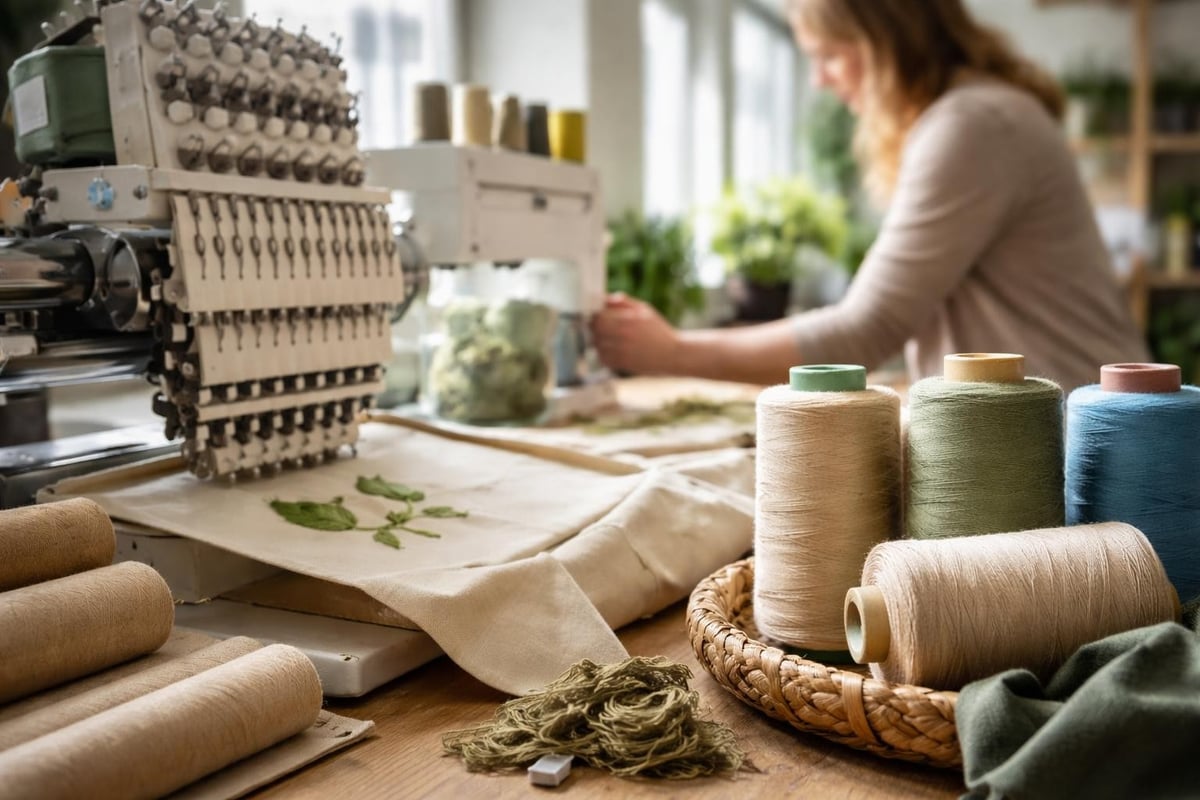
Businesses increasingly request documentation of sustainability credentials from their embroidery suppliers. This transparency extends throughout supply chains, from garment manufacturing through decoration to final delivery logistics.
Technological Integration and Innovation
Artificial intelligence and advanced software reshape embroidery capabilities. Research into Generative AI for embroidery design demonstrates potential for automated pattern creation and design optimisation, whilst innovative workflows explore new applications beyond traditional garment decoration.
Commercial applications focus on practical improvements:
- Automated quality inspection using computer vision
- Real-time production tracking through connected machinery
- Predictive maintenance reducing equipment downtime
- Customer portals enabling online ordering and approval
- Virtual sampling showing designs before production
These technological advances streamline ordering processes whilst improving consistency. Businesses benefit from reduced lead times, enhanced accuracy, and simplified reordering procedures.
Maximalist and Detail-Rich Designs
Contrary to minimalist trends dominating recent years, embroidery UK increasingly features complex, detail-rich designs. The power of embroidery in fashion extends to workwear applications where businesses seek distinctive brand identity through sophisticated logo work.
Modern machinery capabilities enable intricate details previously impossible at commercial production speeds. Gradient fills, photographic recreations, and complex multi-colour designs become economically viable for businesses wanting standout branding.
Selecting Embroidery Partners for Business Needs
Businesses seeking embroidery UK services should evaluate potential partners against specific criteria ensuring long-term satisfaction and value. The cheapest quote rarely delivers best total cost of ownership when factoring quality, service, and longevity.
Production Capacity and Turnaround Times
Understanding supplier capabilities prevents disappointment when urgent requirements arise. Questions to address include:
- Minimum order quantities and pricing breaks
- Standard turnaround times for various order sizes
- Rush service availability and associated costs
- Peak season impacts on delivery schedules
- Capacity for repeat orders maintaining consistency
Businesses with ongoing requirements benefit from establishing relationships with suppliers capable of scaling production whilst maintaining quality standards. The ability to access diverse workwear options alongside decoration services streamlines procurement processes.
Sample Quality and Approval Processes
Physical samples reveal quality levels more accurately than digital mockups. Reputable embroidery services provide samples before production, allowing assessment of stitch quality, colour accuracy, and placement precision.
Evaluation criteria for embroidery samples:
- Logo sharpness and detail reproduction
- Thread colour accuracy to brand standards
- Fabric distortion or puckering absence
- Backing visibility on garment interior
- Overall professional finish quality
Approval processes should document exact specifications preventing disputes about production outcomes. Written confirmations covering logo size, placement coordinates, thread colours, and garment types create accountability throughout production.
Geographic Considerations and Local Services
Whilst online ordering enables access to nationwide suppliers, local embroidery UK services offer distinct advantages. Face-to-face consultations facilitate complex requirement discussions, whilst proximity enables rapid sample approvals and emergency order fulfilment.
Regional suppliers understand local industry needs, whether supporting construction firms requiring specific safety standards or hospitality businesses serving tourism sectors. This contextual knowledge translates into practical advice about garment selections, logo placements, and durability requirements.
Businesses searching for workwear solutions nearby should consider embroidery capabilities alongside garment range, ensuring single-source convenience for complete uniform programmes.
Cost Structures and Value Assessment
Embroidery pricing reflects numerous variables beyond simple stitch counts. Understanding cost components enables meaningful supplier comparisons and realistic budget planning for workwear programmes.
Pricing Components Breakdown
| Cost Element | Typical Range | Factors Affecting Price |
|---|---|---|
| Logo Digitising | £15-£50 per design | Complexity, stitch count, revisions |
| Setup Fee | £0-£30 per position | Order size, repeat customer status |
| Per-Garment Embroidery | £2-£8 | Stitch count, colours, placement |
| Rush Charges | 25-100% premium | Urgency level, production queue |
One-time digitising costs distribute across multiple orders when businesses maintain consistent branding. Setup fees often waive for larger quantities or established customer relationships, improving unit economics for regular purchasers.
Volume Pricing and Order Planning
Strategic order planning optimises embroidery costs through volume pricing whilst avoiding excess inventory. Businesses should consider:
- Annual uniform budgets versus multiple small orders
- Staff turnover rates influencing replacement frequency
- Seasonal requirements for specific garment types
- Storage capacity for bulk purchases
- Brand evolution potentially obsoleting embroidered stock
Negotiating framework agreements with embroidery suppliers secures consistent pricing across twelve-month periods, simplifying budgeting whilst guaranteeing availability for urgent requirements.
Quality Assurance and Longevity
Embroidery investment justifies itself through durability exceeding alternative decoration methods. Proper quality assurance during production and appropriate garment care maximises return on investment.
Production Quality Control
Professional embroidery UK services implement quality checkpoints throughout production preventing defective garments reaching customers. These include:
- Pre-production samples confirming design accuracy
- First-run inspection after initial garment completion
- Random sampling during production batches
- Final inspection before packaging
- Photographic documentation of completed orders
Businesses should enquire about quality control procedures when selecting suppliers. The willingness to discuss inspection processes indicates commitment to consistent output quality.
Care Instructions and Maintenance
Embroidered workwear requires appropriate laundering to maximise logo longevity. Recommendations typically include:
- Temperature limits preventing thread degradation
- Detergent types avoiding harsh chemicals
- Drying methods reducing mechanical stress
- Ironing guidance protecting embroidered areas
- Storage practices preventing compression damage
Providing staff with care instruction documents extends garment lifecycles, reducing replacement frequency and improving uniform programme economics. Many businesses include care labels in garments or distribute guidelines during uniform issuance.
Building Long-Term Embroidery Partnerships
Successful workwear programmes benefit from stable supplier relationships delivering consistency across years of uniform procurement. Establishing productive partnerships requires attention beyond initial order placement.
Communication and Feedback Channels
Clear communication prevents misunderstandings affecting production outcomes. Establishing protocols covering:
- Order confirmation procedures documenting exact requirements
- Artwork approval processes preventing design discrepancies
- Delivery scheduling coordination aligning with business needs
- Issue resolution pathways addressing quality concerns
- Reorder simplification streamlining repeat purchases
Businesses should maintain digital records of approved designs, thread colours, and placement specifications. This documentation ensures consistency when different personnel manage reorders or when exploring alternative suppliers.
Adapting to Business Growth
Embroidery partners should scale alongside business expansion. Suppliers capable of handling fifty garments quarterly may struggle fulfilling orders for three hundred pieces monthly as organisations grow.
Discussing growth projections during supplier selection identifies partners with capacity supporting future requirements. The ability to maintain quality and turnaround times throughout volume increases separates professional operations from constrained alternatives.
Embroidery UK continues evolving as businesses recognise its value for professional branding, staff identity, and long-term garment durability across countless industries. Whether you're establishing new uniform programmes, refreshing existing workwear, or exploring personalisation options, selecting quality embroidery services delivers tangible returns through enhanced brand presence and extended garment lifecycles. Cobra Workwear combines extensive garment ranges with in-house embroidery capabilities, providing UK businesses with streamlined access to professionally branded workwear across construction, hospitality, healthcare, and numerous other sectors. Speak with our team about your specific requirements and discover how integrated garment supply and decoration services simplify your workwear procurement whilst delivering exceptional quality.
