

Embroidered overalls represent the perfect intersection of practical workwear and professional brand identity. As businesses across the UK increasingly recognise the value of personalised workwear, embroidered overalls have emerged as a versatile solution that provides both protection and promotional benefits. From construction sites to creative studios, these customised garments serve multiple purposes whilst maintaining a polished, cohesive team appearance. Understanding the options, applications, and benefits of embroidered overalls enables businesses to make informed decisions about their workwear investments in 2026.
The Evolution of Overalls in Professional Settings
Overalls have travelled a remarkable journey from purely utilitarian garments to fashion-forward workwear staples. The history of overalls reveals their transformation from basic protective clothing into versatile professional attire. Originally designed in the 18th century for workers requiring durable, full-body protection, these garments have continuously adapted to meet changing workplace demands.
Modern embroidered overalls reflect this evolution whilst maintaining their fundamental purpose. Today's designs incorporate advanced fabrics, ergonomic cuts, and reinforced stress points that earlier versions lacked. The addition of custom embroidery elevates these practical garments into professional uniforms that communicate brand identity.
Why Businesses Choose Embroidered Overalls
Brand visibility stands as the primary motivation for choosing embroidered overalls. When team members wear customised workwear, they become walking advertisements for the business.
Key benefits include:
- Professional consistency across all team members
- Enhanced customer trust through polished appearance
- Improved team morale with quality branded apparel
- Durability that outlasts printed alternatives
- Versatility for various industry applications
The investment in embroidered overalls pays dividends through repeated brand exposure. Unlike temporary marketing campaigns, quality workwear with professional embroidery delivers ongoing promotional value for years.
Fabric Selection and Durability Considerations
Choosing the right fabric for embroidered overalls determines both comfort and longevity. Different industries require specific material properties, making fabric selection a critical decision point.
| Fabric Type | Best For | Key Properties | Embroidery Compatibility |
|---|---|---|---|
| Cotton Canvas | Construction, General Trade | Breathable, durable, comfortable | Excellent - holds detail well |
| Polycotton Blend | Hospitality, Light Industry | Easy care, wrinkle-resistant | Very good - versatile |
| Denim | Creative Industries, Retail | Classic appearance, sturdy | Excellent - traditional choice |
| Technical Fabrics | Engineering, Technical Roles | Moisture-wicking, lightweight | Good - requires testing |
Cotton canvas remains the gold standard for traditional workwear applications. Its natural breathability and robust construction make it ideal for embroidered overalls in demanding environments. The tight weave provides an excellent foundation for detailed embroidery work, ensuring logos and text remain crisp and legible.
Polycotton blends offer practical advantages for businesses requiring low-maintenance options. These fabrics withstand frequent industrial washing whilst maintaining their shape and colour. The synthetic content reduces shrinkage and wrinkling, which proves particularly valuable when designing work clothes that must maintain a professional appearance throughout extended shifts.
Weight and Seasonal Variations
Fabric weight significantly impacts wearer comfort and garment suitability. Lightweight options (around 200-250 GSM) suit warmer months and indoor environments, whilst heavyweight versions (300-400 GSM) provide essential protection in colder conditions or outdoor settings.
Businesses operating year-round often invest in seasonal variations of embroidered overalls. This approach ensures team members remain comfortable whilst maintaining consistent branding across all weather conditions. The embroidery placement and design remain identical, creating visual continuity despite fabric weight differences.
Embroidery Placement and Design Strategies
Strategic placement of embroidery on overalls maximises visibility whilst maintaining aesthetic appeal. Several factors influence optimal positioning, including industry standards, garment construction, and brand recognition goals.
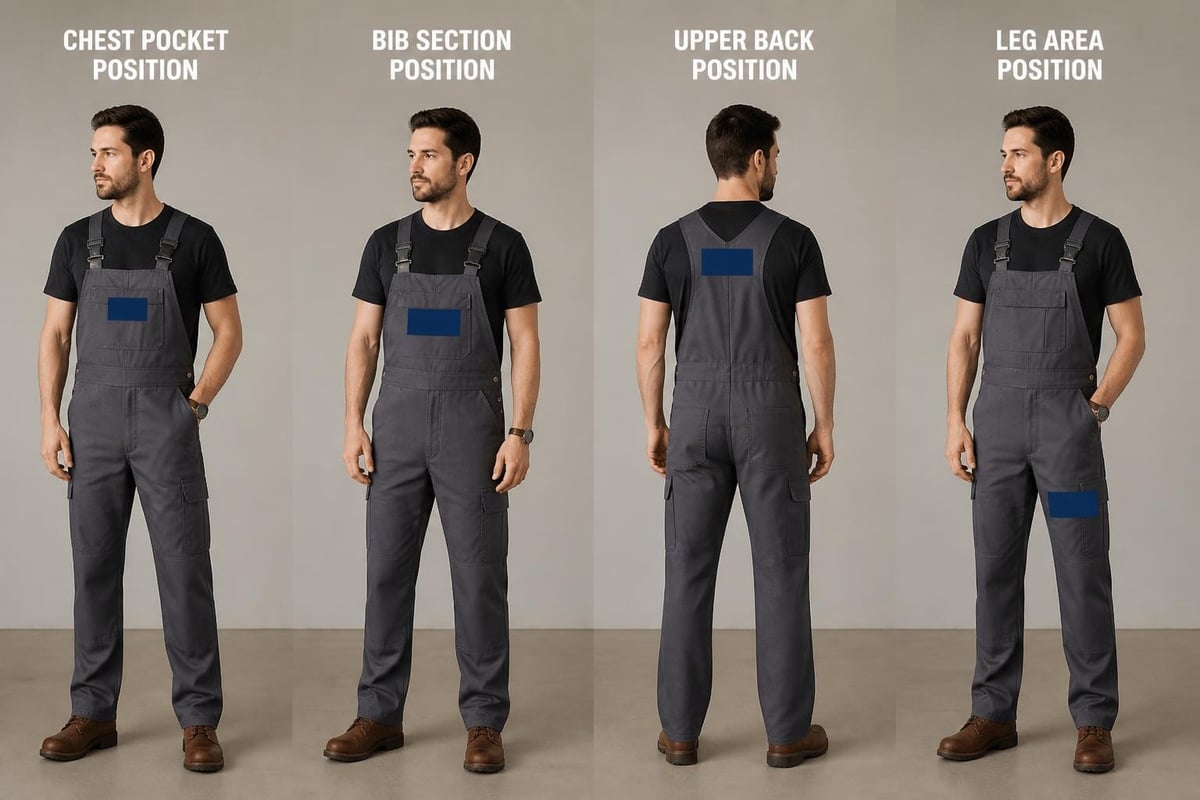
Common embroidery locations include:
- Chest pocket area - Prime visibility for company names or logos
- Upper back - Maximum surface area for detailed designs
- Leg pockets - Secondary branding opportunities
- Bib section - Central positioning for immediate recognition
- Shoulder areas - Visible from multiple angles
The chest pocket area typically serves as the primary embroidery location for embroidered overalls. This position places branding at eye level during customer interactions, maximising recognition whilst maintaining a professional appearance. Many businesses opt for a company logo on the chest combined with additional text or graphics elsewhere on the garment.
Thread Selection and Colour Matching
Thread quality directly affects embroidery longevity and appearance. Professional embroidery services use polyester or rayon threads specifically engineered for commercial applications. These materials resist fading, maintain tension, and withstand industrial laundering processes that would destroy inferior alternatives.
Colour matching requires careful consideration of both brand guidelines and garment fabric. High-contrast combinations ensure maximum visibility - navy embroidery on light fabrics or white stitching on dark materials creates immediate visual impact. Businesses with established brand colours should provide Pantone references to ensure accurate colour reproduction across all embroidered overalls.
Industry-Specific Applications and Requirements
Different sectors demand specific features from their embroidered overalls. Understanding these nuances enables businesses to select appropriate garments that meet both functional and regulatory requirements.
Construction and Trade Industries
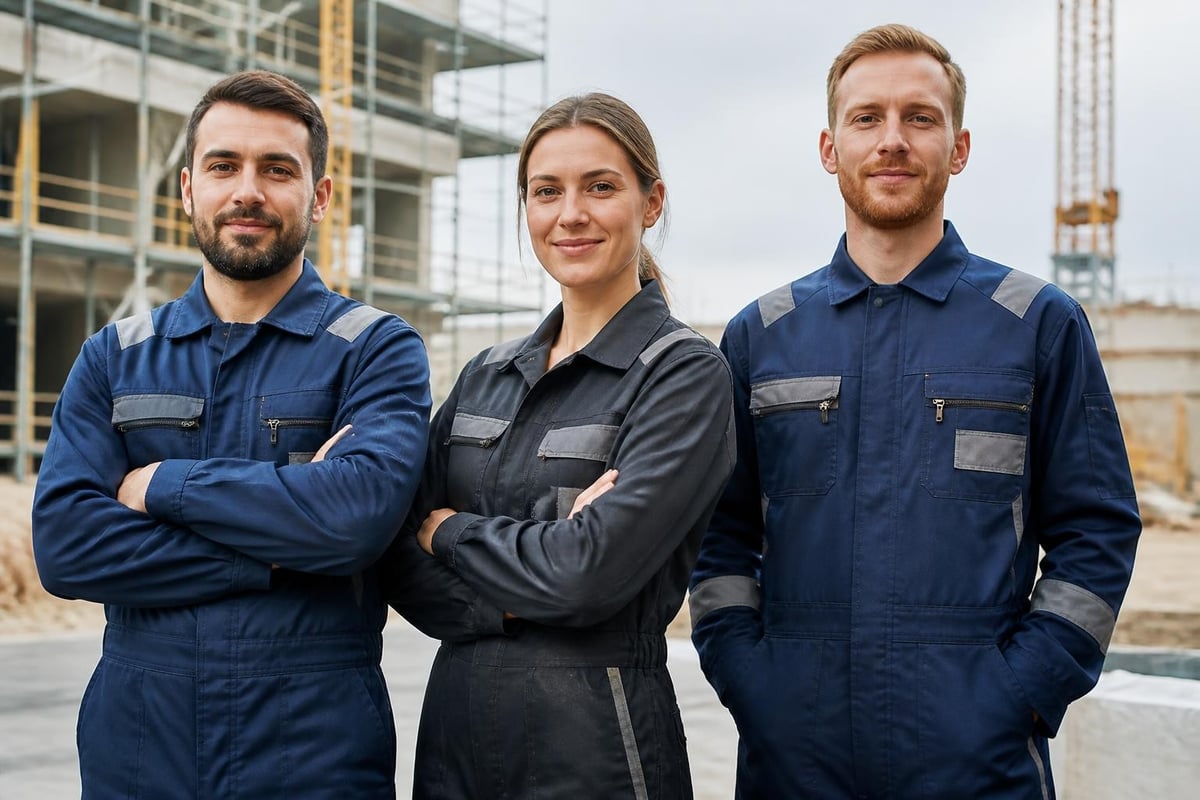
Construction professionals require embroidered overalls with reinforced knees, multiple tool pockets, and hammer loops. Safety regulations often mandate specific colours or reflective elements. Embroidery on construction workwear typically includes company names, individual worker names, and relevant safety certifications.
Triple-stitched seams and bar-tack reinforcement at stress points ensure garments withstand the rigorous demands of building sites. The embroidery must equally endure these conditions, making thread quality and stitch density particularly important for trade applications.
Hospitality and Service Sectors
Hospitality businesses favour embroidered overalls in premium fabrics with refined aesthetics. Restaurants, cafes, and boutique hotels often choose denim or coloured canvas options that complement their interior design whilst providing practical coverage for service staff.
Embroidery for hospitality overalls tends toward subtle, elegant designs. Small chest logos or discreet name embroidery maintain professionalism without overwhelming the garment's visual appeal. This approach aligns with the sophisticated atmosphere many establishments cultivate.
Creative and Retail Environments
Creative industries embrace embroidered overalls as both functional workwear and fashion statements. Art studios, design agencies, and independent retailers appreciate the customisation possibilities these garments offer. Modern fashion trends continue to validate overalls as stylish professional attire beyond traditional blue-collar settings.
Retail environments benefit from embroidered overalls that reflect brand personality. Vintage-style embroidery, oversized logos, or artistic interpretations of company branding help businesses stand out whilst maintaining team uniformity. The all-in-one collection provides excellent options for businesses seeking versatile workwear solutions.
Sizing, Fit, and Comfort Factors
Proper sizing ensures embroidered overalls deliver optimal comfort and professional appearance. Ill-fitting workwear undermines both functionality and brand image, making accurate sizing essential for any embroidered workwear programme.
| Size Consideration | Impact on Comfort | Impact on Embroidery | Recommendation |
|---|---|---|---|
| Chest Measurement | Determines upper body freedom | Affects chest logo positioning | Add 4-6 inches to actual measurement |
| Inseam Length | Prevents restriction during movement | Influences leg embroidery placement | Match to typical work footwear |
| Strap Adjustment | Controls bib positioning | Alters front embroidery visibility | Ensure 2-3 inches adjustment range |
| Waist Sizing | Overall comfort during extended wear | Minimal impact | Consider elastic or adjustable options |
Modern embroidered overalls increasingly incorporate adjustable features that accommodate various body types. Side elastication, adjustable straps, and multiple fastening points allow individual customisation within standard sizing frameworks. This flexibility proves particularly valuable for businesses maintaining stock embroidered overalls rather than ordering individual pieces.
Measuring for Embroidered Overalls
Accurate measurements prevent costly returns and ensure team satisfaction with their workwear. Chest circumference, inside leg length, and height represent the primary measurements required for overall selection.
When ordering embroidered overalls, consider that embroidery adds minimal bulk but may slightly affect garment drape. Heavy embroidery across large areas can marginally stiffen fabric, though this effect diminishes after initial washing. Professional embroidery services account for these factors when recommending appropriate garment sizes.
Maintenance and Longevity of Embroidered Workwear
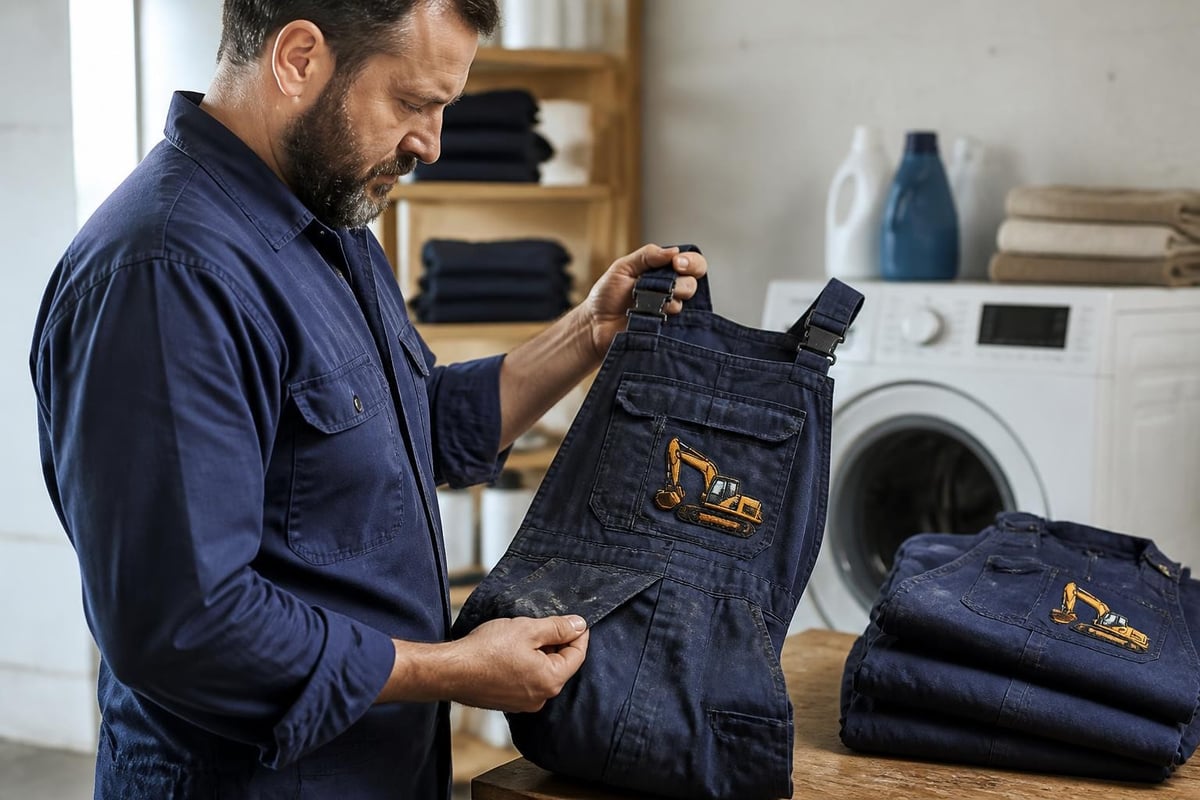
Proper care extends the lifespan of embroidered overalls whilst preserving embroidery quality. Industrial laundering processes differ from domestic washing, requiring specific considerations for workwear maintenance programmes.
Care guidelines for embroidered overalls:
- Turn garments inside out before washing to protect embroidery
- Use moderate water temperatures (40-60°C) for most fabrics
- Avoid harsh bleaches that may damage thread colours
- Tumble dry on low settings or line dry when possible
- Store hanging to prevent permanent creasing
Quality embroidery withstands hundreds of wash cycles when properly cared for. The thread density and backing materials used in professional embroidery services ensure designs maintain integrity despite regular laundering. Businesses should establish clear care protocols and communicate them to team members wearing embroidered overalls.
Repair and Maintenance Considerations
Eventually, even quality workwear requires repairs. Reinforcing worn areas, replacing fasteners, and addressing minor damage extends garment life significantly. When planning embroidered overall programmes, consider partnering with suppliers offering repair services.
Embroidery damage typically occurs through snagging or excessive abrasion rather than washing deterioration. Small repairs to embroidered areas can often restore garments to serviceable condition, protecting the initial embroidery investment. Some businesses maintain relationships with local embroidery specialists who can match existing work when adding names to replacement garments.
Cost Considerations and Investment Value
Understanding the full cost structure of embroidered overalls enables informed budgeting decisions. Initial purchase price represents only one component of total ownership cost.
Initial Investment Breakdown
Base garment costs vary considerably based on fabric quality, construction standards, and brand reputation. Economy options start around £20-30 per garment, whilst premium overalls may exceed £80-100. Mid-range options typically offer the best balance of quality and value for most business applications.
Embroidery costs add to base garment pricing. Simple text or small logos might add £5-10 per garment, whilst complex designs, multiple locations, or large embroidery areas can increase costs to £20-30 per piece. Setup fees for digitising new designs typically range from £20-50, though many suppliers waive these fees for larger orders.
Businesses investing in embroidered overalls should calculate cost per wear rather than focusing solely on initial outlay. A £60 garment lasting three years with minimal maintenance costs substantially less per day than a £30 option requiring replacement after twelve months.
Bulk Ordering and Stock Management
Quantity discounts significantly reduce per-unit costs for embroidered overalls. Most suppliers offer tiered pricing, with meaningful reductions beginning around 10-20 pieces. Larger orders (50+ garments) may achieve savings of 20-30% compared to individual pricing.
Stock management strategies depend on business size and staff turnover. Companies with stable teams often invest in initial bulk orders, maintaining a small stock of common sizes for new employees. High-turnover environments might establish ongoing supply agreements ensuring consistent pricing and availability.
Customisation Beyond Basic Embroidery
Advanced customisation options differentiate embroidered overalls from standard workwear. Businesses seeking distinctive team appearance can explore numerous enhancement possibilities.
Contrast stitching on seams creates subtle visual interest whilst highlighting quality construction. This detail complements embroidered branding without overwhelming the garment's aesthetic. Coloured zips, buttons, or hardware provide additional customisation opportunities that reinforce brand colours.
Patches, appliqués, and embroidered badges offer alternative branding approaches. These elements can be added to standard overalls, creating semi-custom appearances without full bespoke production. Removable badges suit businesses where team members transition between roles requiring different identification.
Combining Embroidery with Other Decoration Methods
Some businesses incorporate multiple decoration techniques on embroidered overalls. Screen printing works well for large back designs where embroidery costs would prove prohibitive. Heat transfer vinyl provides another alternative for certain graphic elements, though longevity typically favours embroidery for primary branding.
When combining methods, maintain visual cohesion through consistent brand elements. The primary logo should appear embroidered at the most visible location, with secondary graphics executed through alternative methods if cost or design complexity demands it.
Selecting a Reliable Embroidery Partner
Partnership quality determines embroidered overall success as significantly as garment quality itself. Professional embroidery services bring expertise, equipment, and experience that ensure optimal results.
Key partnership considerations include:
- Portfolio review demonstrating similar work quality
- Turnaround time matching business scheduling needs
- Minimum order quantities aligning with company scale
- Digitising capabilities for complex logo reproduction
- Customer service responsiveness and communication quality
Established workwear specialists often provide superior results compared to general embroidery services. Their familiarity with workwear fabrics, appropriate stabilisation techniques, and durability requirements ensures embroidered overalls meet professional standards. Many businesses discover significant value in partnering with comprehensive workwear providers who offer both quality garments and in-house embroidery services, streamlining the customisation process.
Quality Assurance and Samples
Request sample embroidery before committing to large orders of embroidered overalls. Physical samples reveal thread quality, stitch density, and overall execution better than digital proofs or descriptions. Examine samples for consistent tension, clean edges, and appropriate backing materials.
Quality embroidery services willingly provide samples and discuss technical specifications. Transparency about processes, materials, and capabilities indicates professional operations likely to deliver satisfactory results.
Environmental Considerations and Sustainable Options
Sustainability increasingly influences workwear decisions as businesses adopt environmentally conscious practices. Embroidered overalls present several opportunities for reducing environmental impact.
Organic cotton overalls eliminate pesticides and synthetic fertilisers from the production chain. Whilst typically commanding premium prices, these garments appeal to environmentally conscious businesses and consumers. The durability of quality embroidered overalls inherently supports sustainability by reducing replacement frequency.
Recycled polyester fabrics and reclaimed cotton present additional sustainable options. These materials deliver performance characteristics comparable to virgin fibres whilst diverting waste from landfills. As sustainable fashion trends continue evolving, businesses positioning themselves as environmentally responsible benefit from choosing sustainable embroidered workwear options.
Longevity as Sustainability
The most sustainable garment remains the one already produced and still in use. Investing in quality embroidered overalls that withstand years of service delivers greater environmental benefit than purchasing cheaper alternatives requiring frequent replacement. Proper care, timely repairs, and appropriate garment selection extend usable life significantly.
Regulatory Compliance and Safety Standards
Certain industries mandate specific workwear characteristics for embroidered overalls. Understanding relevant regulations ensures compliance whilst maintaining professional branding.
High-visibility environments require fluorescent fabrics and reflective tape meeting specific standards. Embroidery on hi-vis overalls must not compromise required visibility levels. Regulations typically permit embroidery on designated areas, though exact specifications vary by jurisdiction and industry.
Flame-retardant requirements affect fabric selection for embroidered overalls in certain sectors. Standard cotton becomes inappropriate for environments with ignition risks, necessitating treated fabrics or inherently flame-resistant materials. Embroidery threads must also meet relevant safety standards in these applications.
Food industry regulations impose hygiene standards affecting garment design and material selection. Embroidered overalls for food preparation environments require fabrics meeting food safety standards, with embroidery executed using food-safe materials and techniques preventing bacterial harbourage.
Staff Input and Team Satisfaction
Successful embroidered overall programmes benefit from staff involvement in selection processes. Team members wearing garments daily provide valuable insights into comfort, functionality, and practical requirements.
Consultation approaches might include:
- Sample garment trials with feedback collection
- Sizing sessions ensuring proper fit for all team members
- Design input regarding embroidery placement and styling
- Care requirement discussion ensuring practical maintenance
- Comfort assessment during typical work activities
Employee satisfaction with embroidered overalls directly impacts programme success. Comfortable, well-fitting workwear encourages consistent use, maximising brand visibility and team cohesion benefits. Conversely, unpopular garments often remain unworn, negating the investment entirely.
Embroidered overalls offer businesses a powerful combination of practical functionality, professional appearance, and effective brand promotion. By carefully considering fabric selection, embroidery placement, sizing requirements, and industry-specific needs, companies can develop workwear programmes that serve both immediate practical needs and long-term brand-building objectives. Whether you're outfitting a construction crew, hospitality team, or creative studio, Cobra Workwear provides comprehensive embroidered workwear solutions tailored to your specific requirements. With in-house embroidery services and extensive industry experience, we help businesses across the UK create distinctive, durable workwear that teams are proud to wear and customers remember.
