

Selecting the right construction work shirts represents a critical decision that impacts worker safety, compliance, and productivity on building sites across the UK. These garments serve as the frontline defence against workplace hazards whilst providing comfort during physically demanding tasks. From high-visibility requirements to moisture-wicking technologies, modern construction work shirts combine protective features with functional design to meet the rigorous demands of the building trade. Understanding the standards, materials, and features that define quality construction workwear enables contractors and site managers to make informed purchasing decisions that protect their workforce and enhance professional presentation.
Understanding Safety Standards for Construction Work Shirts
The construction industry operates under strict regulatory frameworks designed to protect workers from injury and ensure visibility in hazardous environments. Personal protective equipment standards establish clear guidelines for what constitutes appropriate workwear on building sites, including specific requirements for construction work shirts.
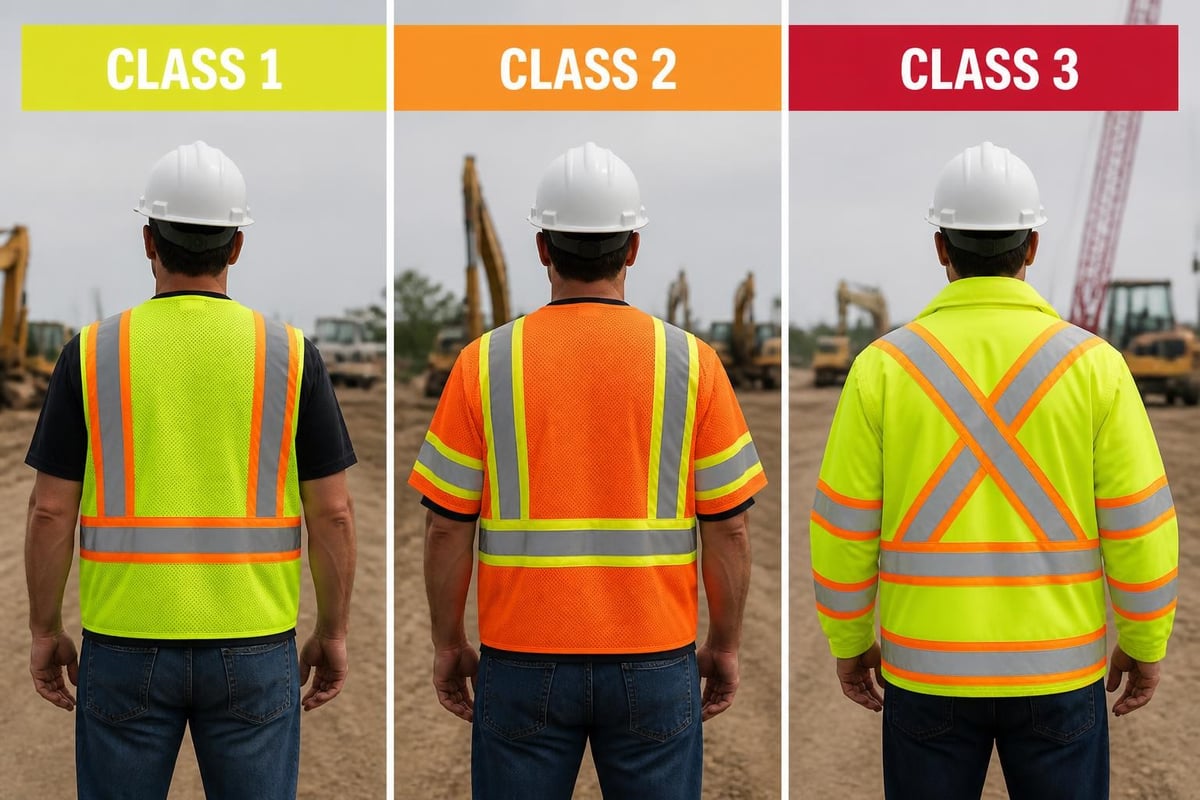
High-visibility clothing forms a cornerstone of construction safety protocols, particularly for workers operating near vehicle traffic or in low-light conditions. ANSI/ISEA 107 standards classify hi-vis garments into three classes based on the level of visibility required. Class 2 and Class 3 garments provide increasingly higher levels of visibility through strategic placement of reflective tape and fluorescent background material.
Compliance Requirements by Work Environment
Different construction environments demand varying levels of protection and visibility. Understanding these distinctions helps contractors specify appropriate construction work shirts for their teams.
| Work Environment | Visibility Class | Typical Requirements |
|---|---|---|
| General construction site | Class 2 | Fluorescent background, 360° reflective tape |
| Roadwork/highways | Class 3 | Enhanced visibility, combined upper/lower body |
| Indoor/enclosed sites | Class 1 or non-hi-vis | Durable fabric, comfort features |
| Night operations | Class 3 | Maximum reflective coverage |
The effectiveness of hi-vis shirts has been thoroughly researched, with studies demonstrating significant reductions in vehicle-related incidents when workers wear compliant high-visibility apparel. For many contractors, understanding why hi-vis clothing is important in construction becomes essential for developing comprehensive safety programmes.
Material Selection and Performance Features
The fabric composition of construction work shirts directly influences durability, comfort, and protective capabilities. Modern textiles incorporate advanced technologies that address the specific challenges construction workers face daily.
Cotton and Cotton Blends
Pure cotton construction work shirts offer natural breathability and comfort, making them popular choices for general site work. Cotton naturally absorbs moisture, helping workers stay comfortable during physical exertion. However, 100% cotton garments may wrinkle easily and take longer to dry after exposure to rain or perspiration.
Polyester-cotton blends combine the comfort of natural fibres with synthetic durability. Common ratios include:
- 65/35 polyester-cotton: Enhanced durability with reasonable breathability
- 50/50 blend: Balanced performance between comfort and longevity
- 35/65 polyester-cotton: Maximum comfort with improved wrinkle resistance
Advanced Performance Fabrics
Contemporary construction work shirts increasingly feature technical fabrics engineered for specific performance characteristics. Moisture-wicking polyester draws perspiration away from skin, allowing rapid evaporation that keeps workers dry and comfortable in warm conditions.
Ripstop construction incorporates reinforced weaving patterns that prevent small tears from expanding, significantly extending garment life on sites where snags and abrasions occur frequently. Some manufacturers combine ripstop technology with lightweight fabrics, creating construction work shirts that provide protection without excess weight.
UV-protective fabrics offer an additional safety layer for outdoor construction workers. These materials block harmful ultraviolet radiation, reducing long-term skin damage risk during extended sun exposure. UPF ratings of 30+ provide good protection, whilst UPF 50+ offers excellent shielding.
Design Features That Enhance Functionality
Practical design elements transform basic construction work shirts into professional tools that support efficient work performance. Thoughtful features address the real-world demands construction professionals encounter throughout their workday.
Pocket Configuration
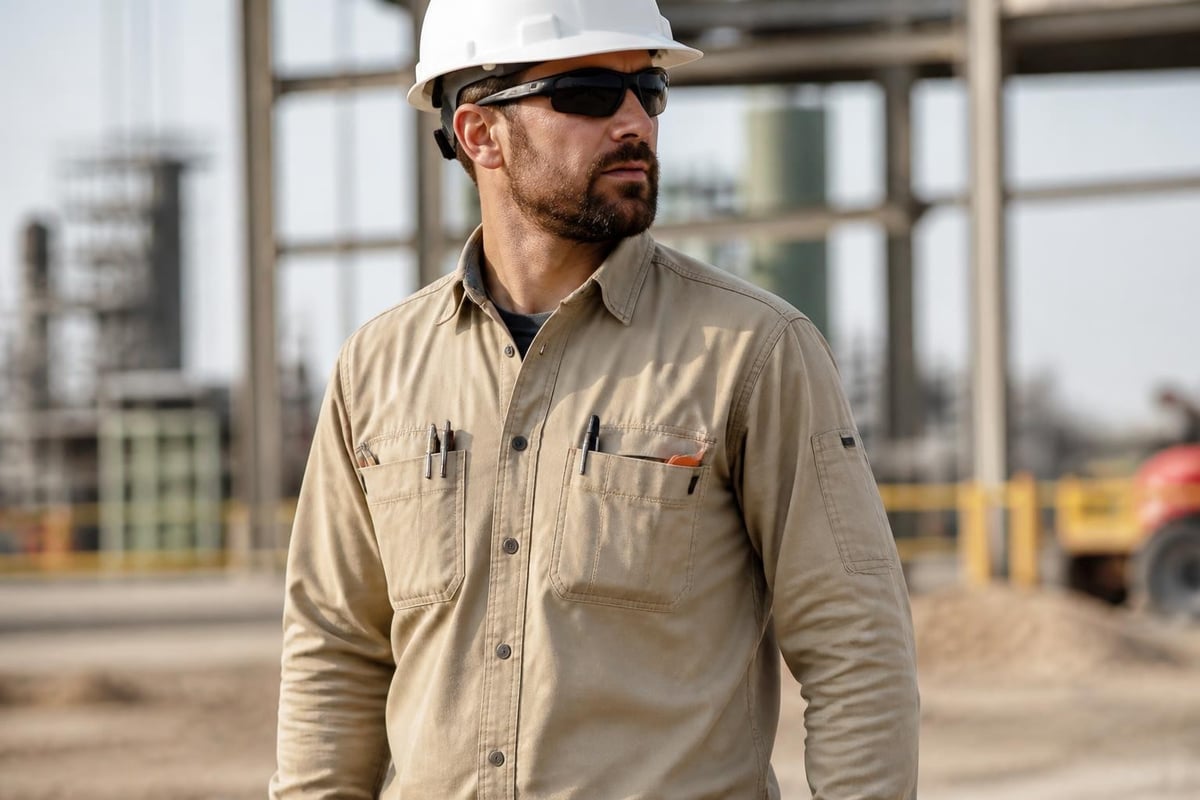
Strategic pocket placement provides convenient storage for essential tools and equipment without impeding movement. Chest pockets with pen divisions keep writing instruments secure, whilst dual chest pockets offer balanced weight distribution for small items.
Some construction work shirts incorporate:
- Radio loops for communication device attachment
- Tool pockets positioned for easy access
- Secure zip or button closures preventing item loss during bending or overhead work
- Internal pockets for valuables protection
Reinforcement and Durability Features
High-stress areas on construction work shirts benefit from additional reinforcement. Double-stitched seams, particularly at shoulders and side seams, withstand repeated stress and washing cycles. Reinforced elbows extend garment life in areas prone to wear.
Collar construction affects both professional appearance and durability. Fused collars maintain shape throughout the garment's lifetime, whilst button-down collars prevent flapping in windy conditions common on construction sites.
Fit, Comfort and Mobility Considerations
Construction workers perform diverse physical tasks requiring unrestricted movement. The fit and cut of construction work shirts significantly impact both comfort and work efficiency throughout long shifts.
Sizing and Cut Options
Regular fit construction work shirts provide standard coverage without excess fabric, suitable for workers who prefer traditional styling. Slim fit options offer a more contemporary appearance whilst maintaining professional standards, though they may restrict movement during overhead reaching or climbing.
Relaxed fit construction work shirts incorporate additional room through the body and sleeves, accommodating layering and providing maximum mobility. This cut particularly suits workers who require flexibility for varied physical tasks or those working in extreme temperature conditions requiring underlayers.
Sleeve Length and Style
Short-sleeved construction work shirts offer several advantages:
- Maximum arm mobility and cooling in warm weather
- Reduced fabric bulk when wearing additional protective equipment
- Lower risk of sleeve contamination from materials
- Easier to roll up for washing hands or forearms
Long-sleeved options provide:
- Enhanced sun protection for outdoor work
- Additional arm coverage against minor abrasions
- Professional appearance in client-facing situations
- Warmth during cooler months or indoor climate-controlled environments
Many construction professionals maintain both sleeve lengths in their work wardrobe, selecting based on daily conditions and specific task requirements. The various types of work shirts available accommodate different environmental demands and personal preferences.
Branding and Professional Presentation
Construction work shirts serve dual purposes as protective equipment and professional uniforms that represent company identity. Strategic branding transforms basic workwear into powerful marketing tools that build recognition and credibility.
Embroidery Versus Printing
Professional logo application enhances construction work shirts whilst maintaining durability through repeated washing and site wear. Embroidery and screen printing offer distinct advantages for construction workwear branding.
| Application Method | Advantages | Best For |
|---|---|---|
| Embroidery | Premium appearance, exceptional durability, textured dimension | Company logos, small text, professional presentation |
| Screen printing | Cost-effective for large designs, vibrant colours, smooth finish | Large graphics, multi-colour designs, high-volume orders |
| Direct-to-garment | Photographic quality, unlimited colours, no setup costs | Complex images, small quantities, detailed artwork |
Embroidered construction work shirts project professionalism and permanence, with stitched logos withstanding the harsh washing and wearing conditions typical in construction environments. For businesses seeking to understand how to add logos to workwear, selecting appropriate placement and sizing ensures visibility without compromising garment functionality.
Custom work shirts with logo applications create unified team appearance, essential for larger construction firms managing multiple crews across various sites. Consistent branding aids site security by clearly identifying authorised personnel and reinforces company identity with clients and the public.
Temperature Regulation and Seasonal Considerations
Construction workers face varying climate conditions throughout the year, requiring construction work shirts that adapt to seasonal temperature fluctuations whilst maintaining protective capabilities.
Warm Weather Performance
Summer construction presents unique challenges as workers balance heat stress prevention with safety equipment requirements. Lightweight construction work shirts featuring moisture-wicking fabrics draw perspiration away from skin, facilitating evaporative cooling that helps regulate body temperature.
Mesh ventilation panels inserted at strategic locations increase airflow without compromising structural integrity. These breathable zones typically appear at the back yoke, under arms, or along side panels where they enhance cooling whilst remaining concealed under high-visibility vests or other protective equipment.
Cooling and protective features have evolved significantly, with some construction work shirts incorporating antimicrobial treatments that prevent odour development during hot weather wear. These treatments maintain freshness throughout extended shifts, particularly valuable for workers without mid-day changing facilities.
Cold Weather Layering
Winter construction requires a strategic layering system where construction work shirts form the foundation. Base layers should fit close to the body, wicking moisture away from skin before it causes chill. Mid-weight construction work shirts provide insulation whilst maintaining breathability, preventing sweat accumulation that leads to discomfort.
Long-sleeved construction work shirts with thermal properties offer warmth without bulk, allowing workers to add outer protective layers as conditions demand. Some garments feature brushed interior finishes that trap warm air against the body whilst maintaining the professional appearance construction professionals require.
Maintenance and Longevity
Proper care extends the service life of construction work shirts, protecting the investment whilst ensuring consistent performance and appearance. Understanding fabric-specific requirements prevents premature wear and maintains protective features.
Washing and Care Guidelines
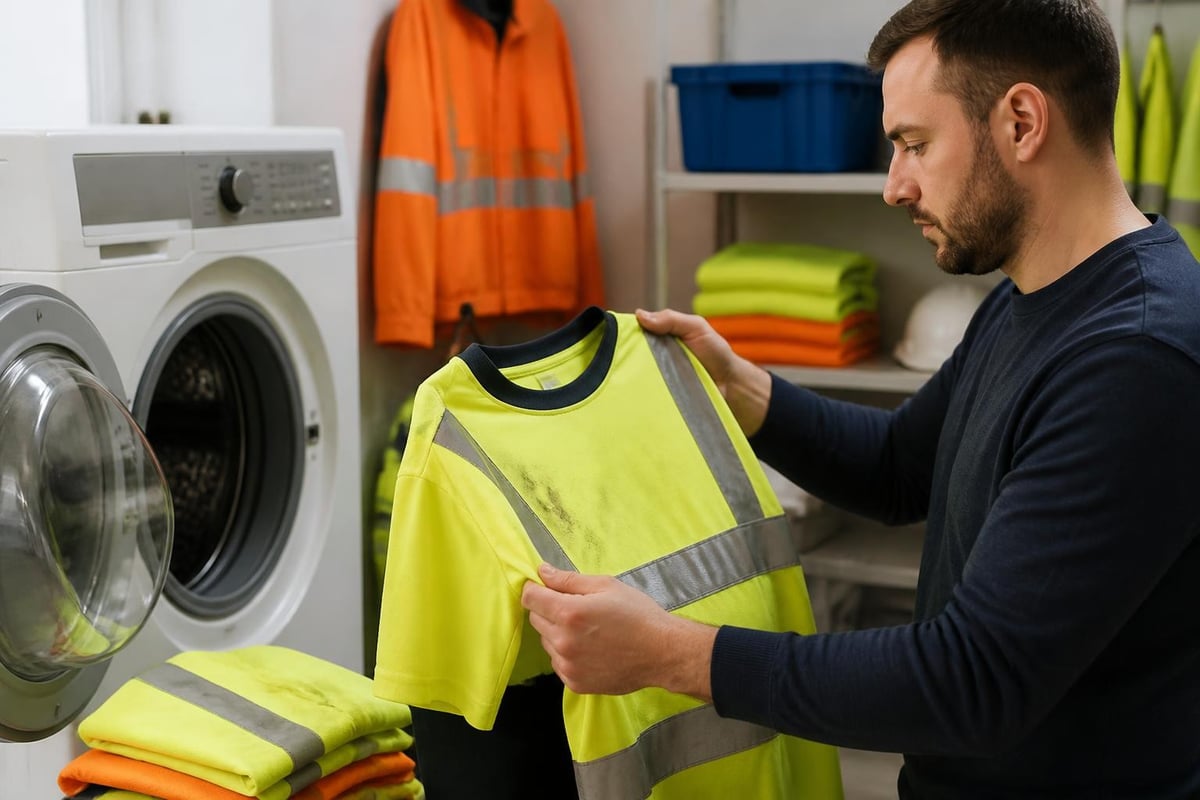
High-visibility construction work shirts require particular attention during laundering to preserve their safety characteristics. Fluorescent fabrics and reflective tape degrade when exposed to harsh detergents, excessive heat, or chlorine bleach.
Recommended washing practices include:
- Separating hi-vis garments from heavily soiled items
- Using mild detergents without optical brighteners
- Washing in warm (not hot) water to prevent colour fading
- Avoiding fabric softeners that coat reflective materials
- Air drying or using low tumble heat settings
For construction work shirts with embroidered logos, caring for embroidered workwear requires turning garments inside out before washing, protecting decorative stitching from abrasion against other items or machine drums.
Inspection and Replacement Protocols
Regular inspection identifies construction work shirts requiring replacement before safety features become compromised. Reflective tape showing cracks, peeling, or significant fading no longer provides adequate visibility. Fluorescent background material that has substantially dulled fails to meet ANSI standards and should be retired from service.
Establishing replacement schedules based on wear patterns rather than arbitrary timelines ensures workers always have compliant, effective construction work shirts. High-use garments may require replacement every 6-12 months, whilst shirts worn occasionally may last several years with proper care.
Sourcing Quality Construction Work Shirts
Selecting reliable suppliers ensures consistent quality, appropriate safety compliance, and value for money. Several factors distinguish professional workwear providers from general clothing retailers.
Supplier Selection Criteria
Quality construction work shirt suppliers maintain comprehensive product knowledge, offering guidance on appropriate specifications for different work environments. They understand relevant safety standards and can verify compliance documentation, essential for contractors requiring certified hi-vis garments.
Key supplier capabilities include:
- Stock availability ensuring prompt delivery for urgent requirements
- Customisation services for branding applications
- Bulk ordering options with volume discounts
- Consistent sizing across orders and product lines
- Return and exchange policies supporting trial programmes
Some specialist providers offer in-house embroidery services that streamline the customisation process, reducing lead times and ensuring quality control throughout logo application. This integrated approach particularly benefits contractors establishing new uniform programmes or expanding their workforce.
Evaluating Value Versus Cost
The lowest-priced construction work shirts rarely deliver best value over their lifecycle. Cheap garments typically use inferior fabrics that wear quickly, fade rapidly, and lose shape after minimal washing. These false economies result in frequent replacement costs that exceed the initial savings.
Quality construction work shirts demonstrate their value through extended wear life, maintained appearance despite harsh conditions, and consistent compliance with safety standards. When evaluating options, contractors should consider total cost of ownership rather than purchase price alone.
Choosing durable workwear requires assessing fabric weight, construction quality, and manufacturer reputation alongside price considerations. Established brands with proven construction sector experience typically offer superior performance and reliability.
Building a Comprehensive Workwear Programme
Strategic construction work shirt selection forms part of broader uniform programmes that enhance team cohesion, safety compliance, and professional image. Coordinated approaches deliver benefits beyond individual garment performance.
Standardising Across Teams
Consistent construction work shirts create immediate visual unity across construction crews, simplifying site management and enhancing security. Standardised colours and styles allow quick identification of different trade teams through subtle variations such as collar colour or pocket configuration.
Multi-site contractors benefit from uniform programmes that maintain consistency across geographic locations. Workers transferring between projects integrate seamlessly when wearing standardised construction work shirts, whilst supervisors easily identify their teams amongst multiple contractors on shared sites.
For companies looking to establish cohesive workwear standards, exploring polo shirts alongside traditional button-front construction work shirts provides versatile options that accommodate different roles and preferences whilst maintaining unified branding.
Seasonal Rotation Strategies
Successful construction work shirt programmes incorporate seasonal rotation, providing appropriate garments for varying weather conditions. Summer inventories emphasise lightweight, moisture-wicking construction work shirts, whilst winter stocks include long-sleeved, thermal-enhanced options.
Transitional seasons benefit from moderate-weight garments that accommodate layering flexibility. Spring and autumn construction work shirts in mid-weight fabrics serve double duty, functioning as outer layers during mild weather or middle layers when temperatures drop.
Specialised Requirements and Emerging Trends
Construction work shirt development continues advancing, with manufacturers introducing innovations addressing evolving industry needs and worker preferences. Staying informed about these developments helps contractors maintain competitive workwear programmes.
Flame-Resistant Options
Certain construction activities involving welding, cutting, or electrical work require flame-resistant construction work shirts. FR-rated garments self-extinguish when ignition sources are removed, preventing continued burning that causes severe injuries.
NFPA 70E standards specify appropriate FR clothing for electrical work, whilst NFPA 2112 addresses flash fire protection. Construction work shirts meeting these standards incorporate inherently flame-resistant fibres or chemical treatments providing protective characteristics.
Sustainable and Eco-Friendly Materials
Environmental consciousness increasingly influences construction work shirt selection, with contractors seeking sustainable options that reduce ecological impact. Eco-friendly workwear manufactured from organic cotton or recycled polyester delivers comparable performance to conventional materials whilst minimising environmental footprint.
Certifications such as GOTS (Global Organic Textile Standard) or Oeko-Tex verify sustainable production practices and chemical safety. Some construction firms incorporate sustainable construction work shirts into corporate responsibility initiatives, demonstrating environmental commitment to clients and stakeholders.
Technology Integration
Innovative construction work shirts incorporate technological features enhancing functionality and safety. Some designs include built-in cooling systems using phase-change materials that absorb excess body heat, whilst others feature integrated sensors monitoring worker vital signs or environmental conditions.
Smart construction work shirts remain specialist items with limited adoption, though interest grows as technology becomes more affordable and robust for construction environments. Early adopters focus on high-risk applications where enhanced monitoring provides significant safety benefits.
Gender-Specific Considerations
Construction's evolving workforce demographics demand construction work shirts accommodating diverse body types and preferences. Women's-specific patterns provide proper fit essential for comfort and professional appearance.
Women's Construction Work Shirts
Traditional unisex construction work shirts often fit poorly on women, with excess fabric through shoulders and insufficient accommodation through hip areas. Purpose-designed women's construction work shirts feature adjusted proportions including narrower shoulders, shaped waistlines, and appropriate bust accommodation.
Safety compliance remains identical regardless of gender, with women's construction work shirts meeting the same ANSI and protective standards as men's garments. The distinction lies purely in fit and cut, ensuring all workers access properly fitting, comfortable construction work shirts.
Contractors developing inclusive construction clothing programmes recognise that well-fitting construction work shirts contribute to worker satisfaction and retention whilst projecting progressive, professional company culture.
Making the Final Selection
Choosing appropriate construction work shirts requires balancing multiple factors including safety compliance, durability, comfort, and budget constraints. Systematic evaluation processes ensure selections meet both immediate needs and long-term programme objectives.
Decision Framework
Effective construction work shirt selection follows structured evaluation:
- Identify regulatory requirements based on work environments and activities
- Assess climate conditions determining fabric weight and performance features
- Define branding specifications including logo placement and application method
- Establish budget parameters considering lifecycle costs rather than purchase price alone
- Evaluate supplier capabilities ensuring consistent quality and reliable service
Trial programmes allow workers to test construction work shirts under actual working conditions before committing to large orders. Feedback from end users identifies practical issues that specifications alone might overlook, whilst revealing preferences that influence adoption and consistent wear.
Implementing New Programmes
Successfully introducing new construction work shirts requires clear communication explaining selection rationale, care requirements, and wearing expectations. Workers understanding how garment features enhance their safety and comfort demonstrate higher compliance rates than those simply issued equipment without context.
Phased rollouts beginning with supervisory staff or pilot crews allow refinement before full deployment. Early adopters become programme ambassadors, addressing colleague concerns and demonstrating proper wear practices.
The best high-visibility work shirts for construction combine multiple features discussed throughout this article, delivering comprehensive protection, durability, and comfort. Contractors investing time in thorough evaluation and selection processes develop workwear programmes that enhance safety outcomes whilst supporting operational efficiency and professional presentation.
Selecting the right construction work shirts involves careful consideration of safety standards, material performance, and practical features that support your workforce throughout demanding workdays. Quality garments that balance protection, durability, and comfort create safer work environments whilst projecting the professional image your business deserves. Cobra Workwear specialises in providing construction-grade workwear with in-house embroidery services, ensuring your team receives compliant, branded garments that meet the rigorous demands of building sites across the UK. Contact us to discuss your construction workwear requirements and discover how our expertise can strengthen your uniform programme.
