

Selecting the right provider from the many work clothing companies available in the UK market is a critical decision that impacts employee safety, brand presentation, and operational budgets. Whether you're outfitting construction crews, hospitality teams, or healthcare professionals, the company you choose will influence everything from compliance standards to staff morale. Understanding what separates exceptional suppliers from mediocre ones helps businesses make informed decisions that protect their workforce whilst enhancing their professional image.
Understanding the Work Clothing Companies Landscape
The workwear sector has evolved dramatically over the past decade, with work clothing companies now offering far more than basic uniforms. Today's suppliers must balance traditional functionality with modern expectations around sustainability, style, and technological innovation. Statistics from the workwear industry reveal that employees increasingly demand fashion-forward designs alongside practical features, creating new challenges for suppliers.
Modern work clothing companies serve diverse sectors with vastly different requirements. Construction firms need high-visibility garments that meet stringent safety standards, whilst hospitality businesses require smart, comfortable attire that reflects their brand identity. Healthcare providers demand antimicrobial fabrics and easy-care properties. The best suppliers demonstrate deep knowledge across multiple industries rather than taking a one-size-fits-all approach.
Industry Specialisation and Expertise
Top-tier work clothing companies invest heavily in understanding the specific challenges facing different sectors. This expertise manifests in fabric selection, design features, and compliance knowledge. A supplier familiar with OSHA uniform requirements and UK health and safety regulations demonstrates the commitment necessary for industries where protective clothing isn't merely preference but legal obligation.
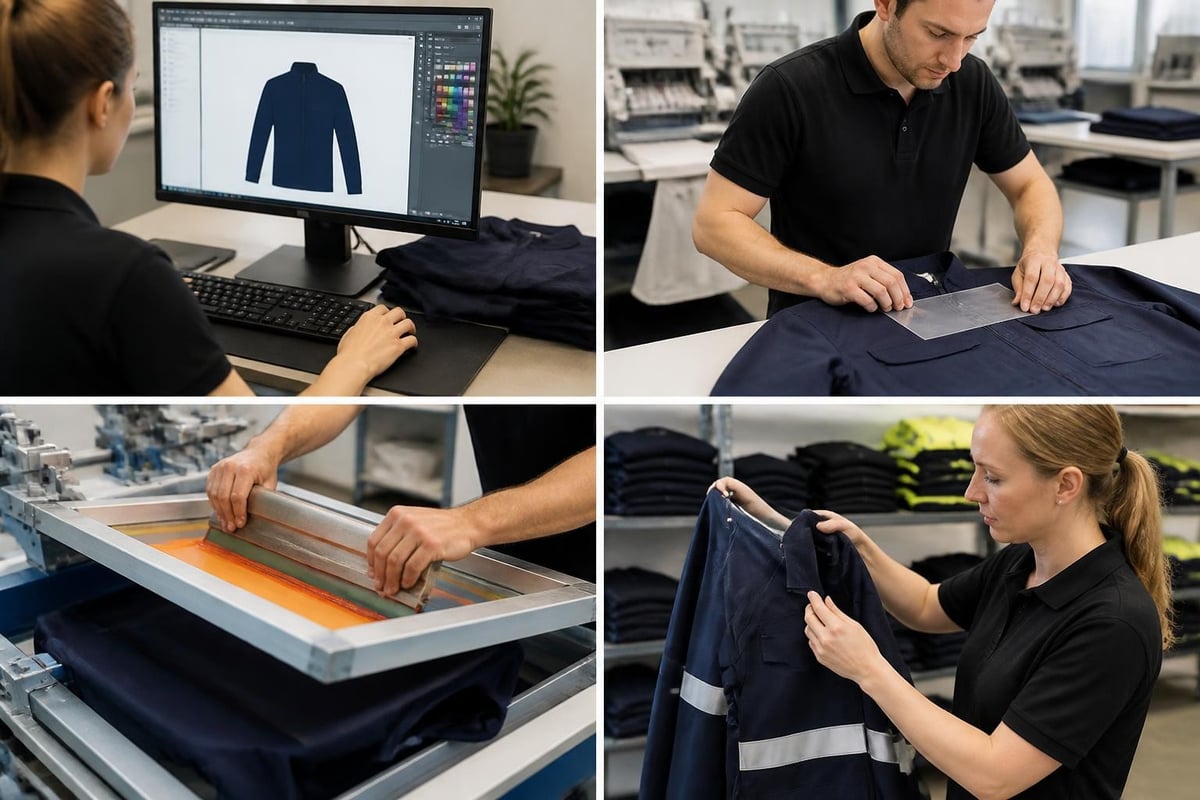
Specialisation also appears in customisation capabilities. Companies offering in-house embroidery and printing services provide faster turnaround times and better quality control compared to those outsourcing these tasks. When evaluating potential suppliers, examine their portfolio across your specific industry to ensure they understand your unique requirements.

Quality Standards That Define Leading Suppliers
Quality remains the primary differentiator amongst work clothing companies. Superior garments last longer, perform better, and ultimately cost less over their lifecycle despite higher initial investment. When assessing quality, consider fabric durability, stitching integrity, colour fastness, and component reliability such as zips and buttons.
Key quality indicators include:
- Fabric weight and weave density appropriate for intended use
- Reinforced stress points at pockets, seams, and closures
- Colourfast dyes that withstand repeated industrial washing
- Pre-shrunk materials that maintain sizing consistency
- Clear care labelling and washing instructions
Leading work clothing companies provide detailed specifications for every garment, including fabric composition, weight, and expected lifespan under normal use conditions. Transparency in these areas signals confidence in product quality. The benefits of high-quality workwear extend beyond durability to encompass employee satisfaction and professional appearance.
Testing and Certification Standards
Reputable suppliers subject their products to rigorous testing regimes. For protective workwear, this includes certification to relevant British and European standards. High-visibility clothing, for instance, must meet EN ISO 20471 standards, whilst flame-resistant garments require EN ISO 11612 certification. Work clothing companies that maintain these certifications demonstrate commitment to safety and compliance.
Beyond statutory requirements, quality-focused suppliers conduct additional testing for wear resistance, colour retention, and dimensional stability. Request test reports and certification documentation before committing to large orders. This due diligence protects your business from compliance issues and ensures employee safety.
| Quality Factor | Premium Suppliers | Budget Suppliers |
|---|---|---|
| Fabric Weight | 220-280 GSM | 150-200 GSM |
| Stitch Density | 8-10 per inch | 4-6 per inch |
| Warranty Period | 12-24 months | 3-6 months |
| Certification | Multiple standards | Basic or none |
| Testing Frequency | Every production run | Sporadic |
Customisation Capabilities and Branding Services
The ability to add company branding distinguishes professional work clothing companies from basic uniform suppliers. Embroidery and printing services transform generic garments into powerful brand ambassadors. However, customisation quality varies dramatically between suppliers, making this a crucial evaluation criterion.
In-house decoration facilities offer significant advantages over outsourced services. Faster turnaround times, better quality control, and more flexible minimum order quantities become possible when suppliers manage the entire process. Polo shirts with embroidered logos, for example, create a polished, professional appearance that reflects positively on your organisation whilst providing practical, comfortable workwear.
Embroidery Versus Printing Options
Different branding techniques suit different applications. Embroidery provides durability and premium appearance but works best on structured fabrics and simpler designs. Screen printing allows full-colour imagery and photographic reproduction but may not withstand industrial laundering as effectively. Understanding these trade-offs helps you select appropriate decoration methods.
Work clothing companies offering both services provide valuable flexibility. They can recommend optimal techniques based on garment type, logo complexity, and expected wear conditions. Choosing between embroidery and screen printing requires consideration of aesthetics, durability, and budget constraints.
- Assess your logo complexity – detailed designs may require printing
- Consider garment lifecycle – heavily laundered items benefit from embroidery
- Evaluate budget constraints – printing offers lower costs for large, colourful designs
- Review placement options – embroidery excels on chest and cap positions
- Request sample products – physical examples reveal quality differences
Sustainability and Environmental Responsibility
Environmental consciousness increasingly influences procurement decisions, with work clothing companies facing pressure to adopt sustainable practices. Emerging trends in the workwear sector emphasise recycled materials, reduced water consumption, and circular economy principles. Forward-thinking suppliers now offer eco-friendly options without compromising performance or durability.
Sustainable workwear encompasses several dimensions. Fabric sourcing, production processes, packaging, and end-of-life disposal all contribute to environmental impact. Look for suppliers offering garments made from organic cotton, recycled polyester, or innovative materials like bamboo and hemp blends. These choices reduce environmental footprint whilst often providing enhanced comfort and breathability.
Certifications and Transparency
Genuine commitment to sustainability requires third-party verification rather than mere marketing claims. Certifications such as GOTS (Global Organic Textile Standard), OEKO-TEX, and Fairtrade provide independent assurance of environmental and ethical standards. Work clothing companies displaying these certifications demonstrate accountability beyond profit maximisation.
Transparency in supply chains separates authentic sustainability efforts from greenwashing. Suppliers should willingly share information about manufacturing locations, working conditions, and environmental policies. Eco-friendly workwear options increasingly appeal to businesses seeking to align procurement with corporate social responsibility objectives.
Service Levels and Customer Support
Technical specifications and product quality matter enormously, but service excellence often determines long-term supplier relationships. Work clothing companies must provide responsive customer support, accurate order fulfilment, and reliable delivery schedules. When urgent replacements become necessary or sizing issues arise, supplier responsiveness directly impacts your operations.
Essential service elements include:
- Dedicated account management for business customers
- Quick response times to enquiries and concerns
- Flexible minimum order quantities for small businesses
- Stock availability and inventory management systems
- Clear returns and exchange policies
The best suppliers view themselves as partners rather than mere vendors. They proactively suggest solutions, notify you of product updates, and accommodate special requests when possible. This relationship-focused approach adds value beyond the physical products.
Delivery Performance and Logistics
Reliable delivery schedules prevent workforce disruptions and ensure new employees receive proper attire promptly. Evaluate work clothing companies based on their delivery track record, not just promised lead times. Request references from existing customers in similar industries to verify performance claims.
Consider geographical coverage and warehouse locations when selecting suppliers. UK-based work clothing companies with local facilities typically offer faster delivery to British businesses compared to international suppliers. However, verify whether "UK-based" means genuine domestic manufacturing or simply a sales office representing overseas production.
Pricing Structures and Value Proposition
Cost naturally influences supplier selection, yet focusing exclusively on lowest price often proves counterproductive. Work clothing companies compete across different value propositions, from budget-conscious options to premium quality at corresponding prices. Understanding your priorities helps identify suppliers offering optimal value rather than merely lowest cost.
Total cost of ownership extends beyond initial purchase price. Durable garments requiring replacement less frequently may cost more upfront but deliver better value over time. Similarly, suppliers offering volume discounts, loyalty programmes, or package deals may provide better overall economics despite higher unit prices.
| Pricing Model | Advantages | Considerations |
|---|---|---|
| Volume Discounts | Lower per-unit costs on large orders | Requires storage space and upfront capital |
| Fixed Annual Contracts | Budget certainty and priority service | Less flexibility for changing requirements |
| Pay-As-You-Go | Maximum flexibility and cash flow control | Higher per-unit costs |
| Subscription Services | Predictable costs with replacement cycles | Long-term commitment required |
Hidden Costs and Fee Structures
Transparent pricing separates trustworthy work clothing companies from those relying on hidden fees. Clarify whether quoted prices include decoration, delivery, and any setup charges for customisation. Some suppliers charge separately for design services, artwork preparation, or rush orders. Understanding the complete fee structure prevents unwelcome surprises.
Minimum order quantities also impact effective pricing, particularly for small businesses or those requiring multiple size ranges. Suppliers imposing high minimums may prove unsuitable despite competitive unit prices. Conversely, companies accommodating small orders enable you to test products before committing to large purchases.
Technology Integration and Future-Ready Solutions
The workwear sector increasingly incorporates technological innovations, with progressive work clothing companies offering smart garments and connected solutions. Emerging workplace wearable technologies promise enhanced safety monitoring, productivity tracking, and environmental sensing capabilities embedded directly into work clothing.
RFID tags enable inventory management and uniform tracking across large workforces. Temperature-regulating fabrics respond to environmental conditions, improving comfort in variable climates. Moisture-wicking and antimicrobial treatments enhance hygiene in demanding environments. Suppliers investing in these innovations position themselves as forward-thinking partners rather than commodity providers.
Digital Ordering and Account Management
Modern work clothing companies provide online platforms simplifying reordering, account management, and inventory tracking. These systems allow employees to select correct sizes, managers to approve orders, and finance teams to track expenditure. Digital infrastructure reduces administrative burden whilst improving accuracy and speed.
Look for suppliers offering size profiling services that record individual employee measurements. This capability streamlines future orders and reduces returns due to sizing errors. Integration with your existing procurement systems further enhances efficiency, particularly for larger organisations with complex approval workflows.
Compliance and Industry-Specific Requirements
Regulatory compliance represents non-negotiable territory for work clothing companies serving sectors with mandatory protective equipment requirements. Construction, manufacturing, and utilities industries face stringent regulations governing worker protection. Suppliers must demonstrate comprehensive knowledge of applicable standards and provide garments meeting or exceeding these requirements.
Safety clothing regulations vary by industry and application, requiring suppliers to maintain current knowledge across multiple frameworks. High-visibility standards differ for road workers versus warehouse staff. Flame-resistant requirements vary by heat exposure levels. Expert work clothing companies guide customers through these complexities rather than simply selling generic products.
Documentation and Audit Trails
Proper documentation supports compliance verification during inspections or incidents. Work clothing companies should provide detailed specifications, test certificates, and compliance declarations for protective garments. This paperwork demonstrates due diligence and protects your organisation from liability claims.
Audit trails tracking garment issue, replacement, and retirement prove valuable during safety reviews. Some suppliers offer software solutions managing these records, ensuring every employee receives appropriate protection and garments remain within serviceable life limits. This systematic approach elevates safety management beyond ad-hoc practices.
Building Long-Term Supplier Relationships
Sustainable partnerships with work clothing companies deliver benefits extending far beyond transactional efficiency. Established relationships enable suppliers to understand your evolving needs, anticipate requirements, and provide proactive recommendations. The evolution of the workwear industry demonstrates how collaborative supplier relationships drive innovation and mutual success.
Long-term partners often provide preferential terms, priority access to new products, and flexibility during challenging periods. They invest time understanding your organisational culture, brand values, and operational constraints. This knowledge translates into better recommendations and more appropriate solutions than suppliers treating each order as isolated transaction.
Evaluating and Reviewing Supplier Performance
Regular performance reviews ensure work clothing companies maintain service standards and identify improvement opportunities. Establish clear metrics covering quality, delivery reliability, customer service responsiveness, and value for money. Document performance against these criteria quarterly or annually.
Honest feedback benefits both parties. Suppliers gain insight into customer expectations whilst businesses encourage continuous improvement. Constructive dialogue around challenges strengthens relationships rather than damaging them, provided both parties approach discussions professionally and collaboratively.
- Schedule quarterly business reviews with key suppliers
- Track delivery performance against promised dates
- Monitor quality issues and return rates
- Assess responsiveness to enquiries and problems
- Compare pricing against market benchmarks annually
- Gather employee feedback on comfort and functionality
- Review compliance with contractual terms and conditions
Choosing from the many work clothing companies operating across the UK requires careful evaluation of quality standards, customisation capabilities, sustainability practices, and service excellence. The right supplier becomes a strategic partner supporting your workforce whilst enhancing your professional image and ensuring regulatory compliance. Cobra Workwear combines industry expertise, in-house embroidery services, and comprehensive product ranges tailored to construction, hospitality, healthcare, and numerous other sectors. Explore how we can transform your workwear programme with quality garments and personalised service that exceeds expectations.
