

Finding reliable safety workwear near me has become increasingly critical as workplace safety regulations evolve and businesses seek faster turnaround times for essential protective clothing. Whether you're managing a construction site, running a manufacturing facility, or overseeing a logistics operation, sourcing high-quality safety workwear locally offers distinct advantages whilst online suppliers provide broader selection and competitive pricing. This comprehensive guide explores how UK businesses can navigate the safety workwear landscape in 2026, balancing convenience, compliance, and cost-effectiveness to protect their workforce whilst building a professional brand identity.
Understanding Safety Workwear Requirements in 2026
Safety workwear encompasses far more than basic protective clothing. Modern workplace safety demands adherence to strict regulatory frameworks that govern everything from high-visibility garments to flame-retardant fabrics. Understanding OSHA standards for personal protective equipment provides a foundation for compliance, even though UK businesses primarily follow HSE guidelines that share similar core principles.
The categories of safety workwear have expanded considerably:
- High-visibility clothing for construction, highways, and emergency services
- Flame-retardant garments for welding and electrical work
- Chemical-resistant protective wear for manufacturing and laboratory environments
- Cut-resistant clothing for food processing and metal fabrication
- Weather-protective outerwear with safety features integrated
- Anti-static workwear for environments with explosive atmospheres
Each category carries specific certification requirements. EN ISO 20471 governs high-visibility clothing, whilst EN 11612 covers heat and flame protection. The legal requirements outlined in federal regulations demonstrate the complexity of compliance, with UK equivalents maintained through BSI standards and CE marking requirements.
Compliance Beyond Basic Standards
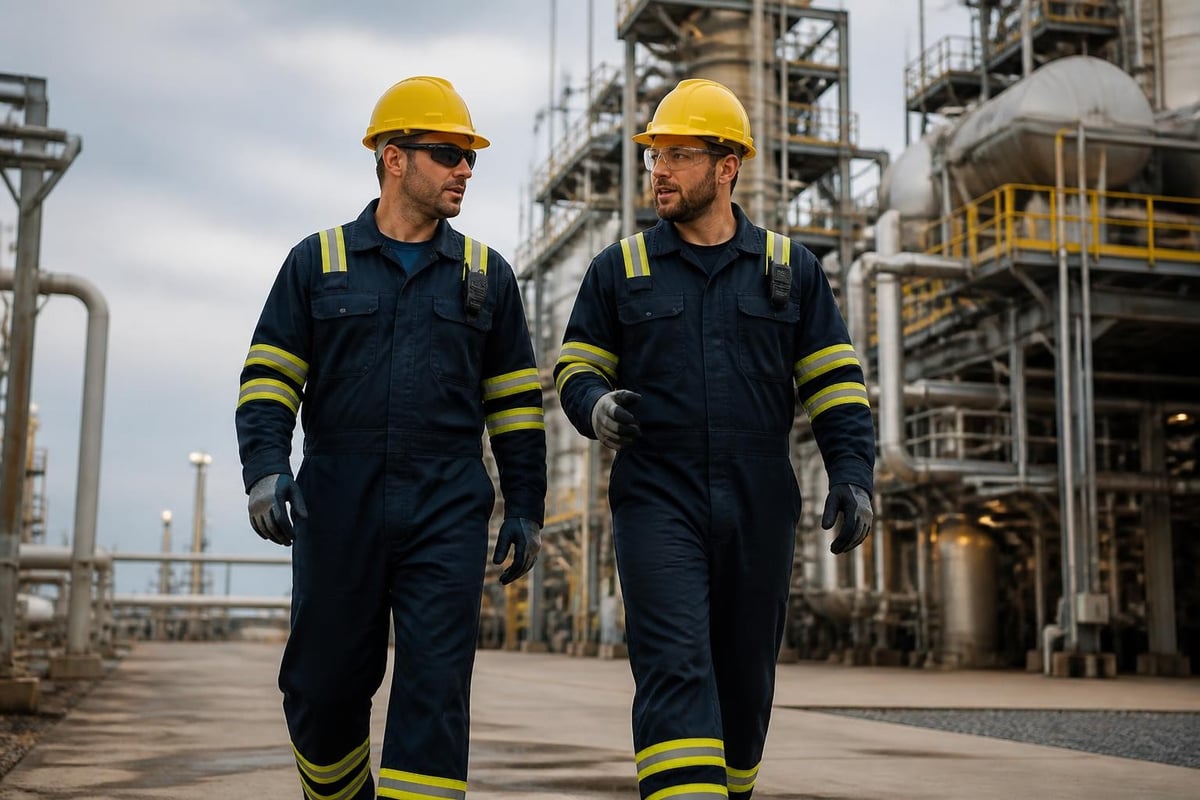
Modern safety workwear must meet multiple standards simultaneously. Multi-norm garments have gained popularity because they combine several protective properties into single garments. European buyers increasingly prefer multi-norm workwear that meets flame resistance, arc flash protection, and high-visibility requirements together, reducing the number of specialised garments workers need to maintain.
The Local Versus Online Debate for Safety Workwear
When searching for safety workwear near me, businesses face a fundamental decision between local suppliers and online providers. Each approach offers distinct advantages that suit different operational needs.
Benefits of Local Safety Workwear Suppliers
| Advantage | Description | Best For |
|---|---|---|
| Immediate Availability | Same-day or next-day collection for urgent needs | Emergency replacements, small teams |
| Physical Inspection | Touch fabrics, test fits, verify quality before purchase | First-time buyers, quality-focused businesses |
| Relationship Building | Develop partnerships for ongoing support and advice | Long-term procurement strategies |
| Local Accountability | Face-to-face resolution of issues or returns | Businesses valuing personal service |
| Try-Before-You-Buy | Size multiple team members without committing to large orders | Teams with varied body types |
Local suppliers excel when businesses need rapid response times. A construction project requiring replacement safety vests after theft benefits from immediate local pickup rather than waiting for delivery.
Advantages of Online Safety Workwear Providers
Online suppliers have transformed the safety workwear market by offering unprecedented selection and competitive pricing. The workwear market's projected growth reflects increasing digitalisation within the industry.
Selection and specialisation lead the online advantage. Whilst local stockists might carry 50-100 items, comprehensive online platforms offer thousands of products across multiple safety categories. This breadth ensures businesses find exactly the right specification rather than compromising with what's available locally.
Price competitiveness stems from operational efficiency. Online-only businesses avoid expensive retail premises, passing savings to customers through lower prices or inclusive customisation services. Many platforms now offer in-house embroidery services that add company branding without third-party markup.
Convenience and documentation streamline procurement. Digital order histories simplify reordering, whilst online compliance certificates and technical specifications download instantly for health and safety audits. Modern platforms integrate with business purchasing systems, automating approval workflows and budget tracking.
Key Factors When Selecting Safety Workwear Suppliers
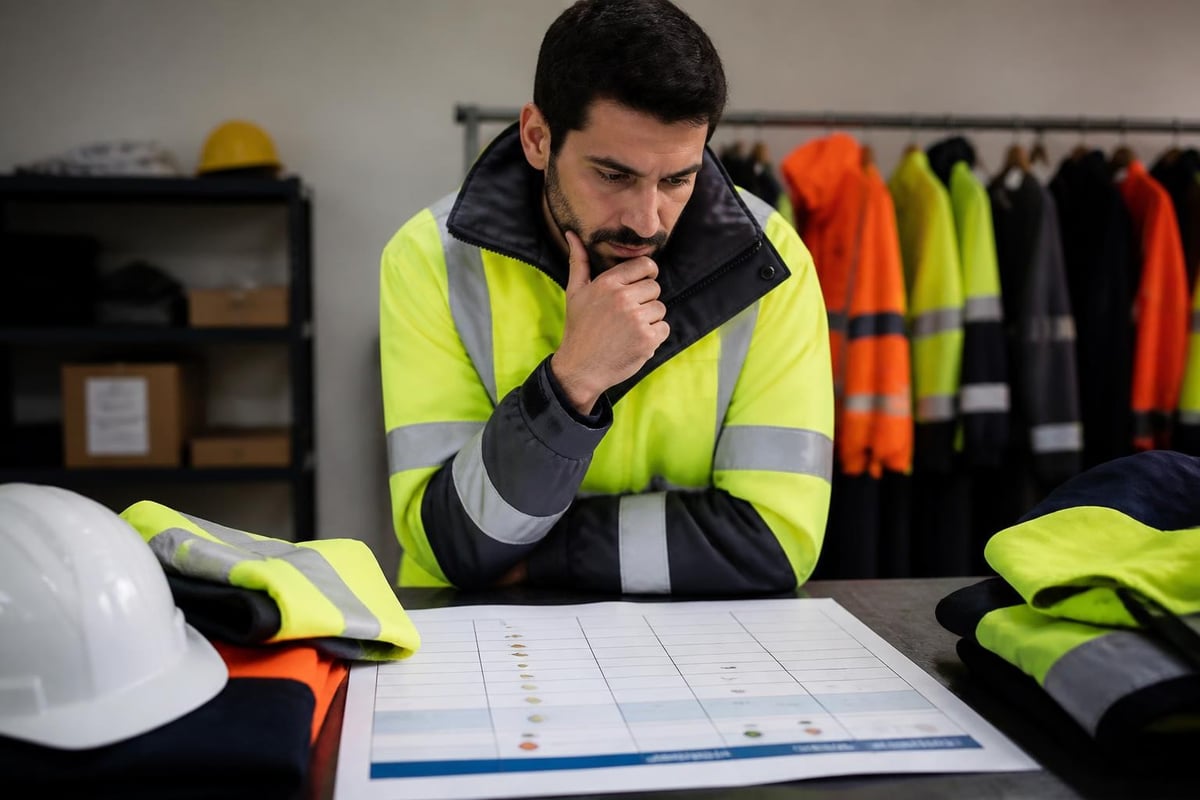
Identifying the right supplier requires evaluating multiple criteria beyond proximity and price. Successful procurement balances immediate needs with long-term partnership potential.
-
Certification verification processes - Suppliers should provide readily accessible certification documentation for every safety product, including batch traceability for regulated items.
-
Customisation capabilities - Whether embroidery, printing, or heat transfer, branding distinguishes your team whilst reinforcing professional identity. Understanding how to add logos to workwear that enhance your brand maximises this investment.
-
Stock depth and continuity - Suppliers maintaining consistent stock prevent frustrating situations where half your team wears one style and new starters receive different products because the original is discontinued.
-
Sizing inclusivity - Modern workforces demand comprehensive size ranges. Suppliers offering tall, short, and plus-size options demonstrate commitment to genuine inclusivity rather than token gestures.
-
Aftercare and maintenance guidance - Quality suppliers educate customers on extending garment life through proper care. Tips for caring for workwear preserve safety properties that washing incorrectly can compromise.
Industry-Specific Considerations
Different sectors prioritise different supplier attributes. Construction companies value durability and high-visibility compliance above all else, making the importance of hi-vis clothing in construction central to their purchasing decisions. Healthcare facilities prioritise hygiene-certified fabrics and comfortable designs for 12-hour shifts. Manufacturing environments need cut-resistant materials meeting specific EN standards.
The workwear industry statistics reveal market segmentation reflecting these specialised needs, with suppliers increasingly focusing on niche sectors rather than attempting to serve all industries equally.
Emerging Trends Shaping Safety Workwear in 2026
The safety workwear landscape continues evolving rapidly, driven by technological innovation, sustainability imperatives, and changing workforce expectations. Businesses searching for safety workwear near me should understand these trends to make future-proof purchasing decisions.
Sustainability and Circular Economy Models
Environmental responsibility has shifted from marketing differentiator to essential requirement. Workwear trends for 2025 and beyond emphasise recycled polyester, organic cotton, and innovative materials like hemp blends that maintain safety certification whilst reducing environmental impact.
Leading manufacturers now offer garment take-back schemes where worn-out safety clothing gets recycled into new products. This circular approach appeals to businesses with ESG commitments whilst potentially reducing long-term procurement costs through manufacturer loyalty programmes.
Eco-friendly options don't compromise safety. Modern recycled fabrics achieve identical flame resistance, tensile strength, and visibility properties as virgin materials. Eco-friendly embroidered workwear made with organic and recycled fabrics demonstrates how sustainability integrates throughout the supply chain, from base materials through customisation processes.
Smart Textiles and Integrated Technology
Safety workwear increasingly incorporates technology that enhances worker protection and operational efficiency. Garments with embedded sensors monitor environmental conditions, alerting wearers to dangerous temperatures, toxic gas exposure, or excessive physical strain.
RFID tags built into clothing enable automated inventory management, tracking garment usage cycles to schedule replacements before safety properties degrade. This proactive approach prevents the common problem of workers continuing to use compromised protective clothing simply because procurement hasn't noticed the need for replacement.
Comfort and Performance Engineering
The stereotype of uncomfortable, restrictive safety clothing finally fades as manufacturers embrace performance fabrics and ergonomic design. The evolution of hi-vis workwear in 2025 showcases breathable mesh panels, four-way stretch materials, and moisture-wicking properties that keep workers comfortable throughout demanding shifts.
This focus on comfort delivers tangible business benefits. Workers who find their safety clothing comfortable wear it consistently and correctly, maximising protection. Reduced heat stress improves productivity whilst lowering risk of accidents caused by fatigue or discomfort-related distraction.
Building a Strategic Safety Workwear Programme
Moving beyond transactional purchasing to strategic workwear management transforms safety clothing from necessary expense to workforce investment. Successful programmes balance compliance, budget management, and employee satisfaction.
Inventory Assessment and Forecasting
Begin by auditing current safety workwear inventory and usage patterns:
- Quantity on hand across all sizes and styles
- Replacement frequency for different garment types
- Seasonal variations in requirements (increased hi-vis jackets in winter)
- New starter onboarding needs and typical hiring patterns
- Attrition and damage rates indicating quality issues or sizing problems
This data establishes baseline requirements and highlights improvement opportunities. Perhaps 30% of jackets fail within six months, suggesting either quality problems or incorrect specification for actual work conditions.
Supplier Relationship Management
Rather than treating suppliers as interchangeable vendors, develop partnerships with one or two preferred providers. Consolidated purchasing generates volume discounts whilst simplifying procurement administration. Regular communication with account managers ensures suppliers understand your evolving needs, recommending new products that address specific challenges.
Service level agreements formalise expectations around delivery times, quality standards, and issue resolution. Clear SLAs prevent disputes whilst giving procurement teams leverage when performance falls short.
Employee Input and Satisfaction
Workers wearing the clothing daily possess invaluable insights that desk-based procurement misses. Structured feedback mechanisms identify practical problems like pockets positioned awkwardly, zips that snag, or sizing that runs inconsistent between styles.
Trial programmes introducing new products to small groups before full rollout prevent expensive mistakes. If three test users report sizing runs small, order the next size up for the broader team rather than dealing with returns and reorders later.
Customisation: From Functional Necessity to Brand Asset
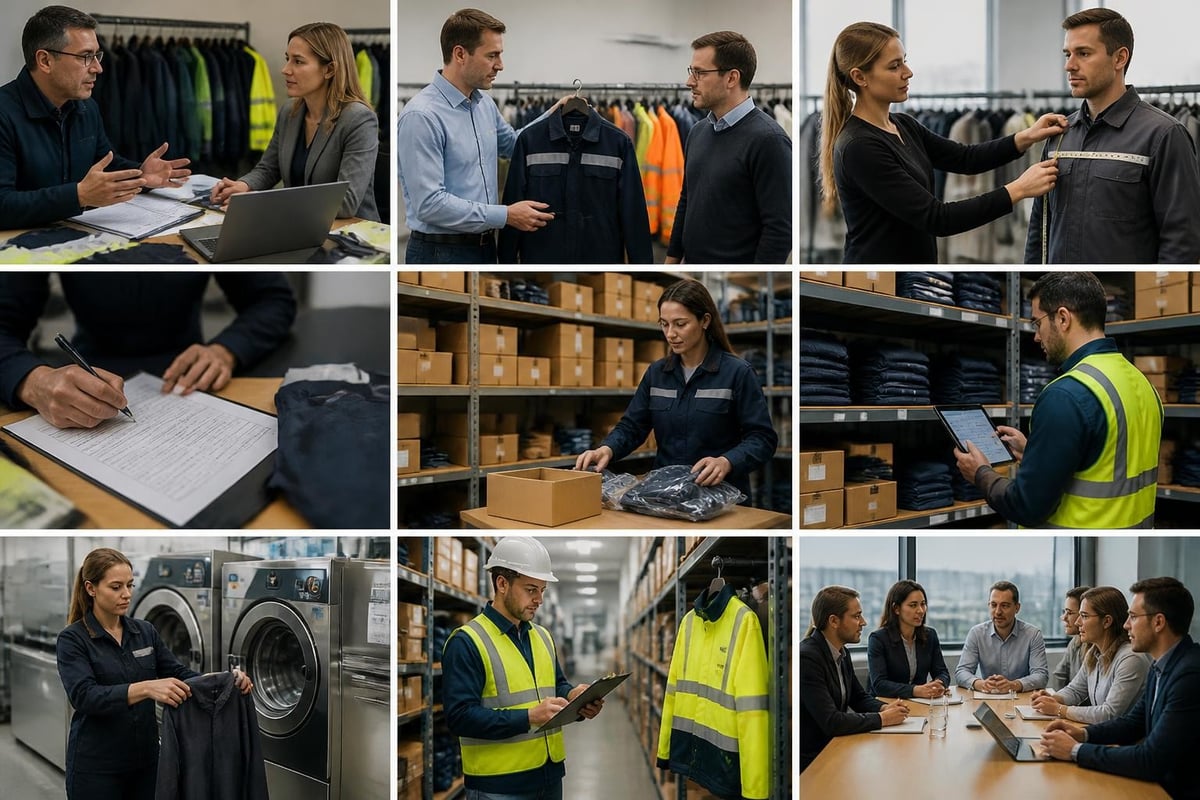
Safety workwear customisation serves dual purposes-practical identification and professional branding. Effective customisation programmes balance these objectives whilst managing costs and maintaining garment safety certification.
Embroidery Versus Printing for Safety Garments
Different decoration methods suit different applications and budgets. Comparing embroidery versus screen printing reveals trade-offs between durability, appearance, and cost.
| Method | Durability | Best Applications | Typical Cost | Safety Considerations |
|---|---|---|---|---|
| Embroidery | Excellent - lasts garment lifetime | Polo shirts, fleeces, softshell jackets | Higher per unit | Won't compromise breathability or flame resistance |
| Screen Printing | Good - fades before garment wears out | T-shirts, high-volume orders | Lower per unit | Check ink certifications for specific safety standards |
| Heat Transfer | Moderate - suitable for temporary needs | Short-term projects, irregular shapes | Medium | May affect fabric properties on technical garments |
| Direct-to-Garment | Good - improving technology | Complex designs, photographic images | Medium-high | Limited suitable fabrics for safety workwear |
For safety workwear specifically, embroidery generally proves superior because it maintains fabric integrity essential for protective properties. Threading doesn't create impermeable layers that trap heat or compromise flame resistance the way some printing methods can.
In-House Versus Outsourced Decoration
Businesses requiring regular customisation benefit from suppliers offering in-house services. Why in-house embroidery matters for fast turnaround and quality control becomes evident when comparing typical timelines. Suppliers outsourcing decoration add 7-14 days to order fulfilment as items move between facilities, whilst in-house operations complete customisation within the standard production cycle.
Quality consistency also improves when the same team managing garment supply controls decoration. Artwork files translate reliably across repeat orders, thread colours match precisely, and positioning remains consistent-critical when professional appearance matters for client-facing teams.
Navigating Price Versus Value in Safety Workwear
Budget constraints tempt businesses toward cheapest options, yet false economy in safety workwear creates hidden costs exceeding initial savings. Strategic buyers distinguish between price and value, assessing total cost of ownership rather than purchase price alone.
Calculating True Cost Per Wear
A £15 safety vest lasting three months through 60 working days costs 25 pence per day. A £35 vest lasting twelve months through 240 working days costs 15 pence daily-40% cheaper despite higher purchase price. Factor in procurement administration time for more frequent reordering, and the premium product becomes even more economical.
Durability indicators help predict garment longevity:
- Fabric weight and thread count
- Reinforced stress points and bar-tacking
- Quality of components (zips, poppers, reflective tape)
- Manufacturer warranty length
- Fade resistance of dyes and reflective materials
Hidden Costs of Inadequate Safety Workwear
Beyond replacement frequency, poor-quality safety workwear generates costs through multiple channels. Non-compliant clothing risks enforcement action from HSE inspectors, potentially halting operations until rectified. Uncomfortable garments reduce worker productivity and increase turnover as employees seek employers providing better equipment.
Most seriously, inadequate protection failing during incidents creates liability exposure far exceeding any procurement savings. Comprehensive insurance and legal protections depend on demonstrating reasonable care in selecting appropriate safety equipment.
Regional Considerations for UK Businesses
Searching for safety workwear near me yields different results depending on location, with regional variations in supplier density, specialisation, and service levels affecting procurement strategy.
Urban Versus Rural Procurement Challenges
Urban businesses typically access multiple local suppliers within reasonable distance, enabling competitive pricing through quotes comparison. Rural operations may find limited local options, making online suppliers more practical despite losing same-day collection advantages.
However, rural businesses often develop closer relationships with available local suppliers, receiving personalised service unavailable from metropolitan high-volume retailers. This relationship value sometimes outweighs marginal price differences.
Scotland, Wales, and Northern Ireland Specific Factors
Devolved administration creates minor regulatory variations, though core safety standards remain consistent UK-wide. Delivery logistics affect supplier selection more significantly, with some England-based providers charging premium rates or extending delivery times to Celtic nations.
Scottish businesses particularly benefit from suppliers understanding unique weather conditions demanding different balance between visibility, weather protection, and breathability compared to southern England. Similarly, Welsh quarrying and mining industries need specialised protective clothing that general workwear suppliers may not stock comprehensively.
Quality Indicators When Evaluating Safety Workwear
Professional buyers assess garment quality through systematic evaluation preventing costly mistakes. These indicators distinguish genuinely protective clothing from substandard products marketed with misleading claims.
Certification and Standards Documentation
Legitimate safety workwear prominently displays certification information on labels, hang tags, and product descriptions. Essential certifications include:
- CE marking confirming European safety directive compliance
- UKCA marking for post-Brexit UK market products
- EN standard numbers specifying exactly which protections the garment provides
- Batch or lot numbers enabling traceability if quality issues emerge
- Care instructions preserving safety properties through proper maintenance
Absence of clear certification documentation signals potential non-compliance. Reputable suppliers provide certificates electronically and maintain detailed technical specifications for every safety product.
Physical Quality Assessment
When examining samples or existing inventory, inspect these quality markers:
- Seam construction - Double or triple stitching at stress points, clean finishing without loose threads
- Reflective tape application - Securely bonded with no lifting edges, correctly positioned per standards
- Fabric hand feel - Appropriate weight and texture for intended use, not thin or papery
- Component quality - Smooth zip operation, secure button attachment, rust-resistant metal hardware
- Colour fastness - No dye transfer when rubbed with white cloth, no fading after washing
Physical assessment complements certification documentation, confirming manufacturing quality matches regulatory compliance on paper.
Seasonal Planning for Safety Workwear Requirements
Strategic procurement anticipates seasonal variations in safety workwear needs, preventing last-minute emergency orders at premium prices. Different industries experience distinct seasonal patterns requiring tailored planning approaches.
Construction and outdoor industries peak winter demand for insulated high-visibility jackets, waterproof trousers, and thermal base layers. Ordering these items in late summer secures availability and often better pricing before seasonal demand increases costs.
Conversely, summer requirements for lightweight breathable safety clothing, sun protection, and moisture-wicking fabrics should be secured in early spring. Hospitality and events businesses experience summer demand peaks, whilst utilities and infrastructure maintenance faces year-round requirements with winter emphasis.
Inventory buffer recommendations:
- Maintain 20-30% surplus of core items used year-round
- Order seasonal items 8-12 weeks before anticipated need
- Stock emergency replacements for safety-critical items regardless of season
- Plan customisation timing accounting for embroidery lead times during busy periods
Sourcing quality safety workwear near me in 2026 requires balancing immediate availability against comprehensive selection, local relationships against competitive online pricing, and initial cost against long-term value. Understanding compliance requirements, evaluating supplier capabilities, and implementing strategic procurement processes ensures your workforce receives protection meeting both regulatory standards and practical job demands. Cobra Workwear combines the advantages of both approaches, offering extensive safety workwear selection with in-house embroidery services that deliver customised, compliant garments efficiently across the UK, supporting businesses from construction and manufacturing through hospitality and healthcare with professional protective clothing that enhances both safety and brand identity.
