

The professional landscape has undergone a remarkable transformation in recent years, with workplace attire evolving far beyond the rigid conventions of yesteryear. Designer workwear represents this shift, merging high-end fashion sensibilities with the practical demands of various industries. This evolution reflects changing attitudes towards professional presentation, employee satisfaction, and brand identity. No longer confined to boardrooms or creative agencies, designer-inspired work attire now spans construction sites, hospitality venues, and healthcare facilities, proving that style and functionality can coexist harmoniously.
The Rise of Designer Workwear in Professional Settings
The contemporary workplace demands more than basic functional garments. As workplace flexibility has transformed work attire, professionals across sectors increasingly expect clothing that reflects their personal style whilst maintaining industry standards. Designer workwear addresses this need by incorporating premium fabrics, considered cuts, and refined details into garments built for daily wear.
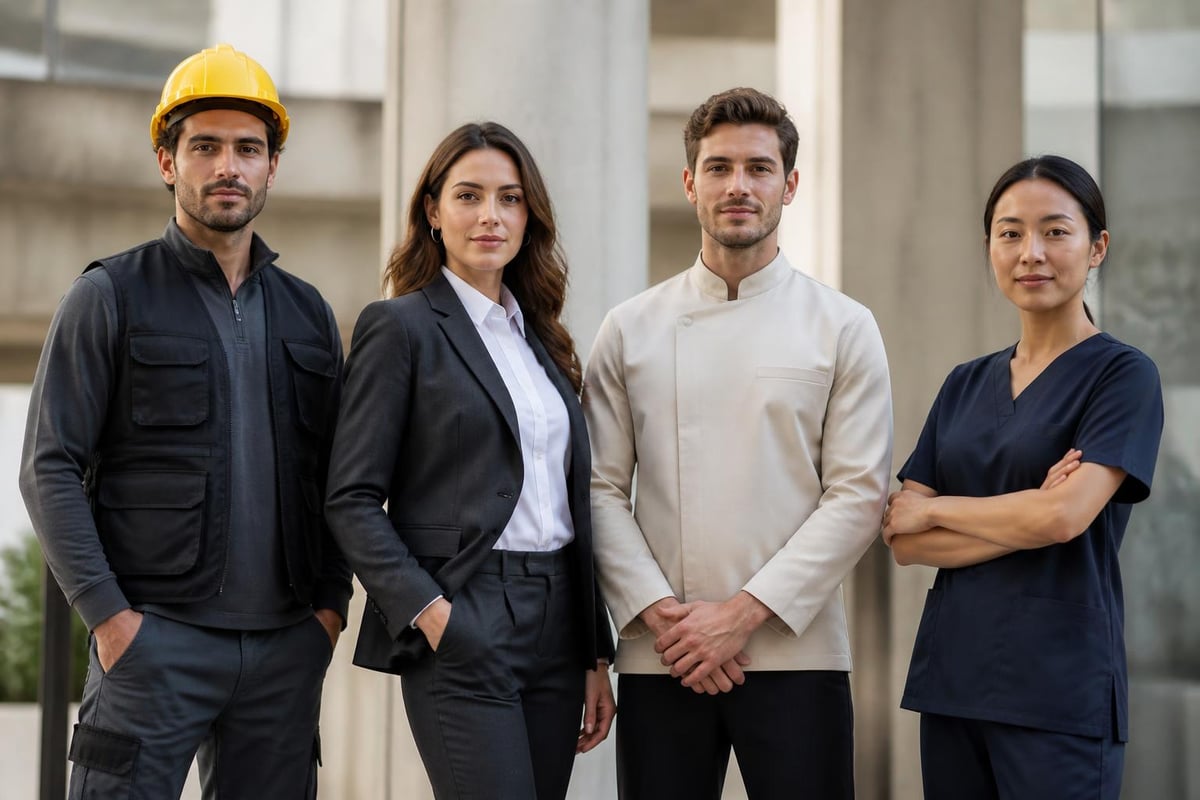
This shift has been particularly pronounced in sectors traditionally associated with purely utilitarian clothing. The construction industry, hospitality sector, and healthcare professions now recognise that well-designed workwear contributes to employee morale and professional perception. Companies investing in quality designer workwear often report improved staff retention and enhanced brand recognition.
Understanding the Designer Workwear Movement
Several factors have driven the surge in designer workwear adoption:
- Changing workplace cultures that prioritise employee wellbeing and self-expression
- Brand differentiation requirements in competitive markets
- Quality expectations from a workforce accustomed to high-standard consumer goods
- Functionality innovations that merge technical performance with aesthetic appeal
- Social media influence showcasing professional presentation across industries
The movement extends beyond simple aesthetic upgrades. Designer workwear incorporates advanced fabric technologies, ergonomic construction, and durability features that justify the investment for businesses seeking long-term value.
Key Characteristics of Quality Designer Workwear
Distinguishing genuine designer workwear from standard offerings requires understanding specific quality markers. Premium workwear balances multiple performance criteria whilst maintaining visual appeal.
| Feature | Standard Workwear | Designer Workwear |
|---|---|---|
| Fabric Quality | Basic cotton/polyester blends | Premium technical fabrics with performance properties |
| Construction | Standard seams and stitching | Reinforced construction with ergonomic design |
| Fit | Generic sizing | Tailored cuts with multiple fit options |
| Detailing | Minimal finishing | Refined details, contrast stitching, premium fastenings |
| Customisation | Basic logo placement | Strategic branding with quality embroidery options |
The emphasis on superior construction translates to garments that withstand intensive use whilst maintaining appearance. This durability proves particularly valuable for businesses requiring frequent laundering or exposure to demanding conditions.
Fabric Innovation and Performance
Modern designer workwear leverages textile innovations previously reserved for luxury fashion or technical sportswear. These advances deliver tangible benefits:
- Moisture-wicking properties that enhance comfort during active work
- Stretch fabrics allowing unrestricted movement without compromising structure
- Stain-resistant treatments maintaining professional appearance throughout shifts
- Breathable constructions regulating temperature across varying conditions
- Fade-resistant dyes preserving colour integrity despite repeated washing
Such features elevate designer workwear beyond aesthetic considerations, providing measurable performance advantages. Understanding fashion and identity in workwear helps businesses appreciate how clothing choices impact team dynamics and external perception.
Industry-Specific Designer Workwear Applications
Different sectors have embraced designer workwear in distinct ways, adapting high-end principles to specific operational requirements.
Construction and Trade Sectors
The construction industry has witnessed perhaps the most dramatic designer workwear evolution. Traditional blue workwear has even entered office settings, reflecting broader cultural appreciation for these garments. Contemporary construction workwear now features:
- Articulated knees and reinforced stress points combining durability with mobility
- Multi-functional pockets designed for specific tools and devices
- Reflective detailing integrated aesthetically rather than applied superficially
- Weather-resistant finishes that don't sacrifice breathability
Premium brands have demonstrated that safety-compliant workwear needn't compromise on style. Custom embroidery services allow construction companies to reinforce brand identity through thoughtfully placed logos on quality garments.
Hospitality and Service Industries
Hospitality venues increasingly recognise that staff presentation directly influences customer perception. Designer workwear in this sector prioritises:
- Clean, contemporary silhouettes that photograph well
- Stain-resistant fabrics maintaining pristine appearance
- Comfortable stretch materials supporting extended wear
- Coordinated colour palettes reflecting brand aesthetics
Quality Polo Shirts with professional embroidery offer hospitality businesses an accessible entry point to designer workwear principles, balancing approachability with polish.
Healthcare and Wellness Professions
Healthcare settings demand stringent hygiene standards alongside professional appearance. Designer workwear addresses these requirements through:
- Antimicrobial fabric treatments
- Easy-care constructions withstanding frequent high-temperature washing
- Flattering cuts maintaining dignity and authority
- Functional pocket configurations for essential equipment
The psychological impact of well-designed uniforms extends to both staff confidence and patient trust, making investment in designer workwear strategically sound for healthcare organisations.

Current Trends Shaping Designer Workwear
The designer workwear landscape continues evolving, influenced by broader fashion movements and changing professional expectations. Understanding these trends helps businesses make informed purchasing decisions aligned with contemporary standards.
Sustainable and Ethical Production
Environmental consciousness has become central to designer workwear development. Organisations increasingly prioritise suppliers demonstrating:
- Transparent supply chains with ethical labour practices
- Recycled materials reducing environmental impact without compromising quality
- Circular design principles facilitating garment longevity and eventual recycling
- Local production minimising transportation emissions
This sustainability focus aligns with broader corporate responsibility initiatives whilst appealing to environmentally conscious employees. Eco-friendly workwear options demonstrate commitment to progressive values without sacrificing professional standards.
Gender-Inclusive Design Approaches
Progressive designer workwear brands have moved beyond traditional gendered sizing towards inclusive design philosophies. This shift encompasses:
| Traditional Approach | Contemporary Inclusive Design |
|---|---|
| Binary male/female styles | Universal designs with varied fit options |
| Limited size ranges | Extended sizing accommodating diverse bodies |
| Gendered colour assumptions | Versatile palettes suitable for all |
| Distinct style categories | Unified collections with personal choice |
Such inclusivity not only addresses practical fitting challenges but signals organisational values regarding diversity and respect.
Influence of Luxury Fashion Trends
Designer workwear increasingly borrows elements from high fashion runways. Paris Men's Fashion Week 2026 showcased exaggerated shoulders and sharp tailoring, details now appearing in professional workwear collections. Similarly, accessible designer-inspired pieces demonstrate how luxury aesthetics can translate to practical work garments.
Emerging workwear trends include:
- Oversized blazers with structured shoulders
- Waistcoats as standalone statement pieces
- Bold colour blocking beyond traditional neutrals
- Textural mixing combining different fabric finishes
- Western-influenced details following the "cowboy core" trend
These fashion-forward elements require careful adaptation to maintain professional appropriateness whilst elevating standard workwear conventions.
Strategic Implementation of Designer Workwear
Successfully integrating designer workwear requires strategic planning beyond simple procurement. Businesses must consider multiple factors to maximise return on investment.
Budget Allocation and Value Assessment
Designer workwear typically commands premium pricing, necessitating careful budget consideration. However, cost-per-wear calculations often favour quality garments through:
- Extended lifespan reducing replacement frequency
- Maintained appearance eliminating premature disposal due to visible wear
- Employee satisfaction potentially reducing turnover costs
- Enhanced brand perception supporting business development
Phased implementation allows businesses to test designer workwear benefits before comprehensive rollouts. Starting with customer-facing roles or leadership teams provides measurable impact data.
Customisation and Brand Integration
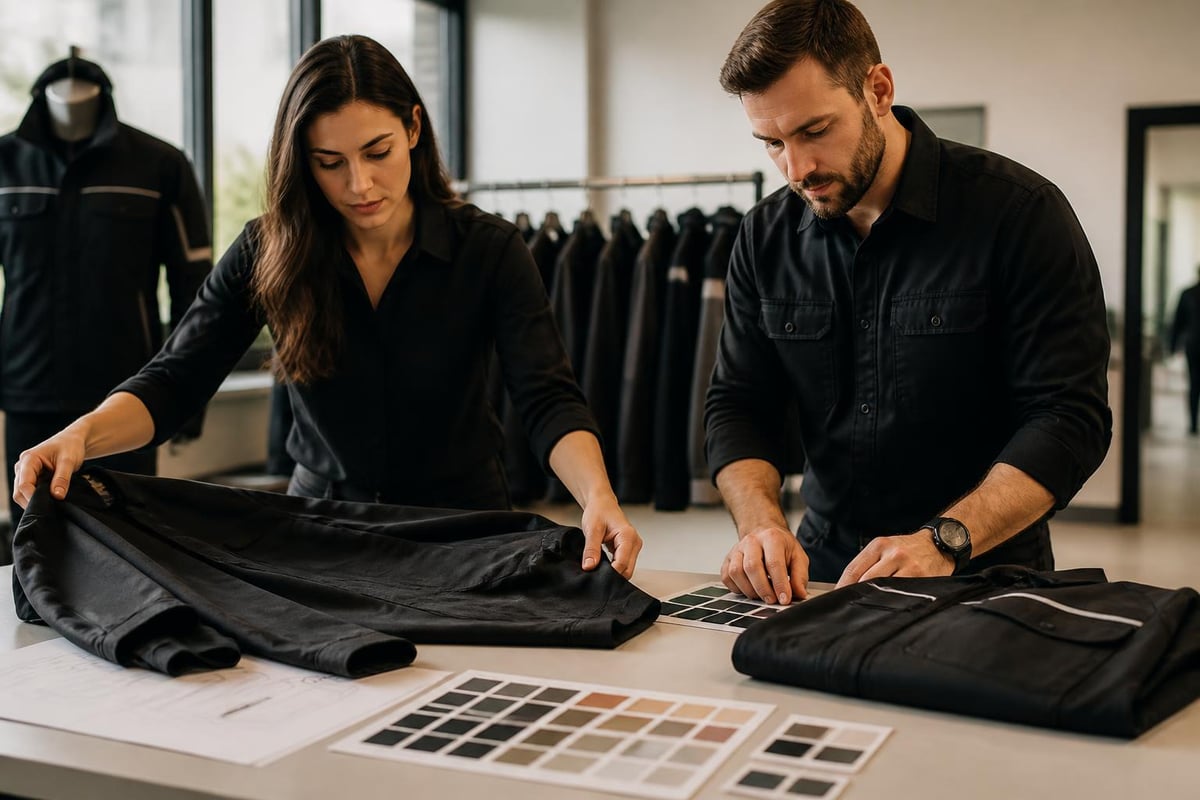
Designer workwear achieves maximum impact when thoughtfully customised. Strategic logo placement enhances rather than detracts from garment aesthetics. Considerations include:
- Embroidery quality matching garment sophistication
- Colour coordination between branding and fabric choices
- Placement strategy balancing visibility with design integrity
- Size proportions ensuring logos complement rather than dominate
Professional embroidery and printing services ensure customisation maintains designer workwear standards. Poorly executed branding can undermine premium garment investment, making skilled application crucial.
Employee Involvement and Feedback
Successful designer workwear programmes incorporate staff input throughout selection processes. This involvement ensures:
- Practical functionality meeting actual job requirements
- Size range adequacy accommodating team diversity
- Style acceptance aligning with employee preferences
- Comfort validation confirming wearability across full shifts
Pilot programmes with representative employee groups identify potential issues before large-scale investment. This consultative approach increases adoption rates and demonstrates organisational respect for staff perspectives.
Maintaining Designer Workwear Investment
Premium garments require appropriate care to justify their cost. Establishing maintenance protocols protects investment value whilst ensuring consistent professional appearance.
Care and Laundering Protocols
Designer workwear often incorporates delicate fabrics or finishes requiring specific treatment. Recommended practices include:
- Following manufacturer care instructions precisely
- Using appropriate detergents that won't degrade technical fabrics
- Avoiding excessive heat that damages elastic or coatings
- Storing garments properly to maintain shape and structure
- Rotating items to distribute wear evenly
Detailed care guidance for embroidered workwear helps preserve both fabric quality and branding integrity. Educating employees on proper care techniques prevents premature degradation.
Replacement Planning and Lifecycle Management
Even premium designer workwear eventually requires replacement. Strategic lifecycle management optimises total cost of ownership through:
- Regular inspections identifying wear before garments become unpresentable
- Documented replacement schedules based on usage intensity
- Consistent ordering maintaining uniform appearance across teams
- Style continuity ensuring new garments coordinate with existing items
Planning replacement purchases during supplier promotional periods can significantly reduce costs without compromising quality standards.
Designer Workwear for Different Professional Levels
Hierarchical organisations may implement tiered designer workwear approaches, differentiating roles whilst maintaining cohesive aesthetic standards.
Entry-Level and Operational Staff
Frontline employees benefit from designer workwear emphasising durability and comfort alongside style. Priorities include:
- Hard-wearing fabrics withstanding intensive daily use
- Practical features supporting specific job functions
- Easy-care properties minimising maintenance burden
- Comfortable fits enabling unrestricted movement
Even entry-level garments should reflect overall brand standards, ensuring all staff represent the organisation professionally.
Management and Client-Facing Roles
Senior positions and customer-facing staff often warrant premium designer workwear reflecting additional responsibility. Enhanced features might include:
- Superior fabric quality with refined hand-feel
- More sophisticated styling details
- Expanded customisation options
- Coordinated accessories completing professional presentation
This differentiation must avoid creating divisive "us versus them" dynamics whilst appropriately recognising different role requirements.
Future Directions in Designer Workwear
The designer workwear sector continues evolving, with several emerging developments likely shaping future offerings.
Technology Integration
Smart textiles and wearable technology integration represent frontier developments. Potential applications include:
- Temperature-regulating fabrics adapting to environmental conditions
- Health monitoring through integrated sensors
- Communication devices embedded discreetly in garments
- Augmented reality compatibility supporting training and operations
As these technologies mature, designer workwear will likely incorporate them seamlessly, maintaining aesthetic standards whilst delivering enhanced functionality.
Personalisation and Made-to-Measure Services
Advances in digital manufacturing enable cost-effective personalisation previously available only through bespoke tailoring. Benefits include:
| Traditional Sizing | Personalised Approach |
|---|---|
| Standard size runs | Individual measurements |
| Generic fits | Tailored to body shape |
| Limited options | Extensive choice |
| Stock availability dependent | Made-to-order production |
This customisation ensures perfect fits across diverse workforces whilst reducing waste from unsold inventory. The workwear trends for 2025 indicate growing consumer expectation for personalised professional attire.
Cross-Functional Design Philosophy
Future designer workwear may further blur boundaries between different wear occasions. Garments suitable for professional settings, casual environments, and active pursuits offer enhanced value. This versatility aligns with hybrid working patterns and reduced wardrobe redundancy, appealing to sustainability-conscious consumers whilst providing practical benefits. Workwear trends that blend style with function demonstrate this multi-purpose approach gaining traction across industries.
Designer workwear represents a strategic investment in team presentation, employee satisfaction, and brand differentiation across all professional sectors. By prioritising quality construction, thoughtful design, and appropriate customisation, businesses create lasting impressions whilst supporting staff comfort and confidence. Whether you're equipping a construction team, hospitality staff, or healthcare professionals, Cobra Workwear offers premium garments with professional embroidery services that elevate your brand whilst meeting the demanding standards of modern workplaces.
