

Selecting the right workwear polo shirts for your team requires balancing durability, comfort, professional appearance, and brand representation. Whether you're outfitting construction workers, hospitality staff, or healthcare professionals, the polo shirt has become a versatile staple that bridges the gap between formal shirts and casual wear. Understanding fabric technologies, construction quality, and industry-specific requirements will help you make an informed decision that enhances team cohesion whilst providing lasting value.
Understanding Fabric Options for Workwear Polo Shirts
The foundation of any quality workwear polo shirt lies in its fabric composition. Different materials offer distinct advantages depending on your industry requirements and working conditions.
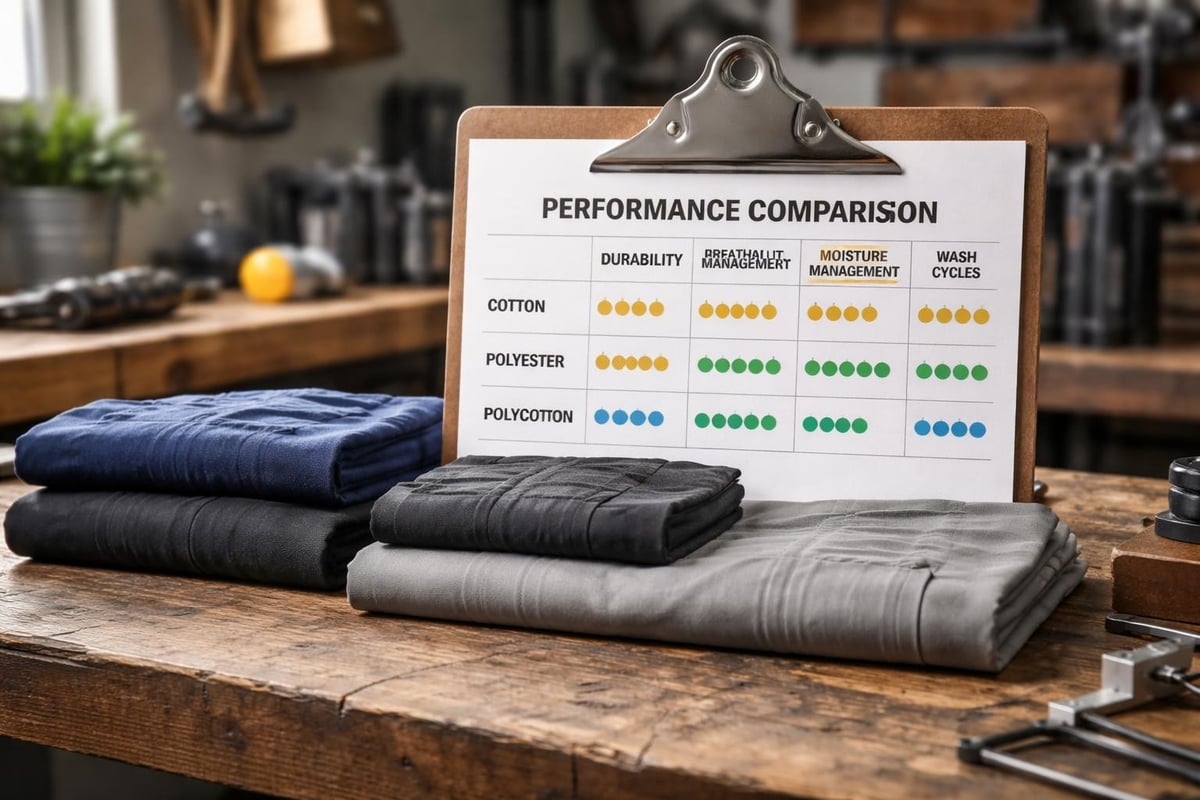
Cotton vs Polyester vs Blends
100% cotton provides natural breathability and comfort against the skin, making it ideal for indoor environments where temperature control is maintained. However, cotton tends to wrinkle easily, shrinks when washed, and takes longer to dry.
100% polyester delivers superior durability and colour retention. This synthetic option resists wrinkles, dries quickly, and maintains its shape through repeated washing cycles. The downside is reduced breathability compared to natural fibres.
Polycotton blends represent the sweet spot for most workwear applications. A typical 65/35 polyester-cotton blend combines the breathability of cotton with the durability of polyester. According to fabric selection research, these blends offer excellent performance across diverse working conditions.
| Fabric Type | Durability | Breathability | Wrinkle Resistance | Drying Time |
|---|---|---|---|---|
| 100% Cotton | Moderate | Excellent | Poor | Slow |
| 100% Polyester | Excellent | Moderate | Excellent | Fast |
| 65/35 Polycotton | Very Good | Good | Very Good | Moderate |
| 50/50 Blend | Good | Good | Good | Moderate |
Advanced Fabric Technologies
Modern workwear polo shirts incorporate sophisticated fabric treatments that enhance performance. Moisture-wicking technology pulls sweat away from the skin, distributing it across the fabric surface for faster evaporation. This feature proves particularly valuable in physically demanding roles or warm environments.
Antimicrobial treatments prevent odour-causing bacteria growth, extending the time between necessary washes. Food service workers, healthcare professionals, and anyone working long shifts benefit significantly from this innovation.
UV protection fabrics shield outdoor workers from harmful sun exposure. Construction teams, landscapers, and maintenance crews require garments offering UPF 30+ protection as standard.
When choosing breathable work polo shirts, consider the specific environmental challenges your team faces daily.
Key Durability Features in the Best Workwear Polo Shirts
Longevity matters when investing in team uniforms. The best workwear polo shirts incorporate specific construction features that extend their serviceable life.
Reinforced Stitching and Seams
Double-stitched seams throughout the garment prevent unravelling and splitting, especially at stress points. Look for:
- Bar-tack reinforcement at pocket corners
- Chain-stitched hems that withstand repeated washing
- Flatlock seams in high-friction areas
- Reinforced shoulder seams for heavy-use applications
Collar and Button Quality
The collar represents the most visible quality indicator on any polo shirt. Fused collars maintain their shape better than non-fused alternatives, staying crisp throughout the day and across multiple wash cycles.
Button durability separates professional-grade workwear from retail alternatives. Heat-resistant buttons that won't crack or discolour during industrial washing processes prove essential for high-volume laundry operations. Some industrial polo shirts feature crosshatch stitching at button attachment points, significantly reducing button loss.
Weight and Fabric Density
Fabric weight, measured in grams per square metre (GSM), directly correlates with durability and perceived quality. Consider these guidelines:
- 160-180 GSM: Lightweight options for hospitality and customer-facing roles
- 200-220 GSM: Medium weight for general workwear applications
- 240+ GSM: Heavy-duty options for construction and industrial settings
Industry-Specific Considerations
Different sectors demand specific features from their workwear polo shirts. Tailoring your selection to industry requirements ensures both compliance and employee satisfaction.
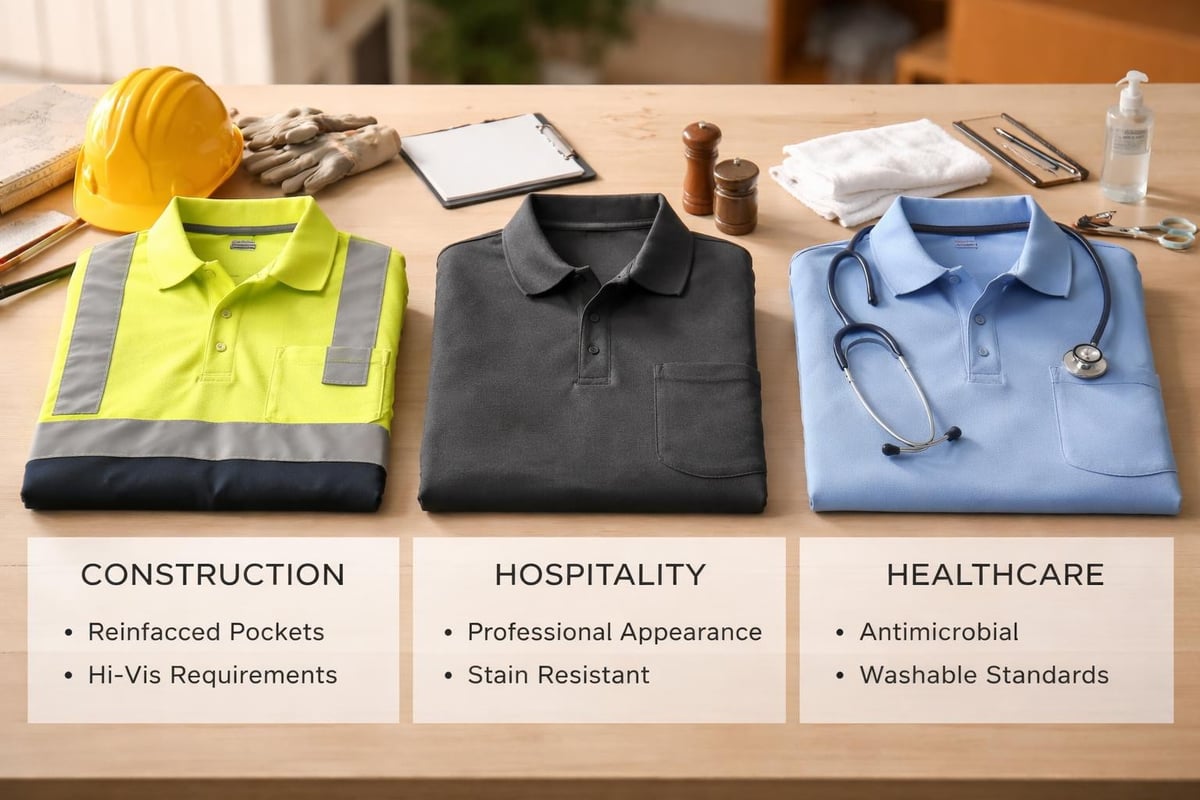
Construction and Trade Professions
Construction workers need polo shirts that withstand outdoor conditions whilst remaining comfortable during physical labour. High-visibility options meet safety regulations on active sites, whilst reinforced fabrics resist snags from tools and materials.
Essential features:
- Reinforced pocket construction for tool carrying
- Extended back length for bending and reaching
- Side vents for improved airflow
- Colour-fast dyes that resist UV degradation
Hospitality and Customer Service
Front-of-house staff require polo shirts that maintain a polished appearance throughout extended shifts. The focus shifts towards wrinkle resistance, stain repellence, and professional aesthetics.
Priority characteristics:
- Crisp collar that stays structured
- Stain-resistant treatments
- Slim or tailored fit options
- Wide colour range for brand alignment
Healthcare and Medical Settings
Healthcare professionals need garments that survive frequent high-temperature washing whilst preventing cross-contamination. Polo Shirts suitable for medical environments typically incorporate antimicrobial treatments and meet NHS laundry standards.
Branding and Customisation Options
Professional branding transforms workwear polo shirts from simple garments into powerful marketing tools. The customisation method you choose impacts both appearance and longevity.
Embroidery vs Screen Printing
Embroidery delivers premium perceived value and exceptional durability. Thread-based logos withstand countless wash cycles without fading or cracking. The dimensional quality creates a tactile, high-end finish suitable for client-facing teams. For businesses seeking consistent quality, understanding in-house embroidery benefits proves valuable.
Screen printing offers cost advantages for large runs and allows full-colour, detailed designs. Modern printing techniques produce flexible, breathable prints that move with the fabric. However, prints may fade or crack faster than embroidery, particularly with industrial washing.
Logo Placement Strategies
Strategic logo positioning maximises brand visibility whilst maintaining professional aesthetics:
- Left chest (standard corporate placement)
- Right chest (secondary branding or staff names)
- Sleeve embroidery (increasing in popularity)
- Back yoke or shoulder (high-visibility applications)
- Collar underside (subtle branding detail)
When considering embroidery styles for different industries, remember that simpler designs typically age better than complex, multi-colour artwork.
Sizing and Fit Considerations
Proper fit directly impacts both comfort and professional appearance. The best workwear polo shirts accommodate diverse body types whilst maintaining a cohesive team aesthetic.
Standard vs Tailored Fits
Classic fit polo shirts offer generous room through the body and sleeves, providing comfort for physical work without restriction. This traditional cut suits most body types and allows layering when needed.
Slim or tailored fits create a more contemporary silhouette appropriate for customer-facing roles. These cuts work well for hospitality, retail, and office environments where a modern appearance matters.
Athletic fits accommodate broader shoulders and tapered waists, designed for physically active workers who require freedom of movement without excess fabric.
Size Range and Inclusivity
Comprehensive size ranges ensure every team member receives appropriate workwear. Look for suppliers offering:
- XS through 5XL or 6XL in standard lines
- Tall and short variants for proper length
- Women's specific cuts that don't simply scale down men's patterns
- Maternity or adjustable options where relevant
| Fit Type | Best For | Key Features |
|---|---|---|
| Classic | Trade work, general use | Relaxed through body, standard armholes |
| Slim | Customer service, office | Tapered waist, fitted sleeves |
| Athletic | Physical roles | Broad shoulders, narrow waist |
| Oversized | Layering, comfort | Extra room, relaxed cut |
Colour Selection and Psychology
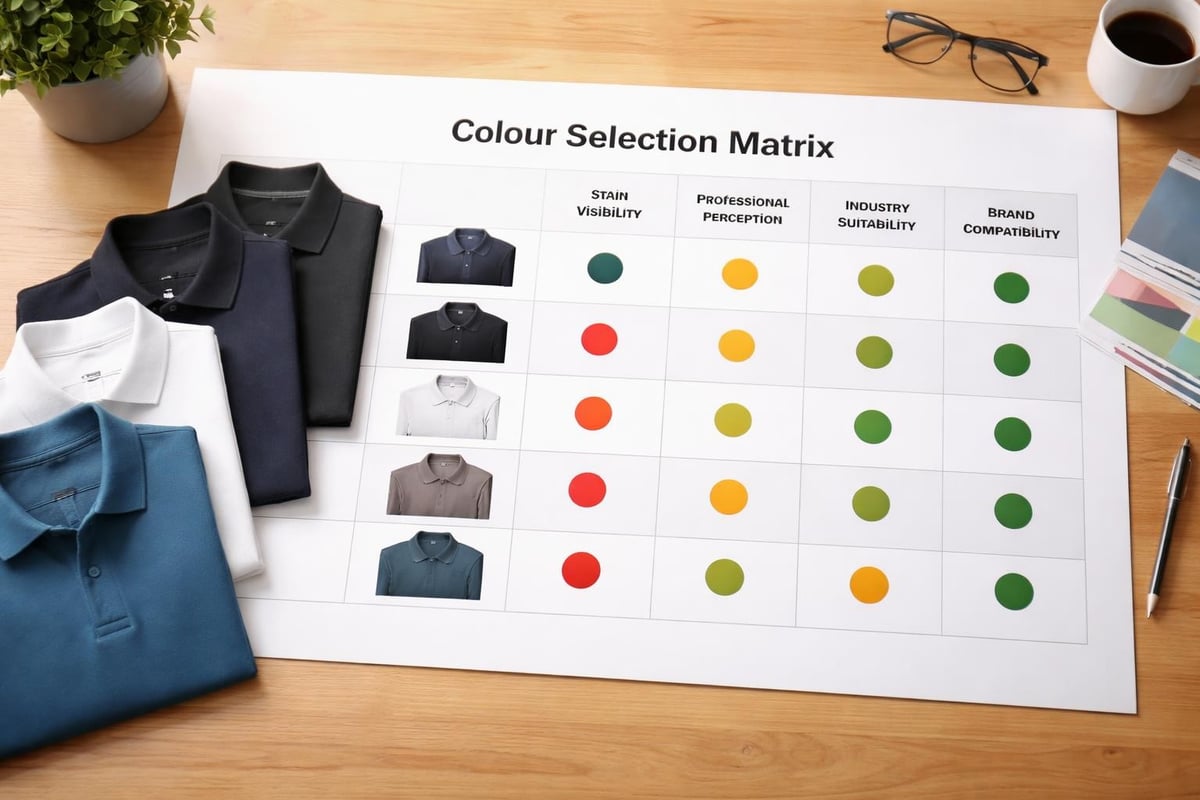
Colour choices impact brand recognition, dirt visibility, and even workplace psychology. Strategic colour selection enhances your team's professional image.
Practical Colour Considerations
Navy blue remains the most popular workwear colour for good reason. It hides minor stains, conveys professionalism, and suits virtually every industry. Navy pairs well with most brand colours for embroidered logos.
Black offers similar practicality to navy whilst creating a sleeker, more contemporary appearance. However, black shows lint and dust more readily than navy alternatives.
White projects cleanliness and professionalism, making it popular in healthcare and food service. The trade-off lies in higher maintenance requirements and visible staining.
Grey (heather or solid) provides middle ground, offering good stain concealment whilst appearing modern and approachable.
Branded colours strengthen visual identity but require careful selection. Ensure chosen shades remain available from your supplier for future orders, maintaining consistency as team members change.
Quality Indicators When Purchasing
Identifying quality before purchase prevents costly mistakes. Several indicators separate premium workwear polo shirts from budget alternatives.
Manufacturing Details to Check
Examine sample garments for these quality markers:
- Consistent stitching with no loose threads or skipped stitches
- Colour consistency across all garment panels
- Properly aligned patterns at seams and pockets
- Secure button attachment with reinforced stitching
- Neat hem finishes without puckering
Wash and Care Labels
Comprehensive care labels indicate manufacturer confidence in their product. Look for specific washing temperature guidance, drying instructions, and ironing recommendations. Vague or missing care information often signals lower-quality manufacturing.
According to guidance on choosing the right polo shirt, testing wash durability before committing to large orders prevents disappointment.
Budget Considerations and Total Cost of Ownership
Initial purchase price represents only one component of workwear investment. Understanding total cost of ownership enables smarter purchasing decisions.
Price Points and Value
Budget polo shirts (£5-£8 per unit) may suit short-term events or non-demanding environments. However, expect reduced durability and potential quality issues.
Mid-range options (£9-£15 per unit) offer the best value for most applications, balancing quality construction with reasonable pricing.
Premium workwear polo shirts (£16-£25+ per unit) deliver superior fabrics, construction, and longevity. These prove cost-effective when calculated across their extended lifespan.
Calculating Long-Term Value
Consider these factors when evaluating true cost:
- Replacement frequency: How often must garments be replaced?
- Washing costs: Do fabrics require special care or professional cleaning?
- Employee satisfaction: Does comfort impact productivity or retention?
- Brand impact: How does appearance quality affect customer perception?
A £12 polo shirt lasting three years provides better value than a £6 alternative requiring annual replacement, particularly when factoring in reordering administration and potential logo re-embroidering costs.
Ordering Process and Supplier Selection
Finding the right supplier matters as much as selecting the right garments. Reliable partners streamline the ordering process whilst ensuring consistent quality.
Minimum Order Quantities
Many suppliers impose minimum order quantities (MOQs) for customised workwear. Typical MOQs range from 10 to 50 units per design, though some specialist providers accommodate smaller orders.
Bulk ordering advantages:
- Reduced per-unit costs
- Consistent colour batches
- Stock availability for future replacements
- Simplified reordering process
Lead Times and Rush Options
Standard lead times for embroidered workwear typically span 7-14 working days from order confirmation. Complex designs or large quantities may extend this timeframe.
Rush services accommodate urgent requirements but generally incur premium charges. Planning ahead prevents unnecessary expedite fees. For businesses managing multiple locations, understanding key account services streamlines large-scale uniform programmes.
Sample Ordering
Always request samples before committing to large orders. Evaluate:
- Fabric hand-feel and weight
- Colour accuracy (physical vs online)
- Sizing consistency with published charts
- Construction quality and finishing
- Logo placement and quality
Many ecommerce merchants sharing insights on platforms like Talk Shop emphasise the importance of physical product verification, particularly when ordering branded inventory.
Maintaining Your Workwear Polo Shirts
Proper care extends garment lifespan and maintains professional appearance. Implementing standardised care protocols protects your investment.
Washing Best Practices
Follow these guidelines for optimal longevity:
- Turn garments inside out before washing to protect embroidery and surface fabric
- Wash in cool or warm water (30-40°C) rather than hot cycles
- Avoid fabric softeners that can reduce moisture-wicking performance
- Use mild detergents without bleaching agents
- Separate colours to prevent dye transfer, especially initially
For detailed maintenance advice, consult resources on caring for embroidered workwear.
Storage and Rotation
Implementing a garment rotation system prevents premature wear. Provide each team member with at least three polo shirts, allowing adequate recovery time between wears. This rotation approach significantly extends overall garment life.
Proper storage matters too. Hanging polo shirts prevents permanent creasing, whilst folded storage saves space. For embroidered garments, avoid folding directly across logo areas where possible.
Emerging Trends in Workwear Polo Shirts
The workwear sector continues evolving with new technologies and design innovations. Staying informed helps future-proof your uniform programme.
Sustainable Materials
Environmental consciousness increasingly influences purchasing decisions. Organic cotton, recycled polyester, and bamboo-blend fabrics offer eco-friendly alternatives without compromising performance. Businesses exploring eco-friendly workwear options can align uniform choices with corporate sustainability goals.
Technical Performance Fabrics
Advanced fabric engineering delivers enhanced performance characteristics:
- Thermoregulation technologies adapt to body temperature changes
- Four-way stretch materials provide unprecedented mobility
- Odour-control treatments use silver ion technology
- Quick-dry formulations reduce downtime between washes
Design Innovation
Contemporary workwear polo shirts increasingly feature:
- Contrast panels for visual interest
- Reflective trim for safety applications
- Hidden button plackets for streamlined appearance
- Convertible collars that work with or without ties
Selecting the best workwear polo shirts involves balancing multiple factors from fabric technology and durability features to industry requirements and branding opportunities. The right choice enhances team cohesion, projects professionalism, and delivers lasting value when you consider total cost of ownership rather than simply initial price. Cobra Workwear combines extensive product selection with in-house embroidery services, enabling UK businesses across construction, hospitality, healthcare, and beyond to source durable, professionally branded polo shirts tailored to their specific industry needs. Visit their website to explore customisation options and request samples that help you make confident decisions for your team.
